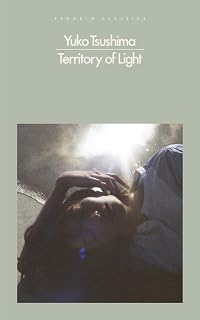
Territory of Light
by Yūko Tsushima
On This Page
Description
From one of the most significant contemporary Japanese writers, a haunting, dazzling novel of loss and rebirth"Yuko Tsushima is one of the most important Japanese writers of her generation." —Foumiko Kometani, The New York Times
I was puzzled by how I had changed. But I could no longer go back . . .
It is spring. A young woman, left by her husband, starts a new life in a Tokyo apartment. Territory of Light follows her over the course of a year, as she struggles to bring up her show more two-year-old daughter alone. Her new home is filled with light streaming through the windows, so bright she has to squint, but she finds herself plummeting deeper into darkness, becoming unstable, untethered. As the months come and go and the seasons turn, she must confront what she has lost and what she will become.
At once tender and lacerating, luminous and unsettling, Yuko Tsushima's Territory of Light is a novel of abandonment, desire, and transformation. It was originally published in twelve parts in the Japanese literary monthly Gunzo, between 1978 and 1979, each chapter marking the months in real time. It won the inaugural Noma Literary Prize.
. show less
Tags
Recommendations

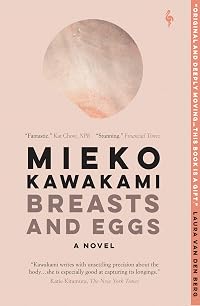
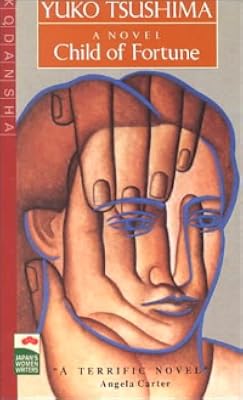
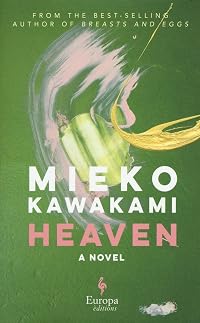
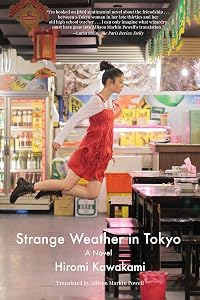










Member Recommendations

Member Reviews
A sparse, realistic depiction of single-motherhood in Japan during the 1970s. Undeniably a relavant text from the time and place, Territory of Light unfortunately lacks the emotional grit necessary to make a lasting impression on contemprary audiences. Despite this, I was particularly enamoured by the author's choice to not share the main character's name nor the real reason for her seperation. The occasional bits of brilliance though could not win me over. I'm completely open to this being a translation issue, as broadly, I felt there was a lack of attention to greater themes in the small details that may be ripe in the original.
I was hypnotized by this book from the very beginning. I don't read many books about mothers -- is that strange? This was constantly tipping back and forth between scenes where I read, set at a comfortable distance from the narrator and her feelings, to scenes where I identified SO INTENSELY that I was awash with sympathetic guilt, exhaustion, anxiety, or quiet awe.
At the beginning of the novel, she separates from her husband and moves into an apartment with her two-year-old daughter. Over the next year and a half, she attempts to make a life for herself and her daughter, while untangling them both from her husband, and figuring out how to be a good parent to a toddler while she herself is struggling. The lack of support she has coupled show more with the judgements she faces from all sides, and her own judgements of herself leave her frequently feeling a bit untethered and adrift -- a stress a child can't help but pick up on. The ways she both accepts and rebels against responsibility for every aspect of her daughter's behavior -- that slides from apathy if not defensive rage to guilt and panic -- cannot help but be relatable to many mothers, whether or not the specific circumstances causing those reactions are familiar.
This was such an impulse purchase for me -- I had seen the cover image over and over on Instagram, but don't think I had even read any of the reviews. I am very glad to have discovered this one. A quiet, deeply empathetic novel. show less
At the beginning of the novel, she separates from her husband and moves into an apartment with her two-year-old daughter. Over the next year and a half, she attempts to make a life for herself and her daughter, while untangling them both from her husband, and figuring out how to be a good parent to a toddler while she herself is struggling. The lack of support she has coupled show more with the judgements she faces from all sides, and her own judgements of herself leave her frequently feeling a bit untethered and adrift -- a stress a child can't help but pick up on. The ways she both accepts and rebels against responsibility for every aspect of her daughter's behavior -- that slides from apathy if not defensive rage to guilt and panic -- cannot help but be relatable to many mothers, whether or not the specific circumstances causing those reactions are familiar.
This was such an impulse purchase for me -- I had seen the cover image over and over on Instagram, but don't think I had even read any of the reviews. I am very glad to have discovered this one. A quiet, deeply empathetic novel. show less
had this lying around for awhile, picked it up again after reading its excerpt in another collection. it can be a little slow and boring if you're not into entering the subconsciousness of a single mom's mundane routines (+ some outbursts, particularly poetic moments). but if you enjoy living between wakefulness and dreams, or find yourself zoning into space drawing revelations from abstract scenes and sensations then this is the book for you.
Territory of Light by Yuko Tsushima is a slender volume which is episodic due to its initial release as a serial in a monthly journal. That said, it still holds together as a novel because it takes place over the course of a year, each chapter taking place in subsequent months.
This is the type of novel one can read in a single sitting quite easily, but I wouldn't recommend it. I think this warrants a slower read with time between chapters to think about what happened, what it means, and how the character may have changed. In that sense this might be better read as a collection of related short stories even though it isn't.
At times poignant and tender, at times harsh and almost cruel, Territory of Light illustrates the fluctuations of show more everyday life, especially after a life-altering decision. What seems certain one moment is questionable the next. Plans become merely hopeful predictions while surprises become the new normal. These aspects will speak to all readers. The fact that this is a woman in a very gender-conscious society speaks specifically to any readers who know what it is like to battle not only personal obstacles but societal ones as well.
I highly recommend this for readers who might like to read and think about the day-to-day process of living, flaws and mistakes included. While very specific it also offers multiples avenues into the narrative so that any reader will be able to find something with which to empathize.
Reviewed from a copy made available through Goodreads First Reads. show less
This is the type of novel one can read in a single sitting quite easily, but I wouldn't recommend it. I think this warrants a slower read with time between chapters to think about what happened, what it means, and how the character may have changed. In that sense this might be better read as a collection of related short stories even though it isn't.
At times poignant and tender, at times harsh and almost cruel, Territory of Light illustrates the fluctuations of show more everyday life, especially after a life-altering decision. What seems certain one moment is questionable the next. Plans become merely hopeful predictions while surprises become the new normal. These aspects will speak to all readers. The fact that this is a woman in a very gender-conscious society speaks specifically to any readers who know what it is like to battle not only personal obstacles but societal ones as well.
I highly recommend this for readers who might like to read and think about the day-to-day process of living, flaws and mistakes included. While very specific it also offers multiples avenues into the narrative so that any reader will be able to find something with which to empathize.
Reviewed from a copy made available through Goodreads First Reads. show less
Originally published as a monthly serial, this novel follows the life of a woman and her young daughter for a year after she separates from her husband. It's really about motherhood, its difficulties and (sometimes) joys. It's beautifully written, and often surprising, sometimes in a good way, sometimes in a bad way. Highly recommended.
Territory of Light is a short, intense book about one woman's first year after separating from her husband. It's a subtle book; Tsushima never explicitly tell us that the narrator is lonely, isolated, or depressed, but rather lets the reader witness her mental state as she struggles to raise her daughter without her husband. This story is beautiful and heartbreaking.
The territory of light from the title is the woman's new apartment, which is flooded with light from windows on all sides. Her young daughter loves this warm and sunny place, which brings comfort to the narrator, who feels guilty about separating the child from her father. The apartment isn't perfect; there was a flooding incident and the neighbors aren't the friendliness, show more but this is their new home.
"All this while, I had kept hoping that once I settled into the new apartment - about the time I became able to find my way around it with my eyes closed and not bump into things - the normality of a relaxed and reasonably sociable existence like the one I used to have, back when I'd started living with my husband, would be conferred on me. That seems to have been my state of mind in those months. For all the world as though I were studying for an entrance exam, I guess I must have believed that if I did my best I would pass, after which I could coast, feeling proud of myself. I did start out with every intention of jettisoning my starry-eyed expectations and recognizing what I'd failed to see so far, but I didn't yet know what it meant in practice to trim my expectations."
This book broke my heart. Since her husband has left, our narrator only has her daughter and her mundane job. She fantasizes about connecting with the other mothers from her daughter's daycare, but the friendship never materializes. She drinks and has casual sex to fill a void. None of these feelings are ever explicitly stated in the text, but Tsushima's sparse prose nonetheless illustrates these emotions. The matter-of-fact narration is so raw.
The daughter cries herself to sleep at night, which eventually escalates into screaming fits. I'm not a parent, but Tsushima's description of how the narrator reacted felt so true.
"It was not so much hearing her crying as finding myself shouting vile abuse and feeling like smothering her that made me realize for the first time just hat the long days ahead would be like. I longed to have my old life back. But there was no going back now, nor any way out. I couldn't decide whether I'd done this to myself or fallen for a ruse of unknown origin. what I'd failed to see so far, it turned out, was my own cruelty."
Our narrator's journey is long and shadowed by death. People on the sidelines of her life begin to die and she sees funeral after funeral on the street. Out of this death finally comes healing.
"I had the feeling that I finally understood what the series of deaths had been trying to tell me. The light of heat, of energy. My body was fully endowed with heat and energy. I couldn't help but see myself standing there last night, transfixed by the glowing red sky, never sparing the approach of death a thought."
I loved every bit of this book. Tsushima's writing is beautiful, and she uses every word deliberately. There is no excess. I am astounded at the complexity of the narrator's emotions, which are never directly written about, but are nevertheless incredibly vivid.
If you like contemporary Japanese fiction, you will love Territory of Light.
ARC provided by Farrar, Straus & Giroux in exchange for an honest review.
The quotes above were taken from an ARC and are subject to change upon publication. show less
The territory of light from the title is the woman's new apartment, which is flooded with light from windows on all sides. Her young daughter loves this warm and sunny place, which brings comfort to the narrator, who feels guilty about separating the child from her father. The apartment isn't perfect; there was a flooding incident and the neighbors aren't the friendliness, show more but this is their new home.
"All this while, I had kept hoping that once I settled into the new apartment - about the time I became able to find my way around it with my eyes closed and not bump into things - the normality of a relaxed and reasonably sociable existence like the one I used to have, back when I'd started living with my husband, would be conferred on me. That seems to have been my state of mind in those months. For all the world as though I were studying for an entrance exam, I guess I must have believed that if I did my best I would pass, after which I could coast, feeling proud of myself. I did start out with every intention of jettisoning my starry-eyed expectations and recognizing what I'd failed to see so far, but I didn't yet know what it meant in practice to trim my expectations."
This book broke my heart. Since her husband has left, our narrator only has her daughter and her mundane job. She fantasizes about connecting with the other mothers from her daughter's daycare, but the friendship never materializes. She drinks and has casual sex to fill a void. None of these feelings are ever explicitly stated in the text, but Tsushima's sparse prose nonetheless illustrates these emotions. The matter-of-fact narration is so raw.
The daughter cries herself to sleep at night, which eventually escalates into screaming fits. I'm not a parent, but Tsushima's description of how the narrator reacted felt so true.
"It was not so much hearing her crying as finding myself shouting vile abuse and feeling like smothering her that made me realize for the first time just hat the long days ahead would be like. I longed to have my old life back. But there was no going back now, nor any way out. I couldn't decide whether I'd done this to myself or fallen for a ruse of unknown origin. what I'd failed to see so far, it turned out, was my own cruelty."
Our narrator's journey is long and shadowed by death. People on the sidelines of her life begin to die and she sees funeral after funeral on the street. Out of this death finally comes healing.
"I had the feeling that I finally understood what the series of deaths had been trying to tell me. The light of heat, of energy. My body was fully endowed with heat and energy. I couldn't help but see myself standing there last night, transfixed by the glowing red sky, never sparing the approach of death a thought."
I loved every bit of this book. Tsushima's writing is beautiful, and she uses every word deliberately. There is no excess. I am astounded at the complexity of the narrator's emotions, which are never directly written about, but are nevertheless incredibly vivid.
If you like contemporary Japanese fiction, you will love Territory of Light.
ARC provided by Farrar, Straus & Giroux in exchange for an honest review.
The quotes above were taken from an ARC and are subject to change upon publication. show less
A softer edge than Haruki Murakami, but equal in using words to create evocative imagery. Light & darkness revolve and intertwine in this story of mother & child, of woman finding her way to herself, and of the passage of one year after separating from a husband. Achingly expressed emotions, fears, fantasies, and realities combine to create a sensory and emotional experience for the reader. Every painful step in the separation process rings true! Wonderfully painful novel!
Members
- Recently Added By
Lists

This is the Canon: Decolonize Your Bookshelf in 50 Books
51 works; 5 members

Kirkus Starred Fiction Reviews of Books Published in 2019
411 works; 12 members

Schwob Nederland
207 works; 2 members

Books Read in 2019
4,052 works; 108 members

Reading LIst
648 works; 1 member
Author Information

21+ Works 1,380 Members
Some Editions
Awards and Honors
Awards
Distinctions
Series
Belongs to Publisher Series
Common Knowledge
Classifications
- Genres
- General Fiction, Fiction and Literature
- DDC/MDS
- 895.635 — Literature & rhetoric Literatures of other languages Literatures of East and Southeast Asia Japanese Japanese fiction 1945–2000
- LCC
- PL862 .S76 — Language and Literature Languages and literatures of Eastern Asia, Africa, Oceania Languages of Eastern Asia, Africa, Oceania Japanese language and literature Japanese literature Individual authors and works
- BISAC
Statistics
- Members
- 567
- Popularity
- 52,153
- Reviews
- 20
- Rating
- (3.63)
- Languages
- 5 — Dutch, English, German, Japanese, Spanish
- Media
- Paper, Audiobook, Ebook
- ISBNs
- 17
- ASINs
- 5