
Maria Stepanova (1) (1972–)
Author of In Memory of Memory
For other authors named Maria Stepanova, see the disambiguation page.
Works by Maria Stepanova
Associated Works
Tagged
Common Knowledge
- Legal name
- Степанова, Мария Михайловна
Stepanova, Maria Mikhailovna - Birthdate
- 1972-06-09
- Gender
- female
- Education
- Maxim Gorky Literature Institute
- Awards and honors
- Andrei Bely Prize (2005)
Big Book Prize (2018) - Nationality
- Russia
- Birthplace
- Moscow, USSR
Members
Reviews
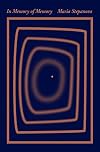
I let "In Memory of Memory" swallow me, sing to me, break my heart and heal it again. It is a poetic journey through history, family history, philosophy, memories, sights and objects. Beautiful writing that makes even the smallest things shine. (There were poignant moments of recognition for me as well - that childhood hunger for family history, for example. There I was, with black and white squares and rectangles spread around me on the floor at grandma's house. Who is this? And this? And show more grandparents who did not like to talk about certain things...) I am very glad I read this. show less
By all indications this should have been better than it is (consider the subject matter, authorial pedigree, tasteful cover art)
The work is neither material 'speaking for itself' nor theoretical 'essaie', but belongs to the unhappy middleground: primary source with copious supplement of commentary/speculation. This is a genre demanded by those unsatisfied by 'unsubstantial' theory and also those bored by 'pointless' historiography. The secret of such critiques is the author cannot fulfil show more them - they must be overcome by effort of the reader or aid of a 'third' work. Strepanova is aware of this trap, which she has not managed to evade, hence the frequent auto-reference and near-despairing allusions to Sebald, who "captures everything".
The physical document acquires a "precious" quality - think Joseph Cornell's Boxes. A more accessible analogy: one imagines a re-printing of Walter Benjamin's notes, falsely distressed, such that the object itself becomes the valued, and not its signified. This is a quality which evades inspection, yet the analysis is attempted anyway. In the first movement, the value of the object is displaced onto a signified 'history' or 'time' or 'death'. But once these qualities are investigated in the second movement, we discover the object has lost its value. So, in the third movement, we once again return to the precious object, find value without explanation, and the investigation begins again. We are drawn into a dialectical 'false infinity' (which, perhaps, is the true nature of history...). The author is well-aware of one manifestation of this process: she has disappeared completely from the 'autobiographical' text. There is no point (of this impenetrable cycle) at which she could have entered into it. show less
The work is neither material 'speaking for itself' nor theoretical 'essaie', but belongs to the unhappy middleground: primary source with copious supplement of commentary/speculation. This is a genre demanded by those unsatisfied by 'unsubstantial' theory and also those bored by 'pointless' historiography. The secret of such critiques is the author cannot fulfil show more them - they must be overcome by effort of the reader or aid of a 'third' work. Strepanova is aware of this trap, which she has not managed to evade, hence the frequent auto-reference and near-despairing allusions to Sebald, who "captures everything".
The physical document acquires a "precious" quality - think Joseph Cornell's Boxes. A more accessible analogy: one imagines a re-printing of Walter Benjamin's notes, falsely distressed, such that the object itself becomes the valued, and not its signified. This is a quality which evades inspection, yet the analysis is attempted anyway. In the first movement, the value of the object is displaced onto a signified 'history' or 'time' or 'death'. But once these qualities are investigated in the second movement, we discover the object has lost its value. So, in the third movement, we once again return to the precious object, find value without explanation, and the investigation begins again. We are drawn into a dialectical 'false infinity' (which, perhaps, is the true nature of history...). The author is well-aware of one manifestation of this process: she has disappeared completely from the 'autobiographical' text. There is no point (of this impenetrable cycle) at which she could have entered into it. show less
A difficult read, because it is written by someone from a different culture, with frequent Russian and Jewish cultural and historical references scattered abundantly throughout the book that I don’t necessarily fully “catch”. It is also overlong and rambling, approaching the partial biographies of the author’s ancestors with multiple anecdotes and stories; using descriptions of objects, old photos and visits to places where they lived.
Despite this, or because of this, for me show more Stepanova’s book succeeds in making me think and in articulating its objective:
This book about my family is not about my family, but something quite different: the way memory works, and what memory wants from me. (Page 51) show less
Despite this, or because of this, for me show more Stepanova’s book succeeds in making me think and in articulating its objective:
This book about my family is not about my family, but something quite different: the way memory works, and what memory wants from me. (Page 51) show less
This is a very well-written book about a topic that is just not that interesting to me. For whatever reason, the last twenty years or so in the USA there seems to have been a trend towards people, having reached a certain age, trying to discover everything about their family and genealogy. In the American context, this is almost always about white people searching for a meaningful ethnic identity in a society that is more and more dismissive of white identity while trumpeting the virtues of show more other ethnicities and races. All of this is of course just another awkward step for the US to reckon with our unseemly past and hypocritical present. I can see the appeal to trying to understand where your people “come from” seeing as most traditions more than a few decades old have long been lost and forgotten, but I often feel like this search convolutes the very worthwhile quest for self-knowledge with a lot of information that is at best, not necessary, and at worst, an excuse to claim some kind of “unique” identity when presented with criticism of the other identity you’ve been playing your whole life.
Obviously Stepanova isn’t American, and I have no idea if the same trend towards DIY ancestry has been ascendant in Russia too, but there were many times in this book I felt like I was being regaled with reams and reams of information that had no significance to anyone outside of the writer’s family. There were moments in the book where the reader is treated to insight about art or literature or history (the sections about Charlotte Salomon and the siege of Leningrad stick out for me) and these made it worth reading. But at a certain point I had a hard time keeping all the names straight on the twisting branches of the family tree. At one point late in the book, Stepanova admits that for all this writing about these dead family members, she actually took on the project for very self-conscious reasons. Actually, I’m still not clear why she wrote this book or did what must add up to years and years of research. Her reflections on topics that have some significance for the uninitiated reader are almost incidental to the stories of marriages, deaths, letters sent back and forth decades and decades ago, and for a book aimed at the public, it seems it seems that hierarchy should be flipped around. show less
Obviously Stepanova isn’t American, and I have no idea if the same trend towards DIY ancestry has been ascendant in Russia too, but there were many times in this book I felt like I was being regaled with reams and reams of information that had no significance to anyone outside of the writer’s family. There were moments in the book where the reader is treated to insight about art or literature or history (the sections about Charlotte Salomon and the siege of Leningrad stick out for me) and these made it worth reading. But at a certain point I had a hard time keeping all the names straight on the twisting branches of the family tree. At one point late in the book, Stepanova admits that for all this writing about these dead family members, she actually took on the project for very self-conscious reasons. Actually, I’m still not clear why she wrote this book or did what must add up to years and years of research. Her reflections on topics that have some significance for the uninitiated reader are almost incidental to the stories of marriages, deaths, letters sent back and forth decades and decades ago, and for a book aimed at the public, it seems it seems that hierarchy should be flipped around. show less
Lists
Awards


You May Also Like


Associated Authors
Statistics
- Works
- 10
- Also by
- 1
- Members
- 508
- Popularity
- #48,805
- Rating
- 3.7
- Reviews
- 13
- ISBNs
- 55
- Languages
- 11