

Fernanda Melchor
Author of Hurricane Season
About the Author
Works by Fernanda Melchor
Lažni zec 1 copy
Paradais - Fernanda Melchor 1 copy
Tagged
Common Knowledge
- Birthdate
- 1982
- Gender
- female
- Occupations
- Schriftstellerin
- Awards and honors
- Anna-Seghers-Preis (2019)
- Nationality
- Mexico
- Birthplace
- Veracruz, Mexico
- Map Location
- Mexico
Members
Reviews

Hurricane Season by Fernanda Melchor ⭐⭐⭐⭐⭐
Hurricane Season is a novel about the murder of a woman known as the Witch, the events leading up to the murder told through the voices of those who knew her—or thought they did. Rumored to hoard treasure, to host depraved orgies, to possess supernatural powers, the Witch becomes a vessel for fear, desire, and hatred, and ultimately a target of violence.
Sex, rape, pornography, and drugs saturate the novel. Foul language comes in show more relentless torrents, hurled directly at the reader. Melchor’s prose is suffocating, almost throttling—long, breathless sentences that refuse mercy. But if you surrender to the rhythm, it becomes terrifyingly propulsive.
This is a novel about societal rot, about people degraded by violence until they barely resemble human beings. It demands no forgiveness, offers no redemption. Some passages made my stomach turn in ways no novel ever has before. The violence is graphic, invasive, unforgettable.
Only after finishing did I learn the book was inspired by a real, bone-chilling event—knowledge I almost wish I hadn’t gained, though it deepens the horror. The Witch’s rumored treasure, of course, never existed:
“There is no treasure in there, no gold or silver or diamonds or anything more than a searing pain that refuses to go away.”
Melchor suggests that violence is not an aberration but a constant presence—woven into desire, masculinity, poverty, power. Not a spectacle, but a condition. Of Mexico, perhaps—but also of humanity.
An absolutely feral novel. One that leaves bruises. show less
Hurricane Season is a novel about the murder of a woman known as the Witch, the events leading up to the murder told through the voices of those who knew her—or thought they did. Rumored to hoard treasure, to host depraved orgies, to possess supernatural powers, the Witch becomes a vessel for fear, desire, and hatred, and ultimately a target of violence.
Sex, rape, pornography, and drugs saturate the novel. Foul language comes in show more relentless torrents, hurled directly at the reader. Melchor’s prose is suffocating, almost throttling—long, breathless sentences that refuse mercy. But if you surrender to the rhythm, it becomes terrifyingly propulsive.
This is a novel about societal rot, about people degraded by violence until they barely resemble human beings. It demands no forgiveness, offers no redemption. Some passages made my stomach turn in ways no novel ever has before. The violence is graphic, invasive, unforgettable.
Only after finishing did I learn the book was inspired by a real, bone-chilling event—knowledge I almost wish I hadn’t gained, though it deepens the horror. The Witch’s rumored treasure, of course, never existed:
“There is no treasure in there, no gold or silver or diamonds or anything more than a searing pain that refuses to go away.”
Melchor suggests that violence is not an aberration but a constant presence—woven into desire, masculinity, poverty, power. Not a spectacle, but a condition. Of Mexico, perhaps—but also of humanity.
An absolutely feral novel. One that leaves bruises. show less
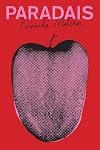
That Paradais is well written and conceived does not prevent it from being a grueling, unpleasant read. Melchor successfully puts the reader in the protagonist's mind, but that turned out to be a place I didn't want to be. Polo's run-on sentence existence is full of oppressive and redundant loops of wishful thinking, intensely graphic sexual braggadocio, physical and emotional child abuse, ennui, misogyny, the violence of poverty and limited prospects, and stillborn hopes. The heightened show more frenzy of the denouement is almost as a relief: at last the shoe has dropped. I loved the closing paragraphs, which reminded me of something I read of Leonard Peltier's once about how guilt has many voices but innocence believes in itself more strongly since it has only one voice that repeats 'I didn't do it' over and over. Anyway, I was nothing short of relieved once I turned that final, devastating page. show less
Why am I still reading this, I asked myself soon after I opened the book. It is an assault... A brutal monsoon of broken glass... A mudslide of filth and depravity mixed with blood and myth and an endless ocean of every human perversity... It took my breath away, and not in a good way, but in the way of an entire nation sitting on my chest and punching me in the throat.
Why do I want to keep reading, I asked myself part-way through? It is pornography and bloody horror; racism and misogyny of show more the most degrading type; exploitation and torture for the gratification of spectators. It is starvation and disease, drug addiction and narco-terror, deprivation and abuse... and I should turn away.
Why did I read it through -- every word, including the acknowledgments and the copyright pages?
Because it was true. True like the epigraph: "Some of the events described here are real. All of the characters are invented." True -- not like in true crime or non-fiction or fact-checked, investigated, annotated, footnoted reality. But true like the distillation of everyday life in poverty and despair in most of the world which I will never see.
Because it was a howling shrieking cacophony of pain from voices that were still recognizably human. Voices I could choose to shut out even if they couldn't choose to stop screaming. show less
Why do I want to keep reading, I asked myself part-way through? It is pornography and bloody horror; racism and misogyny of show more the most degrading type; exploitation and torture for the gratification of spectators. It is starvation and disease, drug addiction and narco-terror, deprivation and abuse... and I should turn away.
Why did I read it through -- every word, including the acknowledgments and the copyright pages?
Because it was true. True like the epigraph: "Some of the events described here are real. All of the characters are invented." True -- not like in true crime or non-fiction or fact-checked, investigated, annotated, footnoted reality. But true like the distillation of everyday life in poverty and despair in most of the world which I will never see.
Because it was a howling shrieking cacophony of pain from voices that were still recognizably human. Voices I could choose to shut out even if they couldn't choose to stop screaming. show less
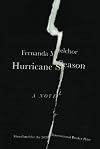
Reminiscent of Roberto Bolano's 2066 in its fierce, unflinching portrait of evil, Melchor's third novel limns the blighted lives of the residents of Villagarbodas, a place where drugs, drink, and sex provide the only relief from the violence, squalor, and ignorance that haunt them. Based on the real-life murder of an alleged witch in Melchor's home state of Veracruz, the novel unspools in long, unbroken, Garcia Marquez-like chapters narrated by a revolving cast of characters: the show more perpetrators, one of the perp's mother and stepfather, a young runaway pregnant with her stepfather's child. The language Melchor uses to tell her tale (with an able assist from translator Sophie Hughes) is vivid and searing, an apt reflection of her characters' rage and frustration, while the banal brutality she captures -- an almost nihilistic embrace of every bad impulse a human being could have -- is at once arresting and disturbing. Not for the faint of heart, Hurricane Season is a stark reminder that, for too many on this planet, Hobbes' pessimistic view of human nature is an all-but-inescapable reality. show less
Lists
Awards


You May Also Like


Associated Authors
Statistics
- Works
- 8
- Members
- 1,866
- Popularity
- #13,791
- Rating
- 3.8
- Reviews
- 57
- ISBNs
- 72
- Languages
- 10
- Favorited
- 3
