
Samanta Schweblin
Author of Fever Dream
About the Author
Works by Samanta Schweblin
Un hombre sin suerte 2 copies
Toward Happy Civilization 1 copy
Associated Works
Granta 113: The Best of Young Spanish Language Novelists (2011) — Contributor — 165 copies, 3 reviews
Tagged
Common Knowledge
- Canonical name
- Schweblin, Samanta
- Birthdate
- 1978
- Gender
- female
- Occupations
- writer
- Nationality
- Argentina
- Birthplace
- Buenos Aires, Argentina
- Map Location
- Argentina
Members
Reviews
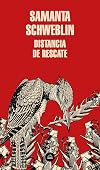
I read this book in Spanish because, well, I'm from Argentina and so is the author of this book. But I decided to write the review in English so it might reach more people, because I've read several reviews saying they didn't understand anything that happens. This is completely understandable. You need to read this book at least twice to fully catch all the hints. Maybe I can shine some light on that. Not that I'm a genius at analyzing literature (although I did analyze this novel for a show more paper I had to write for college), but being from Argentina does give me some insight into what the underlying subject of this novel is, which many people don't seem to see.
SPOILERS AHEAD.
The story is about a woman, Amanda, and her daughter, Nina, who go on vacation to the country to get away from the craziness of the city and experience some peace and quiet. But all that goes to hell when Amanda meets Carla. Carla tells her the story of how her son, David, got sick and hasn't been the same since the town's healer cured him by moving part of his soul to a different body. Since then, Amanda starts getting paranoid and scared for her daughter's safety. She's always calculating the "rescue distance" to always know how long it would take her to reach Nina in the event of danger. This thread that joins mother and daughter gets so twisted that, when there actually is danger, Amanda doesn't notice. That's how she and Nina get poisoned when they sit on some wet grass.
The story is told through the dialogue between David (Carla's son) and Amanda in the emergency room to which Amanda gets sent after she is poisoned. David is pushing Amanda to remember how she got to the emergency room, always telling her they're running out of time because she's dying.
There's palpable tension from beginning to end because, when David rushes Amanda to skip the unimportant details, he is also rushing us, asking us to read faster or else Amanda will die without knowing what happened to her. There is a constant sense of imminent danger.
What a fantastic first line. Honestly, I was gripped instantly. And it sets the tense, dark tone of the novel perfectly. The tension is accomplished by making us feel that we're running out of time and by giving the reader very subtle hints of information. The dark tone is set by the twisted mother-child relationship that both Amanda and Carla have. On one hand, you have Carla, who is terrified of her son after he loses half of his soul and no longer acts like the boy she knows and is creepy as hell, almost like an empty shell. On the other hand, you have Amanda, who is obsessed with her daughter's safety even when there's no sign of danger anywhere. The loving mother-child relationship gets shown in such a dark, twisted way that it's impossible not feel disturbed.
And then you have the fantasy elements. This is what most people don't see: there really aren't any other fantasy elements besides the "soul migration" the healer uses to help cure the poisoning. It seems most people see the dead animals, the poison, and the deformed kids as fantasy or horror elements. From the dark tone of the novel and its confusing way of revealing information, it would be easy to mistake them as such. But the truth is all of that is actually the most realistic elements of the novel. The animals dropping dead for no reason, the grass and the water being poisonous and the kids being deformed are the consecuenses of a herbicide called glyphosate, which is commonly used in our farms in Argentina. It's highly toxic and is known to cause all the things shown in this novel. From the way this novel is written, it's amazing how you can't tell these are real things unless you're aware of the situation in our farms. It is so implicit it actually seems like it's one of the fantasy elements of the novel.
This short novel has a fantastic mix of suspense, horror and fantasy. It is hard to understand on the first read, you need at least two. It's a weird novel, it has weird written all over it, which is what makes it so amazing. It is told in a very non-linear way, so it's very confusing unless you already know what happens. The entire thing is actually one big flashback, with smaller flashbacks in between. It's Amanda in the emergency room telling her story to David, but inside that story there is also the story Carla tells her about David. And at the very end you have a flashforward. David shows Amanda the future after she's died, to show her Nina survived the poisoning thanks to the soul migration. It is also hinted that David was the one who received that piece of Nina's soul, since he sits on the car in the same position Nina did.
Recommended for those who like a challenge and those who can stomach the creepy and the disturbing. show less
SPOILERS AHEAD.
The story is about a woman, Amanda, and her daughter, Nina, who go on vacation to the country to get away from the craziness of the city and experience some peace and quiet. But all that goes to hell when Amanda meets Carla. Carla tells her the story of how her son, David, got sick and hasn't been the same since the town's healer cured him by moving part of his soul to a different body. Since then, Amanda starts getting paranoid and scared for her daughter's safety. She's always calculating the "rescue distance" to always know how long it would take her to reach Nina in the event of danger. This thread that joins mother and daughter gets so twisted that, when there actually is danger, Amanda doesn't notice. That's how she and Nina get poisoned when they sit on some wet grass.
The story is told through the dialogue between David (Carla's son) and Amanda in the emergency room to which Amanda gets sent after she is poisoned. David is pushing Amanda to remember how she got to the emergency room, always telling her they're running out of time because she's dying.
There's palpable tension from beginning to end because, when David rushes Amanda to skip the unimportant details, he is also rushing us, asking us to read faster or else Amanda will die without knowing what happened to her. There is a constant sense of imminent danger.
They're like worms.
What a fantastic first line. Honestly, I was gripped instantly. And it sets the tense, dark tone of the novel perfectly. The tension is accomplished by making us feel that we're running out of time and by giving the reader very subtle hints of information. The dark tone is set by the twisted mother-child relationship that both Amanda and Carla have. On one hand, you have Carla, who is terrified of her son after he loses half of his soul and no longer acts like the boy she knows and is creepy as hell, almost like an empty shell. On the other hand, you have Amanda, who is obsessed with her daughter's safety even when there's no sign of danger anywhere. The loving mother-child relationship gets shown in such a dark, twisted way that it's impossible not feel disturbed.
And then you have the fantasy elements. This is what most people don't see: there really aren't any other fantasy elements besides the "soul migration" the healer uses to help cure the poisoning. It seems most people see the dead animals, the poison, and the deformed kids as fantasy or horror elements. From the dark tone of the novel and its confusing way of revealing information, it would be easy to mistake them as such. But the truth is all of that is actually the most realistic elements of the novel. The animals dropping dead for no reason, the grass and the water being poisonous and the kids being deformed are the consecuenses of a herbicide called glyphosate, which is commonly used in our farms in Argentina. It's highly toxic and is known to cause all the things shown in this novel. From the way this novel is written, it's amazing how you can't tell these are real things unless you're aware of the situation in our farms. It is so implicit it actually seems like it's one of the fantasy elements of the novel.
This short novel has a fantastic mix of suspense, horror and fantasy. It is hard to understand on the first read, you need at least two. It's a weird novel, it has weird written all over it, which is what makes it so amazing. It is told in a very non-linear way, so it's very confusing unless you already know what happens. The entire thing is actually one big flashback, with smaller flashbacks in between. It's Amanda in the emergency room telling her story to David, but inside that story there is also the story Carla tells her about David. And at the very end you have a flashforward. David shows Amanda the future after she's died, to show her Nina survived the poisoning thanks to the soul migration. It is also hinted that David was the one who received that piece of Nina's soul, since he sits on the car in the same position Nina did.
Recommended for those who like a challenge and those who can stomach the creepy and the disturbing. show less
‘’Madness scares you, it distracts you, but you have to look at it closely.’’
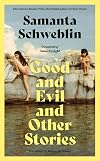
I have read Samanta Schweblin’s work extensively, and each time, I’m struck anew by the power of her writing. In just ten to twenty pages, she constructs riddles—quiet, contained, yet charged with emotional and psychological weight—that can spark hours of discussion. She transforms the mundane into the disturbing, turning everyday encounters into moments of quiet terror. If Fernanda Melchor tests the show more limits of your sanity with supernatural dread bleeding into reality, Schweblin does the opposite: she takes familiar relationships and recognisable emotions and quietly corrupts them. She invites you to reconsider what it means to age, to belong, to parent, to survive in a world where madness spreads silently, like an infection you didn’t know you were carrying.
The new collection, Good and Evil and Other Stories, published in 2025, continues her exploration of psychological fragility with chilling precision. The stories are brief but relentless. They don’t rely on overt horror or shock—they work like whispers at the edge of your mind, asking unsettling questions in deceptively ordinary settings.
‘’Mommy, are you happy?’’
Welcome to the Club: The story opens with a woman’s failed suicide attempt. What becomes immediately clear is that she is deeply depressed—but why? What has driven her to make a decision that would leave her two daughters without a mother? And who is the strange neighbour, the Hunter, who seems to know everything about her?
A story that raises a million questions and deliberately leaves the answers to the reader.
A Fabulous Animal: Two old friends talk on the phone. One of them is always on the run. The other is dying. After so many years, the only thing that unites them is the death of a boy and a horse…
William in the Window: In a writer’s retreat, two women become friends, sharing their worries about the ones they have left at home. One is afraid her husband will die without her. The other is afraid for her cat and gives little thought to her husband. How do you accept that kind of distance when your own partner is dying of cancer? And what does it mean when a dead animal appears to be watching you?
A quiet tale about the companionship of marriage—or the absence of it—and the human need to cling to whatever anchor life offers
‘’But at night, if the phone rings and my father picks up, no one answers.’’
An Eye in the Throat: Narrated by a precociously bright two-year-old, this is the story of a single moment that leads to the collapse of a family. As is often the case in Schweblin’s fiction, every page holds layers of secrets, instincts, confessions, and quiet mysteries.
One of the saddest stories I’ve ever read—deeply memorable and quietly haunting. A poignant study of a fractured bond between father and son.
‘’And you two?’’, he asked. ‘’What do you do to keep from getting bored?’’
My sister said, ‘’We sneak into other people’s houses.’’
The Woman from Atlantida: The visit of a client takes the narrator back to a summer of her childhood when she and her sister encountered mysterious characters such as a woman poet who seems to be coming from a different time. The story of an unsettling summer, of sisterhood, loneliness and addictions, of the kindness of children, the isolation that comes with age, and the moments of disaster that always find us unaware.
A Visit from the Chief: Unfortunately, this story fell flat for me and made little sense. It follows a troubled 60-year-old woman who can’t seem to decide whether she loves her daughter or resents her, while her mother and another elderly woman engage in bizarre antics at a hospice. Add a repulsive male character to the mix, and you’re left with a disappointing, disjointed narrative.
A weak and confusing ending to an otherwise haunting and incisive collection.
Despite its uneven conclusion, Good and Evil and Other Stories confirms once again Samanta Schweblin’s mastery of the short story form. Her writing is precise, eerie, and emotionally complex—never offering easy answers, but always provoking thought. These stories linger long after the last page, unsettling in the best possible way. For readers drawn to quiet horror, psychological unease, and the emotional fissures of ordinary life, this collection is well worth reading.
‘’Why don’t you talk to me?’’, asked the woman. ‘’Why don’t you ask me things?’’
Many thanks to Pan Macmillan and NetGalley for the ARC in exchange for an honest review.
My reviews can also be found on https://theopinionatedreaderblog.wordpress.com/ show less
I have read Samanta Schweblin’s work extensively, and each time, I’m struck anew by the power of her writing. In just ten to twenty pages, she constructs riddles—quiet, contained, yet charged with emotional and psychological weight—that can spark hours of discussion. She transforms the mundane into the disturbing, turning everyday encounters into moments of quiet terror. If Fernanda Melchor tests the show more limits of your sanity with supernatural dread bleeding into reality, Schweblin does the opposite: she takes familiar relationships and recognisable emotions and quietly corrupts them. She invites you to reconsider what it means to age, to belong, to parent, to survive in a world where madness spreads silently, like an infection you didn’t know you were carrying.
The new collection, Good and Evil and Other Stories, published in 2025, continues her exploration of psychological fragility with chilling precision. The stories are brief but relentless. They don’t rely on overt horror or shock—they work like whispers at the edge of your mind, asking unsettling questions in deceptively ordinary settings.
‘’Mommy, are you happy?’’
Welcome to the Club: The story opens with a woman’s failed suicide attempt. What becomes immediately clear is that she is deeply depressed—but why? What has driven her to make a decision that would leave her two daughters without a mother? And who is the strange neighbour, the Hunter, who seems to know everything about her?
A story that raises a million questions and deliberately leaves the answers to the reader.
A Fabulous Animal: Two old friends talk on the phone. One of them is always on the run. The other is dying. After so many years, the only thing that unites them is the death of a boy and a horse…
William in the Window: In a writer’s retreat, two women become friends, sharing their worries about the ones they have left at home. One is afraid her husband will die without her. The other is afraid for her cat and gives little thought to her husband. How do you accept that kind of distance when your own partner is dying of cancer? And what does it mean when a dead animal appears to be watching you?
A quiet tale about the companionship of marriage—or the absence of it—and the human need to cling to whatever anchor life offers
‘’But at night, if the phone rings and my father picks up, no one answers.’’
An Eye in the Throat: Narrated by a precociously bright two-year-old, this is the story of a single moment that leads to the collapse of a family. As is often the case in Schweblin’s fiction, every page holds layers of secrets, instincts, confessions, and quiet mysteries.
One of the saddest stories I’ve ever read—deeply memorable and quietly haunting. A poignant study of a fractured bond between father and son.
‘’And you two?’’, he asked. ‘’What do you do to keep from getting bored?’’
My sister said, ‘’We sneak into other people’s houses.’’
The Woman from Atlantida: The visit of a client takes the narrator back to a summer of her childhood when she and her sister encountered mysterious characters such as a woman poet who seems to be coming from a different time. The story of an unsettling summer, of sisterhood, loneliness and addictions, of the kindness of children, the isolation that comes with age, and the moments of disaster that always find us unaware.
A Visit from the Chief: Unfortunately, this story fell flat for me and made little sense. It follows a troubled 60-year-old woman who can’t seem to decide whether she loves her daughter or resents her, while her mother and another elderly woman engage in bizarre antics at a hospice. Add a repulsive male character to the mix, and you’re left with a disappointing, disjointed narrative.
A weak and confusing ending to an otherwise haunting and incisive collection.
Despite its uneven conclusion, Good and Evil and Other Stories confirms once again Samanta Schweblin’s mastery of the short story form. Her writing is precise, eerie, and emotionally complex—never offering easy answers, but always provoking thought. These stories linger long after the last page, unsettling in the best possible way. For readers drawn to quiet horror, psychological unease, and the emotional fissures of ordinary life, this collection is well worth reading.
‘’Why don’t you talk to me?’’, asked the woman. ‘’Why don’t you ask me things?’’
Many thanks to Pan Macmillan and NetGalley for the ARC in exchange for an honest review.
My reviews can also be found on https://theopinionatedreaderblog.wordpress.com/ show less
A creepy, claustrophobic novel exploring our relationship with technology and with ourselves, the nature of freedom and capitalism, and how easy it is to make strong, often indelible judgments based on a limited perspective and very little information. I'll be seeking out more by Samanta Schweblin.
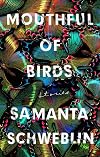
Fever Dream (Schweblin's novella published in English in 2017) is one of my favorite books -- precisely written and haunting, it captures the anxieties of motherhood amazingly well. So I was very excited to read this collection of short stories. From what I understand, Mouthful of Birds was originally published in Spanish in 2010 (and in English in 2019). Fever Dream was originally published in Spanish in 2014 (and published in English in 2017). Meaning the stories in Mouthful of Birds were show more originally written some time before Fever Dream. Some of these stories do feel like an author's early work. Rather than finding that a negative, I find it exciting to get to see how Schweblin's writing has progressed (and it makes me excited for what Schweblin will be publishing next). She is not a static writer by any means and appears interested in exploring and poking at boundaries. Two stories in this collection are some of my favorite short stories ever: "Olingiris" and "A Great Effort." ("A Great Effort" had interesting hints of Fever Dream - "Then the boy put down the puppet and he looked out from the stage himself. He hid behind the curtain for a few seconds and then appeared again. The pain he felt every time his son disappeared was something brutal. Every time the boy hid behind the curtain again, an invisible thread pulled at him violently."!!). These two pieces are odd, emotional, subtle, and moving in the best way. Other favorites from this collection include "Mouthful of Birds," "Heads Against Concrete," "Underground" (creepy story about parenthood, also reminded me of Fever Dream a little), and "On the Steppe." Some of the other stories I didn't connect with as much, but I think that's expected in a collection. show less
Lists
Awards


You May Also Like


Associated Authors
Statistics
- Works
- 36
- Also by
- 5
- Members
- 3,843
- Popularity
- #6,592
- Rating
- 3.7
- Reviews
- 188
- ISBNs
- 181
- Languages
- 18
- Favorited
- 6
