
Mariana Enríquez
Author of Our Share of Night
About the Author
Works by Mariana Enríquez
The Well 1 copy
Kids Who Come Back 1 copy
No Birthdays or Baptisms 1 copy
Meat 1 copy
Where Are You, Dear Heart? 1 copy
The Lookout 1 copy
Rambla Triste 1 copy
The Cart 1 copy
Angelita Unearthed 1 copy
A tűz martaléka 1 copy
Nunca cruces ese umbral: Los himnos de las hienas, La casa de Adela, El mirador (Spanish Edition) (2026) 1 copy
Bahaya Merokok di Ranjang 1 copy
Nossa Parte de Noite 1 copy
Associated Works
McSweeney's 46: Thirteen Crime Stories from Latin America (2014) — Contributor — 101 copies, 5 reviews
Through the Night Like a Snake: Latin American Horror Stories (Calico Series) (2024) — Contributor — 73 copies, 1 review
Tagged
Common Knowledge
- Canonical name
- Enríquez, Mariana
- Birthdate
- 1973
- Gender
- female
- Education
- Universidad Nacional de La Plata
- Occupations
- journalist
- Short biography
- Mariana Enríquez (Buenos Aires, 1973) es una periodista y escritora argentina. Forma parte del grupo de escritores conocidos como «nueva narrativa argentina».2
Se recibió de licenciada en Comunicación Social en la Universidad Nacional de La Plata. Se ha desempeñado profesionalmente como periodista y columnista en medios gráficos, como el suplemento Radar del diario Página/12 (donde es subeditora) y las revistas TXT, La Mano, La Mujer de mi Vida y El Guardián. También participó en radio, como columnista en el programa Gente de a pie, por Radio Nacional.
Trabajó como jurado en concursos literarios y dictó talleres de escritura en la fundación Tomás Eloy Martínez. - Nationality
- Argentina
- Birthplace
- Buenos Aires, Argentina
- Map Location
- Argentina
Members
Discussions
THE DEEP ONES: "The Little Angel's Exhumation" by Mariana Enriquez in The Weird Tradition (June 2024)
THE DEEP ONES: "My Sad Dead" by Mariana Enriquez in The Weird Tradition (January 2024)
Reviews
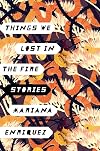
From the first page this collection made me remember how much I love stories that are macabre, unexpected, or full of dread. These stories both seem very contemporary, and seem completely connected with the magnificent stories of the macabre of past eras--stories that I have read over and over again, like The Monkey's Paw by Saki, and The Horla by de Maupassant, and The Most Dangerous Game by Connell, and anything ever written by Poe. What is different about Enriquez's stories--startlingly, show more shockingly, eye-opening-ly different--is how deeply they are connected with a female perspective. Female fears. Female dreads. I say "eye-opening" because I never really understood how masculine these old stories are--not even The Most Dangerous Game which is about two men on an island in a life-and-death battle for survival and not a woman to be seen or heard from. I was totally captivated by these stories and delighted to have found a new author and a new contemporary voice to follow. show less
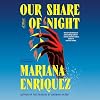
There’s a heaviness in this book that, while indeed long, is more about the horrors humans inflict upon each other, especially for greed. Cruelty and trauma are side by side in each chapter. I started it full of curiosity but that feeling quickly built into a gross miasma as I read. Folk magic and disturbed secret societies gather around power where they can find it and get rid of anyone necessary along the way. If you like the dark, you’ll enjoy the humanity in the book as well. If you show more don’t, I don’t recommend it. show less
The stories in Things We Lost in the Fire are dark, unsettling and powerful. Mariana Enríquez uses horror and the uncanny to explore women's lives, from schoolgirls to grown women, some impoverished, some wealthy, most reaching for levels of independence or to carve out some space for themselves in the world.
One story tells of three friend drink and drug their way through their young years, a partying haze. Part of the beauty "The Intoxicated Years" is the breathless quality of the prose, show more moment rushing into moment as the girls rage through their days. At first, it seems a story of reckless freedom, but it becomes clear that all of their adventures are underpinned with a growing viscousness that's beautifully powerful and raw.
In "Spiderweb," a woman feels bored and trapped by the marriage she rushed into, and when she brings her husband to visit her family, she's embarrassed and repelled by him with every passing moment. One a trip with her cousin Natalia and her husband to Asunción (an open market offering mostly knockoffs or illegal items), her frustration comes to the surface. I love the way this story builds on the feeling of being stuck by the choices you've made.
"No Flesh Over Our Bones" is the story of a woman finds a human skull, rings it home and names it Vera. The woman becomes more and more obsessed with the skull, desiring to make it whole again. The story approaches the realm of body horror as it explores women's relationships to their bodies.
In "Under the Black Water," Marina is an attorney who works with the people who live in impoverished in the slums of Buenos Aires. She learns that strange things, including a dead man coming up out of the water, are happening in the slums. When Marina investigates, events grow more and more disturbing in a way that feels Lovecraftian. This is one of my favorite stories in the collection. I love the main character and how the story is both grittily realistic and strange in the ways it explores poverty and environmentalism.
Among the most disturbing and powerful stories for me was "Things We Lost in the Fire." Body horror is a key trope in this story, in which women claim their own lives and bodies by setting themselves on fire and living in the world with their scars proudly shown. The scars are presented by this movement of women as a new kind of beauty, with fearlessness and a fervor, and yet.
I'm looking forward to reading more work by Enríquez. show less
One story tells of three friend drink and drug their way through their young years, a partying haze. Part of the beauty "The Intoxicated Years" is the breathless quality of the prose, show more moment rushing into moment as the girls rage through their days. At first, it seems a story of reckless freedom, but it becomes clear that all of their adventures are underpinned with a growing viscousness that's beautifully powerful and raw.
In "Spiderweb," a woman feels bored and trapped by the marriage she rushed into, and when she brings her husband to visit her family, she's embarrassed and repelled by him with every passing moment. One a trip with her cousin Natalia and her husband to Asunción (an open market offering mostly knockoffs or illegal items), her frustration comes to the surface. I love the way this story builds on the feeling of being stuck by the choices you've made.
"No Flesh Over Our Bones" is the story of a woman finds a human skull, rings it home and names it Vera. The woman becomes more and more obsessed with the skull, desiring to make it whole again. The story approaches the realm of body horror as it explores women's relationships to their bodies.
In "Under the Black Water," Marina is an attorney who works with the people who live in impoverished in the slums of Buenos Aires. She learns that strange things, including a dead man coming up out of the water, are happening in the slums. When Marina investigates, events grow more and more disturbing in a way that feels Lovecraftian. This is one of my favorite stories in the collection. I love the main character and how the story is both grittily realistic and strange in the ways it explores poverty and environmentalism.
Among the most disturbing and powerful stories for me was "Things We Lost in the Fire." Body horror is a key trope in this story, in which women claim their own lives and bodies by setting themselves on fire and living in the world with their scars proudly shown. The scars are presented by this movement of women as a new kind of beauty, with fearlessness and a fervor, and yet.
I'm looking forward to reading more work by Enríquez. show less
 This review was written for LibraryThing Early Reviewers.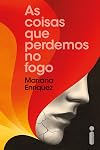
Mariana Enríquez escreve sobre uma Argentina que não conhecemos, oculta nas sobras de Buenos Aires e cidades menos conhecidas. Pessoas em situação de rua, adolescentes para quem os pais não olham com a devida atenção, gente solitária angustiada por situações incomuns, que beiram o sobrenatural. Leitura instigante, por vezes perturbadora.
Lists
For Commonweal (2)
Stuff from Bard (1)
Netgalley Reads (1)
Reading Now (1)
Best of 2017 (1)
Books for Birute (2)
Books for Dustin (1)
Awards


You May Also Like


Associated Authors
Statistics
- Works
- 40
- Also by
- 7
- Members
- 5,129
- Popularity
- #4,861
- Rating
- 3.9
- Reviews
- 232
- ISBNs
- 182
- Languages
- 16
- Favorited
- 10
