
Yuri Herrera
Author of Signs Preceding the End of the World
About the Author
Yuri Herrera was born in Actopan, Mexico, in 1970. He earned his PhD for Hispanic Language and Literature from UC Berkeley. He teaches at the University of Tulane, in New Orleans. Signs Preceding the End of the World, is his first novel in English. He and translator Lisa Dillman won the Best show more Translated Book Award 2016 from the University of Rochester's Three Percent blog and funded by Amazon's literary partnerships program. His latest work includes The Transmigration of Bodies (July 2016). (Bowker Author Biography) show less
Series
Works by Yuri Herrera
Associated Works
McSweeney's 46: Thirteen Crime Stories from Latin America (2014) — Contributor — 101 copies, 5 reviews
Lunatics, Lovers and Poets: Twelve Stories after Cervantes and Shakespeare (2016) — Contributor — 37 copies
Tagged
Common Knowledge
- Birthdate
- 1970
- Gender
- male
- Nationality
- Mexico
- Birthplace
- Actopan, Mexico
- Associated Place (for map)
- Actopan, Mexico
Members
Reviews
CW: enslavement
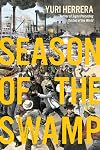
I want to call Yuri Herrera's Season of the Swamp "a fever-dream of a novel." I may have used that line before, but, in this case, it is so apt that I'm going with it. Season of the Swamp is built around an 18-month period during which Benito Juárez, exiled from of Mexico, lived in New Orleans. Not much is known about this period, so the book presents Herrera's imaginings about that period—and his imaginings ring true and are presented in downright lovely prose.
Part of the show more fever-dream nature of this novel is that it includes a summer epidemic of yellow fever, during which Juárez does have fever dreams. But even when Juárez is hale, the novel proceeds in a dream-like fashion—which seems to me to be utterly appropriate given the tale the novel tells.
Herrera's prose is perfectly suited to the time and to Juárez's situation. Occasionally, there are long, undulating sentences: "He got out [of a staged bear fight] as fast as he could feeling that these were experiences he had no right to, the roaring distress of the bears, but also the portent of the drums, but also the swampiness of those chaotic days as well as the swamp-swamp beneath his feet, but also that trumpet like a spike of wind at the coffeeshop, the brothel, but the pianos, but the sound, the unbearable sound hammering his brain so loud that when he finally reached the quadrant [where he lived] he didn't even recognize it, it had all become the clamor of celebration, it was all foreign, he turned down a street, did not know it, turned down two others, did not know them, walked on for several blocks, slipped down a alley, which he suddenly realized was not an alley but the walkway to a house, which led to the silence, and the stillness, of an inner courtyard." Herrera doesn't overdo it; this is not the usual sentence of the novel, but it fits its moment well, sweeping readers along sharing the overwhelm and disorientation of Juárez.
**This is a good moment to note the deftness of the translation done by Lisa Dillman. Her linguistic flexibility and precision perfectly matches Juárez's.**
If you're curious about Juárez's life, the Wikipedia write-up is clear and will give you a sense of Juárez's role in history: "Of Zapotec ancestry, he was the first indigenous president of Mexico[a] and the first democratically elected indigenous president in the postcolonial Americas. A member of the Liberal Party, he previously held a number of offices, including the governorship of Oaxaca and the presidency of the Supreme Court. During his presidency he led the Liberals to victory in the Reform War and in the Second French intervention in Mexico." There's more, but this gives a sense of the scope of his abilities and life story.
In season Season of the Swamp, Juárez is neither statesman nor soldier. He's an exile making his living via whatever work he can find—cigar rolling, delivering fliers and other printed material—struggling to pay for even basic accommodations. He and his compañero Pepe are learning New Orleans with by going on long walks, drinking endless cups of coffee, and attempting to avoid the attentions of the law.
Herrera's Juárez is attuned to the injustices of the time: an economy built around the buying and selling of human beings, the nuances of a society in which one's position was determined by the color of one's skin. Slaves are no longer being "imported" into the U.S., so there's a detestable grow-your-own emphasis on breeding and the production of children as "endless capital." Just let that sink in.
Season of the Swamp is a deceptively quick read—which is good, as it merits more than one reading. Give yourself over to it,
I received a free electronic review copy of this title from the publisher via Edelweiss; the opinions are my own. show less
I want to call Yuri Herrera's Season of the Swamp "a fever-dream of a novel." I may have used that line before, but, in this case, it is so apt that I'm going with it. Season of the Swamp is built around an 18-month period during which Benito Juárez, exiled from of Mexico, lived in New Orleans. Not much is known about this period, so the book presents Herrera's imaginings about that period—and his imaginings ring true and are presented in downright lovely prose.
Part of the show more fever-dream nature of this novel is that it includes a summer epidemic of yellow fever, during which Juárez does have fever dreams. But even when Juárez is hale, the novel proceeds in a dream-like fashion—which seems to me to be utterly appropriate given the tale the novel tells.
Herrera's prose is perfectly suited to the time and to Juárez's situation. Occasionally, there are long, undulating sentences: "He got out [of a staged bear fight] as fast as he could feeling that these were experiences he had no right to, the roaring distress of the bears, but also the portent of the drums, but also the swampiness of those chaotic days as well as the swamp-swamp beneath his feet, but also that trumpet like a spike of wind at the coffeeshop, the brothel, but the pianos, but the sound, the unbearable sound hammering his brain so loud that when he finally reached the quadrant [where he lived] he didn't even recognize it, it had all become the clamor of celebration, it was all foreign, he turned down a street, did not know it, turned down two others, did not know them, walked on for several blocks, slipped down a alley, which he suddenly realized was not an alley but the walkway to a house, which led to the silence, and the stillness, of an inner courtyard." Herrera doesn't overdo it; this is not the usual sentence of the novel, but it fits its moment well, sweeping readers along sharing the overwhelm and disorientation of Juárez.
**This is a good moment to note the deftness of the translation done by Lisa Dillman. Her linguistic flexibility and precision perfectly matches Juárez's.**
If you're curious about Juárez's life, the Wikipedia write-up is clear and will give you a sense of Juárez's role in history: "Of Zapotec ancestry, he was the first indigenous president of Mexico[a] and the first democratically elected indigenous president in the postcolonial Americas. A member of the Liberal Party, he previously held a number of offices, including the governorship of Oaxaca and the presidency of the Supreme Court. During his presidency he led the Liberals to victory in the Reform War and in the Second French intervention in Mexico." There's more, but this gives a sense of the scope of his abilities and life story.
In season Season of the Swamp, Juárez is neither statesman nor soldier. He's an exile making his living via whatever work he can find—cigar rolling, delivering fliers and other printed material—struggling to pay for even basic accommodations. He and his compañero Pepe are learning New Orleans with by going on long walks, drinking endless cups of coffee, and attempting to avoid the attentions of the law.
Herrera's Juárez is attuned to the injustices of the time: an economy built around the buying and selling of human beings, the nuances of a society in which one's position was determined by the color of one's skin. Slaves are no longer being "imported" into the U.S., so there's a detestable grow-your-own emphasis on breeding and the production of children as "endless capital." Just let that sink in.
Season of the Swamp is a deceptively quick read—which is good, as it merits more than one reading. Give yourself over to it,
I received a free electronic review copy of this title from the publisher via Edelweiss; the opinions are my own. show less

Read for my writerly book group. A young Mexican woman crosses the US border to seek her brother. She is brave and observant and resourceful. The book is written in short intense bursts, very cinematic, really. One could read this book several times, pick it apart, and find it breaktakingly well thought out and put together. But the takeaway will remain the same: Crossing borders must never be taken lightly. And some borders in particular change the one who crosses, a death occurs, not show more necessarily literal, but powerfully life-changing. Nothing will be the same after. Kind of a five star, but I was left . . . annoyed by the ambiguity of the ending, thought it unnecessary. His choice, fine. ****1/2 show less
Literary modernism/absurdism is alive and well and living in postmodern Mexico and its grim borderland with the USA. This, like Flann O'Brien's The Third Policeman, is a recursive infernal vision that only gradually reveals itself to be such, and it's really just about perfect. The only stars off are for the impossibility of translating the linguistic play and multiple registers clearly at work. That's not the translator's fault, it's sheer impossibility. Her afterword is really helpful in show more making the reader understand just how impossible. show less
Rating: 4.5* of five
The Publisher Says: New Orleans, 1853. A young exile named Benito Juárez disembarks at a fetid port city at the edge of a swamp. Years later, he will become the first indigenous head of state in the postcolonial Americas, but now he is as anonymous and invisible as any other migrant to the roiling and alluring city of New Orleans.
Accompanied by a small group of fellow exiles who plot their return and hoped-for victory over the Mexican dictatorship, Juárez immerses show more himself in the city, which absorbs him like a sponge. He and his compatriots work odd jobs, suffer through the heat of a southern summer, fall victim to the cons and confusions of a strange young nation, succumb to the hallucinations of yellow fever, and fall in love with the music and food all around them. But unavoidable, too, is the grotesque traffic in human beings they witness as they try to shape their future.
Though the historical archive is silent about the eighteen months Juárez spent in New Orleans, Yuri Herrera imagines how Juárez’s time there prepared him for what was to come. With the extraordinary linguistic play and love of popular forms that have characterized all of Herrera’s fiction, Season of the Swamp is a magnificent work of speculative history, a love letter to the city of New Orleans and its polyglot culture, and a cautionary statement that informs our understanding of the world we live in.
I RECEIVED A DRC FROM THE PUBLISHER VIA EDELWEISS+. THANK YOU.
My Review: A vividly imagined and intensely told expansion on the historical record of President Juárez's exile from Mexico. Arriving in New Orleans, with its slave markets, must've been a shock coming from Mexico thirtyish years after the trade was outlawed and slavery abolished there. Like everything else Juárez thought or felt in those years, though, Author Herrera has had to reconstruct it from the known, more importantly the documented, facts of his later life.
So it is that the events related in this novel can't be verified; there aren't any records in his, or anyone else who was there's, own words what the people around Juárez said, or thought, or felt. This reconstructed tale that relies on the history of New Orleans in 1853 as extensively documented has the feel of verisimilitude. We can't know if Author Herrera got it all, as regards Juárez at least, factually correct, but I can tell you he got it right.
Juárez, as an Indigenous Mexican in the US at that fraught passage in our history, would've seen and been the subject of the nastiest kind of "racial" prejudice. Mexico was no kind of enlightened paradise at this moment, but there was no threat of being kidnapped, then sold into slavery, as the was in the antebellum South. I don't know if one major plot point relating to slavery is factual, but it wouldn't surprise me. In fact I kind of hope it was, even if it wasn't Juárez's own story. (You'll know as soon as you run across it which one I mean.)
If this story has an overriding virtue, it is that it is short enough to be an all-day-and-done read. I think it's going to be hard to put down once you begin it, so that's a very good thing. Among the events rendered all the more effectively for being curtailed in length is Juárez's immigrant journey of acquiring the local language, English, on top of his native Zapotec and the Mexican national tongue Spanish. Three very different grammars, poor bastard, and (as we who speak English first do not realize) extremely complicated to navigate the world in.
Author Herrera's writing style is both evocative and without frills and furbelows, eg: "What are we willing to ignore, or let atrophy, for the right to indolence. What a monstrous thing, comfort." It's not flowery and it's not plain. Translator Dillman is clearly working to a high level and from a highly polished source. This is the kind of work I hope we will get from author, translator, and publisher, as a team or separately, for a long time to come.
Almost five stars for compact, beautiful, concise storytelling. Some minor rubbing of noses cost it a half-star. show less
The Publisher Says: New Orleans, 1853. A young exile named Benito Juárez disembarks at a fetid port city at the edge of a swamp. Years later, he will become the first indigenous head of state in the postcolonial Americas, but now he is as anonymous and invisible as any other migrant to the roiling and alluring city of New Orleans.
Accompanied by a small group of fellow exiles who plot their return and hoped-for victory over the Mexican dictatorship, Juárez immerses show more himself in the city, which absorbs him like a sponge. He and his compatriots work odd jobs, suffer through the heat of a southern summer, fall victim to the cons and confusions of a strange young nation, succumb to the hallucinations of yellow fever, and fall in love with the music and food all around them. But unavoidable, too, is the grotesque traffic in human beings they witness as they try to shape their future.
Though the historical archive is silent about the eighteen months Juárez spent in New Orleans, Yuri Herrera imagines how Juárez’s time there prepared him for what was to come. With the extraordinary linguistic play and love of popular forms that have characterized all of Herrera’s fiction, Season of the Swamp is a magnificent work of speculative history, a love letter to the city of New Orleans and its polyglot culture, and a cautionary statement that informs our understanding of the world we live in.
I RECEIVED A DRC FROM THE PUBLISHER VIA EDELWEISS+. THANK YOU.
My Review: A vividly imagined and intensely told expansion on the historical record of President Juárez's exile from Mexico. Arriving in New Orleans, with its slave markets, must've been a shock coming from Mexico thirtyish years after the trade was outlawed and slavery abolished there. Like everything else Juárez thought or felt in those years, though, Author Herrera has had to reconstruct it from the known, more importantly the documented, facts of his later life.
So it is that the events related in this novel can't be verified; there aren't any records in his, or anyone else who was there's, own words what the people around Juárez said, or thought, or felt. This reconstructed tale that relies on the history of New Orleans in 1853 as extensively documented has the feel of verisimilitude. We can't know if Author Herrera got it all, as regards Juárez at least, factually correct, but I can tell you he got it right.
Juárez, as an Indigenous Mexican in the US at that fraught passage in our history, would've seen and been the subject of the nastiest kind of "racial" prejudice. Mexico was no kind of enlightened paradise at this moment, but there was no threat of being kidnapped, then sold into slavery, as the was in the antebellum South. I don't know if one major plot point relating to slavery is factual, but it wouldn't surprise me. In fact I kind of hope it was, even if it wasn't Juárez's own story. (You'll know as soon as you run across it which one I mean.)
If this story has an overriding virtue, it is that it is short enough to be an all-day-and-done read. I think it's going to be hard to put down once you begin it, so that's a very good thing. Among the events rendered all the more effectively for being curtailed in length is Juárez's immigrant journey of acquiring the local language, English, on top of his native Zapotec and the Mexican national tongue Spanish. Three very different grammars, poor bastard, and (as we who speak English first do not realize) extremely complicated to navigate the world in.
Author Herrera's writing style is both evocative and without frills and furbelows, eg: "What are we willing to ignore, or let atrophy, for the right to indolence. What a monstrous thing, comfort." It's not flowery and it's not plain. Translator Dillman is clearly working to a high level and from a highly polished source. This is the kind of work I hope we will get from author, translator, and publisher, as a team or separately, for a long time to come.
Almost five stars for compact, beautiful, concise storytelling. Some minor rubbing of noses cost it a half-star. show less
Lists
Awards


You May Also Like


Associated Authors
Statistics
- Works
- 14
- Also by
- 3
- Members
- 1,905
- Popularity
- #13,511
- Rating
- 3.9
- Reviews
- 73
- ISBNs
- 76
- Languages
- 9