
Juan Pablo Villalobos
Author of Down the Rabbit Hole
About the Author
Works by Juan Pablo Villalobos
The Other Side: Stories of Central American Teen Refugees Who Dream of Crossing the Border (2014) 72 copies, 1 review
Associated Works
McSweeney's 46: Thirteen Crime Stories from Latin America (2014) — Contributor — 102 copies, 5 reviews
Tagged
Common Knowledge
- Birthdate
- 1973
- Gender
- male
- Nationality
- Mexico
- Birthplace
- Guadalajara, Mexico
- Places of residence
- Guadalajara, Mexico
Barcelona, Spain
Brazil
Members
Reviews
Rating: 4.5* of five
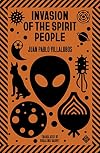
The Publisher Says: Juan Pablo Villalobos’s fifth novel adopts a gentle, fable-like tone, approaching the problem of racism from the perspective that any position as idiotic as xenophobia can only be fought with sheer absurdity.
In an unnamed city, colonised by an unnamed world power, an immigrant named Gastón makes his living selling exotic vegetables to eateries around the city. He has a dog called Kitten, who’s been diagnosed with terminal cancer, and a good friend show more called Max, who’s in a deep depression after being forced to close his restaurant. Meanwhile, Max’s son, Pol, a scientist away on a scientific expedition into the Arctic, can offer little support.
Faced with these dispiriting problems, Gastón begins a quest, or rather three: he must search for someone to put his dog to sleep humanely; he must find a space in which to open a new restaurant with Max; and he must look into the truth behind the news being sent back by Pol: that human life may be the by-product of an ancient alien attempt at colonisation . . . and that those aliens might intend to make a return visit.
I RECEIVED A DRC FROM THE PUBLISHER VIA EDELWEISS+. THANK YOU.
My Review: Alien invasion! Gastón's shared son, Pol, is freaking right out (wouldn't we all!) as he tries to get through Max, his depressed father's, fog to...to what? Gastón, his other father, isn't quite sure what to do about Max's decline into dissociation from his failing business and crumbling participation with the world. But is Gastón sure he believes Pol? Aliens from space made us humans what we are?
Add to the stress of trying to prop up Max, comprehend the influx of aliens from Earth (...or are they...?) and what that means for his and Max's attempts to survive as feeders of the people via growing and cooking food, his quest to find someone he trusts to give Kitten (his aging, ill dog) a good death. This is entirely a story of the humanity of all people, regardless of where they come from or how they define themselves.
A casual reader might see the Asian stereotyping, with mentions of slanting eyes etc etc as endorsing this world-view. I don't think that is accurate, or fair. It seems to me that every step of the story's progress is made in the harsh light of Judgment. No one here, from Gastón (whose exploits we're following closely, as the third-person narrator advises us early on) on down, is spared an unflattering shadow.
As is the norm for Author Villalobos, there is stuff to shock and offend those prone to such histrionics. Avoid the read, then, if you're not prepared to look closely at your own responses to the events unfolding here. I myownself think it's another, less raucous but more reflective, take-down of the structures and maintainers of Power as it's used in the twenty-first century end-stage capitalist world. show less
The Publisher Says: Juan Pablo Villalobos’s fifth novel adopts a gentle, fable-like tone, approaching the problem of racism from the perspective that any position as idiotic as xenophobia can only be fought with sheer absurdity.
In an unnamed city, colonised by an unnamed world power, an immigrant named Gastón makes his living selling exotic vegetables to eateries around the city. He has a dog called Kitten, who’s been diagnosed with terminal cancer, and a good friend show more called Max, who’s in a deep depression after being forced to close his restaurant. Meanwhile, Max’s son, Pol, a scientist away on a scientific expedition into the Arctic, can offer little support.
Faced with these dispiriting problems, Gastón begins a quest, or rather three: he must search for someone to put his dog to sleep humanely; he must find a space in which to open a new restaurant with Max; and he must look into the truth behind the news being sent back by Pol: that human life may be the by-product of an ancient alien attempt at colonisation . . . and that those aliens might intend to make a return visit.
I RECEIVED A DRC FROM THE PUBLISHER VIA EDELWEISS+. THANK YOU.
My Review: Alien invasion! Gastón's shared son, Pol, is freaking right out (wouldn't we all!) as he tries to get through Max, his depressed father's, fog to...to what? Gastón, his other father, isn't quite sure what to do about Max's decline into dissociation from his failing business and crumbling participation with the world. But is Gastón sure he believes Pol? Aliens from space made us humans what we are?
Add to the stress of trying to prop up Max, comprehend the influx of aliens from Earth (...or are they...?) and what that means for his and Max's attempts to survive as feeders of the people via growing and cooking food, his quest to find someone he trusts to give Kitten (his aging, ill dog) a good death. This is entirely a story of the humanity of all people, regardless of where they come from or how they define themselves.
A casual reader might see the Asian stereotyping, with mentions of slanting eyes etc etc as endorsing this world-view. I don't think that is accurate, or fair. It seems to me that every step of the story's progress is made in the harsh light of Judgment. No one here, from Gastón (whose exploits we're following closely, as the third-person narrator advises us early on) on down, is spared an unflattering shadow.
As is the norm for Author Villalobos, there is stuff to shock and offend those prone to such histrionics. Avoid the read, then, if you're not prepared to look closely at your own responses to the events unfolding here. I myownself think it's another, less raucous but more reflective, take-down of the structures and maintainers of Power as it's used in the twenty-first century end-stage capitalist world. show less
Desconcertante talvez seja a melhor palavra para definir essa novela. Sob um véu de simplicidade o autor revela humor, cinismo, loucura enquanto desvenda a intimidade do "lar" de um narcotraficante. Trata-se de universo surrealista e ao mesmo tempo hiperrealista. A loucura é o protagonista que permeia as relações e as revelações se impondo com naturalidade de sanatório. Não é realismo fantástico latino americano nem surrealismo de Lewis Carrol, mas a dura loucura dos psicopatas com show more a leveza impossível de uma criança. Impossível não rir e impossível não ficar incomodado, perplexo e finalmente deprimido. show less
Rating: 4.5* of five
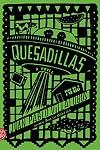
The Publisher Says: It’s the eighties in Lagos de Moreno—a town where there are more cows than people, and more priests than cows—and a poor family struggles to overcome the bizarre dangers of living in Mexico. The father, a high school civics teacher, insists on practicing and teaching the art of the insult, while the mother prepares hundreds of quesadillas to serve to their numerous progeny: Aristotle, Orestes, Archilochus, Callimachus, Electra, Castor, and show more Pollux. Confined to their home, the family bears witness to the revolt against the Institutional Revolutionary Party and their umpteenth electoral fraud. This political upheaval is only the beginning of son Orestes’s adventures and his uproarious crusade against the boredom of rustic life and the tyranny of his older brother.
Both profoundly moving and wildly funny, Juan Pablo Villalobos’s Quesadillas is a satiric masterpiece, chock-full of inseminated cows, Polish immigrants, religious pilgrims, alien spacecraft, psychedelic watermelons, and many, many “your mama” insults.
I RECEIVED AN ARC FROM THE PUBLISHER. THANK YOU.
My Review: I do not think there is another author alive who can make such a painfully, angrily critical book about inequality so damned funny. Foul-mouthed Oreste blasts your wimpy Norteño eyes with some deeply "offensive" cursing, swearing, and blasphemy.
I, of course, loved it.
You need to be warned, though, lest you fall into one of those performative swoons that are so absurd and typical of the US readers. Lots and lots and lots of pearl-clutching fun to be had, of course, howling about your delicate sensibilities! But you can't claim to be blindsided. I'm telling you clearly, now, before you pick it up, that this teenager's mouth is not going to sound good to you.
To me, it was a welcome return to honest, gut-deep youthful outrage at the hideous, genuinely offensive to proper sensibility calibration, social crimes and thefts. Nothing in this flensingly honest shout of outrage should shock you more than the cruelty, the sheer shocking indifference, of the economic elites.
I encourage the easily-offended pearl-clutching fools to read it because it will offend them. They need offending. show less
The Publisher Says: It’s the eighties in Lagos de Moreno—a town where there are more cows than people, and more priests than cows—and a poor family struggles to overcome the bizarre dangers of living in Mexico. The father, a high school civics teacher, insists on practicing and teaching the art of the insult, while the mother prepares hundreds of quesadillas to serve to their numerous progeny: Aristotle, Orestes, Archilochus, Callimachus, Electra, Castor, and show more Pollux. Confined to their home, the family bears witness to the revolt against the Institutional Revolutionary Party and their umpteenth electoral fraud. This political upheaval is only the beginning of son Orestes’s adventures and his uproarious crusade against the boredom of rustic life and the tyranny of his older brother.
Both profoundly moving and wildly funny, Juan Pablo Villalobos’s Quesadillas is a satiric masterpiece, chock-full of inseminated cows, Polish immigrants, religious pilgrims, alien spacecraft, psychedelic watermelons, and many, many “your mama” insults.
I RECEIVED AN ARC FROM THE PUBLISHER. THANK YOU.
My Review: I do not think there is another author alive who can make such a painfully, angrily critical book about inequality so damned funny. Foul-mouthed Oreste blasts your wimpy Norteño eyes with some deeply "offensive" cursing, swearing, and blasphemy.
I, of course, loved it.
You need to be warned, though, lest you fall into one of those performative swoons that are so absurd and typical of the US readers. Lots and lots and lots of pearl-clutching fun to be had, of course, howling about your delicate sensibilities! But you can't claim to be blindsided. I'm telling you clearly, now, before you pick it up, that this teenager's mouth is not going to sound good to you.
To me, it was a welcome return to honest, gut-deep youthful outrage at the hideous, genuinely offensive to proper sensibility calibration, social crimes and thefts. Nothing in this flensingly honest shout of outrage should shock you more than the cruelty, the sheer shocking indifference, of the economic elites.
I encourage the easily-offended pearl-clutching fools to read it because it will offend them. They need offending. show less
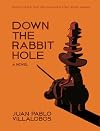
This short novel (more of a novella or novelette really) is a dark comedy about the isolated life of a paranoid drug lord as told by his 10 year old son. Tochti is a motherless kid with some odd interests: samurai, dictionaries and words, and hats, and he really wants a pygmy hippopotamus for his collection. He lives in isolation in a palatial estate, knowing only a few people. His tutor, the cook, the two bodyguards, his father's girlfriend. And Tochti is learning the lingo of the drug show more trade.
I thought the book an interesting and enjoyable read, a sad book because Tochti's innocence in being chipped away at before our eyes. Yet, it's darkly comic, taking something tragic and making it funny and often absurd. It's been highly praised and was short-listed for the Guardian first book prize, but I can't rave about it. Vilalobos is clearly a talented new writer and worth watching. show less
I thought the book an interesting and enjoyable read, a sad book because Tochti's innocence in being chipped away at before our eyes. Yet, it's darkly comic, taking something tragic and making it funny and often absurd. It's been highly praised and was short-listed for the Guardian first book prize, but I can't rave about it. Vilalobos is clearly a talented new writer and worth watching. show less
Lists
Awards


You May Also Like


Associated Authors
Statistics
- Works
- 15
- Also by
- 3
- Members
- 990
- Popularity
- #26,013
- Rating
- 3.7
- Reviews
- 48
- ISBNs
- 85
- Languages
- 9