
Juan Gabriel Vásquez
Author of The Sound of Things Falling
About the Author
Juan Gabriel Vásquez was born in Bogotá, Colombia in 1973. He studied law at the University of Rosario and received a doctorate in Latin American literature at the Sorbonne. He is the author of The Informants (Los Informantes), The Secret History of Costaguana (Historia Secreta de Costaguana), show more and The Sound of Things Falling (El Ruido de las Cosas al Caer), which won International Dublin Literary Award in 2014. (Bowker Author Biography) show less
Image credit: From Wikipedia
Works by Juan Gabriel Vásquez
Associated Works
Lunatics, Lovers and Poets: Twelve Stories after Cervantes and Shakespeare (2016) — Contributor — 37 copies
Tagged
Common Knowledge
- Canonical name
- Vásquez, Juan Gabriel
- Birthdate
- 1973-01-01
- Gender
- male
- Education
- Bogota University (Law)
Sorbonne (Literature) - Occupations
- translator
writer
journalist - Awards and honors
- Premio Roger Caillois (2012)
Premio Real Academia Española (2014)
Alfaguara Novel Prize (2011) - Relationships
- Mariana Montoya (wife)
Martina Vasquez (daughter)
Carlota Vasquez (daughter) - Nationality
- Colombia
- Birthplace
- Bogotá, Colombia
- Places of residence
- Bogotá, Colombia
Barcelona, Spain - Map Location
- Colombia
Members
Reviews
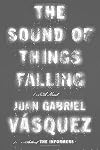
The Sound of Things Falling by Juan Gabriel Vásquez
My rating: 4 of 5 stars
The story is set in Bogotá, Colombia and the reader learns that much of the city is recovering from severe PTSD. Citizens who lived through the Eighties in the time of Pablo Escobar have symptoms not unlike war veterans, having spent a decade living in fear, not going out to public places, restaurants, cafes, etc. and never knowing when a family member or friend would go missing. The narrator grew up in the era and show more suffers irrational fears and despair after he is wounded while walking with his friend Roberto who is shot and killed, leaving him obsessed with trying to understand the death from the man's surviving daughter. The book becomes a mystery tale and spurs the reader on to discover what happened. The writing is beautiful in translation. Kudos to Anne McLean - I want to read more of her translations and am looking at The Anatomy of a Moment: Thirty-Five Minutes in History and Imagination. One memorable setting of the ruined and abandoned animal park/zoo owned by the drug lord is so real you can hear the squeak of a broken sign hanging by one hinge in the oppressive ever-present heat. The pace is almost dreamy for the first section of the story but picks up rapidly moving forward to other events, further puzzles.
A favorite quotation from the book:
"There is just one direct route beween La Dorada and Bogotá...You turn south and take the straight road that runs by the river that takes you to Honda, the port where travelers used to arrive when no planes flew over the Andes. From London, from New York, from Havana, Colón or Barranquilla, they would arrive by sea at the mouth of the Magdalena and change ship there...long days of sailing upriver on tired steamships...From Honda, each traveler would get to Bogotá however he could, by mule or by train or in a private car...no one has able to explain convincingly, beyond banal historical causes, why a country should choose as its capital its most remote and hidden city. It's not our fault that we Bogotanos are stuffy and cold and distant, because that's what our city is like, and you can't blame us for greeting strangers warily, for we're not used to them." show less
My rating: 4 of 5 stars
The story is set in Bogotá, Colombia and the reader learns that much of the city is recovering from severe PTSD. Citizens who lived through the Eighties in the time of Pablo Escobar have symptoms not unlike war veterans, having spent a decade living in fear, not going out to public places, restaurants, cafes, etc. and never knowing when a family member or friend would go missing. The narrator grew up in the era and show more suffers irrational fears and despair after he is wounded while walking with his friend Roberto who is shot and killed, leaving him obsessed with trying to understand the death from the man's surviving daughter. The book becomes a mystery tale and spurs the reader on to discover what happened. The writing is beautiful in translation. Kudos to Anne McLean - I want to read more of her translations and am looking at The Anatomy of a Moment: Thirty-Five Minutes in History and Imagination. One memorable setting of the ruined and abandoned animal park/zoo owned by the drug lord is so real you can hear the squeak of a broken sign hanging by one hinge in the oppressive ever-present heat. The pace is almost dreamy for the first section of the story but picks up rapidly moving forward to other events, further puzzles.
A favorite quotation from the book:
"There is just one direct route beween La Dorada and Bogotá...You turn south and take the straight road that runs by the river that takes you to Honda, the port where travelers used to arrive when no planes flew over the Andes. From London, from New York, from Havana, Colón or Barranquilla, they would arrive by sea at the mouth of the Magdalena and change ship there...long days of sailing upriver on tired steamships...From Honda, each traveler would get to Bogotá however he could, by mule or by train or in a private car...no one has able to explain convincingly, beyond banal historical causes, why a country should choose as its capital its most remote and hidden city. It's not our fault that we Bogotanos are stuffy and cold and distant, because that's what our city is like, and you can't blame us for greeting strangers warily, for we're not used to them." show less
 This review was written for LibraryThing Early Reviewers.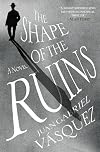
Superficially, THE SHAPE OF THE RUINS seems to be historical fiction focusing on politics, but it is neither of those things. In reality the novel is a clever exploration of conspiracy theories: their nature, origins, the types of people who embrace them and the motivations some have to cover them up. Vasquez uses a conversational style with himself as the narrator and protagonist. He packs the novel with information (too much?) and even some historical photos including hearsay, autopsy show more material, witness accounts, and general gossip surrounding two Columbian assassinations.
Vasquez uses conspiracy theories that arose around the murders of General Rafael Uribe Uribe (1914) and Jorge Eliécer Gaitán (1948) to understand why people tend to reject facts in favor of unsubstantiated suppositions. This broadens to an examination of the nature of truth, the limitations of the historical record, and the obsessions that often surround such incidents. The assassinations of two Columbian political figures may seem a little obscure to most. But many will readily relate to similar theories that continue to swirl around other more high profile deaths like JFK, Princess Diana, and Marilyn Monroe. “Those human ruins were memoranda of our past errors, and at some point they were also prophecies.”
The novel focuses on two conspiracy theorists that Vasquez pits against one another: one charming and the other repellent. Francisco Benavides, an empathic doctor and son of Columbia’s most renowned forensic scientist, rescues artifacts from his father’s collection. These include a portion of Gaitán’s spine containing an assassin’s bullet and an xray of his bullet-riddled body. These mysteriously disappear in a burglary of the Benevides home. He suspects Carlos Carballo, his father’s former student, who is obsessed with the Gaitán assassination. Francisco recruits Vasquez to befriend Carlos. He asks him to pretend to offer to write an expose book about Gaitán’s murder as a ruse to retrieve the artifacts. Vasquez rapidly becomes enmeshed in Carballo’s obsession with the Gaitán assassination as well as that or General Uribe which occurred several decades earlier. He observes conspiracy nuts on Carballo’s late night call-in radio show. He also reads about an aborted investigation of the Uribe assassination conducted by a young attorney, Marco Tulio Anzola. The latter alleges numerous suspicious occurrences including vanishing witnesses, lost evidence, mysterious well-dressed men, and police collusion. These, along with the death of the suspected assassins in both murders, seem to suggest conspiracy.
Despite often bogging down with the shear volume of facts he includes and his aimless narrative, Vasquez maintains interest primarily through a conversational tone and by resisting the temptation to provide easy answers. Along with Vasquez, the reader finds himself sucked into the dark world of conspiracy thinking. show less
Vasquez uses conspiracy theories that arose around the murders of General Rafael Uribe Uribe (1914) and Jorge Eliécer Gaitán (1948) to understand why people tend to reject facts in favor of unsubstantiated suppositions. This broadens to an examination of the nature of truth, the limitations of the historical record, and the obsessions that often surround such incidents. The assassinations of two Columbian political figures may seem a little obscure to most. But many will readily relate to similar theories that continue to swirl around other more high profile deaths like JFK, Princess Diana, and Marilyn Monroe. “Those human ruins were memoranda of our past errors, and at some point they were also prophecies.”
The novel focuses on two conspiracy theorists that Vasquez pits against one another: one charming and the other repellent. Francisco Benavides, an empathic doctor and son of Columbia’s most renowned forensic scientist, rescues artifacts from his father’s collection. These include a portion of Gaitán’s spine containing an assassin’s bullet and an xray of his bullet-riddled body. These mysteriously disappear in a burglary of the Benevides home. He suspects Carlos Carballo, his father’s former student, who is obsessed with the Gaitán assassination. Francisco recruits Vasquez to befriend Carlos. He asks him to pretend to offer to write an expose book about Gaitán’s murder as a ruse to retrieve the artifacts. Vasquez rapidly becomes enmeshed in Carballo’s obsession with the Gaitán assassination as well as that or General Uribe which occurred several decades earlier. He observes conspiracy nuts on Carballo’s late night call-in radio show. He also reads about an aborted investigation of the Uribe assassination conducted by a young attorney, Marco Tulio Anzola. The latter alleges numerous suspicious occurrences including vanishing witnesses, lost evidence, mysterious well-dressed men, and police collusion. These, along with the death of the suspected assassins in both murders, seem to suggest conspiracy.
Despite often bogging down with the shear volume of facts he includes and his aimless narrative, Vasquez maintains interest primarily through a conversational tone and by resisting the temptation to provide easy answers. Along with Vasquez, the reader finds himself sucked into the dark world of conspiracy thinking. show less
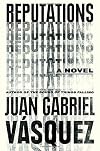
“It’s a poor sort of memory that only works backwards,” says the White Queen to Alice. In REPUTATIONS, Juan Gabriel Vasquez explores unreliable memories and the lengths we will go to validate them.
Javier Mallarino is a living legend in Columbia. As a political cartoonist, he is being honored as the conscience of the nation with his own postal stamp. His successful career rests on a reputation of speaking truth to power. Using his gift for characterization, he has been able to expose show more Columbian political corruption. People looked forward to his daily cartoons and his targets quickly came to realize that being mawked by Mallarino was a sign of celebrity.
His private life is somewhat less successful. He is divorced from Magdalena and estranged from his daughter, Beatrice. Due to constant threats, he has been forced to move from Bogatá to the surrounding mountains. Yet, in the final analysis, Javier enjoys a good life. That is until he receives a visit from a mysterious young woman, Samanta Leal, who intrudes into his lair under the guise of being a journalist seeking an interview. In fact, Samanta was a guest in his house 28 years earlier as a playmate of his daughter. The girls manage to get a little tipsy by finishing off drinks left around at a house party. This leads to the accusation of molestation by another intruder at the party when Samanta’s father arrives to her pick up. Senator Adolfo Cuéllar crashed the party to implore Mallarino to cease his particularly vicious attacks on his character. Instead, the incident has the opposite effect. Mallarino’s chief concern is not the truth so much as using the incident for his next juicy cartoon. Of course, the cartoonist’s approach is not to draw reality, but instead to insinuate character emphasizing physical flaws. “Bones are the only things that matter…Give me a bone and I shall move the world.” In this case, Mallarino suggests that Cuéllar may be a pedophile. This has disastrous consequences for Cuéllar and his family.
Samanta is confused by what may or may not have happened at that party 28 years ago and only seeks the truth. Of course, Mallarino really doesn’t know what happened, but the outcome from his attack on Cuéllar has him doubting his own honor and provides the impetus to seek answers, even at the risk of his own reputation.
The novel is a subtle exploration of multiple important themes: the precariousness of reputation, the gap between private persona and celebrity, the shadow land between artistic distortion and reality, the unreliability of memory, and the ultimate inability to define the past. Vasquez skillfully handles these themes with controlled plotting, avoidance of didacticism and presentation of realistic and nuanced characters. show less
Javier Mallarino is a living legend in Columbia. As a political cartoonist, he is being honored as the conscience of the nation with his own postal stamp. His successful career rests on a reputation of speaking truth to power. Using his gift for characterization, he has been able to expose show more Columbian political corruption. People looked forward to his daily cartoons and his targets quickly came to realize that being mawked by Mallarino was a sign of celebrity.
His private life is somewhat less successful. He is divorced from Magdalena and estranged from his daughter, Beatrice. Due to constant threats, he has been forced to move from Bogatá to the surrounding mountains. Yet, in the final analysis, Javier enjoys a good life. That is until he receives a visit from a mysterious young woman, Samanta Leal, who intrudes into his lair under the guise of being a journalist seeking an interview. In fact, Samanta was a guest in his house 28 years earlier as a playmate of his daughter. The girls manage to get a little tipsy by finishing off drinks left around at a house party. This leads to the accusation of molestation by another intruder at the party when Samanta’s father arrives to her pick up. Senator Adolfo Cuéllar crashed the party to implore Mallarino to cease his particularly vicious attacks on his character. Instead, the incident has the opposite effect. Mallarino’s chief concern is not the truth so much as using the incident for his next juicy cartoon. Of course, the cartoonist’s approach is not to draw reality, but instead to insinuate character emphasizing physical flaws. “Bones are the only things that matter…Give me a bone and I shall move the world.” In this case, Mallarino suggests that Cuéllar may be a pedophile. This has disastrous consequences for Cuéllar and his family.
Samanta is confused by what may or may not have happened at that party 28 years ago and only seeks the truth. Of course, Mallarino really doesn’t know what happened, but the outcome from his attack on Cuéllar has him doubting his own honor and provides the impetus to seek answers, even at the risk of his own reputation.
The novel is a subtle exploration of multiple important themes: the precariousness of reputation, the gap between private persona and celebrity, the shadow land between artistic distortion and reality, the unreliability of memory, and the ultimate inability to define the past. Vasquez skillfully handles these themes with controlled plotting, avoidance of didacticism and presentation of realistic and nuanced characters. show less
A remarkable work, the best of the several novels of his that I’ve read; among other things, it made me wonder why his name doesn’t appear more in our Nobel speculations. (Yes. It does. But I wonder whether it should be given even more consideration than we generally accord it.) Javier Mallarino is an enormously influential political cartoonist in Colombia. His caricatures change lives and destroy careers and governments. He is quite proud of the body of work he has produced over four show more decades, to the point of being just a bit too self-satisfied. And so Vasquez uses that self-satisfaction to analyze the nature of truth. Reputations is a deeply insightful novel asking hard questions beautifully posed: do caricatures depict or do they invent reality? Does intent matter? Does doubt help? Or hinder? Perhaps most important: how does one draw the lines of moral responsibility for one’s actions? Is it even possible? In a perfectly imagined confluence of coincidences, Mallarino is forced to confront these questions in the context of a caricature he drew years ago that may have literally destroyed lives. Was the caricature justified? Does it matter? What kind of power does he have? How should he use it? I will admit to being ever so slightly disappointed at the ending but this is a very impressive work; unhesitatingly recommended. show less
Lists
. (1)
Awards


You May Also Like


Associated Authors
Statistics
- Works
- 26
- Also by
- 5
- Members
- 3,058
- Popularity
- #8,349
- Rating
- 3.9
- Reviews
- 132
- ISBNs
- 235
- Languages
- 13
- Favorited
- 4

