
Javier Cercas
Author of Soldiers of Salamis
About the Author
Javier Cercas is the author of Soldiers of Salamis (which sold more than a million copies worldwide), The Tenant and the Motive, and The Speed of Light. He has taught at the University of Illinois and for many years was a lecturer in Spanish literature at the University of Gerona. His books have show more been translated into more than twenty languages. show less
Series
Works by Javier Cercas
The Anatomy of a Moment: Thirty-Five Minutes in History and Imagination (2009) 710 copies, 42 reviews
El castillo de Barbazul 2022 1 copy
MONARKU I HIJEVE 1 copy
El mejor artifice 2002 1 copy
Η ανεξαρτησία 1 copy
Bibliorelatos 1 copy
USHTARË TË SALAMINËS 1 copy
Associated Works
The Origins of Desire: Modern Spanish Short Stories (Modern European Short Stories) (1993) — Contributor — 14 copies
Tagged
Common Knowledge
- Canonical name
- Cercas, Javier
- Legal name
- Cercas Mena, Javier
- Birthdate
- 1962-04-06
- Gender
- male
- Education
- Autonomous University of Barcelona (classical Spanish literature)
- Occupations
- professor of Spanish Literature
- Organizations
- University of Girona, Spain
- Short biography
- Since 1989, Professor of Spanish literature at the University of Girona, Spain. He is a frequent contributor to the Catalan edition of El País and the Sunday supplement. He worked for two years at the University of Illinois at Urbana-Champaign in the United States.
- Nationality
- Spain
- Birthplace
- Ibahernando, Cáceres, Extremadura, Spain
- Places of residence
- Barcelona, Catalonia, Spain
Illinois, USA - Associated Place (for map)
- Spain
Members
Reviews
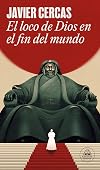
«Soy ateo. Soy anticlerical. Soy un laicista militante, un racionalista contumaz, un impío riguroso. Pero aquí me tienen, volando en dirección a Mongolia con el anciano vicario de Cristo en la Tierra, dispuesto a interrogarle sobre la resurrección de la carne y la vida eterna. Para eso me he embarcado en este avión: para preguntarle al papa Francisco si mi madre verá a mi padre más allá de la muerte, y para llevarle a mi madre su respuesta. He aquí un loco sin Dios persiguiendo al show more loco de Dios hasta el fin del mundo».
Este es el arranque fulgurante de este libro único, que nadie había tenido la oportunidad de escribir, entre otras razones porque el Vaticano jamás le había abierto de par en par sus puertas a un escritor. Pero, además de único, este es un libro de plenitud, donde su autor logra convertir una propuesta insólita en un relato propio y magistral: un thriller sobre el mayor misterio de la historia de la Humanidad. Con esta novela sin ficción, Javier Cercas vuelve a su línea más personal, en la que logra enlazar sus obsesiones íntimas con una de las preocupaciones fundamentales de la sociedad actual: el papel en la vida humana de lo espiritual y lo transcendente, el lugar en ella de la religión y el ansia de inmortalidad. show less
Este es el arranque fulgurante de este libro único, que nadie había tenido la oportunidad de escribir, entre otras razones porque el Vaticano jamás le había abierto de par en par sus puertas a un escritor. Pero, además de único, este es un libro de plenitud, donde su autor logra convertir una propuesta insólita en un relato propio y magistral: un thriller sobre el mayor misterio de la historia de la Humanidad. Con esta novela sin ficción, Javier Cercas vuelve a su línea más personal, en la que logra enlazar sus obsesiones íntimas con una de las preocupaciones fundamentales de la sociedad actual: el papel en la vida humana de lo espiritual y lo transcendente, el lugar en ella de la religión y el ansia de inmortalidad. show less

The writer "Javier Cercas", almost indefatigable in his quest to explore the ways Spain deals with problems of historical memory, is routinely one of the main characters in a Javier Cercas novel, but up to now his explorations have always been limited to digging into other people's memories. As he acknowledges in the opening chapters of this book, the problem he's always shied away from writing about is the way he deals with his family's background in a small pueblo near Trujillo in show more Extremadura, their support for the "wrong", nationalist side in the civil war, and the legend of the family hero, an uncle of his mother's called Manuel Mena, who was killed at the age of nineteen as a subaltern (alférez) in Franco's army at the battle of the Ebro.
Finally tackling this subject, with a good deal of hesitation which he - of course - discusses in detail, Cercas explores the question of whether there is any value in the Greek concept of a "beautiful death" - whether it's better to be Achilles or Odysseus, to reign as monarch over the shadows in the underworld or live as the slave of slaves. He looks at the social situation in the pueblo in the 1930s, and the reasons why people like the Mena and Cercas families allied themselves to the nationalists. They were peasants who had clawed themselves up to a rung higher on the socioeconomic ladder than their starving neighbours, but were still in what by any objective standard would be called extreme poverty. But they felt threatened by the disorder of the Republic, which looked as though it was going to take away even the little they had. They thus ended up on the side of a political movement that was in reality run by and for the very people who were still profiting from rural poverty, the big aristocratic landlords and the church, and fighting against the people they should (with mature hindsight) have seen as their friends.
Interesting, complex, and very nuanced, a book that goes a long way beyond its specifically Spanish subject-matter in its scope. show less
Finally tackling this subject, with a good deal of hesitation which he - of course - discusses in detail, Cercas explores the question of whether there is any value in the Greek concept of a "beautiful death" - whether it's better to be Achilles or Odysseus, to reign as monarch over the shadows in the underworld or live as the slave of slaves. He looks at the social situation in the pueblo in the 1930s, and the reasons why people like the Mena and Cercas families allied themselves to the nationalists. They were peasants who had clawed themselves up to a rung higher on the socioeconomic ladder than their starving neighbours, but were still in what by any objective standard would be called extreme poverty. But they felt threatened by the disorder of the Republic, which looked as though it was going to take away even the little they had. They thus ended up on the side of a political movement that was in reality run by and for the very people who were still profiting from rural poverty, the big aristocratic landlords and the church, and fighting against the people they should (with mature hindsight) have seen as their friends.
Interesting, complex, and very nuanced, a book that goes a long way beyond its specifically Spanish subject-matter in its scope. show less

I read this shortly after Soldados de Salamina, and was struck by how differently Cercas approaches the "non-fiction novel" in the two cases. Soldados is a book with a closely-focussed plot and a very small group of characters, in which the author and the business of researching and writing the book plays a prominent part; in Anatomía there is a huge (all-male) cast of politicians, soldiers, courtiers and spies brought in to help us try to make sense of what happens to prime minister show more Alfonso Suarez in one short moment of the famous TV footage of the attempted coup of the 23rd of February 1981, taking as his premise a remark of Borges about historical events being defined in a single moment.
Cercas argues that our recollection of events does not make a clear distinction between fact and fiction, and that even our famous ability to remember "where we were when we heard about..." is false: thousands of people in Spain distinctly remember having seen the events of the 23rd live on television, but the parliamentary session was only being broadcast live on radio, and the famous TV footage was not shown until the following day, when it was all over. I can understand that: before reading the book I had a clear memory of seeing it on the British TV news and being concerned for the future of the fragile post-Franco democracy, but now that I think about it objectively it seems very unlikely that I saw it until well after it was all over. In February 1981 I was living in college, and rarely, if ever, came anywhere near a TV set. I probably saw the still picture of Lt-Col Tejero with his silly tricorn hat, moustache and sub-machine gun on the front page of a newspaper on the 24th. I'm sure Cercas is right that our awareness of history - even recent history - is basically just a set of stories we tell ourselves, and that it makes perfect sense to approach it with the same tools that we do fiction.
Although this is interesting, it wasn't on that rather theoretical level that I found the book fascinating and worthwhile. What counts is the intrinsic interest of its subject-matter, which Cercas communicates intelligently and clearly. I think it's an interest that goes well beyond Spain and one moment in 1981: what democracy means to us and why it has to be defended is a question that any of us might have to answer one day. show less
Cercas argues that our recollection of events does not make a clear distinction between fact and fiction, and that even our famous ability to remember "where we were when we heard about..." is false: thousands of people in Spain distinctly remember having seen the events of the 23rd live on television, but the parliamentary session was only being broadcast live on radio, and the famous TV footage was not shown until the following day, when it was all over. I can understand that: before reading the book I had a clear memory of seeing it on the British TV news and being concerned for the future of the fragile post-Franco democracy, but now that I think about it objectively it seems very unlikely that I saw it until well after it was all over. In February 1981 I was living in college, and rarely, if ever, came anywhere near a TV set. I probably saw the still picture of Lt-Col Tejero with his silly tricorn hat, moustache and sub-machine gun on the front page of a newspaper on the 24th. I'm sure Cercas is right that our awareness of history - even recent history - is basically just a set of stories we tell ourselves, and that it makes perfect sense to approach it with the same tools that we do fiction.
Although this is interesting, it wasn't on that rather theoretical level that I found the book fascinating and worthwhile. What counts is the intrinsic interest of its subject-matter, which Cercas communicates intelligently and clearly. I think it's an interest that goes well beyond Spain and one moment in 1981: what democracy means to us and why it has to be defended is a question that any of us might have to answer one day. show less

Cercas uses metafiction—a technique in which the author focuses as much on a work’s own structure (regularly intruding the remind the reader that he is reading fiction) as on its story—as a way of analyzing the relationship between literature and reality or between life and art. The ostensible subject of the book is an investigation (by a novelist/journalist named Javier Cercas) into an incident that took place during the Spanish Civil War: a founder and key thinker in the Falangist show more (fascist) party miraculously escapes execution only to be found by a Republican soldier who unaccountably spares his life. The Fascist becomes a national hero under Franco; the soldier is forgotten. Cercas, the character, suffers from career-ending writer's block, but hopes that by discovering what “really” happened, he may be able to resuscitate his novelistic career. The book is divided into three parts: the first part is the story of his research; the second part is the story resulting from the first part. Had the book ended here, it would have been mildly interesting but, ultimately, tedious. Too much detail, far more than you are likely to want to know about this Falangist hero. Ah…but the third part: this is the key. This is where story and history intertwine, where memory and forgetting become an inescapable part of the meaning of life and death. This last part is riveting and beautifully told. The book is even more complex than I suggest and worthy of a graduate school seminar to unpack its meanings. Whether you’ll have the patience for it only you can say. But if you make it to the end, I think you’ll agree it was time well spent.
(P.S. I have just read a fascinating essay on the book which suggests, quite plausibly, that the middle third of the book, the "report" resulting from part one, is intentionally boring and tedious. By writing it that way, Javier Cercas the author (as opposed to Javier Cercas the character) demonstrates that the writer's block is still there and only when the new "assignment" that is part three of the novel comes about does Cercas the character succeed...on multiple levels. The analysis makes great sense and, after further reflection, I have decided to raise my rating.) show less
(P.S. I have just read a fascinating essay on the book which suggests, quite plausibly, that the middle third of the book, the "report" resulting from part one, is intentionally boring and tedious. By writing it that way, Javier Cercas the author (as opposed to Javier Cercas the character) demonstrates that the writer's block is still there and only when the new "assignment" that is part three of the novel comes about does Cercas the character succeed...on multiple levels. The analysis makes great sense and, after further reflection, I have decided to raise my rating.) show less
Lists
Awards


You May Also Like


Associated Authors
Statistics
- Works
- 38
- Also by
- 3
- Members
- 4,943
- Popularity
- #5,083
- Rating
- 3.7
- Reviews
- 201
- ISBNs
- 374
- Languages
- 22
- Favorited
- 7

