
Juan Marsé (1933–2020)
Author of Últimas tardes con Teresa
About the Author
Image credit: Juan Marse at his home in Barcelona,Spain on the 22nd of May 2007
Works by Juan Marsé
Devojka u zlatnim gaćicama 2 copies
Todo Paracuellos 2 copies
Le Fantôme Du Cinéma Roxy 1 copy
Cuando fui mortal 1 copy
Associated Works
A Thousand Forests in One Acorn: An Anthology of Spanish-Language Fiction (2014) — Contributor — 53 copies
Tagged
Common Knowledge
- Canonical name
- Marsé, Juan
- Legal name
- Roca, Juan Faneca (birth)
- Other names
- Carbó, Juan Marsé
- Birthdate
- 1933-01-08
- Date of death
- 2020-07-18
- Gender
- male
- Organizations
- Generation of '50 (literary movement)
- Awards and honors
- Premio Miguel de Cervantes (2008)
- Relationships
- Marsé, Berta (filla)
- Nationality
- Spain
- Birthplace
- Barcelona, Catalonia, Spain
- Places of residence
- Paris, France
Barcelona, Catalonia, Spain - Map Location
- Spain
Catalonia
Members
Reviews
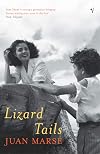
This clever and strangely beautiful novel is set in Barcelona in 1945, as World War II draws to a close and Generalísimo Francisco Franco is slowly and brutally gaining control over the remaining opposition to his fascist rule of Spain. The book is narrated by the unborn child of Rosa, a beautiful redhead whose husband has disappeared after he is sought by police on the suspicion that he is participating in subversive political activities. The unnamed fetus communicates with his brother show more David, a 14 year old who unabashedly loves, supports and protects his mother while blaming the fetus for her failing health. David also engages in surreal conversations with his missing father, a British fighter pilot whose poster hangs on the wall of his room, and his older brother. At the same time he befriends Paulino, an equally troubled boy of his age, and attempts to protect his mother from Inspector Galván, a widower who is investigating his father's disappearance while he showers Rosa with attention and gifts.
David's internal conversations and external relationships are the central feature of the novel, and although the characters are vividly drawn the reader is never completely sure where truth ends and fantasy begins, which creates a growing sense of uncertainty, tension and menace, as the lives of David, Rosa and Paulino spin like wobbly tops at the edge of a table.
Lizard Tails is a gripping story about post-Civil War Spain and the psychological effects that the Franco regime had on ordinary citizens and their oppressors, which was quite unique in its narration and humorous despite its grim setting. Juan Marsé is one of the most respected and decorated Catalan novelists, and this book, which won two major literary awards in Spain, served as an excellent introduction to his work. show less
David's internal conversations and external relationships are the central feature of the novel, and although the characters are vividly drawn the reader is never completely sure where truth ends and fantasy begins, which creates a growing sense of uncertainty, tension and menace, as the lives of David, Rosa and Paulino spin like wobbly tops at the edge of a table.
Lizard Tails is a gripping story about post-Civil War Spain and the psychological effects that the Franco regime had on ordinary citizens and their oppressors, which was quite unique in its narration and humorous despite its grim setting. Juan Marsé is one of the most respected and decorated Catalan novelists, and this book, which won two major literary awards in Spain, served as an excellent introduction to his work. show less
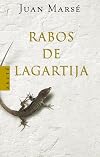
Rabos de lagartija
Juan Marsé
Publicado: 2000 | 246 páginas
Novela Drama
Los inolvidables personajes de esta novela, como la entrañable y desgarrada pareja formada por el adolescente David y su perro Chispa, el enamorado inspector Galván, o Rosa Bartra, la hermosa pelirroja embarazada, obedecen a una tristeza y una estafa histórica muy concretas, pero también a la estafa eterna de los sueños, encarnada aquí por las fantasmales apariciones de un padre libertario fugitivo y de un show more arrogante piloto de la RAF que, desde la vieja fotografía de una revista colgada en la pared, actúa como confidente del fantasioso David. Con estos personajes, con un lenguaje directo y translúcido que contrasta con la honda carga emotiva y moral que discurre por debajo de la trama, Rabos de lagartija, dotada de una estructura narrativa tan sabia como imaginativa, y mostrando cuán frágiles y ambiguos son los límites entre la realidad y la ficción, la verdad y la mentira, el Bien y el Mal, el amor y el desamor, corrobora la condición de Juan Marsé como uno de los novelistas mayores, no sólo de las Letras Hispanas, sino de las actuales narrativas europeas. show less
Juan Marsé
Publicado: 2000 | 246 páginas
Novela Drama
Los inolvidables personajes de esta novela, como la entrañable y desgarrada pareja formada por el adolescente David y su perro Chispa, el enamorado inspector Galván, o Rosa Bartra, la hermosa pelirroja embarazada, obedecen a una tristeza y una estafa histórica muy concretas, pero también a la estafa eterna de los sueños, encarnada aquí por las fantasmales apariciones de un padre libertario fugitivo y de un show more arrogante piloto de la RAF que, desde la vieja fotografía de una revista colgada en la pared, actúa como confidente del fantasioso David. Con estos personajes, con un lenguaje directo y translúcido que contrasta con la honda carga emotiva y moral que discurre por debajo de la trama, Rabos de lagartija, dotada de una estructura narrativa tan sabia como imaginativa, y mostrando cuán frágiles y ambiguos son los límites entre la realidad y la ficción, la verdad y la mentira, el Bien y el Mal, el amor y el desamor, corrobora la condición de Juan Marsé como uno de los novelistas mayores, no sólo de las Letras Hispanas, sino de las actuales narrativas europeas. show less
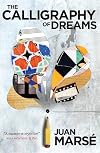
Ringo is an adolescent boy, growing up in the politically charged era just after the 2nd world war, in Barcelona. The town has many people on the cusp of poverty, including his family. In addition, the aftermath of the Spanish civil war means various draconian laws and arrests. Barcelona also has to cope with the question of Catalonian independence. This is the backdrop to the story, but it's also about vibrant, almost magical realist, characters.
Ringo himself is growing up with grand show more delusional ambitions to be a concert pianist, until he carelessly loses a finger as a jewellery apprentice. He often lives in a fantasy world in his head, which he readily enthralls his friend with, when spinning his stories. His hormones, like many adolescent boys, are also in full swing, and he seems to fall in love - or rather lust - in almost every chapter.
The fulcrum of the story, and how it begins, is via Senora Mir, whose daughter Ringo has a huge crush on. She melodramatically attempts suicide by lying across tram tracks - that haven't seen a tram pass them in years. The reason is that her lover has spurned her. Later on it seems as if he's still interested and will send her some letter of import very soon. Every day she goes to the local bar to check if it's arrived.
One day, by chance, Ringo meets up with this lover, quite a charlatan, who gives Ringo the letter to deliver.
SPOILER WARNING: Ringo loses the letter, and is haunted by this mistake for half the book. Eventually he writes an incredibly ham-fisted attempt at a substitute when Senora Mir falls ill, he assumes partly of a broken heart. But the letter was never meant for her, but her teenage daughter, that this man had fallen in love with. This raises many questions that the book doesn't answer. Is this lover deluded too in how much of a relationship he had with this daughter? How much did Senora Mir know about this? Was she trying to cover for or protect her daughter? It's hard to tell, but what's clear is that there's a general mood of resigned desparation to everything in the novel. And the whole idea of fantasy imposed on reality pervades the novel, again making it verge on magic realism at times.
This is a much richer novel than it first appears. It's not just a well observed teen boy coming of age novel. It's not just a delicate portrait of a turbulent time in Barcelona history. There is also a deep undercurrent of how loosely we can be connected to reality, driven by the troubled, unhappy lives we can lead. show less
Ringo himself is growing up with grand show more delusional ambitions to be a concert pianist, until he carelessly loses a finger as a jewellery apprentice. He often lives in a fantasy world in his head, which he readily enthralls his friend with, when spinning his stories. His hormones, like many adolescent boys, are also in full swing, and he seems to fall in love - or rather lust - in almost every chapter.
The fulcrum of the story, and how it begins, is via Senora Mir, whose daughter Ringo has a huge crush on. She melodramatically attempts suicide by lying across tram tracks - that haven't seen a tram pass them in years. The reason is that her lover has spurned her. Later on it seems as if he's still interested and will send her some letter of import very soon. Every day she goes to the local bar to check if it's arrived.
One day, by chance, Ringo meets up with this lover, quite a charlatan, who gives Ringo the letter to deliver.
SPOILER WARNING: Ringo loses the letter, and is haunted by this mistake for half the book. Eventually he writes an incredibly ham-fisted attempt at a substitute when Senora Mir falls ill, he assumes partly of a broken heart. But the letter was never meant for her, but her teenage daughter, that this man had fallen in love with. This raises many questions that the book doesn't answer. Is this lover deluded too in how much of a relationship he had with this daughter? How much did Senora Mir know about this? Was she trying to cover for or protect her daughter? It's hard to tell, but what's clear is that there's a general mood of resigned desparation to everything in the novel. And the whole idea of fantasy imposed on reality pervades the novel, again making it verge on magic realism at times.
This is a much richer novel than it first appears. It's not just a well observed teen boy coming of age novel. It's not just a delicate portrait of a turbulent time in Barcelona history. There is also a deep undercurrent of how loosely we can be connected to reality, driven by the troubled, unhappy lives we can lead. show less

It's the imagination of a boy dealing with the disconnection and disappearance of his father that drive the story set in post World War II Spain. There is a great deal of uncertainty after the Spanish Civil War and then after World War II. There is still an oppressive regime with people going missing and conspiracies by the government against those who supported the opposing regime. It seems that David and his mother, the red-head, are adrift with no direction or hope.
The story is actually show more told by a fetus. David’s mother is pregnant and they both speak to her pregnant belly, David in a more animated way (calling him leech and other unpleasant names). David has an active imagination and his discussions with imaginary characters take up most of the story. His disappeared drunk father, an Irish fighter pilot shot down during World War II, David’s unborn brother, and a few others join the discussion. Using this technique Marse explains many of the problems and anxieties of post war Spain. David increasingly goes into his own little world with only his friend Paulino to talk to. He also must deal with a nosy police detective hunting his father while courting his mother. The absence of his father (even though he was a drunk) creates a large burden for both him and his mother, resulting in the mother relying on the detective in more than a formal way. This also results in David’s increasing resentment and hatred of the detective. That resentment results in the worst betrayal and in a land where one must balance resistance from a corrupt and oppressive government with survival the betrayal could be fatal for all of them.
I really enjoyed this story and would compare it with one of my favorites, The Shadow of the Wind. It is that lost and searching feeling and the post war Spain feeling, with its history of broken dreams. All in all, there is this feeling of loss and helplessness that pervade the story.
This was the opening skirmish in a baleful moment from which neither of them emerged unscathed, although neither started it on purpose: it simply grew out of a file kept somewhere deep in the archives of hatred and betrayal. P 2
...what I see and what I don't see are one and the same. P 5
At that moment I was poised on the threshold of life, but only a step away from death, my back turned to the world, and probably upside down. P 39
What good did thinking do you, poor little lizard? Who chooses the twists you are making, what brain thinks them, if you haven't got a head anymore? P 47
...a blackened face and a smile that is the smile of someone still flying, thinks David as he stuffs the photo under his shirt, someone whose plane may have been destroyed, but not his courage or his belief in victory, or his fighting spirit which is still soaring high in the skied, above the clouds and beyond the lightning storms and the artillery, there where the sun always shines... P 70
Your mother never lies, Pa grumbles. But since these days the truth has to creep around, like the muddy trickle if the waters of the river in the morning mist-- I see it every day, and there's nothing whatsoever poetic about it, I can tell you--then sometimes we have to use lies to recover our lost dignity. P 86
Pa told me one day learn to watch for what hasn't happened yet and you'll learn a lot. 124
Now I realize that it was having to live alone and poor for years, and putting up with the situation without complaint, that forged my mother's sensibility, her secret harmony with the world, even her romantic daydreams and her restless sexuality; whenever the mysteries of life leave me feeling defenseless and lonely, I think of her, and the thought brings me the miraculous consolation of her vulnerability and her strength. In his own way, David also accepted this contradiction: as if he knew the truth does not exist, only the wish to discover it, he fought not against truth itself, but against the fragility of its appearance. P219 show less
The story is actually show more told by a fetus. David’s mother is pregnant and they both speak to her pregnant belly, David in a more animated way (calling him leech and other unpleasant names). David has an active imagination and his discussions with imaginary characters take up most of the story. His disappeared drunk father, an Irish fighter pilot shot down during World War II, David’s unborn brother, and a few others join the discussion. Using this technique Marse explains many of the problems and anxieties of post war Spain. David increasingly goes into his own little world with only his friend Paulino to talk to. He also must deal with a nosy police detective hunting his father while courting his mother. The absence of his father (even though he was a drunk) creates a large burden for both him and his mother, resulting in the mother relying on the detective in more than a formal way. This also results in David’s increasing resentment and hatred of the detective. That resentment results in the worst betrayal and in a land where one must balance resistance from a corrupt and oppressive government with survival the betrayal could be fatal for all of them.
I really enjoyed this story and would compare it with one of my favorites, The Shadow of the Wind. It is that lost and searching feeling and the post war Spain feeling, with its history of broken dreams. All in all, there is this feeling of loss and helplessness that pervade the story.
This was the opening skirmish in a baleful moment from which neither of them emerged unscathed, although neither started it on purpose: it simply grew out of a file kept somewhere deep in the archives of hatred and betrayal. P 2
...what I see and what I don't see are one and the same. P 5
At that moment I was poised on the threshold of life, but only a step away from death, my back turned to the world, and probably upside down. P 39
What good did thinking do you, poor little lizard? Who chooses the twists you are making, what brain thinks them, if you haven't got a head anymore? P 47
...a blackened face and a smile that is the smile of someone still flying, thinks David as he stuffs the photo under his shirt, someone whose plane may have been destroyed, but not his courage or his belief in victory, or his fighting spirit which is still soaring high in the skied, above the clouds and beyond the lightning storms and the artillery, there where the sun always shines... P 70
Your mother never lies, Pa grumbles. But since these days the truth has to creep around, like the muddy trickle if the waters of the river in the morning mist-- I see it every day, and there's nothing whatsoever poetic about it, I can tell you--then sometimes we have to use lies to recover our lost dignity. P 86
Pa told me one day learn to watch for what hasn't happened yet and you'll learn a lot. 124
Now I realize that it was having to live alone and poor for years, and putting up with the situation without complaint, that forged my mother's sensibility, her secret harmony with the world, even her romantic daydreams and her restless sexuality; whenever the mysteries of life leave me feeling defenseless and lonely, I think of her, and the thought brings me the miraculous consolation of her vulnerability and her strength. In his own way, David also accepted this contradiction: as if he knew the truth does not exist, only the wish to discover it, he fought not against truth itself, but against the fragility of its appearance. P219 show less
Lists
Awards


You May Also Like


Associated Authors
Statistics
- Works
- 48
- Also by
- 2
- Members
- 2,795
- Popularity
- #9,199
- Rating
- 3.7
- Reviews
- 79
- ISBNs
- 309
- Languages
- 17
- Favorited
- 8
