
Andrés Neuman
Author of Traveller of the Century
About the Author
Image credit: Author Andrés Neuman at the 2016 Texas Book Festival. By Larry D. Moore, CC BY-SA 4.0, https://commons.wikimedia.org/w/index.php?curid=53513025
Works by Andrés Neuman
Pequenas resistencias 3. Antologia del nuevo cuento sudamericano / Little Resistances: Antologia del nuevo cuento sudamericano (Voces) (Spanish Edition) (2002) — Edición y selección — 14 copies
Associated Works
Granta 113: The Best of Young Spanish Language Novelists (2011) — Contributor — 165 copies, 3 reviews
And We Came Outside and Saw the Stars Again: Writers from Around the World on the COVID-19 Pandemic (2020) — Contributor — 16 copies
Tagged
Common Knowledge
- Canonical name
- Neuman, Andrés
- Birthdate
- 1977
- Gender
- male
- Education
- University of Granada
- Occupations
- poet
translator
columnist
novelist - Nationality
- Argentina
- Birthplace
- Buenos Aires, Argentina
- Places of residence
- Buenos Aires, Argentina (birth)
Granada, Spain - Associated Place (for map)
- Argentina
Members
Reviews

This was Neuman's reaction to the 2011 Fukushima disaster, as experienced by Mr Yoshie Watanabe, a double-hibakusha who survived the Hiroshima bomb as a child but lost all his family to the Nagasaki one. Watanabe, retired and living in Tokyo after a long business career spent mostly overseas, is an oddly elusive character and Neuman doesn't claim to get inside his head: we see him mostly through the eyes of his four ex-girlfriends (in Paris, New York, Buenos Aires and Madrid) and through the show more Argentinian journalist Jorge Pinedo who is collating information from the ladies and is hoping to interview Watanabe but never quite catches up with him.
Watanabe seems to be a kind of serial exile, someone who has been made to feel by his hibakusha status that he doesn't quite belong in the realm of the living any more, and who also feels a serious disconnect with the Japanese culture that he has grown up in, but is never quite at home anywhere else either. Neuman has a lot of quiet fun with the successive layers of cultural and linguistic confusion observed by the women and with the things they tell us about postwar Japan as well as about fifties France, sixties/seventies New York, eighties Argentina and nineties Spain, and about the notions we have of rootedness and exile. When Watanabe travels to the Fukushima region in the closing section of the book and spends time talking to the — mostly elderly — residents who have stayed in the danger area around the nuclear plant despite the advice to evacuate, he seems to find an emotional connection that gives him a kind of closure.
A very interesting and ambitious book. I'm not sure if Neuman has quite got away with it in the way he did in El viajero del siglo — it's hard for the reader to deal with an opaque character like Watanabe, especially when the four women are all modelled in such detail, and it's disorienting in a novel to have a string of serious relationships that just stop without any kind of emotional repercussions. But it's certainly worth plunging into to decide for yourself. show less
Watanabe seems to be a kind of serial exile, someone who has been made to feel by his hibakusha status that he doesn't quite belong in the realm of the living any more, and who also feels a serious disconnect with the Japanese culture that he has grown up in, but is never quite at home anywhere else either. Neuman has a lot of quiet fun with the successive layers of cultural and linguistic confusion observed by the women and with the things they tell us about postwar Japan as well as about fifties France, sixties/seventies New York, eighties Argentina and nineties Spain, and about the notions we have of rootedness and exile. When Watanabe travels to the Fukushima region in the closing section of the book and spends time talking to the — mostly elderly — residents who have stayed in the danger area around the nuclear plant despite the advice to evacuate, he seems to find an emotional connection that gives him a kind of closure.
A very interesting and ambitious book. I'm not sure if Neuman has quite got away with it in the way he did in El viajero del siglo — it's hard for the reader to deal with an opaque character like Watanabe, especially when the four women are all modelled in such detail, and it's disorienting in a novel to have a string of serious relationships that just stop without any kind of emotional repercussions. But it's certainly worth plunging into to decide for yourself. show less

‘’An earthquake fractures the present, shutters perspective, shifts memory plates.’’
Joshi Watanabe returns to a tumultuous past, in the aftermath of the devastating Fukushima earthquake in 2011. His recollections are centred around his relationships with women around the world and Japan’s position since the 40s. An ambitious premise, but the writer falls short. Extremely short, in my opinion.
Watanabe’s lovers are given what seems to be a powerful, determined and confident voice. show more But their desperate focus on sex diminished them in my eyes, and every character (Watanabe included) was so cold, so distant, so impossibly empty… The story takes us on a journey to Tokyo, Paris, New York, Buenos Aires and Madrid and touches, primarily, on the status of Japan following the war, the difficult questions raised by Japan’s actions during WWII but there is no mention of Japan’s unimaginable atrocities against China. Naturally, there is extensive reference to the events in Hiroshima and Nagasaki, all the way to the era of the Cold War, Chernobyl and out times.
Now there was a significant problem I faced which ruined the book irreversibly. Watanabe’s remarks were nationalistic and misogynistic. Was the writer’s intention to make him appear thus? Did his musings reflect the writer’s own opinions? Regardless of the answer, it became a chore to read once repetition and dubious political remarks got in the way. The anti-nuclear message is evident, and rightly so, but there is a thin line between so-called activism and ignorance of the historical facts. The need to justify the actions of the Japanese army during WWII while turning the blind eye to the massacre in China was infuriating. It was ridiculous. It was horrible. The remark that Germany ‘’is the bravest nation’’ because they ‘’had the guts to admit’’ the atrocities was the phrase that made me want to throw my e-reader away. Really? Does the Argentinian writer believe that a mea culpa absolves you? The torture my grandfather went through in Dachau isn’t erased by a billion ‘’I’m sorry’’. The burnt villages, the executed families, the millions of Jews, the millions of victims of the Nazis tyranny, the soldiers of the Allies that lived Hell on Earth in the battlefields of the Pacific aren’t forgotten because a politician whispers an insincere ‘’I’m sorry’’. I suggest Churchill’s biography to the writer in order to understand what it means to be a fighter to free the world from darkness. If the writer wishes to feel pity for the Nazis, the Japanese, the Turks and every army that caused terror during the WWII, there are many ‘’squads’’ he can join. I am disgusted. This is my opinion and whether others disagree with me or not doesn’t interest me in the slightest. Each one of us answers to his own private code of morality. I answer to the wound of my family’s torment during WWII.
In addition, the focus on sex was cheap, voyeuristic, degrading. One more reason for me to throw this away.
Yes, the prose may have been beautiful at times, and the spirit of each city was depicted in a direct, moving way. But, in my opinion, political and social themes were used in a lengthy lecture with the reader as the target audience. And I don’t like being lectured by writers who most obviously retain a frightening kind of political agendas. Perhaps, we should leave the tremendously talented Japanese writers to write about Japan.
ARC from Farrar, Straus and Giroux and NetGalley in exchange for an honest review. show less
Joshi Watanabe returns to a tumultuous past, in the aftermath of the devastating Fukushima earthquake in 2011. His recollections are centred around his relationships with women around the world and Japan’s position since the 40s. An ambitious premise, but the writer falls short. Extremely short, in my opinion.
Watanabe’s lovers are given what seems to be a powerful, determined and confident voice. show more But their desperate focus on sex diminished them in my eyes, and every character (Watanabe included) was so cold, so distant, so impossibly empty… The story takes us on a journey to Tokyo, Paris, New York, Buenos Aires and Madrid and touches, primarily, on the status of Japan following the war, the difficult questions raised by Japan’s actions during WWII but there is no mention of Japan’s unimaginable atrocities against China. Naturally, there is extensive reference to the events in Hiroshima and Nagasaki, all the way to the era of the Cold War, Chernobyl and out times.
Now there was a significant problem I faced which ruined the book irreversibly. Watanabe’s remarks were nationalistic and misogynistic. Was the writer’s intention to make him appear thus? Did his musings reflect the writer’s own opinions? Regardless of the answer, it became a chore to read once repetition and dubious political remarks got in the way. The anti-nuclear message is evident, and rightly so, but there is a thin line between so-called activism and ignorance of the historical facts. The need to justify the actions of the Japanese army during WWII while turning the blind eye to the massacre in China was infuriating. It was ridiculous. It was horrible. The remark that Germany ‘’is the bravest nation’’ because they ‘’had the guts to admit’’ the atrocities was the phrase that made me want to throw my e-reader away. Really? Does the Argentinian writer believe that a mea culpa absolves you? The torture my grandfather went through in Dachau isn’t erased by a billion ‘’I’m sorry’’. The burnt villages, the executed families, the millions of Jews, the millions of victims of the Nazis tyranny, the soldiers of the Allies that lived Hell on Earth in the battlefields of the Pacific aren’t forgotten because a politician whispers an insincere ‘’I’m sorry’’. I suggest Churchill’s biography to the writer in order to understand what it means to be a fighter to free the world from darkness. If the writer wishes to feel pity for the Nazis, the Japanese, the Turks and every army that caused terror during the WWII, there are many ‘’squads’’ he can join. I am disgusted. This is my opinion and whether others disagree with me or not doesn’t interest me in the slightest. Each one of us answers to his own private code of morality. I answer to the wound of my family’s torment during WWII.
In addition, the focus on sex was cheap, voyeuristic, degrading. One more reason for me to throw this away.
Yes, the prose may have been beautiful at times, and the spirit of each city was depicted in a direct, moving way. But, in my opinion, political and social themes were used in a lengthy lecture with the reader as the target audience. And I don’t like being lectured by writers who most obviously retain a frightening kind of political agendas. Perhaps, we should leave the tremendously talented Japanese writers to write about Japan.
ARC from Farrar, Straus and Giroux and NetGalley in exchange for an honest review. show less

Early in 1827, a traveller arrives in the small German town of Wandernburg, which is in some undefined (and undefinable) spot on the borders of Saxony and Prussia. He makes friends with an elderly organ-grinder, falls in love, unintentionally steals the heart of the innkeeper's daughter, has various strange encounters with crows, ice, post-horns, graveyards, barking dogs, and a wind that shakes the leaves and blows the hat from his head. And eventually he leaves town again. You get the show more picture: the symbolic language of this book leans very firmly on Wilhelm Müller's cycle of poems about a winter traveller, which Schubert set to music as the song-cycle Winterreise in 1827.
There's also a significant nod to another famous German plot - the young woman the poetic traveller falls in love with turns out to be engaged to the fine, upstanding son of a local landowner, and out of loyalty to her widowed father she can't break that engagement.
And there's a lot more to this book than that. In a similar way to what Thomas Mann did in Lotte in Weimar, Neuman uses the generous framework of a nineteenth-century novel, where there is space for detailed literary, political and philosophical discussions and for plenty of sub-plots and minor characters, to give us a closely-detailed idea of what Europe was like at that particular moment in history, a moment which he clearly sees as being relevant to our own times. His main characters are young people who have grown up reading Voltaire, Rousseau and Mary Wollstonecraft and believe that everything is possible. But they find themselves living in a world where there are still kings and priests and policemen and censors, the European ideal has disappeared into petty nationalism, and the only rights that the state seeks to protect are those of landowners and employers. OK, maybe there are a few parallels there!
Neuman's method isn't quite as crude as that, of course - he musters his evidence carefully and takes us through all the poets and philosophers we need to make sense of all that. For the most part he sticks to his chosen chronology, although he does take some minor liberties with time, giving his characters access to books that probably would have taken a few more months to get to a place like Wandernburg, or allowing them to boast about having travelled on railways that were then still under construction.
Neuman also takes some pains to show us why so many people felt in the aftermath of the Napoleonic wars that Europe needed order, authority and religion, but he rather undermines this side of the case by making all his conservative characters ultimately reveal themselves as either evil or foolish.
There are some odd little anachronistic titbits thrown in to provide a bit of postmodern Verfremdungseffekt - the two young rebels at the centre of the story are called Hans and Sophie (so we know they aren't going to beat the system, and we have our little doubts about which system it is); the two policemen who share a name seem to have been borrowed from Tintin; the Spanish character has the surname Urquijo and his late wife was called Ulrike - both names that could have been around in 1827, but are more likely to make modern readers think about 20th century news stories. And of course there is a lot more sheer physicality around than there could be in a nineteenth-century novel - sex, body-odour, urinating dogs, and all the rest of it.
The central part of the story has Hans and Sophie collaborating on a poetry translation project, with a lot of reflections on what literature is for, whether and how far translation is possible, and why we need to be aware of literature in other languages. Neuman has to use a certain amount of literary sleight-of-hand here, because he's writing in Spanish about people who are supposed to be working in German, inter alia translating Spanish poetry. And of course the oddity of that comes over all the more if Spanish isn't your first language, and you find yourself reading Keats, Nerval, Pushkin or Heine in a Spanish that you are supposed to take as German! But he seems to get away with it, somehow. It must have been a nightmare for anyone translating the novel, though...
A fascinating, mind-bending and very immersive reading experience. And another book I'm going to have to re-read some day. show less
There's also a significant nod to another famous German plot - the young woman the poetic traveller falls in love with turns out to be engaged to the fine, upstanding son of a local landowner, and out of loyalty to her widowed father she can't break that engagement.
And there's a lot more to this book than that. In a similar way to what Thomas Mann did in Lotte in Weimar, Neuman uses the generous framework of a nineteenth-century novel, where there is space for detailed literary, political and philosophical discussions and for plenty of sub-plots and minor characters, to give us a closely-detailed idea of what Europe was like at that particular moment in history, a moment which he clearly sees as being relevant to our own times. His main characters are young people who have grown up reading Voltaire, Rousseau and Mary Wollstonecraft and believe that everything is possible. But they find themselves living in a world where there are still kings and priests and policemen and censors, the European ideal has disappeared into petty nationalism, and the only rights that the state seeks to protect are those of landowners and employers. OK, maybe there are a few parallels there!
Neuman's method isn't quite as crude as that, of course - he musters his evidence carefully and takes us through all the poets and philosophers we need to make sense of all that. For the most part he sticks to his chosen chronology, although he does take some minor liberties with time, giving his characters access to books that probably would have taken a few more months to get to a place like Wandernburg, or allowing them to boast about having travelled on railways that were then still under construction.
Neuman also takes some pains to show us why so many people felt in the aftermath of the Napoleonic wars that Europe needed order, authority and religion, but he rather undermines this side of the case by making all his conservative characters ultimately reveal themselves as either evil or foolish.
There are some odd little anachronistic titbits thrown in to provide a bit of postmodern Verfremdungseffekt - the two young rebels at the centre of the story are called Hans and Sophie (so we know they aren't going to beat the system, and we have our little doubts about which system it is); the two policemen who share a name seem to have been borrowed from Tintin; the Spanish character has the surname Urquijo and his late wife was called Ulrike - both names that could have been around in 1827, but are more likely to make modern readers think about 20th century news stories. And of course there is a lot more sheer physicality around than there could be in a nineteenth-century novel - sex, body-odour, urinating dogs, and all the rest of it.
The central part of the story has Hans and Sophie collaborating on a poetry translation project, with a lot of reflections on what literature is for, whether and how far translation is possible, and why we need to be aware of literature in other languages. Neuman has to use a certain amount of literary sleight-of-hand here, because he's writing in Spanish about people who are supposed to be working in German, inter alia translating Spanish poetry. And of course the oddity of that comes over all the more if Spanish isn't your first language, and you find yourself reading Keats, Nerval, Pushkin or Heine in a Spanish that you are supposed to take as German! But he seems to get away with it, somehow. It must have been a nightmare for anyone translating the novel, though...
A fascinating, mind-bending and very immersive reading experience. And another book I'm going to have to re-read some day. show less
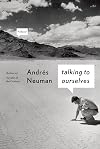
I was impressed with the mastery the author had over the voices of the three characters who tell the story in this small but profound novel. As the title suggests, the story is told by each of the characters in turn through a narrative of what they are telling themselves. This is accomplished through successive chapters devoted to each of the characters.
The father, Mario is dying of cancer. His decision to share a last few meaningful days with his 10-year-son Lito, results in a road trip in show more his brother’s truck. His wife Elena remains at home, seeking solace in books. Elena keeps a journal of her life, Mario records his thoughts on a series of tapes to leave for his son, and the son Lito, unaware of his father’s true illness, recounts the road trip in glorious detail. Lito’s humorous observations sounded very true to me with references to video games and dreams of riding in convertibles. They demonstrate the skill of the author as he lightens the darker material and provides a vivid sense of a 10-year-old’s voice and preoccupations.
In an attempt to make sense of her husband's impending death and her own turbulent emotions, Elena devours books and notes quotations from the authors she reads. These include John Banville, Roberto Bolaño, Javíer Marias and Virginia Woolf. In On Being Ill, Woolf declares “let a sufferer try to describe a pain in his head to a doctor and language at once runs dry”. Woolf’s question, why “illness has not taken its place with love and battle and jealousy among the prime themes of literature,” is just as relevant today.
After entering an intense sexual relationship with her husband’s doctor, Elena experiences shame and guilt but cannot stop herself. As Neuman suggests, grief has its own, often impenetrable, logic. When Mario is finally hospitalized Elena remarks “[p]ity has its own way of destroying”. She contemplates the horror of having lost all desire for Mario, feeling disgust, and yet still loving him: “He has shadows under his eyes, drawn features, no belly. There is a paleness about him that doesn't seem to come from a lack of sunshine, but from somewhere deeper. A sort of white glow beneath the skin. There, between his ribs.”
The multitude of emotions experienced on the death of a loved one are difficult if not impossible to describe. The right words seldom come to you and the result is a form of emotional isolation. The feelings consume you suddenly--on a moments notice.
I was drawn to this novel by Andrés Neuman because I enjoyed his previous award-winning Traveller of the Century. Talking to Ourselves, while a miniature by comparison, is articulate and profound, providing a meditation on illness, death and bereavement. It suggests ways that one may use literature to confront and understand mortality. As a reader I enjoyed it as much as his first novel and look forward to more from his pen. show less
The father, Mario is dying of cancer. His decision to share a last few meaningful days with his 10-year-son Lito, results in a road trip in show more his brother’s truck. His wife Elena remains at home, seeking solace in books. Elena keeps a journal of her life, Mario records his thoughts on a series of tapes to leave for his son, and the son Lito, unaware of his father’s true illness, recounts the road trip in glorious detail. Lito’s humorous observations sounded very true to me with references to video games and dreams of riding in convertibles. They demonstrate the skill of the author as he lightens the darker material and provides a vivid sense of a 10-year-old’s voice and preoccupations.
In an attempt to make sense of her husband's impending death and her own turbulent emotions, Elena devours books and notes quotations from the authors she reads. These include John Banville, Roberto Bolaño, Javíer Marias and Virginia Woolf. In On Being Ill, Woolf declares “let a sufferer try to describe a pain in his head to a doctor and language at once runs dry”. Woolf’s question, why “illness has not taken its place with love and battle and jealousy among the prime themes of literature,” is just as relevant today.
After entering an intense sexual relationship with her husband’s doctor, Elena experiences shame and guilt but cannot stop herself. As Neuman suggests, grief has its own, often impenetrable, logic. When Mario is finally hospitalized Elena remarks “[p]ity has its own way of destroying”. She contemplates the horror of having lost all desire for Mario, feeling disgust, and yet still loving him: “He has shadows under his eyes, drawn features, no belly. There is a paleness about him that doesn't seem to come from a lack of sunshine, but from somewhere deeper. A sort of white glow beneath the skin. There, between his ribs.”
The multitude of emotions experienced on the death of a loved one are difficult if not impossible to describe. The right words seldom come to you and the result is a form of emotional isolation. The feelings consume you suddenly--on a moments notice.
I was drawn to this novel by Andrés Neuman because I enjoyed his previous award-winning Traveller of the Century. Talking to Ourselves, while a miniature by comparison, is articulate and profound, providing a meditation on illness, death and bereavement. It suggests ways that one may use literature to confront and understand mortality. As a reader I enjoyed it as much as his first novel and look forward to more from his pen. show less
Lists
Awards


You May Also Like


Associated Authors
Statistics
- Works
- 74
- Also by
- 3
- Members
- 1,340
- Popularity
- #19,206
- Rating
- 3.8
- Reviews
- 63
- ISBNs
- 167
- Languages
- 9

