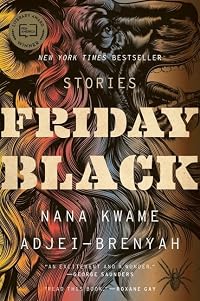
Friday Black
by Nana Kwame Adjei-Brenyah
There is 1 current discussion about this work.
On This Page
Description
A piercingly raw debut story collection from a young writer with an explosive voice; a treacherously surreal, and, at times, heartbreakingly satirical look at what it's like to be young and black in America. From the start of this extraordinary debut, Nana Kwame Adjei-Brenyah's writing will grab you, haunt you, enrage and invigorate you. By placing ordinary characters in extraordinary situations, Adjei-Brenyah reveals the violence, injustice, and painful absurdities that black men and women show more contend with every day in this country. These stories tackle urgent instances of racism and cultural unrest, and explore the many ways we fight for humanity in an unforgiving world. In "The Finkelstein Five," Adjei-Brenyah gives us an unforgettable reckoning of the brutal prejudice of our justice system. In "Zimmer Land," we see a far-too-easy-to-believe imagining of racism as sport. And "Friday Black" and "How to Sell a Jacket as Told by Ice King" show the horrors of consumerism and the toll it takes on us all. Entirely fresh in its style and perspective, and sure to appeal to fans of Colson Whitehead, Marlon James, and George Saunders, Friday Black confronts readers with a complicated, insistent, wrenching chorus of emotions, the final note of which, remarkably, is hope. show lessTags
Recommendations
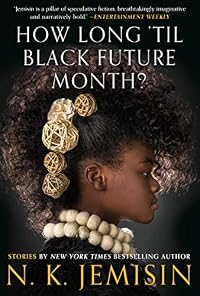
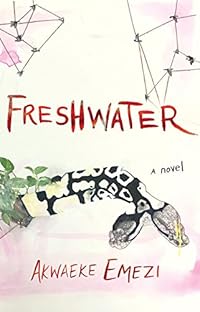
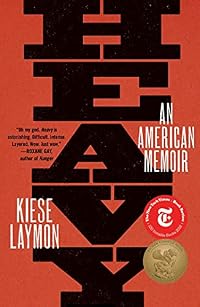
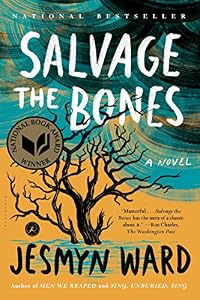
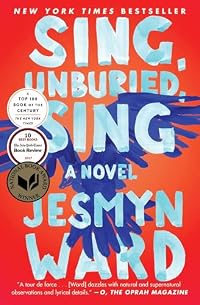
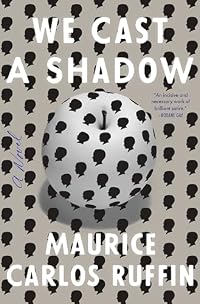
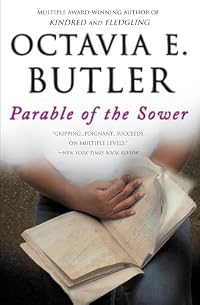
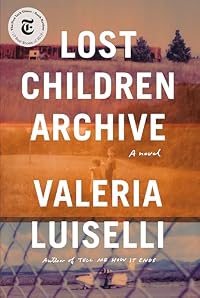
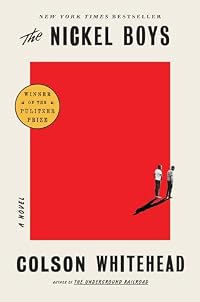
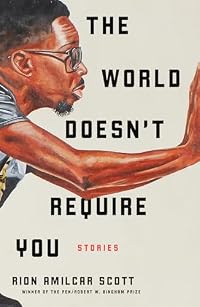
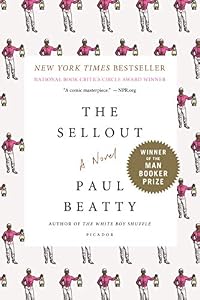
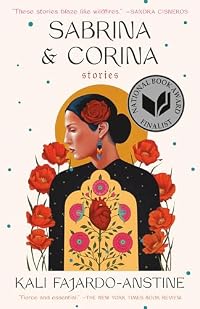
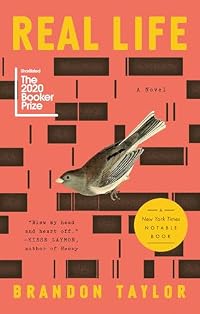
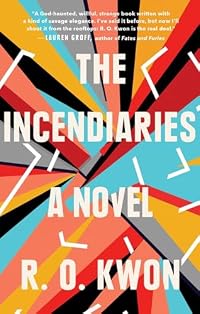

Member Recommendations
Member Reviews
Real Rating: 4.75* of five
The Publisher Says: In the stories of Adjei-Brenyah’s debut, an amusement park lets players enter augmented reality to hunt terrorists or shoot intruders played by minority actors, a school shooting results in both the victim and gunman stuck in a shared purgatory, and an author sells his soul to a many-tongued god.
Adjei-Brenyah's writing will grab you, haunt you, enrage, and invigorate you. By placing ordinary characters in extraordinary situations, Adjei-Brenyah reveals the violence, injustice, and painful absurdities that black men and women contend with every day. These stories tackle urgent instances of racism and cultural unrest and explore the many ways we fight for humanity in an unforgiving world.
I show more CHECKED THIS BOOK OUT OF MY LOCAL LIBRARY. THANKS, Y'ALL!
My Review: A young African American man writes speculative fiction about the alt-present/near-term future from the point of view of the deeply disadvantaged, the ones whose American Dream is a nightmare. An editor sees it, is probably appalled but is certainly moved, and for a minor miracle of a wonder, buys this amazingly assured debut collection of stories by first-generation American Author Adjei-Brenyah. Wherever he saw an odd, he beat it, did the young author. Syracuse University MFA? Now, with this man's debut, that means something to me, where before I'd never have so much as fluttered an eyelid as the words crossed my field of vision.
And speaking of vision, this cover is something special, isn't it? (He's no slouch in the handsome derby either!)
A statement of the powerful reading contained within. This detail image is so pretty I can't resist sharing it:
Author Adjei-Brenyah says, "I do bad at school because sometimes I think when I should be learning." (p29) I nod. I totally understand this kid who's speaking. As the school day unfolds over the next four pages, the Long Big War and HowItWas class, and not only am I clear on how we got here, I'm pretty darn sure that somehow he's come back from the future to warn us what's coming. And man is he pissed off. You won't blame him when you read the collection. Note absence of conditional in previous sentence. Not if, when. These are stories you need.
As is my habit, I'll offer some impressions of each story a la my quondam pal Bryce in his inimitable Method. (He did it better than I do, I'm only aping the form.)
The Finkelstein 5 made me want to vomit. I had to google it to be sure it wasn't reportage. Emmanuel's chant of "Fela St. John, Fela St. John" will haunt my nightmares. How we can look at ourselves as we shave and titivate in our sparkly mirrors is beyond my emotional comprehension. There is a slow-motion genocide against African Americans and this story shouts, "they released the brakes! and the hounds!" at the top of its paper lungs. 4 stars
Things My Mother Said is, in 500 or so words, a complete and compelling worldbuilding sketch. This man has the chops. 3 stars
The Era is an updated Brave New World/This Perfect Day tale about industrial mood management; its effects on high schoolers, families, hierarchies; it packs one helluva wallop as deeply undesirable "shoelookers" claim another "dumb/slow" clear-born, someone whose parents didn't use OptiLife™. Chilled me more than a martini in a shaker. Haunting for its deep anger. No one should ever think for a second that the Millennials' kids are safe.
Soma, anyone? Extra treatments? Yes, Author Ira Levin, I see your vision refuses to die as it steadily approaches. 5 stars
Lark Street is one fucked-up fever dream of guilt, loneliness, bad decisions, the crushing weight of morality grinding a boy into his mortality's disease vector.
There is no hiding from consequences in Author Adjei-Brenyah's world. 4.5 stars for some frankly unworthy-of-him gender stereotyping
The Hospital Where brings us on a w-verb-filled journey through a young writer's bargaining with the Twelve-Tongued God (I love this concept!), who promises him Everything in return for his abject servitude to Story. It's gloriously weird; it contains multitudes (of winks); it resonates with the agonized scream of an abandoned boy demanding his daddy not leave. What, indeed, have you done.
Shivery horripilatingly pure prose telling of a son's psychotic break...or possibly apotheosis...as his father succumbs by degrees to cancer in an uncaring, unfeeling system with classist assumptions informing its death-care. 5 stars
Zimmer Land felt so real to me that, again, I had to google it to be sure it wasn't. It's what I feel about the oddly innocuous-sounding "first-person shooter" games that scare me, disgusting visceral violence as the perp sees it, made more revoltingly real. Living, breathing black men get shot (but not harmed...physically) for a living. In a world where George Zimmer is free but Trayvon Martin is dead, it's almost pornographic. No, it isn't. Scratch the "almost."
The first day of Zay's new job in Zimmer Land's Creative department, a job his ex landed for him thus dragging him up from a mere black body in a safe place for a white "patron" to enact his violent racist fantasies on, is moved an hour earlier; his boss "forgot" to tell him, one senses because his boss was nudged that way by the company founder...a Zardoz-like holographic head whose body is in Cabo schmoozing the banksters for R&D money...since the founder is dating Zay's ex. Corporate politics, racism, end-stage capitalism (the park is about to allow minors in to experience the thrill of murdering a black man). What a piece of work is Man, man. 5 stars
Friday Black reminds me of why I don't do shopping during the xmas rush. I'm not all the way sure it's fiction. The insane stuff-lust that I've seen on news broadcasts as hordes violently rush displays of useless brummagem objects in a desperate race to Buy to Have to Possess the Latest...! Deaths are still rare on Black Friday...for now.... 3 stars
The Lion & The Spider interweaves the Trickster Anansi outwitting the boastful Lion with a son's fear, rage, betrayal as he learns his father is a human being without losing his need to be a son. A well-made story, if not precisely to my taste. 3.5 stars
Light Spitter takes us inside the void created when the world shovels its shit into a kid who has no way to say "no, NO, it hurts, NO" so the weight piles in-on-up until a gun answers the taunts. Horrible, horrible cruelty answered by the sneer of ballistic ammunition. Added bonus: Author uses homophobic slur! Lovely. 4 stars
How to Sell A Jacket As Told by IceKing is the continuation of "Friday Black" told by the same narrator a few years down the line. IceKing's still at the top of his game pushing crap onto people who probably don't need it, but time's ticktickticking. No one wants to be trapped in retail forever. It's not my favorite setting or PoV plus it's got a w-bomb in it, so...well...like that. 3 stars
In Retail is the other side of the rivalry from IceKing...not gonna lie, even six pages of it was no fun, I don't think this is the place Author Adjei-Brenyah needs to be setting his focus. Maybe it's all out of his system now? I for one sure hope so. 3 stars because it's not like it's poorly written, I just don't like it
Through the Flash is the hell of Eternity, the unceasing wretched quotidian repetition of one then another then another cycle of waking, eating, dying...world without end. A future bleaker than any dystopia you've ever read, packed into 27 pages full of the bile of human cruelty, the scalding freeze of knowledge without wisdom, the immutability of lives meant to be impermanent frozen into a rictus of deathlife.
So now we come to the hardest thing for Humanity to bear: Boredom. Not hunger, not violence, not anger. Boredom is the thing that will kill a human being from the inside out. A human will resort to violence and will court anger to escape from the misery, the unending loss, lack, void that is Boredom:
The film [Groundhog Day] always seemed to me to be a singularly vicious and cruel torture-porn exercise. But hey, I never thought Don Rickles was funny even as a kid. If I laugh at someone's misfortunes or disabilities, it's because I hate 'em personally. In general it's just not fun or funny to watch someone suffer, especially of boredom.
How did the world come to be so small? How does Ama, our narrator, come to be the sole possessor of life and death in her eternally renewed Inferno? Ama tells us the Water Wars wrought some awful changes on the world we thoughtlessly squandered:
So the Flash comes, the anomalous great horror of eternal and changeless repetition, and there is absolutely no one to stop the predators from consuming their fill of the prey's agonies.
Author Adjei-Brenyah understands cruelty and despair and the viciousness of the indifferent physics of the Universe far too well for someone who hasn't hit middle age. I'm sad for him. I'm grateful he chose to make his horror into art. I want to read more of his unnervingly precise images and his unpretentious prose before I shuffle off to, well, whatever it is that's next. show less
The Publisher Says: In the stories of Adjei-Brenyah’s debut, an amusement park lets players enter augmented reality to hunt terrorists or shoot intruders played by minority actors, a school shooting results in both the victim and gunman stuck in a shared purgatory, and an author sells his soul to a many-tongued god.
Adjei-Brenyah's writing will grab you, haunt you, enrage, and invigorate you. By placing ordinary characters in extraordinary situations, Adjei-Brenyah reveals the violence, injustice, and painful absurdities that black men and women contend with every day. These stories tackle urgent instances of racism and cultural unrest and explore the many ways we fight for humanity in an unforgiving world.
I show more CHECKED THIS BOOK OUT OF MY LOCAL LIBRARY. THANKS, Y'ALL!
My Review: A young African American man writes speculative fiction about the alt-present/near-term future from the point of view of the deeply disadvantaged, the ones whose American Dream is a nightmare. An editor sees it, is probably appalled but is certainly moved, and for a minor miracle of a wonder, buys this amazingly assured debut collection of stories by first-generation American Author Adjei-Brenyah. Wherever he saw an odd, he beat it, did the young author. Syracuse University MFA? Now, with this man's debut, that means something to me, where before I'd never have so much as fluttered an eyelid as the words crossed my field of vision.
And speaking of vision, this cover is something special, isn't it? (He's no slouch in the handsome derby either!)
A statement of the powerful reading contained within. This detail image is so pretty I can't resist sharing it:
Author Adjei-Brenyah says, "I do bad at school because sometimes I think when I should be learning." (p29) I nod. I totally understand this kid who's speaking. As the school day unfolds over the next four pages, the Long Big War and HowItWas class, and not only am I clear on how we got here, I'm pretty darn sure that somehow he's come back from the future to warn us what's coming. And man is he pissed off. You won't blame him when you read the collection. Note absence of conditional in previous sentence. Not if, when. These are stories you need.
As is my habit, I'll offer some impressions of each story a la my quondam pal Bryce in his inimitable Method. (He did it better than I do, I'm only aping the form.)
The Finkelstein 5 made me want to vomit. I had to google it to be sure it wasn't reportage. Emmanuel's chant of "Fela St. John, Fela St. John" will haunt my nightmares. How we can look at ourselves as we shave and titivate in our sparkly mirrors is beyond my emotional comprehension. There is a slow-motion genocide against African Americans and this story shouts, "they released the brakes! and the hounds!" at the top of its paper lungs. 4 stars
Things My Mother Said is, in 500 or so words, a complete and compelling worldbuilding sketch. This man has the chops. 3 stars
The Era is an updated Brave New World/This Perfect Day tale about industrial mood management; its effects on high schoolers, families, hierarchies; it packs one helluva wallop as deeply undesirable "shoelookers" claim another "dumb/slow" clear-born, someone whose parents didn't use OptiLife™. Chilled me more than a martini in a shaker. Haunting for its deep anger. No one should ever think for a second that the Millennials' kids are safe.
She steps to me. I stretch my neck out for her and close my eyes. She puts one hand on one side of my neck. Her hand is warm plus strong. She stabs the injector needle in. My head feels the way an orange tastes. I open my eyes and look at her. She waits. I look at her more. She frowns, then gives me another shot. And then I feel the Good.
Soma, anyone? Extra treatments? Yes, Author Ira Levin, I see your vision refuses to die as it steadily approaches. 5 stars
Lark Street is one fucked-up fever dream of guilt, loneliness, bad decisions, the crushing weight of morality grinding a boy into his mortality's disease vector.
An impossible hand punched my earlobe. An unborn fetus, aborted the day before, was standing at my bedside. His name was Jackie Gunner.
"So, I guess you didn't have the balls?" Jackie Gunner said. His voice was a stern squeak. My eyelids rolled open. He was a tiny silhouette on the end of my pillow. Smaller than a field mouse.
"Well, say something, Dad." He said Dad the way some people say cunt. "Do you even feel bad?"
"Yeah," I said. "I feel real bad."
"I feel real bad," Jackie Gunner repeated. "Is real bad a hole big enough to fit our lives in?"
"Our?" I said.
"It's a metaphor, Daddy," said a new voice, this one shy, charming even. A second tiny fetus climbed up my comforter onto my bed. Her name, I knew, was Jamie Lou.
There is no hiding from consequences in Author Adjei-Brenyah's world. 4.5 stars for some frankly unworthy-of-him gender stereotyping
The Hospital Where brings us on a w-verb-filled journey through a young writer's bargaining with the Twelve-Tongued God (I love this concept!), who promises him Everything in return for his abject servitude to Story. It's gloriously weird; it contains multitudes (of winks); it resonates with the agonized scream of an abandoned boy demanding his daddy not leave. What, indeed, have you done.
Soon I was staring at a small entryway sign that read RADIOLOGY I. In the hall there was an extremely old man in a wheelchair. He groaned steadily. His white skin looked stretched and spotty. It seemed someone had forgotten him or maybe was using him to prop open the door. There were so many tubes going in and coming out of him that I couldn't imagine where they began or ended. I walked past quickly. Farther down the same hall, a black guy in a wheelchair stared in my direction with eyes so empty I thought they might suck something out of me.
Shivery horripilatingly pure prose telling of a son's psychotic break...or possibly apotheosis...as his father succumbs by degrees to cancer in an uncaring, unfeeling system with classist assumptions informing its death-care. 5 stars
Zimmer Land felt so real to me that, again, I had to google it to be sure it wasn't. It's what I feel about the oddly innocuous-sounding "first-person shooter" games that scare me, disgusting visceral violence as the perp sees it, made more revoltingly real. Living, breathing black men get shot (but not harmed...physically) for a living. In a world where George Zimmer is free but Trayvon Martin is dead, it's almost pornographic. No, it isn't. Scratch the "almost."
The first day of Zay's new job in Zimmer Land's Creative department, a job his ex landed for him thus dragging him up from a mere black body in a safe place for a white "patron" to enact his violent racist fantasies on, is moved an hour earlier; his boss "forgot" to tell him, one senses because his boss was nudged that way by the company founder...a Zardoz-like holographic head whose body is in Cabo schmoozing the banksters for R&D money...since the founder is dating Zay's ex. Corporate politics, racism, end-stage capitalism (the park is about to allow minors in to experience the thrill of murdering a black man). What a piece of work is Man, man. 5 stars
Friday Black reminds me of why I don't do shopping during the xmas rush. I'm not all the way sure it's fiction. The insane stuff-lust that I've seen on news broadcasts as hordes violently rush displays of useless brummagem objects in a desperate race to Buy to Have to Possess the Latest...! Deaths are still rare on Black Friday...for now.... 3 stars
The Lion & The Spider interweaves the Trickster Anansi outwitting the boastful Lion with a son's fear, rage, betrayal as he learns his father is a human being without losing his need to be a son. A well-made story, if not precisely to my taste. 3.5 stars
Light Spitter takes us inside the void created when the world shovels its shit into a kid who has no way to say "no, NO, it hurts, NO" so the weight piles in-on-up until a gun answers the taunts. Horrible, horrible cruelty answered by the sneer of ballistic ammunition. Added bonus: Author uses homophobic slur! Lovely. 4 stars
How to Sell A Jacket As Told by IceKing is the continuation of "Friday Black" told by the same narrator a few years down the line. IceKing's still at the top of his game pushing crap onto people who probably don't need it, but time's ticktickticking. No one wants to be trapped in retail forever. It's not my favorite setting or PoV plus it's got a w-bomb in it, so...well...like that. 3 stars
In Retail is the other side of the rivalry from IceKing...not gonna lie, even six pages of it was no fun, I don't think this is the place Author Adjei-Brenyah needs to be setting his focus. Maybe it's all out of his system now? I for one sure hope so. 3 stars because it's not like it's poorly written, I just don't like it
Through the Flash is the hell of Eternity, the unceasing wretched quotidian repetition of one then another then another cycle of waking, eating, dying...world without end. A future bleaker than any dystopia you've ever read, packed into 27 pages full of the bile of human cruelty, the scalding freeze of knowledge without wisdom, the immutability of lives meant to be impermanent frozen into a rictus of deathlife.
So now we come to the hardest thing for Humanity to bear: Boredom. Not hunger, not violence, not anger. Boredom is the thing that will kill a human being from the inside out. A human will resort to violence and will court anger to escape from the misery, the unending loss, lack, void that is Boredom:
It's very hard at first for some people. But then if you figure that you are infinite, you are supreme and therefore the master of all things, and it's silly to be sad about things like how much your hip is always going to hurt or how you're so old that the flu means a life in bed or how gone forever your mother is.
The film [Groundhog Day] always seemed to me to be a singularly vicious and cruel torture-porn exercise. But hey, I never thought Don Rickles was funny even as a kid. If I laugh at someone's misfortunes or disabilities, it's because I hate 'em personally. In general it's just not fun or funny to watch someone suffer, especially of boredom.
How did the world come to be so small? How does Ama, our narrator, come to be the sole possessor of life and death in her eternally renewed Inferno? Ama tells us the Water Wars wrought some awful changes on the world we thoughtlessly squandered:
I don't know much about other grids in our state block, because way before the Flash came, the soldier-police—the state-sponsored war-coordination authorities—took away everyone's cars. Their slogan—"For us to serve and protect, you must conserve and respect"—is emblazoned on posters in the school, on the windows of some people's homes. ... Back before the Flash ever came, a lot of people actually loved the SPs. They thought they were keeping us safe. People believe lies, believe anything when they are afraid. That's another thing. Aren't we lucky that before the Flash all the soldier-police were deployed elsewhere?
So the Flash comes, the anomalous great horror of eternal and changeless repetition, and there is absolutely no one to stop the predators from consuming their fill of the prey's agonies.
Author Adjei-Brenyah understands cruelty and despair and the viciousness of the indifferent physics of the Universe far too well for someone who hasn't hit middle age. I'm sad for him. I'm grateful he chose to make his horror into art. I want to read more of his unnervingly precise images and his unpretentious prose before I shuffle off to, well, whatever it is that's next. show less
Short stories collections are not really my thing because they're often a mixed bag. It's like panning for gold. Friday Black is an exception in that nearly every one of the 12 stories is exceptional. Adjei-Brenyah throws down the gauntlet with the opening story "The Finkelstein 5." When the second story was sweet but forgettable, I let my guard down and completely unprepared for almost every subsequent story to slay that hard. Highlights: "The Era", "Lark Street", "Zimmer Land", and "Light Splitter". I happened to read this right around Thanksgiving, which made the Black Friday-related stories all the more impactful. I'm greatly looking forward to what he comes up with next.
The first story in this collection -- "The Finkelstein 5," which was clearly inspired by the murder of Trayvon Martin and a hundred similar acts of violence -- absolutely devastated me. It was unbelievably powerful, and I was utterly unprepared for it. I think what made it so effective was the fact that, on the one hand, it felt deeply, darkly satirical and yet, on the other, it barely seemed exaggerated at all. It was like a giant punch in the gut, and after finishing it, I had to put the book down for a while to recover.
Part of me thinks that it's almost a shame that that was the first story in the collection, as it overshadows most of what comes after it, even though what comes after it is still very good. There's a fascinating and show more often disturbing combination, here, of the bizarre and the mundane, with the frequent appearance of a streak of violence that seems equally at home in both worlds. The writing is terrific, too: never showy, but always absorbing and effective.
And then we come to the final story, "Through the Flash," about a town living through the same day over and over, and the collection ends damn near as strong as it began. This one is complex, horrific, and affecting in a way that sneaks up on you from several different directions. As I turned the final page and shut the book, I found myself murmuring "wow" out loud. Astonishing stuff. show less
Part of me thinks that it's almost a shame that that was the first story in the collection, as it overshadows most of what comes after it, even though what comes after it is still very good. There's a fascinating and show more often disturbing combination, here, of the bizarre and the mundane, with the frequent appearance of a streak of violence that seems equally at home in both worlds. The writing is terrific, too: never showy, but always absorbing and effective.
And then we come to the final story, "Through the Flash," about a town living through the same day over and over, and the collection ends damn near as strong as it began. This one is complex, horrific, and affecting in a way that sneaks up on you from several different directions. As I turned the final page and shut the book, I found myself murmuring "wow" out loud. Astonishing stuff. show less
Full disclosure to start this review: I've decided to DNF after reading about 35% of the book, just having finished the fourth story in the collection, "Lark Street", which I personally read as being blatantly anti-abortion, whether or not that is the message intended. If I'd absolutely loved the stories leading up to it, I might have stuck with the collection as a whole, but since that wasn't the case and I was able to chat about what was coming with a few other folks, I decided to move on.
I'll get back to "Lark Street" in a minute, but I first want to mention that I know a number of folks who've read the collection, and most agree that the first story--"The Finkelstein 5"--is by far the strongest. Of the ones I read, it was certainly show more the strongest, and I think it succeeded in so many ways. The one failing was potentially in gender representation, as the book has an undeniably male focus/eye, which gets problematic in later stories, and which I've heard becomes even more of an issue in the second half of the book, where the book simply lacks positive portrayals of characters who aren't men (this is what I've heard vs read for myself, but it did influence my decision to DNF at this point since it seems like I've already read the best and the worst of the book, with folks feeling much more so-so about the rest of the collection). Conceptually and structurally, though, the opener of the collection is smart and powerful, as well as being well-written (even though I'd say the prose in what I read overall feels too MFA-styled for my taste).
The next story in the collection, "Things My Mother Said", was sort of a non-entity for me. As in, I felt like I'd read similar enough before that it didn't strike me in any fashion, but it was short enough that that didn't particularly bother me after the first story's strength. The next story, "The Era", was far stronger...but it also dragged on and on, and this was also the point where I started to get uncomfortable with gender presentation, wondering if the author would ever write a positive woman or girl into the mix of the story in a way that made them feel real or more than just a stereotype. I read the story, and was glad to have read it...but it certainly didn't blow me away. I think the concept was capable of that power, but the story was just too long to deliver the impact that the concept might have been capable of, and some of the characterization issues brought it down further. It also felt fairly heavy-handed, though I took that to be the author's style.
And that's when I got to "Lark Street."
Here's the thing. Authorial intention only matters so much. I just finished reading another book where the author started out his Afterword by saying that he hated explaining his stories because his intentions didn't particularly matter--what mattered was what readers took from the story, and if he had to explain them, he'd already failed on some level. Some readers may see this story as satire, but I would argue that if it is satire, it is simply badly done and failed in its execution. I say this because I and many others in my book club did not read it as satire, and could find no good-faith argument for how someone would see it as anything but anti-abortion. And in this climate, in 2022 in the U.S., where I (and many others) am living in a state where my right to get an abortion has been curtailed, if not all but eliminated, it is extremely difficult to bend over backwards to try to read a story like this as anything but anti-abortion. I don't owe the author that time, or the mental health involved, or an acknowledgement that he might not have meant it that way (even though that's exactly what I'm saying here). The point is, it doesn't really matter if he 'meant it that way' once the story is in print and has the potential to do harm.
Why do I say it has the potential to do harm? CWs aside, the story rehashes and essentially celebrates all of the anti-abortion arguments which are posted upon billboards, posters, and in videos whenever someone aims to make an anti-abortion argument. It could quite literally be offered to a reader by a conservative anti-abortion activist who would say, "Here. Read this. It'll help you see why abortion is wrong. Why it only leads to sadness and regret." The fact that the story could be used in that manner, and that passages could be taken out of context to argue against a woman's right to have an abortion for any reason, means that it's very difficult for me to see beyond the messaging which seems so incredibly blatant. And, again, I don't owe the author or anyone else that time, because to me this is a harmful story, particularly in the political climate we're in now. Ten-fifteen years ago, it might have been edgy and a conversation-starter and something I could respect from a male writer...but to be honest, in a collection that's just come out a few years ago and would have been finalized far more recently than ten years ago, I can't in good conscience understand the reasoning behind including the story unless the author either doesn't care about a woman's right to choose OR is truly anti-abortion. And in either case, especially given the lack of positive female representation in the book, I see no need to continue reading. show less
I'll get back to "Lark Street" in a minute, but I first want to mention that I know a number of folks who've read the collection, and most agree that the first story--"The Finkelstein 5"--is by far the strongest. Of the ones I read, it was certainly show more the strongest, and I think it succeeded in so many ways. The one failing was potentially in gender representation, as the book has an undeniably male focus/eye, which gets problematic in later stories, and which I've heard becomes even more of an issue in the second half of the book, where the book simply lacks positive portrayals of characters who aren't men (this is what I've heard vs read for myself, but it did influence my decision to DNF at this point since it seems like I've already read the best and the worst of the book, with folks feeling much more so-so about the rest of the collection). Conceptually and structurally, though, the opener of the collection is smart and powerful, as well as being well-written (even though I'd say the prose in what I read overall feels too MFA-styled for my taste).
The next story in the collection, "Things My Mother Said", was sort of a non-entity for me. As in, I felt like I'd read similar enough before that it didn't strike me in any fashion, but it was short enough that that didn't particularly bother me after the first story's strength. The next story, "The Era", was far stronger...but it also dragged on and on, and this was also the point where I started to get uncomfortable with gender presentation, wondering if the author would ever write a positive woman or girl into the mix of the story in a way that made them feel real or more than just a stereotype. I read the story, and was glad to have read it...but it certainly didn't blow me away. I think the concept was capable of that power, but the story was just too long to deliver the impact that the concept might have been capable of, and some of the characterization issues brought it down further. It also felt fairly heavy-handed, though I took that to be the author's style.
And that's when I got to "Lark Street."
Here's the thing. Authorial intention only matters so much. I just finished reading another book where the author started out his Afterword by saying that he hated explaining his stories because his intentions didn't particularly matter--what mattered was what readers took from the story, and if he had to explain them, he'd already failed on some level. Some readers may see this story as satire, but I would argue that if it is satire, it is simply badly done and failed in its execution. I say this because I and many others in my book club did not read it as satire, and could find no good-faith argument for how someone would see it as anything but anti-abortion. And in this climate, in 2022 in the U.S., where I (and many others) am living in a state where my right to get an abortion has been curtailed, if not all but eliminated, it is extremely difficult to bend over backwards to try to read a story like this as anything but anti-abortion. I don't owe the author that time, or the mental health involved, or an acknowledgement that he might not have meant it that way (even though that's exactly what I'm saying here). The point is, it doesn't really matter if he 'meant it that way' once the story is in print and has the potential to do harm.
Why do I say it has the potential to do harm? CWs aside, the story rehashes and essentially celebrates all of the anti-abortion arguments which are posted upon billboards, posters, and in videos whenever someone aims to make an anti-abortion argument. It could quite literally be offered to a reader by a conservative anti-abortion activist who would say, "Here. Read this. It'll help you see why abortion is wrong. Why it only leads to sadness and regret." The fact that the story could be used in that manner, and that passages could be taken out of context to argue against a woman's right to have an abortion for any reason, means that it's very difficult for me to see beyond the messaging which seems so incredibly blatant. And, again, I don't owe the author or anyone else that time, because to me this is a harmful story, particularly in the political climate we're in now. Ten-fifteen years ago, it might have been edgy and a conversation-starter and something I could respect from a male writer...but to be honest, in a collection that's just come out a few years ago and would have been finalized far more recently than ten years ago, I can't in good conscience understand the reasoning behind including the story unless the author either doesn't care about a woman's right to choose OR is truly anti-abortion. And in either case, especially given the lack of positive female representation in the book, I see no need to continue reading. show less
Friday Black is an impressive début collection of short stories set in a dystopian version of contemporary America, which touches on race, what it means to be an African American man in this country, and the consumer driven culture we live in. The first story, 'The Finkelstein 5', is narrated by a young man who can adjust his blackness level to fit his dress, attitude and emotional state, who is outraged by the verdict of a trial involving five young black kids and a white man and struggles to balance his rage with his responsibilities. In 'Lark Street', a young man who has gotten his girlfriend pregnant is forced to face the consequences of their decision to abort the pregnancy, in a wholly unexpected manner. 'Zimmer Land' is narrated show more by another young man who works in a virtual reality amusement park, where he portrays a black man who walks in an unfamiliar neighborhood and is confronted by an offended and usually armed resident who challenges his right to be there. The title story is a brilliant and hilarious parody set in the early morning hours on Black Friday in a suburban shopping mall, as store employees face a crazed mob who will bite, maim and even kill their competitors and the staff for a PoleFace winter jacket or other item that will ensure the continued love of a spouse or child on Christmas Day.
The best of the short stories in Friday Black are amongst the best and most unique ones I've ever read, as Adjei-Brenyah has his pulse firmly on the contradictions and absurdities of American society. The remaining stories are good ones, but pale in comparison to the best of them. Friday Black is a superb and highly entertaining book, which is deserving of the high praise and recognition it has received. show less
The best of the short stories in Friday Black are amongst the best and most unique ones I've ever read, as Adjei-Brenyah has his pulse firmly on the contradictions and absurdities of American society. The remaining stories are good ones, but pale in comparison to the best of them. Friday Black is a superb and highly entertaining book, which is deserving of the high praise and recognition it has received. show less
Brutal and graceful. There is magic in true storytelling, moments that shake your perceptions loose and allow you to look a new way. The title piece seems to be the standout for many, but I will carry The Finkelstein 5 and The Lion & The Spider with me. Extremely intelligent, incisive and emotional.
I picked this off a recommended reading shelf because my librarians are awesome, but now I need to buy a copy I can keep.
I picked this off a recommended reading shelf because my librarians are awesome, but now I need to buy a copy I can keep.
Friday Black received a lot of attention and appeared on several "best books of 2018" lists. So as someone who likes short stories and is a sucker for a good book list, I picked up a copy. It really is as good as the hype makes it out to be. The first story, The Finkelstein 5, hits with all the force of a chain saw swung through the air and then immediately follows with an entirely different, but also powerful story called Things My Mother Said.
Many of the stories are set in versions of a dystopian future America and concern events like a Black Friday sale gone violent, a man who works for a company that provides people to engage in live action role-play involving seeing a strange black guy in your neighborhood and a bleak, apocalyptic show more tale of people having to return to a specific time and place over and over again.
I was impressed with this collection and I look forward to reading more by Adjei-Brenyah. show less
Many of the stories are set in versions of a dystopian future America and concern events like a Black Friday sale gone violent, a man who works for a company that provides people to engage in live action role-play involving seeing a strange black guy in your neighborhood and a bleak, apocalyptic show more tale of people having to return to a specific time and place over and over again.
I was impressed with this collection and I look forward to reading more by Adjei-Brenyah. show less
Members
- Recently Added By
Lists

2019 Notable Books for Adults
26 works; 3 members

Overdue Podcast
803 works; 9 members

Kirkus Starred Fiction Reviews of Books Published in 2018
330 works; 3 members

Amazon best fictional genre picks monthly for 2018
418 works; 9 members

To Read
617 works; 7 members

Youth: BLM
265 works; 1 member

living room bookshelf
150 works; 1 member
Talk Discussions
Current Discussions
26Shorts2026: prompt --- set in North America in 26 Short Stories for 2026 (May 19)
Author Information

4+ Works 2,863 Members
Some Editions
Awards and Honors
Awards
Distinctions
The Guardian Book of the Day (2018-12-31)
Common Knowledge
- Canonical title*
- Friday black
- People/Characters
- IceKing; Emmanuel Gyan; Mr. Gyan; Mrs. Gyan; George Wilson Dunn; Boogie (show all 32); Mary "Mistress" Redding; Tyler Mboya; Fela St. John; Akua Harris; Marcus Harris; J. D. Heroy; Tiffany Dunn; Rodman Dunn; Ben; Marlene; Leslie McStowe; Jackie Gunner; Jamie Lou; Twelve-tongued God; Isaiah; Melanie; Anansi; Lion; Melanie Hayes; Deirdra Hayes; William "Fuckton" Cropper; Vince Vice; Porter Lanks; Ama "Knife Queen" Adusei; Ikenna "Ike" Adusei; Carl Samuel
- Important places
- Valley Ridge, South Carolina, USA; Zimmer Land; Bergen County, New Jersey, USA; Ramapo Middle School, New Jersey, USA; Prominent Mall; Wetmoss High School (show all 7); Ridgemore University
- Epigraph
- Anything you can imagine you possess.
-KENDRICK LAMAR - Dedication*
- Pour ma mère, qui m'a dit :
« Comment peux-tu t'ennuyer ?
Combien de livres as-tu écrits ? » - First words
- Fela, the headless girl, walked towards Emmanuel.
- Last words
- (Click to show. Warning: May contain spoilers.)And if you are with your family, or anyone at all, when it comes, you feel silly and scared, but at least not alone.
- Blurbers
- Gay, Roxane; Karr, Mary; Saunders, George; Spiotta, Dana; Dee, Jonathan; Flowers, Arthur (show all 7); Tillman, Lynne
- Original language
- English
- Canonical DDC/MDS
- 813.6
- Canonical LCC
- PS3601.D49
*Some information comes from Common Knowledge in other languages. Click "Edit" for more information.
Classifications
Statistics
- Members
- 1,108
- Popularity
- 22,777
- Reviews
- 58
- Rating
- (3.90)
- Languages
- 8 — Catalan, Dutch, English, French, German, Italian, Spanish, Turkish
- Media
- Paper, Audiobook, Ebook
- ISBNs
- 23
- ASINs
- 5