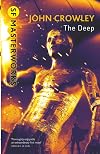
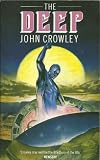
The Deep
by John Crowley
On This Page
Description
For many generations the Just have been at war with the Protectors. In their strange world, supported by a huge pillar poised in the vast and mysterious Deep, ritual bloodshed and sorcery have obsessed the inhabitants since the beginning of time. Half human, half machine, sexless and hairless, the Visitor from the skies enters the world on a mission unknown even to himself. Is he a peacemaker between the warrior clans, an observer, or, with his phenomenal qualities, a warrior himself, the show more likes of which this planet has never seen before? Only time can tell, and time is something that his makers have not allowed for ... show lessTags
Recommendations





















Member Reviews
John Crowley's first novel The Deep is short but dense, difficult of access with frequently opaque characters who are significantly ignorant of their own historical and cosmological situation. In his introduction to the Gollancz SF Masterworks edition, Ken MacLeod calls it "a cold little diamond of hard SF," and there is in fact a rational, technological reading for all of the events and circumstances of the novel, but they are quite mysterious and "magical" (in the Clarkean sense).
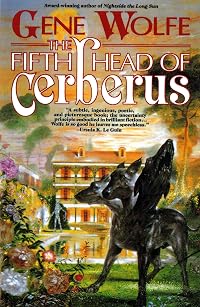
The obvious comparanda are books by Gene Wolfe: his much later Book of the Long Sun series within the Solar Cycle in one clear respect, but also the early Fifth Head of Cerberus from just a few years prior to The Deep. These authors present readers with show more different worlds as understood by their inhabitants, so that those differences can never be made lucid at the outset, since the characters are "at home" there. They take for granted some things we would find exotic, so those are not remarked, and they don't have access to our explanatory frameworks.
The Deep is also, by Crowley's admission, a science-fictional riff on the English Wars of the Roses. So it has perplexing levels of intrigue and motive. (This historical referent also puts it in a class with George R. R. Martin's Song of Ice and Fire series, I guess, along with Robert Irwin's terrific Wonders Will Never Cease.)
Crowley is perhaps best known for his contemporary fantasy Little, Big and the Ægypt tetralogy, which certainly have the sophistication of The Deep, but have very different narrative styles which I would say are more accessible. There are a few thematic elements that persist, though. Cartomancy with an unusual deck and the use of emblematic images in cultural transmission are already an interest for Crowley from the outset.
I enjoyed The Deep and might read it again at some point. It was very slow going, and I often paused to re-read a page, trying to picture the scenes and to fathom the people inhabiting them. The book contains some powerful moments and ideas. Crowley is something of a "writer's writer," and the vertiginous qualities of this debut certainly showed him as such. show less
The obvious comparanda are books by Gene Wolfe: his much later Book of the Long Sun series within the Solar Cycle in one clear respect, but also the early Fifth Head of Cerberus from just a few years prior to The Deep. These authors present readers with show more different worlds as understood by their inhabitants, so that those differences can never be made lucid at the outset, since the characters are "at home" there. They take for granted some things we would find exotic, so those are not remarked, and they don't have access to our explanatory frameworks.
The Deep is also, by Crowley's admission, a science-fictional riff on the English Wars of the Roses. So it has perplexing levels of intrigue and motive. (This historical referent also puts it in a class with George R. R. Martin's Song of Ice and Fire series, I guess, along with Robert Irwin's terrific Wonders Will Never Cease.)
Crowley is perhaps best known for his contemporary fantasy Little, Big and the Ægypt tetralogy, which certainly have the sophistication of The Deep, but have very different narrative styles which I would say are more accessible. There are a few thematic elements that persist, though. Cartomancy with an unusual deck and the use of emblematic images in cultural transmission are already an interest for Crowley from the outset.
I enjoyed The Deep and might read it again at some point. It was very slow going, and I often paused to re-read a page, trying to picture the scenes and to fathom the people inhabiting them. The book contains some powerful moments and ideas. Crowley is something of a "writer's writer," and the vertiginous qualities of this debut certainly showed him as such. show less
This is a great, weird, crazy little sf-fantasy that I love for reasons I can't really put my finger on. Crowley's ability to simply write is obviously one of the elements that works in the book's favour, though my review of [b:Little Big|2612|The Tipping Point How Little Things Can Make a Big Difference|Malcolm Gladwell|http://photo.goodreads.com/books/1298411975s/2612.jpg|2124255] will show that, in my opinion at least, that isn't always enough to carry a Crowley book.
I can (and did) easily imagine this as a movie from the 70's with David Bowie starring as the enigmatic Visitor from the stars (a role he is familiar with) as he wanders in an amnesiac haze through the strange flat-earth world created by Crowley. Throughout his journey show more he witnesses the internecine wars of the Reds and the Blacks, the two reigning groups of aristocrats (who seem to be something of an amalgam of playing cards and chess pieces...though more fleshed out than that description implies) along with the guerilla resistance of the Just.
There's obviously a fairly strong allegorical element to this tale, and normally I don't like that, but Crowley manages to overcome this and still make his characters people, despite their obvious archetypes. Crowley's concerns with examining how human power corrupts, even when used with the best of intentions, and the idea of examining how a closed system will develop when only certain known external factors are allowed to be introduced were interesting, but ultimately I think this book's success lies in the fact that it was a story easy to get lost in and simply enjoy from start to finish. show less
I can (and did) easily imagine this as a movie from the 70's with David Bowie starring as the enigmatic Visitor from the stars (a role he is familiar with) as he wanders in an amnesiac haze through the strange flat-earth world created by Crowley. Throughout his journey show more he witnesses the internecine wars of the Reds and the Blacks, the two reigning groups of aristocrats (who seem to be something of an amalgam of playing cards and chess pieces...though more fleshed out than that description implies) along with the guerilla resistance of the Just.
There's obviously a fairly strong allegorical element to this tale, and normally I don't like that, but Crowley manages to overcome this and still make his characters people, despite their obvious archetypes. Crowley's concerns with examining how human power corrupts, even when used with the best of intentions, and the idea of examining how a closed system will develop when only certain known external factors are allowed to be introduced were interesting, but ultimately I think this book's success lies in the fact that it was a story easy to get lost in and simply enjoy from start to finish. show less
I couldn't finish this. Crowley is one of my favorite authors, so I was excited to see his take on the Wars of the Roses. But the problem is that even though I specialized in late medieval British history in grad school, the Wars of the Roses have always been totally impenetrable to me and I have never been able to keep the people straight or make sense of anything that happened. Reading this novel, I also could not keep the people straight or make sense of anything that happened. There are a lot of characters with very similar names, so I could never figure out who was who. I was very interested in the alien? Visitor, but he didn't appear often enough in the novel to hold my attention.
As always, Crowley's writing style manages to be show more both very sparse and very evocative: even though this is his first book, it bears the hallmarks of his style. show less
As always, Crowley's writing style manages to be show more both very sparse and very evocative: even though this is his first book, it bears the hallmarks of his style. show less
I have been reading older books, in part because back then they were still publishing short books, which are nice when time is limited.
This book was very intriguing, I kept trying to understand more of the world than I did. I guess it is the 'mysterious stranger with no mystery tries to understand mission' theme, but with an interesting twist. The world he falls in is totally confusing to the reader, and feels a bit artificial and amiss - but that is by design.
I kept feeling I was somehow missing some clues that would make more sense of it, but I still enjoyed reading it
This book was very intriguing, I kept trying to understand more of the world than I did. I guess it is the 'mysterious stranger with no mystery tries to understand mission' theme, but with an interesting twist. The world he falls in is totally confusing to the reader, and feels a bit artificial and amiss - but that is by design.
I kept feeling I was somehow missing some clues that would make more sense of it, but I still enjoyed reading it
Vele generaties lang al zijn de Rechtvaardigen in oorlog met de Beschermheren. In hun vreemde wereld, gedragen door een reusachtige zuil, oprijzend uit de gigantische, mysterieuze Diepte, spelen rituele strijd en onverzoenlijke vetes al sinds het begin van de Tijd een dodelijk spel.
Een Bezoeker uit de hemel, half menselijk, half machine, geslachtloos, haarloos, betreedt deze wereld met een opdracht die zelfs hij niet kent. Is het een vredestichter tussen de Roden en de Zwarten, een observator, of meer dan dat?
Zijn raadselachtige aanwezigheid beïnvloedt alle partijen, en brengt een kettingreactie van gebeurtenissen teweeg die van diepgaande invloed zal zijn op de wereld van de Diepte.
Een Bezoeker uit de hemel, half menselijk, half machine, geslachtloos, haarloos, betreedt deze wereld met een opdracht die zelfs hij niet kent. Is het een vredestichter tussen de Roden en de Zwarten, een observator, of meer dan dat?
Zijn raadselachtige aanwezigheid beïnvloedt alle partijen, en brengt een kettingreactie van gebeurtenissen teweeg die van diepgaande invloed zal zijn op de wereld van de Diepte.
May 2, 2025Dutch
Ratings
Members
- Recently Added By
Lists

S.F. Masterworks (Complete)
229 works; 15 members

SF Masterworks
193 works; 8 members
Talk Discussions
Past Discussions
Hat tip to Thom in Good Show Sir! — bad science fiction and fantasy covers (November 2024)
Author Information

46+ Works 12,780 Members
John Crowley was a recipient of the American Academy & Institute of Arts & Letters Award for Literature. He lives in the hills above the Connecticut River in northern Massachusetts with his wife & twin daughters. (Bowker Author Biography)
Some Editions
Series
Belongs to Publisher Series
SF Masterworks (New design)
Work Relationships
Common Knowledge
- Canonical title*
- L'abîme
- Original title
- The Deep
- Original publication date
- 1975-04
- Epigraph
- Canst thou draw out Leviathan with an hook?
Or his tongue with a cord which thou lettest down?
Will he make a covenant with thee?
And wilt thou takest him for a servant for ever?
Lay thine ... (show all)hand upon him,
Remember the battle, do no more
Job - Dedication
- In memorium
J.B.C. - First words
- After the skirmish, two Endwives found him lying in the darkness next to the great silver egg.
- Last words
- (Click to show. Warning: May contain spoilers.)The carriage's dappled gelding quietly cropped the sparkling, sunlit grass.
- Blurbers
- Le Guin, Ursula K.
*Some information comes from Common Knowledge in other languages. Click "Edit" for more information.
Classifications
Statistics
- Members
- 456
- Popularity
- 66,921
- Reviews
- 6
- Rating
- (3.55)
- Languages
- English, French, German
- Media
- Paper, Ebook
- ISBNs
- 11
- ASINs
- 9