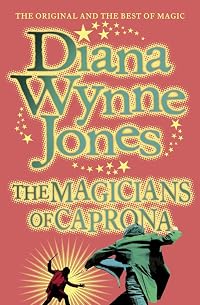
The Magicians of Caprona
by Diana Wynne Jones
The Chronicles of Chrestomanci: Publication (03), The Chronicles of Chrestomanci: Chronological (07)
On This Page
Description
Tonino is the only person in the famous Montana household who wasn't born with an instinct for creating spells, but he has other gifts. His ability to communicate with cats just might help defend the city of Caprona against a mysterious enchanter -- but only if Tonino can learn to cooperate with a girl from the hated Petrocchi family of spell-makers.Tags
Recommendations

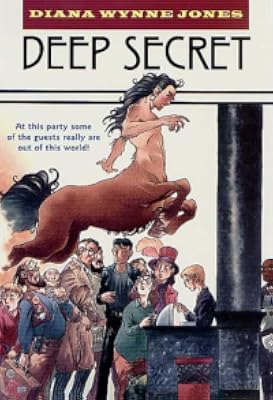
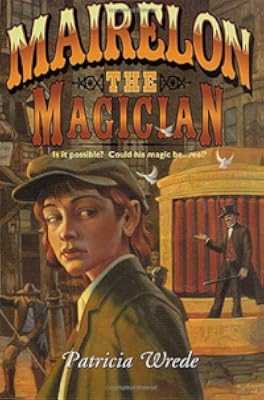


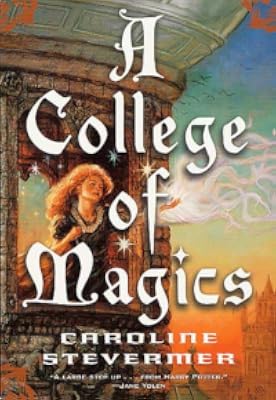


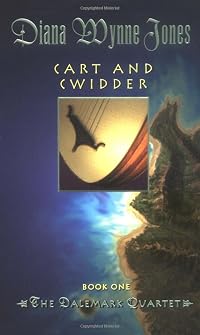
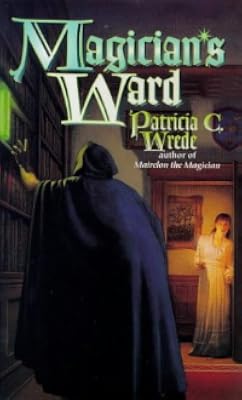
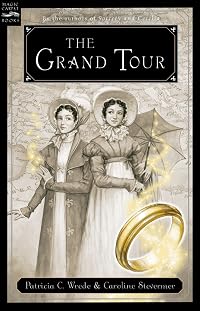
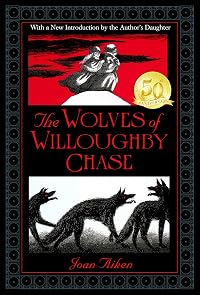

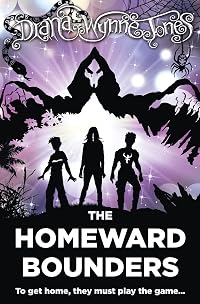
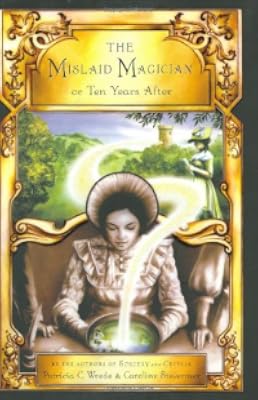
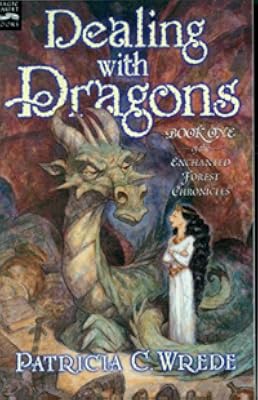
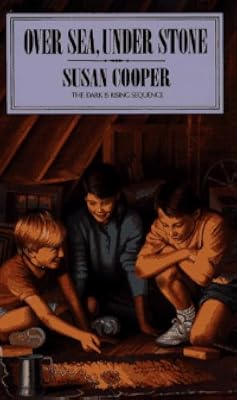
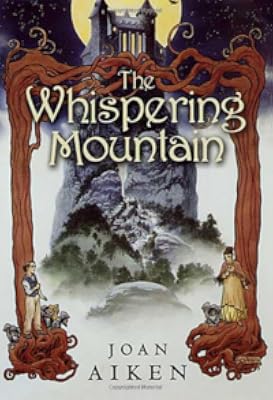

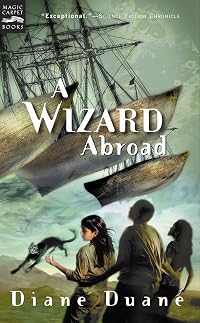
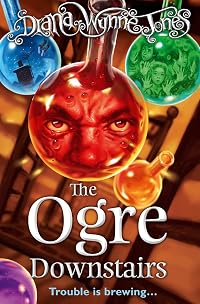
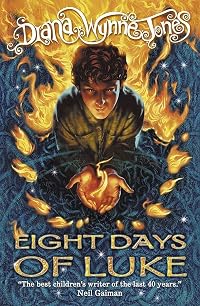
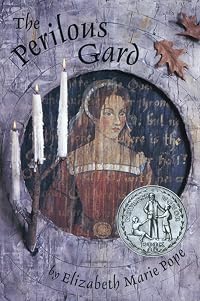
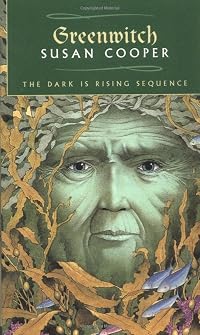
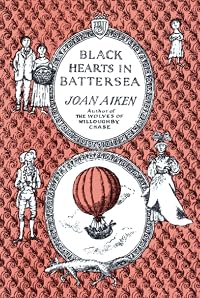
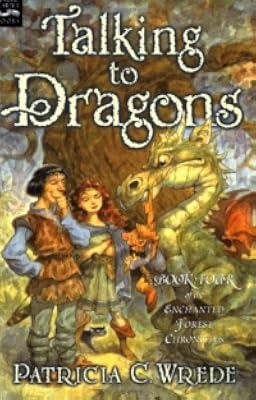
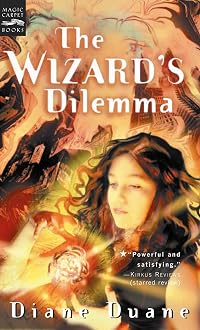


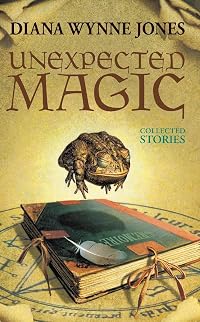

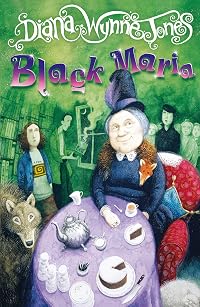
Member Recommendations

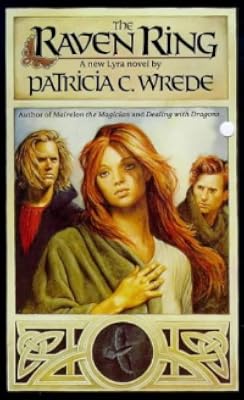
ed.pendragon The youngster Tonino appears in both these tales.
30
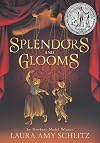
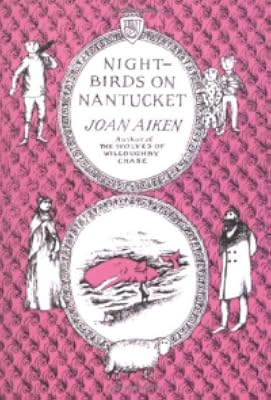
Inky_Fingers Both magical fantasies in which children are turned into puppets.

Member Reviews
Oh so good; this one is up there with The Lives of Christopher Chant and Charmed Life. The large cast of characters is great fun and lends a nonlinear quality to some of the book's problems and eventual solutions. Interesting setting, too.
I love when Jones writes cats! Benvenuto's paw shooting out for vigorous licking is just perfect. The cats sort of make this book for me, and I think the cats and their relationships with the humans make me like the humans more.
I did find the Punch and Judy scene pretty disturbing and won't be handing the one to my sensitive young reader very soon.
I love when Jones writes cats! Benvenuto's paw shooting out for vigorous licking is just perfect. The cats sort of make this book for me, and I think the cats and their relationships with the humans make me like the humans more.
I did find the Punch and Judy scene pretty disturbing and won't be handing the one to my sensitive young reader very soon.
First things first: I wondered why Diana Wynne Jones had chosen the name Caprona to use in the title of this children’s book. Was it from the Latin caprona ‘forelock’? Or from a type of butterfly? Or perhaps in homage to an island featuring in Edgar Rice Burroughs’ The Land that Time Forgot? None of these notions really convinced.
It seems most likely that she borrowed the name from a village in the Arno valley in Tuscany, upriver from Pisa and to the west of Florence. While relatively insignificant now, in the Middle Ages Caprona was of enough importance to feature in Dante’s Inferno when its castle was squabbled over by the opposing armies of Pisa and Florence. In this book the town is besieged by the 20th-century armies of show more Pisa, Florence and Sienna, city-states all bordering the unfortunate Dukedom of Caprona which, in this alternate world fantasy, retains a mix of medieval and early 20th-century customs and technology, not to mention magic. So we perhaps have to imagine an anachronistically prosperous Caprona in the valley of the Voltava (a witty conflation of words derived from the Italian voltare ‘to turn’ and the Czech river Vltava, ‘wild water’) based on the grander ground plans of Florence and other Tuscan cities.
I’d forgotten how well Jones can sometimes draw you into a story before you're aware of it, even on a second reading. Borrowing from the familiar trope in Romeo and Juliet, with its two noble but feuding families alike in dignity, The Magicians of Caprona is narrated from the viewpoints of young Tonino and Paolo in the Montana family, which suspects arch-rivals the Petrocchi family of plotting the downfall of their state. Needless to say, the Petrocchi clan believe the same of the Montanas. The whole is complicated by the secret romance between two members of the opposing families.
Interweaving this trope are other strands: the White Devil, Punch and Judy, and the Angel of Caprona. The first obviously draws its inspiration from Webster’s revenge tragedy The White Devil, itself based on a Jacobean proverb which declared that "the white devil is worse than the black," the White Devil of Jones’ story dissembling in just such a way. The second thread concerns the Punch and Judy puppet theatre. Originally the show was based on Italian Commedia dell’Arte marionettes, but in England evolved into the glove puppet version; in Jones’ alternate world fiction the glove puppets have become familiar in Italy, and the Duke of Caprona’s childish obsession with this miniature world is employed to great effect, both in the plot and in its metaphorical guises.
Another thing I loved about the book's plot was the concept of the song ‘The Angel of Caprona’ which, true to the root of the word ‘enchant’, had the power to effect magic. The Latin text was concocted by Diana’s husband John (to whom the book is dedicated), helped by another academic the late Basil Cottle (one of whose lectures I remember attending when I lived in Bristol, Diana's home). The words conveniently fit to the Medieval Latin hymn Tantum Ergo Sacramentum (which I used to sing when I was an angelic Catholic schoolboy; alas now I am neither angelic, Catholic, nor a schoolboy). Even the English 'translation' earlier in the book fits to the tune. (It would be interesting to know if the words in I maghi di Caprona, the 2002 Italian translation, also scanned the words to fit.)
Like the appearance of the figure of Chrestomanci, the Angel of Caprona itself functions as an expected deus ex machine (though its existence sits uncomfortably with Jones’ professed atheism) in the climax of the story. On one visit to Tuscany I remember being impressed by the giant angel at the top of Lucca’s cathedral facade, and that may have been an inspiration for Caprona's angel. Or it could have been the gilded angel on the spire of Mont-Saint-Michel in Normandy. Or, closer to home, the massive bronze angel on the facade of Coventry Cathedral in the West Midlands.
I wouldn’t want to give the impression, however, that, wonderfully rich though the book is in its diverse cultural references, that these were essential for its appreciation as a work of fiction. Especially for its young target audience The Magicians of Caprona has to work on its own merits, drawing the reader in with its sympathetic characters, its narrative power and its language. On the basis of these alone I’m confident that it does succeed for young readers of all ages.
Postscript
My edition has a cover illustration which is inaccurate and misleading. It presumably shows the duel between the heads of the two magical households, Casa Montana and Casa Petrocchi but in such a way that displays the influence of the Harry Potter books: the duellists wear hoods and use wands, familiar from Rowling's wizarding world but entirely inappropriate for the Chrestomanci tales where wands are significantly absent. Earlier and later British editions don't make the same mistake, revealing that the cover artists had actually read the book carefully.
http://calmgrove.wordpress.com/2013/03/26/caprona/ show less
It seems most likely that she borrowed the name from a village in the Arno valley in Tuscany, upriver from Pisa and to the west of Florence. While relatively insignificant now, in the Middle Ages Caprona was of enough importance to feature in Dante’s Inferno when its castle was squabbled over by the opposing armies of Pisa and Florence. In this book the town is besieged by the 20th-century armies of show more Pisa, Florence and Sienna, city-states all bordering the unfortunate Dukedom of Caprona which, in this alternate world fantasy, retains a mix of medieval and early 20th-century customs and technology, not to mention magic. So we perhaps have to imagine an anachronistically prosperous Caprona in the valley of the Voltava (a witty conflation of words derived from the Italian voltare ‘to turn’ and the Czech river Vltava, ‘wild water’) based on the grander ground plans of Florence and other Tuscan cities.
I’d forgotten how well Jones can sometimes draw you into a story before you're aware of it, even on a second reading. Borrowing from the familiar trope in Romeo and Juliet, with its two noble but feuding families alike in dignity, The Magicians of Caprona is narrated from the viewpoints of young Tonino and Paolo in the Montana family, which suspects arch-rivals the Petrocchi family of plotting the downfall of their state. Needless to say, the Petrocchi clan believe the same of the Montanas. The whole is complicated by the secret romance between two members of the opposing families.
Interweaving this trope are other strands: the White Devil, Punch and Judy, and the Angel of Caprona. The first obviously draws its inspiration from Webster’s revenge tragedy The White Devil, itself based on a Jacobean proverb which declared that "the white devil is worse than the black," the White Devil of Jones’ story dissembling in just such a way. The second thread concerns the Punch and Judy puppet theatre. Originally the show was based on Italian Commedia dell’Arte marionettes, but in England evolved into the glove puppet version; in Jones’ alternate world fiction the glove puppets have become familiar in Italy, and the Duke of Caprona’s childish obsession with this miniature world is employed to great effect, both in the plot and in its metaphorical guises.
Another thing I loved about the book's plot was the concept of the song ‘The Angel of Caprona’ which, true to the root of the word ‘enchant’, had the power to effect magic. The Latin text was concocted by Diana’s husband John (to whom the book is dedicated), helped by another academic the late Basil Cottle (one of whose lectures I remember attending when I lived in Bristol, Diana's home). The words conveniently fit to the Medieval Latin hymn Tantum Ergo Sacramentum (which I used to sing when I was an angelic Catholic schoolboy; alas now I am neither angelic, Catholic, nor a schoolboy). Even the English 'translation' earlier in the book fits to the tune. (It would be interesting to know if the words in I maghi di Caprona, the 2002 Italian translation, also scanned the words to fit.)
Like the appearance of the figure of Chrestomanci, the Angel of Caprona itself functions as an expected deus ex machine (though its existence sits uncomfortably with Jones’ professed atheism) in the climax of the story. On one visit to Tuscany I remember being impressed by the giant angel at the top of Lucca’s cathedral facade, and that may have been an inspiration for Caprona's angel. Or it could have been the gilded angel on the spire of Mont-Saint-Michel in Normandy. Or, closer to home, the massive bronze angel on the facade of Coventry Cathedral in the West Midlands.
I wouldn’t want to give the impression, however, that, wonderfully rich though the book is in its diverse cultural references, that these were essential for its appreciation as a work of fiction. Especially for its young target audience The Magicians of Caprona has to work on its own merits, drawing the reader in with its sympathetic characters, its narrative power and its language. On the basis of these alone I’m confident that it does succeed for young readers of all ages.
Postscript
My edition has a cover illustration which is inaccurate and misleading. It presumably shows the duel between the heads of the two magical households, Casa Montana and Casa Petrocchi but in such a way that displays the influence of the Harry Potter books: the duellists wear hoods and use wands, familiar from Rowling's wizarding world but entirely inappropriate for the Chrestomanci tales where wands are significantly absent. Earlier and later British editions don't make the same mistake, revealing that the cover artists had actually read the book carefully.
http://calmgrove.wordpress.com/2013/03/26/caprona/ show less
Two rival spell-casting families, the Montanas and the Petroccis, are locked in a bitter feud. When their magic begins failing and their city faces threats of war, young Tonino Montana and Angelica Petrocchi join forces to unravel the sabotage and save Caprona.
The Dukedom of Caprona, an independent Italian city-state where magic is musical and spells are highly volatile. Casa Montana and Casa Petrocci are the city's two premier magical families. They have feuded for generations, each blaming the other for the city's fading magical prowess.
Rival city-states are preparing to conquer Caprona because of its weakening defenses. Meanwhile, the city's magic is going disastrously wrong, and children from both houses suddenly disappear amid show more rumors of an evil White Devil.
Tonino Montana, mistakenly considered weak at magic, and Angelica Petrocci are thrust together. They are magically forced to work as a team, compelling them to overcome their families' ingrained hatred. They discover they are being manipulated by a hidden malevolence, and their adventure ultimately involves them navigating a living puppet show.
To solve the ultimate mystery and save the city, the powerful enchanter Chrestomanci intervenes to help the children put the final pieces of the puzzle together and reveal the true villains. show less
The Dukedom of Caprona, an independent Italian city-state where magic is musical and spells are highly volatile. Casa Montana and Casa Petrocci are the city's two premier magical families. They have feuded for generations, each blaming the other for the city's fading magical prowess.
Rival city-states are preparing to conquer Caprona because of its weakening defenses. Meanwhile, the city's magic is going disastrously wrong, and children from both houses suddenly disappear amid show more rumors of an evil White Devil.
Tonino Montana, mistakenly considered weak at magic, and Angelica Petrocci are thrust together. They are magically forced to work as a team, compelling them to overcome their families' ingrained hatred. They discover they are being manipulated by a hidden malevolence, and their adventure ultimately involves them navigating a living puppet show.
To solve the ultimate mystery and save the city, the powerful enchanter Chrestomanci intervenes to help the children put the final pieces of the puzzle together and reveal the true villains. show less
This one's set in an alternate-world Italy – all the Chrestomanic books are set in a kind of quasi-steampunk parallel universe, and someone is going to yell at me now for misusing the word 'steampunk', but never mind – with two feuding families of enchanters, a city under magical siege, a Duke who's obsessed with Punch and Judy, of all the terrifying things, and two sets of children from either side who need to join forces to help save the day.
Diana Wynne Jones has a very distinct style, fun and magical and complex, so much so that at times it's a little confusing. And I like it a lot. This book was entertaining and enjoyable, just as I had come to expect from a book by her. It's just that the ending seemed a bit - not abrupt - but as if something more is supposed to happen; I'm not sure if I get this feeling because it's a part of a series. Even though the books might just as well be standalones. Anyhow, I can't wait to conrinue the series, and find out if there is really an overarching factor that connects between the lot of them...
A less complex Chrestomanci book. It seems like "The Pinhoe Egg" synthesisizes themes from the previous book. This book's theme is the pointless quarrel that just goes on and on under its own momentum because of some unknown thing that happens in the past and that causes plenty of harm in the present. Jones shoves a good satire of war into the mix. Jones doesn't think "Punch and Judy" is terribly funny; I'm sure she is correct.
This... had everything, and I loved it to bits. Very, very well executed *and* the writing was fun. Also elements of Romeo and Juliet all over the place, but *shrugs* can't have everything, and it didn't lean too heavily on that. Or in the ways it might have.
Members
- Recently Added By
Lists

NPRs your favorites: 100 Best Ever Teen Novels
237 works; 49 members

Favourite books by Diana Wynne Jones
35 works; 3 members

Top Five Books of 2014
1,064 works; 398 members

Unshelved Book Clubs
579 works; 5 members

Books Read in 2011
684 works; 19 members

Cats in Fiction
209 works; 9 members

Main Character is aged 10-19
361 works; 6 members

Witches and Wizards Oh My
135 works; 11 members
Author Information

112+ Works 80,448 Members
Diana Wynne Jones was born in London on August 16, 1934. In 1953, she began school at St. Anne's College Oxford and attended lectures by J. R. R. Tolkien and C. S. Lewis. After graduation, she created plays for children that were performed at the London Arts Theatre. Her first book was published in 1973. She wrote over 40 books during her lifetime show more including Dark Lord of Derkholm, Earwig and the Witch, and the Chrestomanci series. She won numerous awards including the Guardian Award for Children's Books in 1977 for Charmed Life, the Boston Globe-Horn Book Award in 1984 for Archer's Goon, the Mythopeic Award in 1999, the Karl Edward Wagner Award in 1999, and the Life Achievement Award from the World Fantasy Organization in 2007. Her book Howl's Moving Castle was adapted into an animated film by director Hayao Miyazaki, and the film was nominated for an Academy Award for Best Animated Feature. She died from lung cancer on March 26, 2011 at the age of 76. (Bowker Author Biography) show less
Some Editions
Series

The Chronicles of Chrestomanci: Publication
6 works (03)

The Chronicles of Chrestomanci: Chronological
6 works (07)
Belongs to Publisher Series
Magic Quest (12)
Work Relationships
Common Knowledge
- Canonical title
- The Magicians of Caprona
- Original title
- The Magicians of Caprona
- Original publication date
- 1980
- People/Characters
- Chrestomanci; Tonino Montana; Angelica Petrocchi; Benvenuto (cat); The Duke; The Duchess (show all 8); Paulo Montana; Renata Petrocchi
- Important places
- Caprona
- Dedication
- For John
- First words
- Spells are the hardest thing in the world to get right.
- Last words
- (Click to show. Warning: May contain spoilers.)They felt very shy and very, very pleased.
Classifications
- Genres
- Fiction and Literature, Fantasy, Tween, Kids
- DDC/MDS
- 823.914 — Literature & rhetoric English & Old English literatures English fiction 1900- 1901-1999 1945-1999
- LCC
- PZ7 .J684 .M — Language and Literature Fiction and juvenile belles lettres Fiction and juvenile belles lettres Juvenile belles lettres
- BISAC
Statistics
- Members
- 1,792
- Popularity
- 12,205
- Reviews
- 26
- Rating
- (3.87)
- Languages
- 9 — Chinese, Danish, Dutch, English, French, German, Italian, Portuguese, Russian
- Media
- Paper, Audiobook, Ebook
- ISBNs
- 49
- UPCs
- 1
- ASINs
- 11