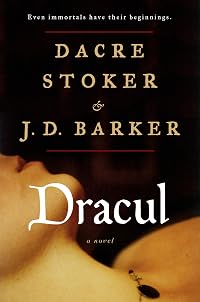
Dracul
by J. D. Barker  , Dacre Stoker
On This Page
Description
It is 1868, and a twenty-one-year-old Bram Stoker waits in a desolate tower to face an indescribable evil. Armed only with crucifixes, holy water, and a rifle, he prays to survive a single night, the longest of his life. Desperate to record what he has witnessed, Bram scribbles down the events that led him here ... A sickly child, Bram spent his early days bedridden in his parents' Dublin home, tended to by his caretaker, a young woman named Ellen Crone. When a string of strange deaths occur show more in a nearby town, Bram and his sister Matilda detect a pattern of bizarre behavior by Ellen--a mystery that deepens chillingly until Ellen vanishes suddenly from their lives. Years later, Matilda returns from studying in Paris to tell Bram the news that she has seen Ellen--and that the nightmare they've thought long ended is only beginning. A riveting novel of gothic suspense, Dracul reveals not only Dracula's true origin, but Bram Stoker's---and the tale of the enigmatic woman who connects them. show lessTags
Recommendations
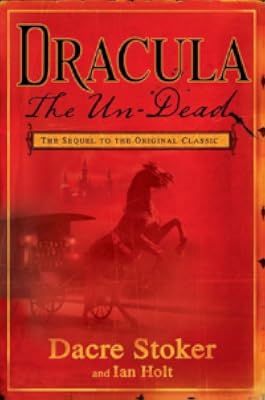
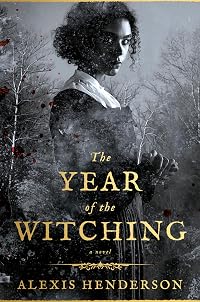
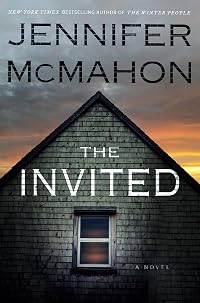
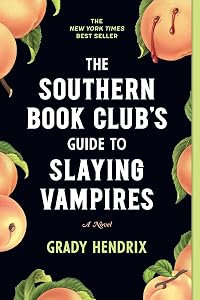
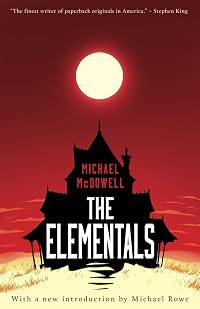
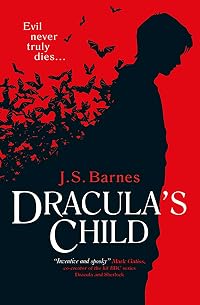
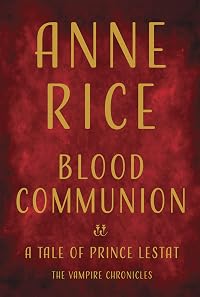
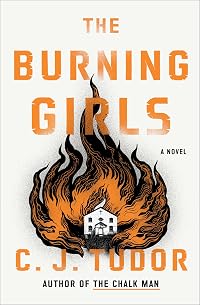
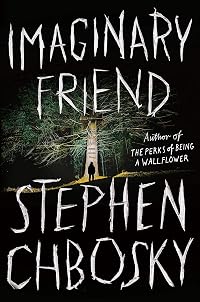
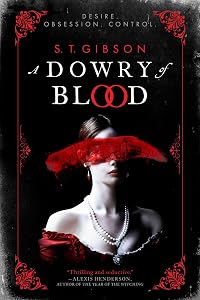
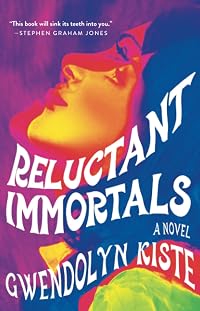
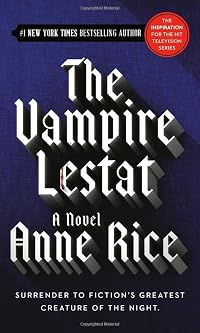
Member Recommendations
Member Reviews
Cracking way to begin a new year of reading. This prequel to the classic is about as meta as it gets. Written by Stoker’s great-grandnephew & well known author J.D. Barker (The Fourth Monkey), it draws heavily from Bram Stoker’s childhood, journals & notes he scribbled while writing the original.
Bram, his family & real life acquaintances are the main characters. Also worth mentioning is some tall, thin, icky guy going by the name of Dracul who manages to steal a few scenes.
This is a proper horror story. The writing team has done a bang-up job of creating an original tale but in a style reminiscent of classics such as Frankenstein, Dr. Jekyll & Mr. Hyde & of course, Dracula. It’s gothic creepiness at its best, a story that engages show more all your senses as it drags you kicking & screaming from Ireland to Germany & back again. (Be careful if you read this in public…you may find yourself drawing some strange looks as you mutter things like “Do NOT touch that”.)
Be sure to read the author’s note written by Dacre Stoker at the end. It’s full of fascinating tidbits of how the original manuscript was written then carefully edited to reflect the times. It was purchased at auction some years ago by Paul Allen (cofounder of Microsoft) & he granted access to the Stoker foundation but only after they signed a non-disclosure agreement. What is known is that the first 100 pages are missing.
It’s a gripping & skeery read that seamlessly combines fact, fiction & folklore. A must-read for fans of the original or Carlos Ruiz Zafón’s “Cemetery of Forgotten Books” series & Lauren Owen's “The Quick”. show less
Bram, his family & real life acquaintances are the main characters. Also worth mentioning is some tall, thin, icky guy going by the name of Dracul who manages to steal a few scenes.
This is a proper horror story. The writing team has done a bang-up job of creating an original tale but in a style reminiscent of classics such as Frankenstein, Dr. Jekyll & Mr. Hyde & of course, Dracula. It’s gothic creepiness at its best, a story that engages show more all your senses as it drags you kicking & screaming from Ireland to Germany & back again. (Be careful if you read this in public…you may find yourself drawing some strange looks as you mutter things like “Do NOT touch that”.)
Be sure to read the author’s note written by Dacre Stoker at the end. It’s full of fascinating tidbits of how the original manuscript was written then carefully edited to reflect the times. It was purchased at auction some years ago by Paul Allen (cofounder of Microsoft) & he granted access to the Stoker foundation but only after they signed a non-disclosure agreement. What is known is that the first 100 pages are missing.
It’s a gripping & skeery read that seamlessly combines fact, fiction & folklore. A must-read for fans of the original or Carlos Ruiz Zafón’s “Cemetery of Forgotten Books” series & Lauren Owen's “The Quick”. show less
Initial thoughts: “Goddess bless the Stoker family. Bram’s Dracula story is a gift that keeps on giving. There is nothing I did not love about this collaboration between Dacre Stoker and J. D. Barker. As a prequel, it has everything I love about the original Dracula story without messing with it. As a stand-alone, it is cleverly and convincingly portrayed to be the real story behind the story with the reasons for the 102 missing pages of Bram’s original manuscript abundantly clear. Creepy, intense, gory in the right places, great characters – it is the perfect blend of storytelling elements. Plus, like his previous novel, the Stoker family authorizes this prequel. I am most definitely a fan!”
Now: I stand by my gushing. Dracul show more is a genuinely entertaining and scary story that works for both Dracula fans and those who may have never read the original story. Personally, because I am a superfan, I love the idea of Bram Stoker meeting vampires and that his personal experiences are what fueled his novel. I love that a distant relative attempted to fill in the gaps of the missing manuscript. I love the “Is it true?” aspect of the authors’ notes. I especially love how formidable Bram’s sister is. Seriously, that girl did not let convention dictate anything she did. I adore how Mr. Stoker and Mr. Barker turned on their head the characteristics of the original cast of characters and played with all of the roles. Plus, I had way too much fun with the little nods to the original; it felt like my own Easter egg hunt. Still, I do think that someone who is not as familiar with the original tale will find Dracul intense and enjoy it just as much as I did. show less
Now: I stand by my gushing. Dracul show more is a genuinely entertaining and scary story that works for both Dracula fans and those who may have never read the original story. Personally, because I am a superfan, I love the idea of Bram Stoker meeting vampires and that his personal experiences are what fueled his novel. I love that a distant relative attempted to fill in the gaps of the missing manuscript. I love the “Is it true?” aspect of the authors’ notes. I especially love how formidable Bram’s sister is. Seriously, that girl did not let convention dictate anything she did. I adore how Mr. Stoker and Mr. Barker turned on their head the characteristics of the original cast of characters and played with all of the roles. Plus, I had way too much fun with the little nods to the original; it felt like my own Easter egg hunt. Still, I do think that someone who is not as familiar with the original tale will find Dracul intense and enjoy it just as much as I did. show less
‘’A crescent moon dangling in the sky offered the thinnest of illuminations, bathing the world in nothing but faint outlines, silhouettes, and shadows. The tower of Artane Castle was barely visible in the distance, lost behind rolling hills and farmland doted with the small homes of our neighbours. Beyond that were the hazel and birch trees of the forest, their inky branches scratching at the night sky in anticipation of a pending shower.’’
Bram Stoker’s Dracula is a novel most of us have read. It is a work inspired by still unclear sources. Was it Vlad the Impaler or Countess Bathory that inspired him? Whatever it was, Stoker produced a novel that became a ‘’classic’’, justifiably or not. I thought that Dracul would be show more a literary effort to trace the thoughts and the sources that led Bram Stoker to create the (absolutely imaginary) Count figure. I can verify that the atmosphere in Dracul is well-constructed and the characters are interesting and (mildly) developed, However, my reading experience as a whole was extremely disappointing. There were times when I felt that the writers actually insulted my intelligence.
Ireland, 1850s. The time of the terrible famine. In the Stoker household, the children are protected by the sorrow of the ones who aren’t privileged but they cannot be protected by strange forces that come from a world beyond our understanding. Ellen Crone, though, is there to protect Bram, Matilda, and Thornley. She is the mysterious nanny whose eyes seem to change colour once sickness strikes the house, whose face changes every time Matilda draws her portrait. Ellen is the angel that watches over the children but sometimes, the angels wear black. This will become obvious a few years later…
Our story is told through the eyes of Bram, Matilda, and Thornley, spanning the decades from the 1850s to the 1890s. Told in diary entries, letters and in the usual third-person narration, the novel is written in an engaging style and Part I benefits from the multiple perspectives. The background of the novel is exceptional, no doubt about that. Apart from the mystery of the story itself and the alluring blue-eyed woman in black, we get the moon, wolves howling, snakes under stones, naked branches, windows opening by themselves, reflections in the glass, gargoyles, bogs, castles, nightly forests and a few (mishandled) traits of the Vampire tradition that was born in the Balkan region.
It takes much more, though, to produce an actual work of Literature…
Let me start with the least of the problems. Whitby is a magical place, legendary and haunting. It hurts me to say that the legends associated with the region and its famous abbey weren’t treated with the proper respect by the writers. Throughout the novel, there were parts that I would characterize as extremely graphic. Even I had to proceed with caution. In the first part of the novel, this was very effective. However, the rest of the book almost read like a 70s Hammer Horror movie. In fact, I think that Hammer films were more plausible. In the end, I just couldn’t take it seriously.
‘’I’ll be okay’’? (repeated dozens of times!!!), ‘’I’ll be right back’’? ‘’Could you just..’’? In Ireland, in the 1850s? Are the writers joking? It was so irritating to find these linguistic abominations in a novel that is supposed to be an atmospheric and detailed read. In fact, most of the dialogue ‘’sounded’’ odd, unnatural. Vampèry speaks like a 21st-century lawyer in a silly TV-series. In addition, Matilda’s letters were a stupid inclusion which resulted in repetition, boredom, and anger on my part. Plus, the feeling that this was an unnecessary long novel was extremely tense. Certain parts seemed ludicrous, cheesy. Vampires writing their memoirs? God, no! Throw a melodramatic love story in the mix and there’s me running away faster than my shadow! Also: ‘’We will triumph or we will fail together.’’
What? No. This is NOT Literature. It may be escapism, I’ll give you that. But I am not a reader who seeks ‘’escapism’’, this is not what I am looking for in a book.
And now, personal rant time: The parts that tried to explain the origins of the Count have nothing to do with the historical facts. Frankly, I am tired and sick at heart to see Vlad Tepeș distorted for the sake of Gothic gimmicks. Was he violent? Well, obviously. People need to read some History...He was the man who stood against one of the vilest forces at the time, the barbaric Ottoman Empire. It is discouraging to see that writers who are too lazy to create stories of their own use historical figures to produce utter trash. The same thing happens with the stories about Countess Bathory. The Author’s Notes attempt to shed some light on the inspiration behind the books but they are didactic and preachy. And I wouldn’t bet my bookcase on the authenticity of the supposedly ‘’true’’ sources.
Did I see the connection between the characters in Dracul and Bram Stoker's novel? I did and in that sense, one could say that was all that mattered. But for me, it is too little. Almost everything else ended up in a bloody mess (no pun intended…) and speaking strictly for myself, this book was a chore to read. If you want to read an actually well-written novel that leaves poor Vlad at peace and deals with Folklore, dashing vampires, beautiful cities and the Devil, then read Fear and His Servant by the Serbian writer Mirjana Novaković. This is what I call ‘’Literature’’... show less
Bram Stoker’s Dracula is a novel most of us have read. It is a work inspired by still unclear sources. Was it Vlad the Impaler or Countess Bathory that inspired him? Whatever it was, Stoker produced a novel that became a ‘’classic’’, justifiably or not. I thought that Dracul would be show more a literary effort to trace the thoughts and the sources that led Bram Stoker to create the (absolutely imaginary) Count figure. I can verify that the atmosphere in Dracul is well-constructed and the characters are interesting and (mildly) developed, However, my reading experience as a whole was extremely disappointing. There were times when I felt that the writers actually insulted my intelligence.
Ireland, 1850s. The time of the terrible famine. In the Stoker household, the children are protected by the sorrow of the ones who aren’t privileged but they cannot be protected by strange forces that come from a world beyond our understanding. Ellen Crone, though, is there to protect Bram, Matilda, and Thornley. She is the mysterious nanny whose eyes seem to change colour once sickness strikes the house, whose face changes every time Matilda draws her portrait. Ellen is the angel that watches over the children but sometimes, the angels wear black. This will become obvious a few years later…
Our story is told through the eyes of Bram, Matilda, and Thornley, spanning the decades from the 1850s to the 1890s. Told in diary entries, letters and in the usual third-person narration, the novel is written in an engaging style and Part I benefits from the multiple perspectives. The background of the novel is exceptional, no doubt about that. Apart from the mystery of the story itself and the alluring blue-eyed woman in black, we get the moon, wolves howling, snakes under stones, naked branches, windows opening by themselves, reflections in the glass, gargoyles, bogs, castles, nightly forests and a few (mishandled) traits of the Vampire tradition that was born in the Balkan region.
It takes much more, though, to produce an actual work of Literature…
Let me start with the least of the problems. Whitby is a magical place, legendary and haunting. It hurts me to say that the legends associated with the region and its famous abbey weren’t treated with the proper respect by the writers. Throughout the novel, there were parts that I would characterize as extremely graphic. Even I had to proceed with caution. In the first part of the novel, this was very effective. However, the rest of the book almost read like a 70s Hammer Horror movie. In fact, I think that Hammer films were more plausible. In the end, I just couldn’t take it seriously.
‘’I’ll be okay’’? (repeated dozens of times!!!), ‘’I’ll be right back’’? ‘’Could you just..’’? In Ireland, in the 1850s? Are the writers joking? It was so irritating to find these linguistic abominations in a novel that is supposed to be an atmospheric and detailed read. In fact, most of the dialogue ‘’sounded’’ odd, unnatural. Vampèry speaks like a 21st-century lawyer in a silly TV-series. In addition, Matilda’s letters were a stupid inclusion which resulted in repetition, boredom, and anger on my part. Plus, the feeling that this was an unnecessary long novel was extremely tense. Certain parts seemed ludicrous, cheesy. Vampires writing their memoirs? God, no! Throw a melodramatic love story in the mix and there’s me running away faster than my shadow! Also: ‘’We will triumph or we will fail together.’’
What? No. This is NOT Literature. It may be escapism, I’ll give you that. But I am not a reader who seeks ‘’escapism’’, this is not what I am looking for in a book.
And now, personal rant time: The parts that tried to explain the origins of the Count have nothing to do with the historical facts. Frankly, I am tired and sick at heart to see Vlad Tepeș distorted for the sake of Gothic gimmicks. Was he violent? Well, obviously. People need to read some History...He was the man who stood against one of the vilest forces at the time, the barbaric Ottoman Empire. It is discouraging to see that writers who are too lazy to create stories of their own use historical figures to produce utter trash. The same thing happens with the stories about Countess Bathory. The Author’s Notes attempt to shed some light on the inspiration behind the books but they are didactic and preachy. And I wouldn’t bet my bookcase on the authenticity of the supposedly ‘’true’’ sources.
Did I see the connection between the characters in Dracul and Bram Stoker's novel? I did and in that sense, one could say that was all that mattered. But for me, it is too little. Almost everything else ended up in a bloody mess (no pun intended…) and speaking strictly for myself, this book was a chore to read. If you want to read an actually well-written novel that leaves poor Vlad at peace and deals with Folklore, dashing vampires, beautiful cities and the Devil, then read Fear and His Servant by the Serbian writer Mirjana Novaković. This is what I call ‘’Literature’’... show less
This is not necessarily a retelling of Dracula, as the author's note makes it clear. It's more of a prequel to the classic story, penned by Bram Stoker's great-great-nephew.
Going into the story, I was expecting some deep horror story (and it did send shivers down my spine at some points), but this book is very character driven and gothic much to my delight. If you appreciate atmosphere and tone, Stoker nails it. Everything is crumbling, the weather is never entirely nice and pleasant, and there's a constant somber air throughout which seems into the characters.
Speaking of, our main-ish character Bram (yes, this is a fictionalized Bram Stoker) is quite fascinating as he slowly realizes his connection to vampires and the Count. He never show more feels like a passive protagonist, always eager to jump at the mysteries and ward into danger to get answers.
The story jumps through different letters and different perspectives, both in the past with Bram and his sister Matilda, and then moments in the present, with Bram facing off against a mysterious supernatural entity.
All the characters presented in this story were well-written and some of the stories were just plain heartbreaking underneath all that scare and fear. That's really where this novel shines, crafting something compelling and adding to the vampire narratives.
Obviously a great selection for the Halloween/spooky season time. show less
Going into the story, I was expecting some deep horror story (and it did send shivers down my spine at some points), but this book is very character driven and gothic much to my delight. If you appreciate atmosphere and tone, Stoker nails it. Everything is crumbling, the weather is never entirely nice and pleasant, and there's a constant somber air throughout which seems into the characters.
Speaking of, our main-ish character Bram (yes, this is a fictionalized Bram Stoker) is quite fascinating as he slowly realizes his connection to vampires and the Count. He never show more feels like a passive protagonist, always eager to jump at the mysteries and ward into danger to get answers.
The story jumps through different letters and different perspectives, both in the past with Bram and his sister Matilda, and then moments in the present, with Bram facing off against a mysterious supernatural entity.
All the characters presented in this story were well-written and some of the stories were just plain heartbreaking underneath all that scare and fear. That's really where this novel shines, crafting something compelling and adding to the vampire narratives.
Obviously a great selection for the Halloween/spooky season time. show less
All fiction – and supernatural fiction especially so – requires us to suspend our disbelief and to accept that the world between the covers of a book is as real as the one we’re living in (if not more). The premise of Dracul however is even harder to swallow than the very existence of the Undead – the novel presents us with a Bram Stoker who has personal experience of vampires and who has a final showdown with none other than Count Dracula himself. The concept intrigued me even whilst setting alarm bells ringing in my head – would Dracul turn out to be the great Dracula prequel touted by the marketing blurbs or just another in a recent tradition of horror mash-ups? The fact that the novel is jointly credited to Dacre Stoker show more (Bram’s great-grand nephew) and horror writer J.D. Barker only fuelled my misgivings. Apart from my irrational prejudice against co-authored works, the Stoker name on the title page gave me a niggling suspicion that it was there primarily to capitalize on the link to Bram. And so, with some difficulty in setting aside pre-conceptions, uncertainties and pet peeves, I joined a youngish Bram keeping watch in an unnamed tower, eyes fixed on a heavy door behind which untold horrors lurk...
I must say that the initial chapters did little to shake off my doubts . The shifts between Bram’s vigil (helpfully marked “NOW”) and his recollections of his sickly childhood, nursed by the enigmatic “Nanna Ellen”, seemed artificial, the dialogue between Bram and his sister Matilda unconvincing. However, once this backstory was set out and the action shifted closer to the (novel’s) present, I became increasingly engrossed. Like Bram’s original, Dracul follows a group of improvised vampire-busters on a hunt which leads them to the dark heart of Continental Europe. The pace of the plot mounts inexorably and culminates in a set-piece in a ghost-village outside Munich which seems to be as much inspired by horror movies and zombie tropes as by ‘traditional’ vampire fiction.
Part of the fun of the book lies in looking for the parallels between this novel and the original, as well as references to real life events and figures. Thus, as in Dracula, Dracul is recounted through a series of journal entries, diaries and letters, giving the text an immediacy and allowing for different perspectives. There is material which is clearly gleaned from the short story Dracula’s Guest and expanded to fit the plot. The novel also has its own Van Helsing, in the shape of Arminius Vámbéry, a Hungarian Turkologist who, in reality, was an acquaintance of Stoker and might have influenced or served as a model for Van Helsing. Rather than a prequel to Dracula, I’d consider it more of a companion piece – a “pastiche”, in a positive sense, which delights in resurrecting vampire tropes largely shaped by Bram Stoker’s seminal novel.
In an afterword to Dracul, Dacre Stoker explains that this novel is based on his ancestor’s actual notes and on the first hundred-or-so pages of the novel which were allegedly excised at the insistence of the original publishers. Then, Stoker ups the ante – Bram, he tells us, presented the manuscript as a “true story” and Dracula was not meant to serve as ‘entertainment’ as much as a warning against a very real evil. Now, of course, Dracula was neither the first nor the last Gothic novel to present itself as a “non-fictional” account. Presumably, Dacre is riffing on this trope. But this does raise an interesting question – namely just how far is Dracul actually inspired by Bram’s biography, handwritten notes and “original intentions” and how much of it is Dacre’s and J.D. Barker’s own invention? Scholars of the Gothic might illuminate us – in the meantime, Dracul remains an enjoyable vampire romp which nicely complements the (unbeatable) original. show less
Well colour me surprised. If I'm being honest here, I fully expected this novel to suck (pardon the pun) and suck hard.
Why? Well hell, I've read enough authors who have decided to add prequels/sequels to their own work (I'm looking at you, [a:Stephen R. Donaldson|12980|Stephen R. Donaldson|https://images.gr-assets.com/authors/1425823085p2/12980.jpg] and you too, [a:Chuck Palahniuk|2546|Chuck Palahniuk|https://images.gr-assets.com/authors/1391203076p2/2546.jpg], I don't care if you're trying to hide, I see you there), and completely, totally, and without remorse, proceed to fuck it up badly.
When it comes to a relation diving in—coughcough [a:Brian Herbert|56|Brian Herbert|https://images.gr-assets.com/authors/1477569035p2/56.jpg] show more coughcough—the results typically suck. Add in another hack author, and that cratering effect grows exponentially.
Now, I know nothing about Dacre Stoker, aside from the fact he bears a famous last name. But I have read a book by J.D. Barker, the steaming pile of shit called [b:The Fourth Monkey|31125554|The Fourth Monkey (4MK Thriller, #1)|J.D. Barker|https://i.gr-assets.com/images/S/compressed.photo.goodreads.com/books/1474820373l/31125554._SY75_.jpg|51739338], and if you're interested you can see how much I enjoyed it here.
So, to be frank, this had a whole lot going against it, as far as I was concerned.
But dudes and dudettes, I love [b:Dracula|17245|Dracula|Bram Stoker|https://i.gr-assets.com/images/S/compressed.photo.goodreads.com/books/1387151694l/17245._SY75_.jpg|3165724], so I was always going to have to at least try and read this.
To be honest, I'm really glad I did. Is there some bonehead stuff in there? Well, yeah. But is the story interesting and fun and engaging? Shockingly, yes. It is.
Of course it's going to take a crap-ton of liberties with Bram and his family, etc., as any work of fiction based on true-to-life characters will.
But it's actually geared me up for my third reading of [b:Dracula|17245|Dracula|Bram Stoker|https://i.gr-assets.com/images/S/compressed.photo.goodreads.com/books/1387151694l/17245._SY75_.jpg|3165724].
And really, that's all I can reasonably expect from the book, right? show less
Why? Well hell, I've read enough authors who have decided to add prequels/sequels to their own work (I'm looking at you, [a:Stephen R. Donaldson|12980|Stephen R. Donaldson|https://images.gr-assets.com/authors/1425823085p2/12980.jpg] and you too, [a:Chuck Palahniuk|2546|Chuck Palahniuk|https://images.gr-assets.com/authors/1391203076p2/2546.jpg], I don't care if you're trying to hide, I see you there), and completely, totally, and without remorse, proceed to fuck it up badly.
When it comes to a relation diving in—coughcough [a:Brian Herbert|56|Brian Herbert|https://images.gr-assets.com/authors/1477569035p2/56.jpg] show more coughcough—the results typically suck. Add in another hack author, and that cratering effect grows exponentially.
Now, I know nothing about Dacre Stoker, aside from the fact he bears a famous last name. But I have read a book by J.D. Barker, the steaming pile of shit called [b:The Fourth Monkey|31125554|The Fourth Monkey (4MK Thriller, #1)|J.D. Barker|https://i.gr-assets.com/images/S/compressed.photo.goodreads.com/books/1474820373l/31125554._SY75_.jpg|51739338], and if you're interested you can see how much I enjoyed it here.
So, to be frank, this had a whole lot going against it, as far as I was concerned.
But dudes and dudettes, I love [b:Dracula|17245|Dracula|Bram Stoker|https://i.gr-assets.com/images/S/compressed.photo.goodreads.com/books/1387151694l/17245._SY75_.jpg|3165724], so I was always going to have to at least try and read this.
To be honest, I'm really glad I did. Is there some bonehead stuff in there? Well, yeah. But is the story interesting and fun and engaging? Shockingly, yes. It is.
Of course it's going to take a crap-ton of liberties with Bram and his family, etc., as any work of fiction based on true-to-life characters will.
But it's actually geared me up for my third reading of [b:Dracula|17245|Dracula|Bram Stoker|https://i.gr-assets.com/images/S/compressed.photo.goodreads.com/books/1387151694l/17245._SY75_.jpg|3165724].
And really, that's all I can reasonably expect from the book, right? show less
What if the dark tale of Dracula was not just a flight of fancy for author Bram Stoker? What if the origins of the story came from Stoker's own life? Dracul is a prequel of sorts for the classic novel, spinning a dark tale of death, evil and monsters.
OMG....I love this book! This isn't a re-telling of the Dracula story, but an imagining of the origins for the vampire story. Bram Stoker left diaries and notes behind, detailing mysterious happenings revolving around a Stoker family servant, Nanna Ellen. The story switches back and forth in time, alternating from Bram's sickly childhood in Ireland to his facing down unimaginable evil 12 years later as an adult. I was completely engrossed in this dark tale from beginning to end. Easily as show more horrific and well-written as the classic Dracula, this new tale of the undead is darkly disturbing and mesmerizing.
Like the classic Dracula, this book relies mostly on psychological horror, rather than more in-your-face type scary. The dark and bleak atmosphere, horrific discoveries and mysterious occurrences build suspense, revealing just a little bit of the truth at a time. The pacing is perfect. I don't usually like books that skip back and forth in time, but for this story it worked perfectly. Jumping from Bram and his sister discovering secrets about a beloved family servant to his facing evil lurking outside his locked, barricaded door years later just made the suspense stronger. The characters are awesome. The writing is descriptive, and the horror....chilling.
Full stars from me! Loved it!
**I voluntarily read a review copy of this book from Penguin via NetGalley. All opinions expressed are entirely my own.** show less
OMG....I love this book! This isn't a re-telling of the Dracula story, but an imagining of the origins for the vampire story. Bram Stoker left diaries and notes behind, detailing mysterious happenings revolving around a Stoker family servant, Nanna Ellen. The story switches back and forth in time, alternating from Bram's sickly childhood in Ireland to his facing down unimaginable evil 12 years later as an adult. I was completely engrossed in this dark tale from beginning to end. Easily as show more horrific and well-written as the classic Dracula, this new tale of the undead is darkly disturbing and mesmerizing.
Like the classic Dracula, this book relies mostly on psychological horror, rather than more in-your-face type scary. The dark and bleak atmosphere, horrific discoveries and mysterious occurrences build suspense, revealing just a little bit of the truth at a time. The pacing is perfect. I don't usually like books that skip back and forth in time, but for this story it worked perfectly. Jumping from Bram and his sister discovering secrets about a beloved family servant to his facing evil lurking outside his locked, barricaded door years later just made the suspense stronger. The characters are awesome. The writing is descriptive, and the horror....chilling.
Full stars from me! Loved it!
**I voluntarily read a review copy of this book from Penguin via NetGalley. All opinions expressed are entirely my own.** show less
Members
- Recently Added By
Lists

Books Read in 2020
4,379 works; 124 members

READ IN 2020
172 works; 1 member

GoodReads Horror Choice Awards
160 works; 4 members
Author Information

33+ Works 5,148 Members
J. D. Barker is a LibraryThing Author, an author who lists their personal library on LibraryThing.

10+ Works 2,509 Members
Some Editions
Awards and Honors
Series
Belongs to Publisher Series
Narrativa [Nord] (778)
Common Knowledge
- Canonical title
- Dracul
- Original title
- Dracul
- Original publication date
- 2018
- People/Characters
- Bram Stoker
- Dedication
- For all those who know monsters are real.
- First words
- Bram stared at the door.
- Last words
- (Click to show. Warning: May contain spoilers.)It was finally time I paid Dracul a visit, long overdue, the sharpest of stakes in hand. Bram Stoker
- Original language
- English
- Canonical DDC/MDS
- 813.6
- Canonical LCC
- PS3619.T645
Classifications
Statistics
- Members
- 1,021
- Popularity
- 25,512
- Reviews
- 41
- Rating
- (3.99)
- Languages
- 10 — Czech, Dutch, English, French, Hungarian, Italian, Spanish, Turkish, Vietnamese, Portuguese (Portugal)
- Media
- Paper, Audiobook, Ebook
- ISBNs
- 32
- ASINs
- 7