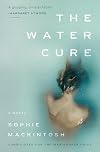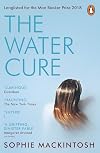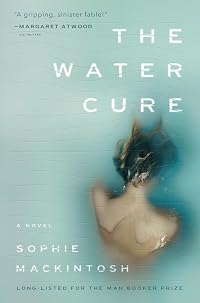
The Water Cure
by Sophie Mackintosh
On This Page
Description
"An extraordinary otherworldly debut... [Mackintosh] is writing the way that Sofia Coppola would shoot the end of the world: everything is luminous, precise, slow to the point of dread." --The Guardian The Handmaid's Tale meets The Virgin Suicides in this dystopic feminist revenge fantasy about three sisters on an isolated island, raised to fear men King has tenderly staked out a territory for his wife and three daughters, Grace, Lia, and Sky. He has lain the barbed wire; he has anchored the show more buoys in the water; he has marked out a clear message: Do not enter . Or viewed from another angle: Not safe to leave . Here women are protected from the chaos and violence of men on the mainland. The cult-like rituals and therapies they endure fortify them from the spreading toxicity of a degrading world. But when their father, the only man they've ever seen, disappears, they retreat further inward until the day two men and a boy wash ashore. Over the span of one blistering hot week, a psychological cat-and-mouse game plays out. Sexual tensions and sibling rivalries flare as the sisters confront the amorphous threat the strangers represent. Can they survive the men? A haunting, riveting debut about the capacity for violence and the potency of female desire, The Water Cure both devastates and astonishes as it reflects our own world back at us. show lessTags
Recommendations
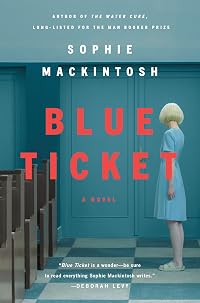












Member Recommendations
hairball They go together like a dry, choking mouthful of peanut butter on crackers. I don’t mean that in a bad way—just, hard topics.
01
Member Reviews
This novel tells the story of three young women living on a Scottish island with their parents. They have spent their lives there and know that off the island is a world where men hurt women, the air is toxic and they would surely die. Living in an isolated, decaying hotel, protected by the rites and tests designed to keep them wary and safe, they find various ways to survive. The oldest, Grace, has been rewarded for her diligence with a swelling stomach while Lia, the middle daughter, cuts herself for the good of all of them. Their father leaves one day, and then the two men and a boy show up on their island.
This is an odd and dreamy dystopian novel where the reader is left in the same information-deprived limbo as the three women. show more They're trying to survive, but what they've been taught might not actually be true and their father was perhaps not the protector they believed him to be. I read this book desperately wanting more information about the world this novel exists in, but by the end of the story, I had just enough to satisfy me, without spelling out everything. Sophie MacKintosh writes evocatively about the inner lives of these isolated women, but if you're looking for clear resolutions, they remain tantalizingly just out of sight. show less
This is an odd and dreamy dystopian novel where the reader is left in the same information-deprived limbo as the three women. show more They're trying to survive, but what they've been taught might not actually be true and their father was perhaps not the protector they believed him to be. I read this book desperately wanting more information about the world this novel exists in, but by the end of the story, I had just enough to satisfy me, without spelling out everything. Sophie MacKintosh writes evocatively about the inner lives of these isolated women, but if you're looking for clear resolutions, they remain tantalizingly just out of sight. show less
Trigger warnings: domestic violence, sexual assault, child sexual assault, abuse, child abuse, rape, vomit, self-harm
The Water Cure follows three sisters, all unreliable narrators, throughout their lives isolated on an island as big changes suddenly start happening in their lives. During their childhood, they were abused and raised to believe cult-like things about the world and, specifically, the men who inhabit it. After their father's death and the sudden appearance of two unknown men and a young boy, the sisters have to figure out what their new life is going to be like.
The book consistently uses the black-and-white, us-versus-them mentality, specifically that all women are victims and all men are evil beings who seek to hurt women. show more While from a reader's perspective it is very easy to see that real life is not black-and-white, we only see this world through the sister's eyes. This was the only kind of mentality they were taught, and we are able to see how this mentality hurts them throughout the novel in various ways.
Despite being a very depressing novel, it is extremely well-written. The prose is beautiful and every aspect of the story is intentional.
While it would have been nice to see the girls recovering from the abuse they suffered and re-learn ways to view the world, I did like the messy ending. Not only did it show that recovering from these types of abuse is extremely difficult, it also showed how not everything needs to be or even can be resolved with a neat little bow. show less
The Water Cure follows three sisters, all unreliable narrators, throughout their lives isolated on an island as big changes suddenly start happening in their lives. During their childhood, they were abused and raised to believe cult-like things about the world and, specifically, the men who inhabit it. After their father's death and the sudden appearance of two unknown men and a young boy, the sisters have to figure out what their new life is going to be like.
The book consistently uses the black-and-white, us-versus-them mentality, specifically that all women are victims and all men are evil beings who seek to hurt women. show more While from a reader's perspective it is very easy to see that real life is not black-and-white, we only see this world through the sister's eyes. This was the only kind of mentality they were taught, and we are able to see how this mentality hurts them throughout the novel in various ways.
Despite being a very depressing novel, it is extremely well-written. The prose is beautiful and every aspect of the story is intentional.
While it would have been nice to see the girls recovering from the abuse they suffered and re-learn ways to view the world, I did like the messy ending. Not only did it show that recovering from these types of abuse is extremely difficult, it also showed how not everything needs to be or even can be resolved with a neat little bow. show less
Three sisters, Grace, Lia, and Sky, live with their parents on an island in a near future toxic world. Their father, King, has disappeared and their mother continues his “teachings,” which includes painful rituals designed to make them “stronger.” The bottom line is that their parents have been abusing them under the guise of love and protection. The daughters have been taught to fear men, so when two men and a boy wash up on their shores, the situation worsens.
Needless to say, this is a disturbing story. It is told primarily by eldest daughter Grace and middle daughter Lia, and the reader will soon realize the abuse has taken a toll on their mental stability. Their isolation has caused an inability to relate to others in a show more natural way. The prose is poetic, in stark contrast to the horror of the story. It reminds me of a fairy tale (but definitely not for children). It prompts many questions and provides few answers.
I presume the intent is to impugn the patriarchy by portraying what it would be like to lump “all men” together into a stereotype (similar to lumping “all women’ together as is more typical in our society). But it comes across as more of a portrait of an immensely dysfunctional family that basically has turned into a cult. It is not a book for everyone (and certainly wasn’t for me). If you are a sensitive reader, I would avoid it. show less
Needless to say, this is a disturbing story. It is told primarily by eldest daughter Grace and middle daughter Lia, and the reader will soon realize the abuse has taken a toll on their mental stability. Their isolation has caused an inability to relate to others in a show more natural way. The prose is poetic, in stark contrast to the horror of the story. It reminds me of a fairy tale (but definitely not for children). It prompts many questions and provides few answers.
I presume the intent is to impugn the patriarchy by portraying what it would be like to lump “all men” together into a stereotype (similar to lumping “all women’ together as is more typical in our society). But it comes across as more of a portrait of an immensely dysfunctional family that basically has turned into a cult. It is not a book for everyone (and certainly wasn’t for me). If you are a sensitive reader, I would avoid it. show less
Okay, WOW. There are so many layers to this novel, so many echoes of the same questions I've been asking myself for decades, about what it means to be a woman and how/if I could ever tell if that meaning was authentic or just handed to me by a male-dominated culture, about what it means to be both powerful and vulnerable, about how easy it is to be used. I feel like turning it back over and reading it again right away. It's even awesomer that this is one of the books my husband got me for Christmas.
This book was okay, but it felt way overhyped. I really liked how the perspective shifted between the sisters, and it started out really strong. Then about a quarter of the way through the book it focused on Lia’s perspective alone and stayed that way almost through the tail end of the book. This would have been fine if Lia was a more interesting character, but she was a very stereotypical “emo teen” character: love-deprived, self-injurious, and self-centered. I stopped counting how many times I rolled my eyes at her.
The story was also very predictable with Lia’s stunted maturity and repressed sexual desires dictating her total disregard for caution and horrendous decision-making skills, and Grace’s pent up rage towards her show more step-father grooming her to be a secondary baby-mama (gross) resulting in her being able to kill in cold blood.
There were a lot of comparisons to Handmaid’s tail, and I can sort of see it; a dystopian world where women are oppressed and repressed with men being the main antagonists, and daily functions have reverted to a more antiquated way of life. However, that was about the extent of it from what I could see. It read more like Lord of the Flies in that it was an exploration into what would happen if a group of mentally and emotionally underdeveloped “kids” get stranded without any “adult” authority figures. They fail to properly care for their home and lifestyle, give way to their base desires, and fall victim to their basic instincts of “kill or be killed.”
Others clearly liked it, but this was not the book for me. show less
The story was also very predictable with Lia’s stunted maturity and repressed sexual desires dictating her total disregard for caution and horrendous decision-making skills, and Grace’s pent up rage towards her show more step-father grooming her to be a secondary baby-mama (gross) resulting in her being able to kill in cold blood.
There were a lot of comparisons to Handmaid’s tail, and I can sort of see it; a dystopian world where women are oppressed and repressed with men being the main antagonists, and daily functions have reverted to a more antiquated way of life. However, that was about the extent of it from what I could see. It read more like Lord of the Flies in that it was an exploration into what would happen if a group of mentally and emotionally underdeveloped “kids” get stranded without any “adult” authority figures. They fail to properly care for their home and lifestyle, give way to their base desires, and fall victim to their basic instincts of “kill or be killed.”
Others clearly liked it, but this was not the book for me. show less
‘’We would all still love each other, but what it meant was: if there was a burning fire, if two sisters were stuck in the inferno and they were screaming a name, the only right thing would be to pick the one the iron dictated to save. It is important to ignore any contrary instinct of your traitor heart. We were quite used to that.’’
Had this been a fairytale, it would have started like this: There once was a couple who had three daughters and they lived on an isolated island. ‘’King’’ was the father’s name and Grace, Lia and Sky were taught that he was their only protection from creatures that wanted to harm them. The creatures were called ‘’men’’ and he was a man but it didn’t matter. He alone knew what was show more good for the family. Because the girls were weak, fragile, easy to fall ill from the sickness carried by the outside world. However, women were welcomed to the island. Women who were frightened and wounded. Women who should accept rebirth through fear and water. But they weren’t there when the master of the house died. They weren’t there when three men were washed ashore. They weren’t there when the daughters had to choose…
But this is not a fairytale. This is a story of isolation, exploitation, intentional fear and violence…
And what about the Mother, one may ask. A mother is not a mother when she oppresses her children and obeys a madman obsessively, violently, in a household where iron determines who is to be loved most. When she doesn’t protect her children from paranoia, when she blatantly, maliciously threatens them, the ‘’mother’’ becomes a worse danger than all the men in the world. She becomes a monster.Terror doesn’t come from women or men. It comes from therapies initiated by disturbed people who exploit the ordeal of women to serve their Messiah complex and their heinous inclinations. Terror comes from ignorance when a young girl falls for the handsome stranger.
Mackintosh plays well with stereotypes and the themes of uncertainty and a vague external threat. The extracts from the Welcome Book of one of the ‘’guests’’ of the island, a woman who has suffered abuse, talk of an invisible threat coming from a man. Who is he? The answer will be found at the end of the book. She is haunted by his presence, abused by his shadow. Who are the other women who refuse to support her? And then, two men and a young boy are washed ashore, their intentions suspicious from the start. In these pages, you will find an array of some of the most hate-worthy characters you’ll ever meet. I wanted to murder half of the cast and I suppose this is a token of the writer’s powerful writing.
‘’I collect a long fingertip of dust from the lip of a vase, a solitary object on the mantelpiece in the hall. It is empty except for a wasp dying in its own sound, vibrating dully against the porcelain. Suffer, I mouth at it.’’
Mackintosh’s prose is like a suffocating summer afternoon that carries the anticipation of an almost metaphysical terror. Lies, deceit, delusion create a claustrophobic environment. At times, the writing is so raw and violent that even I started feeling extremely uncomfortable and this doesn’t happen often. The violence between the two older sisters touches the boundaries of madness, a result of their abnormal upbringing. This is the only way for me to explain Lia’s hysterics that bothered me quite a lot throughout the story. I suppose this is an example of the animal instincts we all carry inside, intensified by isolation and lack of education. Another issue I faced was the dialogue which came in contrast with the exquisite prose. Especially the interactions between Lia and Llew were so bad it was an actual physical torture for me to read. Thankfully, dialogue is limited in the novel and I wasn’t tempted to subtract a star because of it.
No, this isn’t mind-blowing Literature. We have read similar books and more will come out in the future. But it is a marvelous novel, beautiful in its bleakness and desperation, the prose exquisite and mysterious like a sultry summer evening, the last chapters are ferocious and devastating, worthy of 5 stars alone. It balances Dystopian Fiction elements (although the novel has nothing to do with the genre and it is wrong to be marketed like that…) and a very realistic, in-depth study of the harm we can do to ourselves and to others.
Even if it is a candidate for the most insufferable cast of characters, The Water Cure shows that monsters can be found in both sexes. Women and men can become oppressive, dangerous, destructive. There are no saviours but ourselves in these troubled times. Trusting in our strength, aided by education and companionship, are the ways to distance ourselves from populists and tyrants. Building fortresses against imaginary threats that possibly serve twisted purposes only leads to destruction and we have two World Wars and countless hostilities to prove this.
‘’One day they will overwhelm us, water molding our carpets and warping the parquet, leaving tidemarks on the wallpapers. But I hope to be long gone by then.’’
My reviews can also be found on https://theopinionatedreaderblog.wordpress.com/ show less
Had this been a fairytale, it would have started like this: There once was a couple who had three daughters and they lived on an isolated island. ‘’King’’ was the father’s name and Grace, Lia and Sky were taught that he was their only protection from creatures that wanted to harm them. The creatures were called ‘’men’’ and he was a man but it didn’t matter. He alone knew what was show more good for the family. Because the girls were weak, fragile, easy to fall ill from the sickness carried by the outside world. However, women were welcomed to the island. Women who were frightened and wounded. Women who should accept rebirth through fear and water. But they weren’t there when the master of the house died. They weren’t there when three men were washed ashore. They weren’t there when the daughters had to choose…
But this is not a fairytale. This is a story of isolation, exploitation, intentional fear and violence…
And what about the Mother, one may ask. A mother is not a mother when she oppresses her children and obeys a madman obsessively, violently, in a household where iron determines who is to be loved most. When she doesn’t protect her children from paranoia, when she blatantly, maliciously threatens them, the ‘’mother’’ becomes a worse danger than all the men in the world. She becomes a monster.Terror doesn’t come from women or men. It comes from therapies initiated by disturbed people who exploit the ordeal of women to serve their Messiah complex and their heinous inclinations. Terror comes from ignorance when a young girl falls for the handsome stranger.
Mackintosh plays well with stereotypes and the themes of uncertainty and a vague external threat. The extracts from the Welcome Book of one of the ‘’guests’’ of the island, a woman who has suffered abuse, talk of an invisible threat coming from a man. Who is he? The answer will be found at the end of the book. She is haunted by his presence, abused by his shadow. Who are the other women who refuse to support her? And then, two men and a young boy are washed ashore, their intentions suspicious from the start. In these pages, you will find an array of some of the most hate-worthy characters you’ll ever meet. I wanted to murder half of the cast and I suppose this is a token of the writer’s powerful writing.
‘’I collect a long fingertip of dust from the lip of a vase, a solitary object on the mantelpiece in the hall. It is empty except for a wasp dying in its own sound, vibrating dully against the porcelain. Suffer, I mouth at it.’’
Mackintosh’s prose is like a suffocating summer afternoon that carries the anticipation of an almost metaphysical terror. Lies, deceit, delusion create a claustrophobic environment. At times, the writing is so raw and violent that even I started feeling extremely uncomfortable and this doesn’t happen often. The violence between the two older sisters touches the boundaries of madness, a result of their abnormal upbringing. This is the only way for me to explain Lia’s hysterics that bothered me quite a lot throughout the story. I suppose this is an example of the animal instincts we all carry inside, intensified by isolation and lack of education. Another issue I faced was the dialogue which came in contrast with the exquisite prose. Especially the interactions between Lia and Llew were so bad it was an actual physical torture for me to read. Thankfully, dialogue is limited in the novel and I wasn’t tempted to subtract a star because of it.
No, this isn’t mind-blowing Literature. We have read similar books and more will come out in the future. But it is a marvelous novel, beautiful in its bleakness and desperation, the prose exquisite and mysterious like a sultry summer evening, the last chapters are ferocious and devastating, worthy of 5 stars alone. It balances Dystopian Fiction elements (although the novel has nothing to do with the genre and it is wrong to be marketed like that…) and a very realistic, in-depth study of the harm we can do to ourselves and to others.
Even if it is a candidate for the most insufferable cast of characters, The Water Cure shows that monsters can be found in both sexes. Women and men can become oppressive, dangerous, destructive. There are no saviours but ourselves in these troubled times. Trusting in our strength, aided by education and companionship, are the ways to distance ourselves from populists and tyrants. Building fortresses against imaginary threats that possibly serve twisted purposes only leads to destruction and we have two World Wars and countless hostilities to prove this.
‘’One day they will overwhelm us, water molding our carpets and warping the parquet, leaving tidemarks on the wallpapers. But I hope to be long gone by then.’’
My reviews can also be found on https://theopinionatedreaderblog.wordpress.com/ show less
From the first, I wanted to come to this book knowing as little about what was to come as possible. I stayed away from publisher and reader reviews and felt rewarded from the very first page, which immediately presented an enigma. Three sisters writing in the "we" voice. Their father has disappeared. Died. As we move forward, we learn about them as individuals and as a group. We learn about a hard mother. But what we learn is revealed in bits and pieces and we are left with more questions than answers. What is clear is that the sisters have not been treated well by parents who claimed to want to protect and isolate them from a toxic world. From toxic masculinity. Their parents have sought to harden the sisters to make them immune to the show more diseases which afflict all women in the dystopic reality they inhabit. This is where the feminism comes in. I could personally relate to this. I had a single mother who was a hardened feminist, and she certainly sought to harden me and warn me against men, how they could use sex to harm us before I even understood what sex was, and I, a romantic, sentimental, melancholy child, felt her approach to be brutal and harsh. Perhaps I could relate to the sisters, to the kind of experimental treatments they'd been subjected to, all for the cause of keeping them safe. Just a little bit. Minus the physical abuses.
The father, we learn from the beginning, was called King, which, if you are attuned to such things, should alert you to the fact that such a name for a very large man who claimed to humble himself for the sake of women, was suspect, at the very least. For those who do read the publisher's blurb, I am not spoiling anything by revealing that two men and a small boy, castaways, eventually arrive at their hideaway, in need of water and shelter, and upset the strange kind of life the women have made for themselves after King's sudden death. The voice of sister Lia takes up a large part of the story. Lia, unlike the others, hasn't managed to bury her love, her passion, as her parents have taught them to do through countless often cruel exercises. She needs, wants, is desperate to feel things, to touch and be touched, even at the risk of harming herself and those she loves. Small wonder I connected to her most.
As I say, best to come to this novel without expectation. Best to come without expecting answers, above all else, and to be satisfied with the journey; Sophie Mackintosh's writing is beautiful and somehow hypnotic. This is an unpleasant tale, and yet I found myself devouring it. It will make you uncomfortable, and that is probably the point. For this reason, it will displease many readers. The one blurb that caught me and that made me want to read this book was Margaret Atwood's: "A gripping, sinister fable." I've been a Margaret Atwood fan for over 30 years now, and she did not disappoint me this time either. It was gripping. And it was indeed very, very sinister. show less
The father, we learn from the beginning, was called King, which, if you are attuned to such things, should alert you to the fact that such a name for a very large man who claimed to humble himself for the sake of women, was suspect, at the very least. For those who do read the publisher's blurb, I am not spoiling anything by revealing that two men and a small boy, castaways, eventually arrive at their hideaway, in need of water and shelter, and upset the strange kind of life the women have made for themselves after King's sudden death. The voice of sister Lia takes up a large part of the story. Lia, unlike the others, hasn't managed to bury her love, her passion, as her parents have taught them to do through countless often cruel exercises. She needs, wants, is desperate to feel things, to touch and be touched, even at the risk of harming herself and those she loves. Small wonder I connected to her most.
As I say, best to come to this novel without expectation. Best to come without expecting answers, above all else, and to be satisfied with the journey; Sophie Mackintosh's writing is beautiful and somehow hypnotic. This is an unpleasant tale, and yet I found myself devouring it. It will make you uncomfortable, and that is probably the point. For this reason, it will displease many readers. The one blurb that caught me and that made me want to read this book was Margaret Atwood's: "A gripping, sinister fable." I've been a Margaret Atwood fan for over 30 years now, and she did not disappoint me this time either. It was gripping. And it was indeed very, very sinister. show less
Members
- Recently Added By
Lists

Best Dystopias
280 works; 277 members

Scary Stories for the Season
160 works; 94 members

Best Beach Reads
99 works; 61 members

Top Five Books of 2021
604 works; 181 members

Mothers and Daughters
114 works; 11 members
Author Information

7+ Works 1,581 Members
Some Editions
Awards and Honors
Common Knowledge
- Canonical title
- The Water Cure
- Dedication
- For Annys and Beverley, my sisters
- First words
- Once we had a father, but our father dies without us noticing.
It's wrong to say that we don't notice. We are just absorbed in ourselves, that afternoon when he dies. Unseasonable heat. We squabble, as usual. Mothe... (show all)r comes out on the terrace and puts a stop to it by raising her hand, a swift motion against the sky. Then we spend some time lying down with lengths of muslin over our faces, trying not to scream, and so he dies with none of us women bearing witness, none of us accompanying him. -Part One, Father - Quotations
- p.203: As I watch the ghost move up and down in the surf, but not closer to shore, a fist of grief opens in my chest. There is a new wrongness in the air between us that threatens to engulf everything. This is what happens wh... (show all)en the people you love leave you. The is what happens when the protection no longer holds.
- Canonical DDC/MDS
- 823.92
- Canonical LCC
- PR6113.A26493
Classifications
Statistics
- Members
- 895
- Popularity
- 30,130
- Reviews
- 39
- Rating
- (3.24)
- Languages
- English, Italian, Turkish
- Media
- Paper, Audiobook, Ebook
- ISBNs
- 25
- ASINs
- 5