On This Page
Description
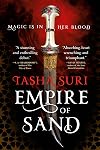
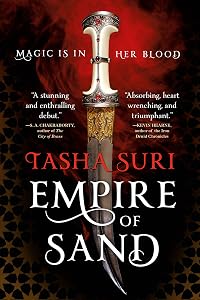
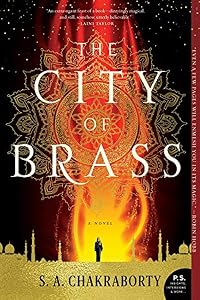
A nobleman's daughter with magic in her blood. An empire built on the dreams of enslaved gods. Empire of Sand is Tasha Suri's captivating, Mughal India-inspired debut fantasy. The Amrithi are outcasts; nomads descended of desert spirits, they are coveted and persecuted throughout the Empire for the power in their blood. Mehr is the illegitimate daughter of an imperial governor and an exiled Amrithi mother she can barely remember, but whose face and magic she has inherited. When Mehr's power show more comes to the attention of the Emperor's most feared mystics, she must use every ounce of will, subtlety, and power she possesses to resist their cruel agenda. Should she fail, the gods themselves may awaken seeking Empire of Sand is a lush, dazzling fantasy novel perfect for readers of City of Brass and The Wrath & the Dawn. show lessTags
Recommendations


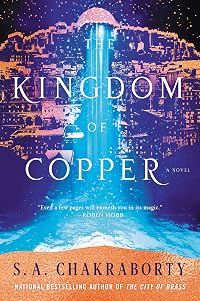

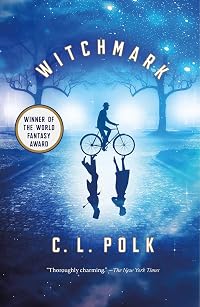
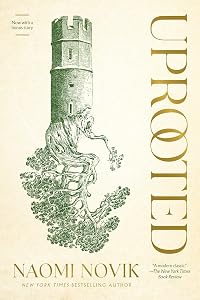
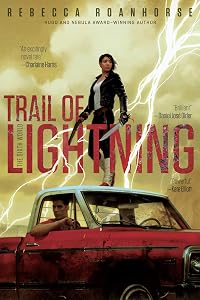






Member Reviews
In the empire, a noblewoman’s right to choose her own husband is considered sacred, but when Mehr is introduced to an unexpected suitor, she knows there will be consequences for her family if she refuses.
I was immediately hooked. This is a story about power and magic and empire, yet its focus is personal, rather than epic -- Mehr, her identity and her relationships.
The first conversation Mehr has with her mystic suitor sets the tone for their marriage:
“Compassion,” she said. She shouldn’t have said it, but she couldn’t take back the word now. “I don’t know what a good husband should be, but I know I would like a husband who is compassionate.”
Amun raised his head. Mehr found herself staring into eyes the colour of a show more moonless night, deep and dark.
“Then I will do all in my power to be a good husband to you,” he said.
The two of them are caught in an awful situation in which they have very few choices -- Amun in particular is bound by his vows of service. Yet they both choose, over and over, to be kind and to support each other. I loved that.
I also liked how this story explores the choices people make to protect loved ones. Mehr agrees to a marriage in part to protect her little sister. Choices made by Mehr’s parents out of love or a desire to protect Mehr haven’t always left Mehr feeling loved or protected, and now she’s confronted with the consequences, especially concerning things she’s been kept ignorant of. And as she and Amun grow closer, she has someone else she wants to protect -- and who wants to protect her. These different relationships and experiences push Mehr to examine this topic from different perspectives. show less
I was immediately hooked. This is a story about power and magic and empire, yet its focus is personal, rather than epic -- Mehr, her identity and her relationships.
The first conversation Mehr has with her mystic suitor sets the tone for their marriage:
“Compassion,” she said. She shouldn’t have said it, but she couldn’t take back the word now. “I don’t know what a good husband should be, but I know I would like a husband who is compassionate.”
Amun raised his head. Mehr found herself staring into eyes the colour of a show more moonless night, deep and dark.
“Then I will do all in my power to be a good husband to you,” he said.
The two of them are caught in an awful situation in which they have very few choices -- Amun in particular is bound by his vows of service. Yet they both choose, over and over, to be kind and to support each other. I loved that.
I also liked how this story explores the choices people make to protect loved ones. Mehr agrees to a marriage in part to protect her little sister. Choices made by Mehr’s parents out of love or a desire to protect Mehr haven’t always left Mehr feeling loved or protected, and now she’s confronted with the consequences, especially concerning things she’s been kept ignorant of. And as she and Amun grow closer, she has someone else she wants to protect -- and who wants to protect her. These different relationships and experiences push Mehr to examine this topic from different perspectives. show less
Mehr has lived a sheltered life as the daughter of the governor of Irinah, half Ambhan (ruling class) and half Amrithi (a hated group). Her mother left her and her sister Arwa behind when she was exiled years ago, and Mehr deals with the slights of her stepmother. Her father, though, has still given her much freedom, allowing her to perform the Amrithi rites. But then one of these rites brings her to the notice of the Emperor, and a group of people come to Mehr for a marriage contract. Mehr knows there's probably something sinister behind it, but with her family on the line, what choice does she have?
This debut fantasy has gotten a lot of hype and as soon as I knew about it, I knew I wanted to read it. The imaginative worldbuilding is show more well done. I sometimes wished for even more, but because the location and Mehr's understanding of events is so small we can only know as much as she does. The narrative is third person, mostly staying tightly with Mehr's point of view and occasionally switching to show us another character's actions. The plot moves along at a good clip and the growing romance between Mehr and her husband is well done. show less
This debut fantasy has gotten a lot of hype and as soon as I knew about it, I knew I wanted to read it. The imaginative worldbuilding is show more well done. I sometimes wished for even more, but because the location and Mehr's understanding of events is so small we can only know as much as she does. The narrative is third person, mostly staying tightly with Mehr's point of view and occasionally switching to show us another character's actions. The plot moves along at a good clip and the growing romance between Mehr and her husband is well done. show less
I loved this book. So many things in it are well done -- the worldbuilding, the structure, the plot -- but a few things made the book for me, so I'm going to focus on those (while fully appreciating all of it).
First, the romance. This book is the exact opposite of "here's a woman and a man, you do the math." Mehr and Amun's relationship develops slowly and genuinely, and in a truly awful situation. (Also, A+ use of romance tropes in a way that is fully explored and really *felt*.) They learn to rely on each other and trust each other, and you get to see them do it -- and that reliance and trust and love is what brings them through the horrible danger they're in and allows them to survive. The romance is the heart of the book, and it show more works and is believable, and I loved that. (And if *I* am saying this about a het romance, you know it's superlatively good!)
I also loved the characters. Mehr is, just in general, an incredible character. She's got flaws and strengths, and I loved both. I particularly loved that she's a strong person not because of her use of weapons or magic, but because of her skills and her compassion. She's motivated by her love for people -- her mentor, her sister, Amun -- and she does hard, hard things to protect them. I loved her hope, her determination, and her ability to pick herself up and try again when she makes mistakes. But so many of the more minor characters are fabulous, too. Almost everyone who has a speaking part feels like a real human, even if you learn very little of them, and some of them -- like Mehr's mother -- are fascinating. Suri's treatment of the characters is so nuanced, too; it was easy to understand where people were coming from, even the ones who hurt or opposed Mehr.
This was a fast, delightful read, and the only reason I'd consider not giving it five stars is the pacing, which was slightly off (but not enough to interfere with my enjoyment, so I didn't consider it in the rating), and the one Bad Moment that was too much for me (which I didn't consider in the rating because at another time in my life it likely wouldn't have been). Fully recommended! show less
First, the romance. This book is the exact opposite of "here's a woman and a man, you do the math." Mehr and Amun's relationship develops slowly and genuinely, and in a truly awful situation. (Also, A+ use of romance tropes in a way that is fully explored and really *felt*.) They learn to rely on each other and trust each other, and you get to see them do it -- and that reliance and trust and love is what brings them through the horrible danger they're in and allows them to survive. The romance is the heart of the book, and it show more works and is believable, and I loved that. (And if *I* am saying this about a het romance, you know it's superlatively good!)
I also loved the characters. Mehr is, just in general, an incredible character. She's got flaws and strengths, and I loved both. I particularly loved that she's a strong person not because of her use of weapons or magic, but because of her skills and her compassion. She's motivated by her love for people -- her mentor, her sister, Amun -- and she does hard, hard things to protect them. I loved her hope, her determination, and her ability to pick herself up and try again when she makes mistakes. But so many of the more minor characters are fabulous, too. Almost everyone who has a speaking part feels like a real human, even if you learn very little of them, and some of them -- like Mehr's mother -- are fascinating. Suri's treatment of the characters is so nuanced, too; it was easy to understand where people were coming from, even the ones who hurt or opposed Mehr.
This was a fast, delightful read, and the only reason I'd consider not giving it five stars is the pacing, which was slightly off (but not enough to interfere with my enjoyment, so I didn't consider it in the rating), and the one Bad Moment that was too much for me (which I didn't consider in the rating because at another time in my life it likely wouldn't have been). Fully recommended! show less
Oh, but this was a glorious read! My first book by Suri, whose words will keep my heart full for years to come, I have no doubt. One of the things I find hardest to do, as a writer, is balance giant concepts like good an evil with any measure of subtlety... and Suri just nails all those giant voids to the wall. Love/Hate, Good/Evil, Orient/Occident, Magic/Reality, Strength/Weakness. It's such a beautiful tightrope to walk through her prose, and I am left in awe of how well she sticks the landing. Character driven, this first book in the duology still manages to juggle world-building, action, and plot in a way that feels seamless to read. The amount of rabbit holes I went down in terms of research was a delight. Seriously. I'm learning show more all the things!
Okay. I've gushed enough. Probably my new favorite author. Don't be insane: read this immediately! show less
Okay. I've gushed enough. Probably my new favorite author. Don't be insane: read this immediately! show less
I haven't been in the mood for YA fantasy for a while, which is why it took me so long to read this. However, the moment I started it I got completely sucked in -- really enjoyed it. It moves along at a great pace, Mehr is a compelling character -- full of privilege, but aware of it and low on whining. Very refreshing! I loved the setting. I loved the very background romance. I loved the standalone quality of it even though it is a series. I feel invited to continue reading adventures in this world, not compelled, and that makes all the difference.
advanced readers copy provided by Edelweiss.
advanced readers copy provided by Edelweiss.
I really liked this! It was one of my few unqualified lovely new-to-me reads of 2020.
It took me five months to finish but I was having trouble focusing on reading in general in the meantime. General quarantine blues plus some library loans that I loathed that made me think I'd lost the bug for reading again.
I loved the relationship between the main characters. I always like a love story where the main conflict isn't based on major interpersonal drama between the love interests, so I'm not having to constantly evaluate who the real asshole is (and so I don't have to mentally scream at the characters that they're obviously bad for each other). So once Mehr got to know Amun, he was never the source of her misery. I loved that.
Historically, show more I also liked this reimagining of Mughal history more than Kingdom of Brass, though that's largely because I liked the characters much more (I remember KoB having some of my favorite middle eastern history factoids, but I hated the characters). I also liked Suri's research into the lives of noble women and how that rang much truer to what I remember learning. One idle thought while reading: did Mughal women explicitly chafe so much at restrictions because of their gender? It's not a bad thing to have modern feminist opinions in this book, but I wonder (there's so little writing from Mughal noblewomen to form an idea, anyway).
Anyway, I liked the women being strong within their society without having to completely transgress against it (Lois McMaster Bujold's writing is the purest form of this idea that I can think of right now). That's the kind of historical fantasy that I adore. I loved that there were so many women in it, all strong in different ways.
I think my only big complaint is that this book has a slow start. I had to get 45% in before I could start believing in the relationship of the main characters, which was all that was carrying me through the bleakness of Mehr's situation (not necessarily a fault of the author - once again, my personal reading situation). The start was also necessary for some of the worldbuilding that was referenced again in the end, but...I still wonder if there was a more efficient way to do it. I also wonder if it's something I would appreciate more on a reread (knowing which portions tie in to the end), or if it's something I would gloss over. I guess Suri needed emotional and factual buildup, but...very slow start.
Also because of the long read time, I can't tell if the consequences I was imagining (my "let's stop here for the night before it gets worse" points) ended up better than I feared or if the dread had leached away by the time I continued. I think I'll lean towards the former: we didn't absolutely wallow in Mehr's misery, and she was never completely without a single source of comfort(after her marriage at least; the beginning is hazy) . So no Robin Hobb kind of situation.
So: great book once you get into it! show less
It took me five months to finish but I was having trouble focusing on reading in general in the meantime. General quarantine blues plus some library loans that I loathed that made me think I'd lost the bug for reading again.
I loved the relationship between the main characters. I always like a love story where the main conflict isn't based on major interpersonal drama between the love interests, so I'm not having to constantly evaluate who the real asshole is (and so I don't have to mentally scream at the characters that they're obviously bad for each other). So once Mehr got to know Amun, he was never the source of her misery. I loved that.
Historically, show more I also liked this reimagining of Mughal history more than Kingdom of Brass, though that's largely because I liked the characters much more (I remember KoB having some of my favorite middle eastern history factoids, but I hated the characters). I also liked Suri's research into the lives of noble women and how that rang much truer to what I remember learning. One idle thought while reading: did Mughal women explicitly chafe so much at restrictions because of their gender? It's not a bad thing to have modern feminist opinions in this book, but I wonder (there's so little writing from Mughal noblewomen to form an idea, anyway).
Anyway, I liked the women being strong within their society without having to completely transgress against it (Lois McMaster Bujold's writing is the purest form of this idea that I can think of right now). That's the kind of historical fantasy that I adore. I loved that there were so many women in it, all strong in different ways.
I think my only big complaint is that this book has a slow start. I had to get 45% in before I could start believing in the relationship of the main characters, which was all that was carrying me through the bleakness of Mehr's situation (not necessarily a fault of the author - once again, my personal reading situation). The start was also necessary for some of the worldbuilding that was referenced again in the end, but...I still wonder if there was a more efficient way to do it. I also wonder if it's something I would appreciate more on a reread (knowing which portions tie in to the end), or if it's something I would gloss over. I guess Suri needed emotional and factual buildup, but...very slow start.
Also because of the long read time, I can't tell if the consequences I was imagining (my "let's stop here for the night before it gets worse" points) ended up better than I feared or if the dread had leached away by the time I continued. I think I'll lean towards the former: we didn't absolutely wallow in Mehr's misery, and she was never completely without a single source of comfort
So: great book once you get into it! show less
4.0 stars
I received an ARC from the publisher in a Goodreads giveaway in exchange for an honest review.
I liked this a lot; it's a cut above your average YA fantasy. I keep reading YA fantasy novels even though they frequently disappoint me, so it was nice not to be disappointed for once. Tasha Suri has given us well-drawn characters, strong prose, interesting worldbuilding, complicated relationships, even more complicated moral situations, and a big win for Team Free Will. Though there will be other novels set in the same universe, this story stands alone and is satisfying in itself.
Mehr, the main character, is a great mixture of prickly and caring, a real survivor. She's got some wonderfully complex familial relationships and her show more "chosen one" status is much more complicated than that sort of thing usually is (thank God). The worldbuilding doesn't feel like a retread but also isn't too complicated to follow. This is a book that takes its time, which I really appreciate, though I suppose some might find it slow. The tone is a great mixture of dark and hopeful--some very bad things happen, but hope shines through the whole book. The romance has a nice us-against-the-world aspect to it, with two people in an impossible position trying to be good to each other, which I love. At least 75% of the time with romances, I think the book would be stronger without the romantic aspect, but this was one case where I was invested in the relationship itself and thought it was great for revealing aspects of the characters as individuals.
One of my favorite things about this book is that it avoids some of my biggest YA pet peeves. For one thing, it's not in first person PRAISE THE LORD. We've got a nice third person from the pov of the female lead, plus a few short interludes from other characters scattered throughout. Second, the romantic interest isn't a jerk. In fact, he's sweet and kind and gentle! He might fall into the brooding category if only because he doesn't talk much and carries a great deal of self-loathing around with him, but he's got every right to be immense pain, considering what he's been through. This is not a boy whose pain you roll your eyes at. He earns your sympathy. And there's no love triangle.
I think Empire of Sand is a great start to Suri's career and I'm excited to see what she does in the future. show less
I received an ARC from the publisher in a Goodreads giveaway in exchange for an honest review.
I liked this a lot; it's a cut above your average YA fantasy. I keep reading YA fantasy novels even though they frequently disappoint me, so it was nice not to be disappointed for once. Tasha Suri has given us well-drawn characters, strong prose, interesting worldbuilding, complicated relationships, even more complicated moral situations, and a big win for Team Free Will. Though there will be other novels set in the same universe, this story stands alone and is satisfying in itself.
Mehr, the main character, is a great mixture of prickly and caring, a real survivor. She's got some wonderfully complex familial relationships and her show more "chosen one" status is much more complicated than that sort of thing usually is (thank God). The worldbuilding doesn't feel like a retread but also isn't too complicated to follow. This is a book that takes its time, which I really appreciate, though I suppose some might find it slow. The tone is a great mixture of dark and hopeful--some very bad things happen, but hope shines through the whole book. The romance has a nice us-against-the-world aspect to it, with two people in an impossible position trying to be good to each other, which I love. At least 75% of the time with romances, I think the book would be stronger without the romantic aspect, but this was one case where I was invested in the relationship itself and thought it was great for revealing aspects of the characters as individuals.
One of my favorite things about this book is that it avoids some of my biggest YA pet peeves. For one thing, it's not in first person PRAISE THE LORD. We've got a nice third person from the pov of the female lead, plus a few short interludes from other characters scattered throughout. Second, the romantic interest isn't a jerk. In fact, he's sweet and kind and gentle! He might fall into the brooding category if only because he doesn't talk much and carries a great deal of self-loathing around with him, but he's got every right to be immense pain, considering what he's been through. This is not a boy whose pain you roll your eyes at. He earns your sympathy. And there's no love triangle.
I think Empire of Sand is a great start to Suri's career and I'm excited to see what she does in the future. show less
Members
- Recently Added By
Lists

Female Protagonist
1,056 works; 57 members

The 100 Best Fantasy Books of All Time
100 works; 15 members

Kirkus Starred Fiction Reviews of Books Published in 2018
330 works; 3 members

Amazon best fictional genre picks monthly for 2018
418 works; 9 members

infjsarah's wishlist
408 works; 2 members

Books Read in 2019
4,052 works; 110 members

Fantasy by Women Who Broke Away from Europe
144 works; 12 members

Books Read in 2026
1,963 works; 66 members
Author Information

12+ Works 3,987 Members
Some Editions
Awards and Honors
Series

Common Knowledge
- Canonical title
- Empire of Sand
- Original publication date
- 2018-11
- People/Characters
- Mehr; Amun; Maryam; Arwa
- Dedication
- For my dad, Nishant Suri.
You would have been proud. - First words
- Mehr woke up to a soft voice calling her name.
- Publisher's editor
- Guan, Sarah
- Original language
- English
Classifications
Statistics
- Members
- 870
- Popularity
- 31,256
- Reviews
- 32
- Rating
- (3.74)
- Languages
- English, Italian, Polish
- Media
- Paper, Audiobook, Ebook
- ISBNs
- 16
- ASINs
- 6