Tarr
by Wyndham Lewis
On This Page
Description
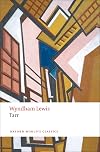
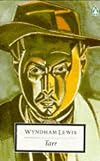
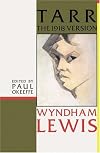
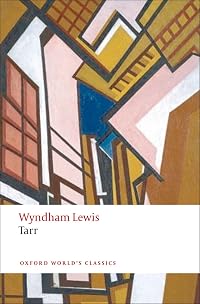
Played out against the backdrop of Paris before the start of the First World War, Tarr tells the blackly comic story of the lives and loves of two artists--the English enfant terrible Frederick Tarr, and the middle-aged German Otto Kreisler, a failed painter who finds himself in a widening spiral of militaristic self-destruction. When both become interested in the same two women--Bertha Lunken, a conventional German, and Anastasya Vasek, the ultra-modern international devotee of "swagger show more sex"--Wyndham Lewis sets the stage for a scathing satire of national and social pretensions, the fraught relationship between men and women, and the incompatibilities of art and life. Scott W. Klein's introduction places the novel in the context of social satire and the avant-garde, especially the artistic developments of the 1910s--including Cubism, Futurism, and Lewis's own movement, Vorticism--and explores the links between Tarr and other Modernist masterpieces. The book also features Lewis's Preface to the 1918 American edition, comprehensive notes, a glossary of foreign words and phrases, and a map of Paris. About the Series: For over 100 years Oxford World's Classics has made available the broadest spectrum of literature from around the globe. Each affordable volume reflects Oxford's commitment to scholarship, providing the most accurate text plus a wealth of other valuable features, including expert introductions by leading authorities, voluminous notes to clarify the text, up-to-date bibliographies for further study, and much more. show lessTags
Recommendations




















Member Reviews
This is a novel of the pre-first world war modernist avant-garde, written by Wyndham Lewis, who was slightly better known as a painter and co-founder of the literary/art movement of Vorticism. It contains a lot of experimentation in writing style, and in a few ways pre-empts the innovation of better known subsequent modernist authors.
In plot, it deals with a group of four characters living in Paris – two male, two female – in what Lewis coins as the Bourgeois Bohemian set. As an exemplar of the abstract geometrical principles of Vorticism, their actions over the course of the novel have a quasi-symmetrical rhythm, changing, maintaining balance, and yet going nowhere. With the principles foci of Vorticism being directly counter to show more those of Futurism (Intellect vs Emotion; Spatial vs Temporal; Balance vs Movement; Contemplation vs Action), it is interesting to see here Lewis embodying on occasion the two different styles in his characters and setting them in conflict. He does this both through their actions, and more cleverly in his style of language when describing them, achieving with some success a parallel to the techniques of painting or visual representation. This novel is also partly meant to be a discussion on the incompatibility of art and life, but is at least as much a social satire and black comedy.
As a novel that was written over a hundred years ago now, it still feels experimental and modern. This is perhaps because not much quite like it has been written since, with contemporary culture never quite absorbing his style in the same way it did with that of better-known modernist writers. There are various reasons for not liking this novel, which have probably prevented its wider popularity, including brutal elements, and generally unlikeable characters. Thankfully this edition was well-footnoted, which helped a lot with a few of the anachronistic references that have not aged well. show less
In plot, it deals with a group of four characters living in Paris – two male, two female – in what Lewis coins as the Bourgeois Bohemian set. As an exemplar of the abstract geometrical principles of Vorticism, their actions over the course of the novel have a quasi-symmetrical rhythm, changing, maintaining balance, and yet going nowhere. With the principles foci of Vorticism being directly counter to show more those of Futurism (Intellect vs Emotion; Spatial vs Temporal; Balance vs Movement; Contemplation vs Action), it is interesting to see here Lewis embodying on occasion the two different styles in his characters and setting them in conflict. He does this both through their actions, and more cleverly in his style of language when describing them, achieving with some success a parallel to the techniques of painting or visual representation. This novel is also partly meant to be a discussion on the incompatibility of art and life, but is at least as much a social satire and black comedy.
As a novel that was written over a hundred years ago now, it still feels experimental and modern. This is perhaps because not much quite like it has been written since, with contemporary culture never quite absorbing his style in the same way it did with that of better-known modernist writers. There are various reasons for not liking this novel, which have probably prevented its wider popularity, including brutal elements, and generally unlikeable characters. Thankfully this edition was well-footnoted, which helped a lot with a few of the anachronistic references that have not aged well. show less
Ratings
Members
- Recently Added By
Published Reviews
ThingScore 100
I would not undervalue the nostalgic quality Tarr has acquired in the course of a generation; but what strikes one still is that its originality in description, episode and attitude of character is more than innovation. It is an enlargement of the novelist’s means; a new territory has been subdued: the terrasse...
Human beings are enjoyed as the dangerous animals who are determined - whatever show more fairy tales they may tell themselves or others - to have their cake and eat it. They are dangerous because they dream, and dreams create an inflated physical world. Human nature is disgraceful; the only thing to be said for it is that it may produce a little, a very little, Art... In Kreisler cadging, scrounging, loving, fighting, crawling back, breaking up parties and ending in murder and suicide, he has created a permanent character. (The fact is he created Hitler.) It is a strange experience to put down a masterpiece in which one has had the impression of not only knowing the characters but of giving them a pinch all over to see if they were ready for the comic pot of life on earth. show less
Human beings are enjoyed as the dangerous animals who are determined - whatever show more fairy tales they may tell themselves or others - to have their cake and eat it. They are dangerous because they dream, and dreams create an inflated physical world. Human nature is disgraceful; the only thing to be said for it is that it may produce a little, a very little, Art... In Kreisler cadging, scrounging, loving, fighting, crawling back, breaking up parties and ending in murder and suicide, he has created a permanent character. (The fact is he created Hitler.) It is a strange experience to put down a masterpiece in which one has had the impression of not only knowing the characters but of giving them a pinch all over to see if they were ready for the comic pot of life on earth. show less
added by SnootyBaronet
Lists

1,001 BYMRBYD Concensus
723 works; 27 members

Personal 2026 reads
28 works; 1 member
Author Information

91+ Works 2,924 Members
Wydham Lewis: November 18, 1882 -- March 7, 1957 Distinguished and highly original, Wyndham Lewis was known for his sharp wit and sardonic insight. A modern master of satire, Lewis was born off the coast of Nova Scotia in his English father's yacht on November 18, 1882, and grew up in England with his mother. He was associated with Roger Fry and show more Ezra Pound on the vorticist magazine, Blast (1914--1915). Lewis served in France in World War I, and his dynamic paintings of war scenes soon gained him wide recognition for his art, now represented in the Tate Gallery and the Victoria and Albert Museum, London, and in the Museum of Modern Art, New York. After the publication of his naturalistic novel Tarr (1918), he became prominent as a writer. His major work of fiction is The Human Age (1955--56). He also wrote Doom of Youth, The Hitler Cult, and The Jews, Are They Human? Lewis died in London on March 7, 1957. (Bowker Author Biography) show less
Some Editions
Awards and Honors
Series
Belongs to Publisher Series
Common Knowledge
- Canonical title
- Tarr
- Original publication date
- 1918
- People/Characters
- Frederick Tarr; Alan Hobson
- Important places
- Paris, France
- First words
- PUBLISHED ten years ago, Tarr, my first book, in a sense the first book of an epoch in England, is often referred to and a new edition has, for several years, been in demand.
PARIS hints of sacrifice.
This book was begun eight years ago;* so I have not produced this disagreeable German for the gratification of primitive partisanship aroused by the war. - Quotations
- She crossed her legs. The cold grape-bloom mauve silk stockings ended in a dark slash each against her two snowy stallion thighs which they bisected, visible, one above the other, in naked expanses of tempting undercut, issui... (show all)ng from a dead-white foam of central lace worthy of the Can-Can exhibitionists* of the tourist resorts of Paris-by-night.
- Last words
- (Click to show. Warning: May contain spoilers.)The cheerless and stodgy absurdity of Rose Fawcett required as compensation the painted, fine and enquiring face of Prism Dirkes.
- Blurbers
- Pritchett, V. S.
Classifications
Statistics
- Members
- 458
- Popularity
- 66,729
- Reviews
- 1
- Rating
- (3.74)
- Languages
- 5 — Dutch, English, French, German, Italian
- Media
- Paper, Ebook
- ISBNs
- 19
- ASINs
- 8