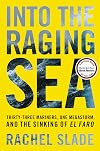
Into the Raging Sea: Thirty-Three Mariners, One Megastorm, and the Sinking of El Faro
by Rachel Slade
On This Page
Description
WINNER OF THE MAINE LITERARY AWARD FOR NON FICTION NATIONAL BESTSELLER A NEW YORK TIMES NOTABLE BOOK AN NPR BEST BOOK OF THE YEAR ONE OF JANET MASLIN'S MUST-READ BOOKS OF THE SUMMER A NEW YORK TIMES EDITOR'S CHOICE ONE OF OUTSIDE MAGAZINE'S BEST BOOKS OF THE SUMMER ONE OF AMAZON'S BEST NONFICTION BOOKS OF THE YEAR SO FAR "A powerful and affecting story, beautifully handled by Slade, a journalist who clearly knows ships and the sea."-Douglas Preston, New York Times Book Review "A Perfect show more Storm for a new generation." -Ben Mezrich, bestselling author of The Accidental Billionaires: The Founding of Facebook On October 1, 2015, Hurricane Joaquin barreled into the Bermuda Triangle and swallowed the container ship El Faro whole, resulting in the worst American shipping disaster in thirty-five years. No one could fathom how a vessel equipped with satellite communications, a sophisticated navigation system, and cutting-edge weather forecasting could suddenly vanish-until now. Relying on hundreds of exclusive interviews with family members and maritime experts, as well as the words of the crew members themselves-whose conversations were captured by the ship's data recorder-journalist Rachel Slade unravels the mystery of the sinking of El Faro. As she recounts the final twenty-four hours onboard, Slade vividly depicts the officers' anguish and fear as they struggled to carry out Captain Michael Davidson's increasingly bizarre commands, which, they knew, would steer them straight into the eye of the storm. Taking a hard look at America's aging merchant marine fleet, Slade also reveals the truth about modern shipping-a cut-throat industry plagued by razor-thin profits and ever more violent hurricanes fueled by global warming. A richly reported account of a singular tragedy, Into the Raging Sea takes us into the heart of an age-old American industry, casting new light on the hardworking men and women who paid the ultimate price in the name of profit. show lessTags
Recommendations














Member Reviews
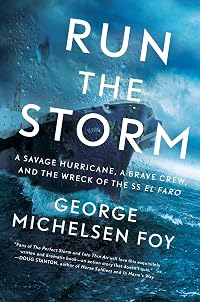
This book makes an interesting comparison with George Foy's "Run the Storm", as author Rachel Slade takes a very different approach to the telling of the SS El Faro tragedy. While Foy is a writer with a maritime background, Slade is a journalist with no grounding in matters of the sea. So a camparison of the styles is most enlightening.
The origins of this book lay in an article Slade wrote for Yankee magazine, a regional publication focusing on the state of Maine. Her article was about the El Faro officers with connections with the state, so to create the book Slade greatly expanded the scope of her writing to encompass the entirety of the El Faro saga: its design and construction, its personnel and their families, the corporate show more entities that managed the operations of the ship, and the searchers and would be rescuers for the ship and crew. Slade's subsequent book, "Into the Raging Sea" was published in 2018 with 416 pages divided into two parts with a total of 32 fairly short chapters.
The author's treatment of the El Faro story is as a fabric woven with many threads. Slade introduces those threads at different points in the book. For example, the first chapter is about the calls made by the El Faro's master, Captain Michael Davidson, to the offices of TOTE Marine services less than an hour before the ship sank. Then Chapter 2 sees the ship being loaded at Blount Island Terminal in Jacksonville, Florida on the eve of the ship's fatal sailing. Chapter 3 brings in the development of Hurricane Juaquin, and so on. Therre are chapters on the crew members, the captain, on the design and construction of the ship, on the El Faro's service life, on the Puerto Rican economy and the maritime logistics that support it, on the TOTE corporate struction and leadership, the search fo the ship after its loss, the investigations, and the associated hearings, and,finally, the families. Each chapter is brief, which makes for quick reading, even if the story wasn't so compelling.
This book's differences from Foy's "Run the Storm' are significant. Foy writes as a sailor and is clearly comfortable with maritime subject. Slade is not at home with ships and the sea, and she relies on interviews with experienced mariners to fill in the details. Foy takes you through the fatal voyage from beginning to end, departing from the storyline to provide a detail or two on subjects that required a bit more depth. Slade ushers you in and out of the timeline to explain aspects of the tragedy. While there is sadness in Foy's telling, Slade clearly condemns the corporate world that is willing to sacrifice precious human lives as well as a healthy and stable world climate in search of higher profits and happier shareholders.
In my readings of the two books, I give Slade's work the higher marks. Her investigation into the El Faro disaster goes far deeper than Foy's effort, and her reveals about TOTE's corporate ethic are as disturbing as they are unsuprising in 21st century America. One can easily make the comparison between the El Faro's 2015 sinking and the destroyer collisions that plagued the U.S. Navy two years later. The corporate bodies involved (TOTE and the U.S. Navy) initially accepted no fault for these accidents and pushed blame down on the individual ship captains, who were either relieved for cause or perished. Aside from the question of maritime competence, it sure appears that the character of a nation is in decline. show less
The origins of this book lay in an article Slade wrote for Yankee magazine, a regional publication focusing on the state of Maine. Her article was about the El Faro officers with connections with the state, so to create the book Slade greatly expanded the scope of her writing to encompass the entirety of the El Faro saga: its design and construction, its personnel and their families, the corporate show more entities that managed the operations of the ship, and the searchers and would be rescuers for the ship and crew. Slade's subsequent book, "Into the Raging Sea" was published in 2018 with 416 pages divided into two parts with a total of 32 fairly short chapters.
The author's treatment of the El Faro story is as a fabric woven with many threads. Slade introduces those threads at different points in the book. For example, the first chapter is about the calls made by the El Faro's master, Captain Michael Davidson, to the offices of TOTE Marine services less than an hour before the ship sank. Then Chapter 2 sees the ship being loaded at Blount Island Terminal in Jacksonville, Florida on the eve of the ship's fatal sailing. Chapter 3 brings in the development of Hurricane Juaquin, and so on. Therre are chapters on the crew members, the captain, on the design and construction of the ship, on the El Faro's service life, on the Puerto Rican economy and the maritime logistics that support it, on the TOTE corporate struction and leadership, the search fo the ship after its loss, the investigations, and the associated hearings, and,finally, the families. Each chapter is brief, which makes for quick reading, even if the story wasn't so compelling.
This book's differences from Foy's "Run the Storm' are significant. Foy writes as a sailor and is clearly comfortable with maritime subject. Slade is not at home with ships and the sea, and she relies on interviews with experienced mariners to fill in the details. Foy takes you through the fatal voyage from beginning to end, departing from the storyline to provide a detail or two on subjects that required a bit more depth. Slade ushers you in and out of the timeline to explain aspects of the tragedy. While there is sadness in Foy's telling, Slade clearly condemns the corporate world that is willing to sacrifice precious human lives as well as a healthy and stable world climate in search of higher profits and happier shareholders.
In my readings of the two books, I give Slade's work the higher marks. Her investigation into the El Faro disaster goes far deeper than Foy's effort, and her reveals about TOTE's corporate ethic are as disturbing as they are unsuprising in 21st century America. One can easily make the comparison between the El Faro's 2015 sinking and the destroyer collisions that plagued the U.S. Navy two years later. The corporate bodies involved (TOTE and the U.S. Navy) initially accepted no fault for these accidents and pushed blame down on the individual ship captains, who were either relieved for cause or perished. Aside from the question of maritime competence, it sure appears that the character of a nation is in decline. show less
Into the Raging Sea is a well-researched and powerfully written account of one of the worst American maritime disasters in decades. The book chronicles the final voyage of the container ship El Faro, which sank near the Bahamas during Hurricane Joaquin on October 1, 2015, claiming the lives of all 33 crew members. Slade reconstructs the ship's final hours using the recovered voice data recorder, allowing readers to experience the conversations and decisions that ultimately led to tragedy.
In breaks between these conversations, Slade provides minibiographies of key crew members, particularly Captain Michael Davidson, whose decision-making comes under intense scrutiny. She examines the corporate culture at TOTE Maritime, revealing how show more economic pressures and outdated equipment (not to mention old-style open lifeboats) contributed to the disaster. The book serves as both a gripping disaster narrative and an indictment of the modern shipping industry. Slade highlights how cost-cutting measures and the prioritization of schedules created the conditions for disaster. The ending is heartbreaking. Recommended to readers interested in maritime journeys, analysis of disasters, or corporate ethics (or lack thereof). show less
In breaks between these conversations, Slade provides minibiographies of key crew members, particularly Captain Michael Davidson, whose decision-making comes under intense scrutiny. She examines the corporate culture at TOTE Maritime, revealing how show more economic pressures and outdated equipment (not to mention old-style open lifeboats) contributed to the disaster. The book serves as both a gripping disaster narrative and an indictment of the modern shipping industry. Slade highlights how cost-cutting measures and the prioritization of schedules created the conditions for disaster. The ending is heartbreaking. Recommended to readers interested in maritime journeys, analysis of disasters, or corporate ethics (or lack thereof). show less
In 2015, SS El Faro, a 790-foot container ship on its trip to Puerto Rico, sailed into the teeth of Joaquin, a category five hurricane, resulting in the deaths of its thirty-three member crew. Drawing on the black box that recorded the conversations on the ship’s deck, author Rachel Slade masterfully recreates a “you are there” description of events, detailing the thoughts and actions of the crew as the weather forecast was ignored, resulting in the ship’s fateful decision to steer directly into the storm.
The author places blame on the ship’s captain who blithely discarded the concerns of other officers, basing his decisions on out of date weather forecasts. But she also clearly shows how El Faro’s owner, a company that for show more years had been cutting staff and repairs to save money, was also culpable. Throughout, they had no one monitoring the ship’s decisions, leaving them to a captain who, under pressure to enhance the company’s profits, chose to try to outrace the storm to ensure he completed the trip on time.
While the causes of El Faro’s sinking were numerous, Slade praises and details the efforts of the U.S. Coast Guard’s search and rescue team who risked their lives to rescue several other ships caught up in the storm. Unfortunately, El Faro sank before most of its crew could abandon ship. Into The Raging Sea is a gripping read, and a chilling one. Slade’s biographies of the crew members’ personal lives drive home the toll of this tragedy. It presents not only the hubris of a domineering captain, but the faults of the ship’s owners who were concerned more about profits than the safety of the crews. The fact that the investigation into the sinking resulted in a mere hand slap corporately shows that American companies have little reason to take safety concerns seriously. Then, as now, profits are too often the driving factor no matter if this might result in the loss of lives. This account of El Faro’s sinking is guaranteed to haunt. show less
The author places blame on the ship’s captain who blithely discarded the concerns of other officers, basing his decisions on out of date weather forecasts. But she also clearly shows how El Faro’s owner, a company that for show more years had been cutting staff and repairs to save money, was also culpable. Throughout, they had no one monitoring the ship’s decisions, leaving them to a captain who, under pressure to enhance the company’s profits, chose to try to outrace the storm to ensure he completed the trip on time.
While the causes of El Faro’s sinking were numerous, Slade praises and details the efforts of the U.S. Coast Guard’s search and rescue team who risked their lives to rescue several other ships caught up in the storm. Unfortunately, El Faro sank before most of its crew could abandon ship. Into The Raging Sea is a gripping read, and a chilling one. Slade’s biographies of the crew members’ personal lives drive home the toll of this tragedy. It presents not only the hubris of a domineering captain, but the faults of the ship’s owners who were concerned more about profits than the safety of the crews. The fact that the investigation into the sinking resulted in a mere hand slap corporately shows that American companies have little reason to take safety concerns seriously. Then, as now, profits are too often the driving factor no matter if this might result in the loss of lives. This account of El Faro’s sinking is guaranteed to haunt. show less
This was an absolutely riveting and tragic account of El Faro, the container ship that ran into Hurricane Joaquin while enroute to Puerto Rico from Jacksonville, Fl, in October 2015, and disappeared, resulting in the loss of 33 lives. The first half of the book tells of the mariners and the final hours aboard ship (possible because of the subsequent find of the ship’s VDR that had recorded hours of conversations on the bridge). The second half details the search and subsequent infuriating investigation. The author is a journalist and the book has a “you are there” feel - it’s impossible not to feel deeply as ill formed decisions are made. It’s a page-turner of a book even as you know it’s going to end tragically. This show more isn’t a technical story, it’s more a story of people - the mariners and coast guard personnel - who work the water. Highly recommended
My thanks to the publisher for providing a copy of this book for honest review. show less
My thanks to the publisher for providing a copy of this book for honest review. show less
This is an excellent recounting of the horrifying wreck of an American container ship in a 2015 hurricane off the coast of Puerto Rico. Since the "black box" recorder on the ship's bridge was retrieved (at great peril and expense), the author is able to document the hour-by-hour combination of human hubris and mechanical failure that caused the deaths of 33 mariners. And since she attended the post-accident inquest, Slade is also able to pin the tail on the corporate donkey. There's plenty of neglect and avarice to be spread around.
Quote: "The word "experienced" often refers to someone who has gotten away with doing the wrong thing more frequently than you have."
Quote: "The word "experienced" often refers to someone who has gotten away with doing the wrong thing more frequently than you have."
Shortly before dawn on Thursday, October 1, 2015, an American merchant captain named Michael Davidson sailed a 790-foot U.S.-flagged cargo ship, El Faro, into the eye of a Category 3 hurricane near the the Bahama Islands.
This book was a riveting sea story of a horrible disaster. Many readers will enjoy it purely for that reason, but it's so much more. It details the struggles and challenges faced by mariners making a living on the sea, and the impact our society has on people when it makes decisions and laws based on economics, without also considering safety as equally important.
I was completely oblivious to the difficulties and risks facing the men and women who deliver our goods across the sea. The chapters alternate between the crew show more profiles and the more dry statistics of the ship, computer systems, and history of sea shipping. But I did find that history much more interesting than I expected I would.
I found this book to be a gripping narrative of a cargo ship’s tragic voyage. This is a well written book, and when the author sticks to the main narrative is quite compelling. I prefer not to have to read every author's political opinion, so I could have done with less social commentary. However, it's full of fascinating detail for anyone remotely interested in ships or shipping.
1347 show less
This book was a riveting sea story of a horrible disaster. Many readers will enjoy it purely for that reason, but it's so much more. It details the struggles and challenges faced by mariners making a living on the sea, and the impact our society has on people when it makes decisions and laws based on economics, without also considering safety as equally important.
I was completely oblivious to the difficulties and risks facing the men and women who deliver our goods across the sea. The chapters alternate between the crew show more profiles and the more dry statistics of the ship, computer systems, and history of sea shipping. But I did find that history much more interesting than I expected I would.
I found this book to be a gripping narrative of a cargo ship’s tragic voyage. This is a well written book, and when the author sticks to the main narrative is quite compelling. I prefer not to have to read every author's political opinion, so I could have done with less social commentary. However, it's full of fascinating detail for anyone remotely interested in ships or shipping.
1347 show less
Shipping is dangerous work and ships run aground, capsize, founder, or sink nearly every day. Some of these tragedies, though, capture the imagination and inspire writers to explore the reasons for their loss and to find some deeper meaning. The sinking of El Faro in Hurrican Joaquin on October 1, 2015, is just such a storm and has already inspired at least three books so far. Rachel Slade’s Into the Raging Sea seeks to do more than tell the story of the loss of El Faro and its thirty-three crew members, she seeks to place it in the context of shifts in global trade, economic trends, and global warming. This makes for an absorbing and important narrative.
Slade looks at several factors that led to the disaster. Most obviously, global show more climate change has warmed the ocean, creating more violent storms and far more damaging hurricanes. Climate-change deniers in Congress have underfunded the National Weather Service and the National Oceanic and Atmospheric Administration because they are too afraid of climate science to fund good weather science. It’s very important for climate-change deniers that no one understands weather and climate are not the same, because then they could not bring snowballs into the House of Representatives to expose their ignorance.
She also looks at the leadership of El Faro, the captain, engineers, and officers. Certainly, it seems clear that Captain Davidson made several errors in judgment. He was unaware that his preferred weather update, a graphical representation of the weather, was several hours behind the National Weather Service whose update was textual and required being plotted by hand on their charts. He was responding to weather reports nine hours out of date and like many people, where there was a conflict in reports, he went with the report he liked best. He was also unreceptive to his subordinates advancing their concerns and concerned more about pleasing the on-shore executives than anyone else. He had recently been overlooked for a promotion and was resentful.
She considers the design of El Faro which is the most fascinating part in that the ship was retrofitted a few times to adapt to changing shipping trends without thinking carefully enough about how those changes affect the ship’s balance and seaworthiness. They were allowed again and again to take on more cargo, allowing the ship to rest lower and lower in the water without noticing that the vents on the side allow water in and are much lower. If you have a three-inch glass and it’s got a vent at two inches, the water does not wait to reach three inches before beginning to fill the glass.
Then she looks at management at TOTE, the company who owned El Faro. A more feckless bunch would be hard to find. It’s like they all watched “Wall Street” and though Gecko was the hero, not the villain. They fire the most experienced to replace them with cheaper and younger workers. They have someone unqualified to be an engineer on a ship overseeing all the ships. Their lead contact for ships at sea travels without leaving someone in charge. Sadly, because maritime law is heavily biased toward shipowners, they can cast all the blame on the captain.
There’s more, nonexistent inspections or next-to-worthless inspections. Like Wall Street, most maritime regulation and inspection is carried out by an organization created, funded, and in service to the shipowners. As in other industries, global trade patterns, outsourcing, and trends in labor have weakened the power of labor to advocate for safety. So many factors come together and you begin to wonder why there have not been more tragedies.
Rachel Slade does a great job of writing a compelling narrative that grabs your interest immediately. She is good at short character sketches, but her real strength is explaining the many unseen factors that led to disaster. In capturing the many historical and global trends that influenced decisions on the ship’s design, redesign, management, and maintenance, she is masterful.
I think she sometimes reaches unsupported conclusions when describing people’s character, particularly the women who are involved. For example, the crewing manager comes in for some serious criticism and the kind of gendered gossip that women in leadership often attract. However, her most significant act was ensuring Captain Davidson didn’t get promoted to the new ships. Considering his performance on El Faro, that sounds like a good decision to me. The other woman also came in for some of the same sort of commentary from men who worked with her, that she was scattered and forgetful and of course, rumored to have gotten her job because she filed a sexual harassment claim. But, of the officers on the bridge, she seemed to be more aware than anyone they were in danger and did more than anyone to point it out to the captain. If he had been willing to listen to her and if other officers had backed her up better, they would have changed course. Perhaps because Slade is also a woman, she didn’t want to seem partial, so she accepted the criticisms of these women even though they fit into the pattern of criticism women who seek jobs in men’s space always get. I think she should have taken more care to put those criticisms in the voice of the people who gave them, rather than in the author’s voice. That brings me to my second criticism. She tells us what people are thinking. Well, we know what they are doing and saying, but we can’t know their thoughts and motivations.
Lastly, I wish she had provided endnotes or footnotes. She lists her main sources, but she made some assertions that I would like to check, for example, that Florida is the most racist state. It sure could be and I assume she made that assertion based on the number of lynchings in Florida, but I don’t know because it is not sourced. There are other state’s that can make that claim based on other rationales. For example, my own state of Oregon prohibited Black people from owning land or a business or signing a contract in the state. Iowa and Indiana required black people to post a bond that would equal $15,000 in today’s dollars just to enter the state.
These are minor complaints when stacked against the scope of her research and the quality of her analysis. This is a fascinating story about a tragedy that could have been avoided and identitifies problems that probably guarantee it will happen again.
I received an ARC of Into the Raging Sea from the publisher through a Shelf Awareness drawing.
Into the Raging Sea at Harper Collins
Rachel Slade interview at 98.9 WCLZ
★★★★
https://tonstantweaderreviews.wordpress.com/2018/05/18/9780062699701/ show less
Slade looks at several factors that led to the disaster. Most obviously, global show more climate change has warmed the ocean, creating more violent storms and far more damaging hurricanes. Climate-change deniers in Congress have underfunded the National Weather Service and the National Oceanic and Atmospheric Administration because they are too afraid of climate science to fund good weather science. It’s very important for climate-change deniers that no one understands weather and climate are not the same, because then they could not bring snowballs into the House of Representatives to expose their ignorance.
She also looks at the leadership of El Faro, the captain, engineers, and officers. Certainly, it seems clear that Captain Davidson made several errors in judgment. He was unaware that his preferred weather update, a graphical representation of the weather, was several hours behind the National Weather Service whose update was textual and required being plotted by hand on their charts. He was responding to weather reports nine hours out of date and like many people, where there was a conflict in reports, he went with the report he liked best. He was also unreceptive to his subordinates advancing their concerns and concerned more about pleasing the on-shore executives than anyone else. He had recently been overlooked for a promotion and was resentful.
She considers the design of El Faro which is the most fascinating part in that the ship was retrofitted a few times to adapt to changing shipping trends without thinking carefully enough about how those changes affect the ship’s balance and seaworthiness. They were allowed again and again to take on more cargo, allowing the ship to rest lower and lower in the water without noticing that the vents on the side allow water in and are much lower. If you have a three-inch glass and it’s got a vent at two inches, the water does not wait to reach three inches before beginning to fill the glass.
Then she looks at management at TOTE, the company who owned El Faro. A more feckless bunch would be hard to find. It’s like they all watched “Wall Street” and though Gecko was the hero, not the villain. They fire the most experienced to replace them with cheaper and younger workers. They have someone unqualified to be an engineer on a ship overseeing all the ships. Their lead contact for ships at sea travels without leaving someone in charge. Sadly, because maritime law is heavily biased toward shipowners, they can cast all the blame on the captain.
There’s more, nonexistent inspections or next-to-worthless inspections. Like Wall Street, most maritime regulation and inspection is carried out by an organization created, funded, and in service to the shipowners. As in other industries, global trade patterns, outsourcing, and trends in labor have weakened the power of labor to advocate for safety. So many factors come together and you begin to wonder why there have not been more tragedies.
Rachel Slade does a great job of writing a compelling narrative that grabs your interest immediately. She is good at short character sketches, but her real strength is explaining the many unseen factors that led to disaster. In capturing the many historical and global trends that influenced decisions on the ship’s design, redesign, management, and maintenance, she is masterful.
I think she sometimes reaches unsupported conclusions when describing people’s character, particularly the women who are involved. For example, the crewing manager comes in for some serious criticism and the kind of gendered gossip that women in leadership often attract. However, her most significant act was ensuring Captain Davidson didn’t get promoted to the new ships. Considering his performance on El Faro, that sounds like a good decision to me. The other woman also came in for some of the same sort of commentary from men who worked with her, that she was scattered and forgetful and of course, rumored to have gotten her job because she filed a sexual harassment claim. But, of the officers on the bridge, she seemed to be more aware than anyone they were in danger and did more than anyone to point it out to the captain. If he had been willing to listen to her and if other officers had backed her up better, they would have changed course. Perhaps because Slade is also a woman, she didn’t want to seem partial, so she accepted the criticisms of these women even though they fit into the pattern of criticism women who seek jobs in men’s space always get. I think she should have taken more care to put those criticisms in the voice of the people who gave them, rather than in the author’s voice. That brings me to my second criticism. She tells us what people are thinking. Well, we know what they are doing and saying, but we can’t know their thoughts and motivations.
Lastly, I wish she had provided endnotes or footnotes. She lists her main sources, but she made some assertions that I would like to check, for example, that Florida is the most racist state. It sure could be and I assume she made that assertion based on the number of lynchings in Florida, but I don’t know because it is not sourced. There are other state’s that can make that claim based on other rationales. For example, my own state of Oregon prohibited Black people from owning land or a business or signing a contract in the state. Iowa and Indiana required black people to post a bond that would equal $15,000 in today’s dollars just to enter the state.
These are minor complaints when stacked against the scope of her research and the quality of her analysis. This is a fascinating story about a tragedy that could have been avoided and identitifies problems that probably guarantee it will happen again.
I received an ARC of Into the Raging Sea from the publisher through a Shelf Awareness drawing.
Into the Raging Sea at Harper Collins
Rachel Slade interview at 98.9 WCLZ
★★★★
https://tonstantweaderreviews.wordpress.com/2018/05/18/9780062699701/ show less
Members
- Recently Added By
Lists

Disaster Books
74 works; 19 members

Books Read in 2020
4,379 works; 124 members
Author Information
2 Works 373 Members
Rachel Slade is a Boston-based journalist, writer, and editor. She was a staff writer at Boston magazine for ten years, and her writing earned her a City and Regional Magazine Award in civic journalism. She splits her time between Brookline, Massachusetts, and Rockport, Maine.
Awards and Honors
Common Knowledge
- Original publication date
- 2018
- Important places
- Carribbean Islands; Puerto Rico
- Important events
- Sinking of the El Faro (2015); Hurricane Joaquin (2015)
- Epigraph
- There is nothing more enticing, disenchanting, and enslaving than the life at sea. - Lord Jim, Joseph Conrad
- Dedication
- To the families and friends of those lost on El Faro. No one should have to endure such sorrow.
- First words
- The satellite call came into the emergency center at 7:08 on the morning of October 1, 2015.
- Last words
- (Click to show. Warning: May contain spoilers.)At the end of every conversation, Rich reminds his daughter that he will always love her.
(Click to show. Warning: May contain spoilers.)(Epilogue) Humankind may chart a noble course but progress, like every voyage, requires strong situational awareness and a vigilant helmsman. - Blurbers
- Mezrich, Ben; Stark, Peter; Frump, Robert; Hargrove, Brantley; Weinman, Sarah; Konrad, John
- Original language
- English US
- Canonical DDC/MDS
- 910.916363
- Canonical LCC
- G530.E39
Classifications
- Genres
- Nonfiction, General Nonfiction, History, Travel, Science & Nature
- DDC/MDS
- 910.916363 — History & geography Geography & travel modified standard subdivisions of Geography and travel Explorers & Travelers Geography of and travel in areas, regions, places in general Air And Water Atlantic Ocean
- LCC
- G530 .E39 — Geography, Anthropology and Recreation Geography (General) Adventures, shipwrecks, buried treasure, etc.
- BISAC
Statistics
- Members
- 313
- Popularity
- 101,988
- Reviews
- 15
- Rating
- (4.11)
- Languages
- English
- Media
- Paper, Audiobook, Ebook
- ISBNs
- 14
- ASINs
- 2