On This Page
Description
Captain Sam Wyndham and his sidekick Surrender-Not Banerjee return in this prize-winning historical crime series set in 1920s Calcutta. India, 1921. Haunted by his memories of World War I, Captain Sam Wyndham is battling a serious addiction to opium that he must keep secret from his superiors in the Calcutta police force. When Sam is summoned to investigate a grisly murder, he is stunned at the sight of the body: he's seen this before. Last night, in a drug addled haze, he stumbled across a show more corpse with the same ritualistic injuries. It seems like there's a deranged killer on the loose. Unfortunately for Sam, the corpse was in an opium den-and revealing his presence there could cost him his career. With the aid of his quick-witted Indian Sergeant, Surrender-Not Banerjee, Sam must try to solve the two murders, all the while keeping his personal demons secret, before somebody else turns up dead. show lessTags
Recommendations
























Member Reviews
Again a solid mystery. In book 1, I guessed the written note was a false clue right away, plus a few other things. This one kept the truth hidden better.
The second half felt like a thriller rather than a detective mystery, and overall this was one of the finest use of tension I've read in a long while. The various killings linking together, the prince's visit hanging over them like Damocles's sword, historically accurate horror and impending terrorist attacks.
I did not read the second one, but apparently Banerjee and Annie found out about the opium addiction and left him to it, occasionally giving him the side eye. Banerjee and Wyndham are also living together, and somewhat friends.
Yet it’s very hard to be friends with someone who is show more not only your subordinate at work, but seen as a lesser man in the world you live in. And I’m glad the two aren’t best pals through the magic of fiction. They have shared 1000+ pages of story and are still struggling to manage the minefield that is their relationship.
Like the first one, I liked the clear hypocrisy of the setting. It is woven into the characters’ daily lives with lines such as There was, of course, no jury …. on account of the difficulty of finding twelve good men and true in this country of three hundred million souls.
While Wyndham doesn’t believe in English superiority and is sure the Raj will fall someday, he is also not above using his status as a sahib and regularly talks about Indians or Bengalis as a generalised whole. Meanwhile Banerjee is from an incredibly rich family and the pair have a servant of their own.
As a means of protest, it seemed almost tailor-made for the Bengali psyche, which was predisposed to causing maximum inconvenience while doing as little as possible. Striking was in their blood.
There were still a few lines that felt slightly mismatched with the actions of the main character.
Her case had landed on my desk, and while it probably didn’t matter to her, I’d never been one to give up on lost causes, maybe because I was one myself.
Don’t tell me the detective never gives up, show that.
The irony was that, while I ran from my memories, my inability to move forward – to consign my time with Sarah to the past – had probably crushed any prospect of a future with Annie.
Sarah, the wife you lived with for 5 weeks and is barely mentioned otherwise? That wife?
Wyndham is very aware of his faults but barely follows up on them. His failure to do better doesn’t lead to any significant action, or emotional turmoil. The scene where he admits to himself Banerjee is the closest thing he has to a friend could have been a perfect scene to address this and develop their friendship more.
In a way, his awareness of his flaws is what makes his character work. He's not written as some white-saviour-ally to the Indians, if that was the case, the book in itself would be annoying because Wyndham does too many things wrong to be an ally. He doesn't pretend to be one either, unless he is talking to miss Grant, whose subplot I still think is cliche. Sometimes he is significantly more fair than his fellow Englishmen, and sometimes he is exactly like them, but he never pretends to be good or moral.
Sam Wyndham, the character, knows he can be awful, and the fact that the author wrote him that way makes the way the book addresses the issues of the British Raj work. The character of a ‘good’ white Englishman would be a false comfort, soothing to some readers maybe, but just another way of saying that “see! The English can be good!”
Sam just acts, and as a result, the reader sees the big picture of an unfair world in which he's just one guy. show less
The second half felt like a thriller rather than a detective mystery, and overall this was one of the finest use of tension I've read in a long while. The various killings linking together, the prince's visit hanging over them like Damocles's sword, historically accurate horror and impending terrorist attacks.
I did not read the second one, but apparently Banerjee and Annie found out about the opium addiction and left him to it, occasionally giving him the side eye. Banerjee and Wyndham are also living together, and somewhat friends.
Yet it’s very hard to be friends with someone who is show more not only your subordinate at work, but seen as a lesser man in the world you live in. And I’m glad the two aren’t best pals through the magic of fiction. They have shared 1000+ pages of story and are still struggling to manage the minefield that is their relationship.
Like the first one, I liked the clear hypocrisy of the setting. It is woven into the characters’ daily lives with lines such as There was, of course, no jury …. on account of the difficulty of finding twelve good men and true in this country of three hundred million souls.
While Wyndham doesn’t believe in English superiority and is sure the Raj will fall someday, he is also not above using his status as a sahib and regularly talks about Indians or Bengalis as a generalised whole. Meanwhile Banerjee is from an incredibly rich family and the pair have a servant of their own.
As a means of protest, it seemed almost tailor-made for the Bengali psyche, which was predisposed to causing maximum inconvenience while doing as little as possible. Striking was in their blood.
There were still a few lines that felt slightly mismatched with the actions of the main character.
Her case had landed on my desk, and while it probably didn’t matter to her, I’d never been one to give up on lost causes, maybe because I was one myself.
Don’t tell me the detective never gives up, show that.
The irony was that, while I ran from my memories, my inability to move forward – to consign my time with Sarah to the past – had probably crushed any prospect of a future with Annie.
Sarah, the wife you lived with for 5 weeks and is barely mentioned otherwise? That wife?
Wyndham is very aware of his faults but barely follows up on them. His failure to do better doesn’t lead to any significant action, or emotional turmoil. The scene where he admits to himself Banerjee is the closest thing he has to a friend could have been a perfect scene to address this and develop their friendship more.
In a way, his awareness of his flaws is what makes his character work. He's not written as some white-saviour-ally to the Indians, if that was the case, the book in itself would be annoying because Wyndham does too many things wrong to be an ally. He doesn't pretend to be one either, unless he is talking to miss Grant, whose subplot I still think is cliche. Sometimes he is significantly more fair than his fellow Englishmen, and sometimes he is exactly like them, but he never pretends to be good or moral.
Sam Wyndham, the character, knows he can be awful, and the fact that the author wrote him that way makes the way the book addresses the issues of the British Raj work. The character of a ‘good’ white Englishman would be a false comfort, soothing to some readers maybe, but just another way of saying that “see! The English can be good!”
Sam just acts, and as a result, the reader sees the big picture of an unfair world in which he's just one guy. show less
Move over Nordic Noir, Indian Noir surprises!
My second reading of Abir Mukherjee's murder mystery novel set against related socioeconomic and political conditions in 1920's India, continues to enthrall. I am totally smitten with the goings on of former Scotland Yard detective Captain Sam Wyndham and his co policeman, Surendranath (Surrender-Not) Bannerjee
As always Mukherjee's knowledge of political events in 1920's Calcutta is well grounded.
Sam's struggle with opium addiction (a result of his psychological traumas of the Great War) continues. Not that it slows down his thinking processes but it does mean that sometimes he's in the wrong place at the wrong or right time depending on your point of view. This time Sam realizes that a show more ritualistic seeming murder is something he's witnessed already, in fact the night before at an opium den. And that's not a story your going to relate to your colleagues! A further murder of a nurse that has puzzling similarities and the take over of the investigation of the latter by military intelligence, has Sam and Bannerjee at a loss. All this against the background of a Calcutta preparing for a visit by the Prince of Wales--a security nightmare.
Once again a tautly charged crime thriller that drew me in and has left me wanting more! Bring on the fourth novel soon, please!
A NetGalley ARC show less
My second reading of Abir Mukherjee's murder mystery novel set against related socioeconomic and political conditions in 1920's India, continues to enthrall. I am totally smitten with the goings on of former Scotland Yard detective Captain Sam Wyndham and his co policeman, Surendranath (Surrender-Not) Bannerjee
As always Mukherjee's knowledge of political events in 1920's Calcutta is well grounded.
Sam's struggle with opium addiction (a result of his psychological traumas of the Great War) continues. Not that it slows down his thinking processes but it does mean that sometimes he's in the wrong place at the wrong or right time depending on your point of view. This time Sam realizes that a show more ritualistic seeming murder is something he's witnessed already, in fact the night before at an opium den. And that's not a story your going to relate to your colleagues! A further murder of a nurse that has puzzling similarities and the take over of the investigation of the latter by military intelligence, has Sam and Bannerjee at a loss. All this against the background of a Calcutta preparing for a visit by the Prince of Wales--a security nightmare.
Once again a tautly charged crime thriller that drew me in and has left me wanting more! Bring on the fourth novel soon, please!
A NetGalley ARC show less
I have to be honest and say that it took me a long time to get into Smoke and Ashes, and it's got everything to do with me and nothing to do with the book because I really enjoy this series. The book starts out with Wyndham on a bender, and I have very little patience for fictional characters addicted to alcohol or drugs. Once I'd reminded myself over and over again that Mukherjee's A Necessary Evil made my Best Reads List of 2018, I picked the book up again and began to read. I'm glad I did.
Wyndham is no fool. He realizes that--with that first body he stumbled across in the opium den and the subsequent police raid-- he's been set up. Someone knows of his addiction, and that someone is using it against him. Wyndham gets himself together show more to wean himself off the drugs. Once he started avoiding opium dens, my enjoyment of the story increased, and so did the pace of the book.
The mystery and the characters are so strong, but I carried away two major things from reading Smoke and Ashes. One, Mukherjee is wonderful at depicting how unsettled India was in the 1920s-- and how good the British Raj was at making decisions that kept the Indians riled up. They brought about their own doom. The second thing that really impressed itself upon me was what an uncomfortable position Wyndham's Indian sergeant is in. No one in his family wanted him to join the Raj's police force, and many family members shun him. But Surrender-Not is as stubborn as the British mispronunciation of his given name. He is good at his job. He believes in his job. He also believes India should be free from British rule. Like I said, his position is not an easy one.
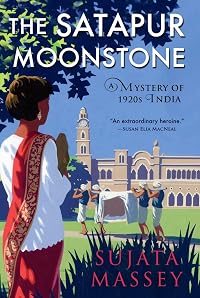
If you enjoy historical mysteries with strong stories, strong characters, and a setting so vivid that you're drawn right into the thick of things, you can't go wrong with Abir Mukherjee's Wyndham and Banerjee series. I also find that these books make excellent companion pieces to Sujata Massey's Perveen Mistry historical series that take place during the same time frame, so keep those in mind, too! show less
Wyndham is no fool. He realizes that--with that first body he stumbled across in the opium den and the subsequent police raid-- he's been set up. Someone knows of his addiction, and that someone is using it against him. Wyndham gets himself together show more to wean himself off the drugs. Once he started avoiding opium dens, my enjoyment of the story increased, and so did the pace of the book.
The mystery and the characters are so strong, but I carried away two major things from reading Smoke and Ashes. One, Mukherjee is wonderful at depicting how unsettled India was in the 1920s-- and how good the British Raj was at making decisions that kept the Indians riled up. They brought about their own doom. The second thing that really impressed itself upon me was what an uncomfortable position Wyndham's Indian sergeant is in. No one in his family wanted him to join the Raj's police force, and many family members shun him. But Surrender-Not is as stubborn as the British mispronunciation of his given name. He is good at his job. He believes in his job. He also believes India should be free from British rule. Like I said, his position is not an easy one.
If you enjoy historical mysteries with strong stories, strong characters, and a setting so vivid that you're drawn right into the thick of things, you can't go wrong with Abir Mukherjee's Wyndham and Banerjee series. I also find that these books make excellent companion pieces to Sujata Massey's Perveen Mistry historical series that take place during the same time frame, so keep those in mind, too! show less
Summary
December 1921, Calcutta. Captain Sam Wyndham keeps his opium addiction a secret from his superiors. One night, his colleagues raid an opium den and he narrowly escapes detection. As he runs, he stumbles over a mutilated body. Eyeless. Two stab wounds in the chest. Opium-dazed, Sam’s unsure whether this is a hallucination or reality. No one reports a murder.
Meanwhile, their boss tells Sam and his sergeant, “Surrender-Not” Banerjee, to persuade Das, Gandhi’s chief lieutenant in Bengal, not to organize a protest during Prince Edward’s visit.
Then there’s another murder. The corpse bears the same wounds as the victim in the opium den. It can’t be a coincidence. But how can Sam investigate the link between the two victims show more when he’s got to keep his addiction a secret?
What works for me:
Everything.
That’s not an exaggeration. I took four pages of notes and could’ve written more. (Okay, it was in a 5×7 notebook, but for most novels, I take 2 or 2 1/2 pages of notes.) Here’s a few of the major ones.
The opening.
Mukherjee has mastered the art of the opening lines.
The portrayal of the upheaval in India
Prince Edward (later Edward VII) is coming to India. Gandhi has called for Indian independence, sparking a non-violent non-cooperation movement that unites both the Bengali and Muslim factions (amazing!) to protest continued British ruling. United, they can shut down major roads simply by smiling while they sit in the road and pray. Current tensions run high. Indian British policemen are quitting by the dozens, so the British don’t have enough police presence to keep the peace.
Mukherjee excels at showing the tensions, the differing opinions, and the complicated political moves of both British and Indian leaders. For example, they can’t arrest Gandhi or his right hand man Das because doing that would make martyrs of them. (There’s nothing like a martyr to refuel enthusiasm for a protest.) But Sam knows that trying to “persuade” Gandhi and the other leaders not to protest during the Prince’s visit is futile.
Sam’s character growth
We’re in Sam’s head. Sometimes that’s not a pleasant place to be. He’s sarcastic, often acid-tongued, and paranoid. (It’s kept him alive, he believes. He may be right.)
His opinions color everything he sees. Background details and cultural explanations that might be dull are brought to life with his sharp and sardonic observations. They aren’t always politically correct. He’s a walking paradox, simultaneously racist and progressive.
On the one hand, he still thinks of the British police as being the best people to maintain law and order in India. He doesn’t care for the “new breed” of Indian revolutionaries (Gandhi’s non-violent protesters). He’s definitely not in favor of Indian independence.
But on the other hand, he shares his living quarters with his Bengali sergeant, Surrender-Not, and considers him to be a friend and confidant. He also investigates the murder of a native woman as thoroughly as he would a white person’s death. Both of these are unusual for a British officer at that time. As he and another officer examine the native woman’s mutilated body, the other man comments that Sam must be used to seeing murdered bodies, he responds, “I pray I never get used to seeing it” (page 87).
He’s about as cuddly as a Brillo pad, but he’s not beyond redemption. I appreciate how in both Smoke and Ashes and A Necessary Evil, Sam comes to new realizations about himself and others. He’s growing as a person. It will be interesting to see how he changes throughout this series.
Surrender-Not
Speaking of character growth, Sam’s sergeant is changing, too. He’s been estranged from his family since he joined the British police force. It’s been a source of pain, but in this novel it comes to the forefront. With so many other Indian policemen quitting the force, his continued presence seems a betrayal of his country and siding with the resented British. He loves his job. Yet he loves his family, too.
His relationship with Sam is changing as well. They seem more like equals (or moving toward equality) in this book than the last.
Like Sam, he’s a bit of a walking contradiction. He’s too shy to talk to beautiful young women, but he’s fabulous at interviewing older women. He shows a disdain for the English language (he finds it deficient–especially its speakers’ inability to pronounce his first name) but is fluent and is often relied on to translate for the British police. He was raised to be a priest but ended up as a policeman. In some regards, he’s innocent but he’s a source of reliable information about Indian cultures for Sam.
The mystery
This particular mystery is deeply rooted in the British/Indian relationship. It’s believable and heart-breaking.
This is a terrific historical crime novel. I highly recommend it!
Note: This review also appears on Bookbub and my personal blog. show less
December 1921, Calcutta. Captain Sam Wyndham keeps his opium addiction a secret from his superiors. One night, his colleagues raid an opium den and he narrowly escapes detection. As he runs, he stumbles over a mutilated body. Eyeless. Two stab wounds in the chest. Opium-dazed, Sam’s unsure whether this is a hallucination or reality. No one reports a murder.
Meanwhile, their boss tells Sam and his sergeant, “Surrender-Not” Banerjee, to persuade Das, Gandhi’s chief lieutenant in Bengal, not to organize a protest during Prince Edward’s visit.
Then there’s another murder. The corpse bears the same wounds as the victim in the opium den. It can’t be a coincidence. But how can Sam investigate the link between the two victims show more when he’s got to keep his addiction a secret?
What works for me:
Everything.
That’s not an exaggeration. I took four pages of notes and could’ve written more. (Okay, it was in a 5×7 notebook, but for most novels, I take 2 or 2 1/2 pages of notes.) Here’s a few of the major ones.
The opening.
Mukherjee has mastered the art of the opening lines.
It’s not unusual to find a corpse in a funeral parlour. It’s just rare for them to walk in the door under their own steam. (Smoke and Ashes, page 1)Bam! and we’re right there in Sam’s mind as he flees an opium den during a police raid, stumbling through dark hallways and over almost-dead bodies, trying not to get caught by his colleagues.
The portrayal of the upheaval in India
Prince Edward (later Edward VII) is coming to India. Gandhi has called for Indian independence, sparking a non-violent non-cooperation movement that unites both the Bengali and Muslim factions (amazing!) to protest continued British ruling. United, they can shut down major roads simply by smiling while they sit in the road and pray. Current tensions run high. Indian British policemen are quitting by the dozens, so the British don’t have enough police presence to keep the peace.
Mukherjee excels at showing the tensions, the differing opinions, and the complicated political moves of both British and Indian leaders. For example, they can’t arrest Gandhi or his right hand man Das because doing that would make martyrs of them. (There’s nothing like a martyr to refuel enthusiasm for a protest.) But Sam knows that trying to “persuade” Gandhi and the other leaders not to protest during the Prince’s visit is futile.
Sam’s character growth
We’re in Sam’s head. Sometimes that’s not a pleasant place to be. He’s sarcastic, often acid-tongued, and paranoid. (It’s kept him alive, he believes. He may be right.)
His opinions color everything he sees. Background details and cultural explanations that might be dull are brought to life with his sharp and sardonic observations. They aren’t always politically correct. He’s a walking paradox, simultaneously racist and progressive.
On the one hand, he still thinks of the British police as being the best people to maintain law and order in India. He doesn’t care for the “new breed” of Indian revolutionaries (Gandhi’s non-violent protesters). He’s definitely not in favor of Indian independence.
But on the other hand, he shares his living quarters with his Bengali sergeant, Surrender-Not, and considers him to be a friend and confidant. He also investigates the murder of a native woman as thoroughly as he would a white person’s death. Both of these are unusual for a British officer at that time. As he and another officer examine the native woman’s mutilated body, the other man comments that Sam must be used to seeing murdered bodies, he responds, “I pray I never get used to seeing it” (page 87).
He’s about as cuddly as a Brillo pad, but he’s not beyond redemption. I appreciate how in both Smoke and Ashes and A Necessary Evil, Sam comes to new realizations about himself and others. He’s growing as a person. It will be interesting to see how he changes throughout this series.
Surrender-Not
Speaking of character growth, Sam’s sergeant is changing, too. He’s been estranged from his family since he joined the British police force. It’s been a source of pain, but in this novel it comes to the forefront. With so many other Indian policemen quitting the force, his continued presence seems a betrayal of his country and siding with the resented British. He loves his job. Yet he loves his family, too.
His relationship with Sam is changing as well. They seem more like equals (or moving toward equality) in this book than the last.
Like Sam, he’s a bit of a walking contradiction. He’s too shy to talk to beautiful young women, but he’s fabulous at interviewing older women. He shows a disdain for the English language (he finds it deficient–especially its speakers’ inability to pronounce his first name) but is fluent and is often relied on to translate for the British police. He was raised to be a priest but ended up as a policeman. In some regards, he’s innocent but he’s a source of reliable information about Indian cultures for Sam.
The mystery
This particular mystery is deeply rooted in the British/Indian relationship. It’s believable and heart-breaking.
This is a terrific historical crime novel. I highly recommend it!
Note: This review also appears on Bookbub and my personal blog. show less
Well done, Mr. Mukherjee. What makes his books stand out is the thoughtful, vivid history of a time and place, as seen through the eyes of one Anglo man - eyes that are gradually opening to the evils and the triumphs of British-ruled India. Ethnicity, culture, politics and belief systems all come into play as Gandhi's leadership is bringing the impoverished masses to a new awareness of their power. Wyndham's consciousness is beginning to be raised, as his opium habit is spiralling him downward. The quiet, brave, smart Sergeant Banerjee is dealing with his own family and political conflicts. Mukherjee finds fascinating - and sometimes horrifying - historical episodes to weave into his crime stories, which bring them a wider scope beyond show more just who murdered whom and why.
Wyndham has a tendency to paint groups of people with a broad brush: Bengalis are talkers, Gurkhas are chillingly bold killers, Nepalese or Assamese all look a certain way. Given Mukherkee's mixed cultural background, I'm not quite sure how to take that. I really DO wish that Wyndham would stop referring to young women - independent, self-sufficient women running their own households or jobs - as "girls." But maybe that's just him, and he'll get over it. And maybe get over the irritating Annie Grant as well.
Perfectly enjoyable; looking forward to #4. show less
Wyndham has a tendency to paint groups of people with a broad brush: Bengalis are talkers, Gurkhas are chillingly bold killers, Nepalese or Assamese all look a certain way. Given Mukherkee's mixed cultural background, I'm not quite sure how to take that. I really DO wish that Wyndham would stop referring to young women - independent, self-sufficient women running their own households or jobs - as "girls." But maybe that's just him, and he'll get over it. And maybe get over the irritating Annie Grant as well.
Perfectly enjoyable; looking forward to #4. show less
The Sam & Surrender-Not Saga meets Indian History in 1921
Review of the Vintage paperback edition (2019) of the original hardcover edition (2018)
This reading was part of my investigation of the novels nominated for the 2020 Edgar Awards by the Mystery Writers of America. Smoke and Ashes is a nominee for Best Novel. The winners are expected to be announced April 30, 2020.
I've been following the Captain Sam Wyndham and Sergeant Surendranath (Surrender-Not) Banerjee adventures since the first one A Rising Man (2016) and have enjoyed them immensely. Author Mukherjee has done his best work yet here in Smoke and Ashes which pits Sam and Surrender-Not into a serial-murder investigation set against the backdrop of a 1921 visit to India by the show more Prince of Wales (the later abdicating Edward VIII) in the midst of Gandhi's Non-Cooperation Movement.
They work to solve the case facing their usual conflicts with the diabolical Section H secret military police unit of the British Raj. Sam continues to battle his opium addiction which he uses to counter his PTSD from the First World War and is still drawn to his unrequited love of Annie Grant. Surrender-Not is put in conflict between his loyalties to family (who support the Non-Cooperation movement) and his duty to his career and his friend.
This was an excellent continuation of the series and shows how it will begin to incorporate the true-life stories of the end of the British Raj and the Indian Independence Movement into the crime mysteries of the duo. I very much look forward to the books yet to come.
Trivia and Link
If you want to get the atmosphere of the Prince of Wales visit to India in 1921 you can view some archival photographs here. show less
Review of the Vintage paperback edition (2019) of the original hardcover edition (2018)
This reading was part of my investigation of the novels nominated for the 2020 Edgar Awards by the Mystery Writers of America. Smoke and Ashes is a nominee for Best Novel. The winners are expected to be announced April 30, 2020.
I've been following the Captain Sam Wyndham and Sergeant Surendranath (Surrender-Not) Banerjee adventures since the first one A Rising Man (2016) and have enjoyed them immensely. Author Mukherjee has done his best work yet here in Smoke and Ashes which pits Sam and Surrender-Not into a serial-murder investigation set against the backdrop of a 1921 visit to India by the show more Prince of Wales (the later abdicating Edward VIII) in the midst of Gandhi's Non-Cooperation Movement.
They work to solve the case facing their usual conflicts with the diabolical Section H secret military police unit of the British Raj. Sam continues to battle his opium addiction which he uses to counter his PTSD from the First World War and is still drawn to his unrequited love of Annie Grant. Surrender-Not is put in conflict between his loyalties to family (who support the Non-Cooperation movement) and his duty to his career and his friend.
This was an excellent continuation of the series and shows how it will begin to incorporate the true-life stories of the end of the British Raj and the Indian Independence Movement into the crime mysteries of the duo. I very much look forward to the books yet to come.
Trivia and Link
If you want to get the atmosphere of the Prince of Wales visit to India in 1921 you can view some archival photographs here. show less
This book would make a good end to the series, in that it moves everyone into a new phase. India itself is moving into a new phase against the British rule, as Gandhi has moved to the fore.
However, the book does suffer from the problem that a lot of historical suspense novels have, which is that we already know how the larger issues play out. In the previous two books, the events were largely self-contained, so there's no historical record to comply with. But here, Mukherjee works in some real characters (the Prince of Wales and a major resistance organizer), as well as historical events. There's a lot of suspense in how the Prince's visit to India will go (avoiding specific spoilers here), but in fact, even if you don't know much show more Indian history (which I don't), you know more-or-less how it turns out.
Having said that, I enjoyed the atmosphere, the characters are nicely well-rounded, and it has a strong sense of place, so I'm in for the next one. show less
However, the book does suffer from the problem that a lot of historical suspense novels have, which is that we already know how the larger issues play out. In the previous two books, the events were largely self-contained, so there's no historical record to comply with. But here, Mukherjee works in some real characters (the Prince of Wales and a major resistance organizer), as well as historical events. There's a lot of suspense in how the Prince's visit to India will go (avoiding specific spoilers here), but in fact, even if you don't know much show more Indian history (which I don't), you know more-or-less how it turns out.
Having said that, I enjoyed the atmosphere, the characters are nicely well-rounded, and it has a strong sense of place, so I'm in for the next one. show less
Members
- Recently Added By
Lists

Books Read in 2024
4,727 works; 128 members

The 100 Best Crime Novels and Thrillers since 1945
100 works; 6 members
Author Information

9+ Works 2,111 Members
Some Editions
Awards and Honors
Series

Work Relationships
Is contained in
Common Knowledge
- Canonical title
- Smoke and Ashes
- Original title
- Smoke and Ashes
- Original publication date
- 2019
- People/Characters
- Sam Wyndham; Surendranath Banerjee, "Sergeant Surrender-not Banerjee"
- Important places
- Calcutta, India
- Epigraph
- Forget not, that thou art born as a sacrifice upon the altar of the Motherland.
Swami Vivekananda - Dedication
- For Mum,
Hope this makes up for not being a doctor. - First words
- It's not unusual to find a corpse in a funeral parlor.
- Last words
- (Click to show. Warning: May contain spoilers.)Maybe there was something to Hindu mysticism after all.
Classifications
Statistics
- Members
- 312
- Popularity
- 102,644
- Reviews
- 16
- Rating
- (3.86)
- Languages
- English, French, German, Italian
- Media
- Paper, Audiobook, Ebook
- ISBNs
- 19
- ASINs
- 8