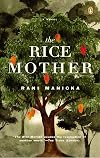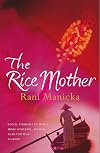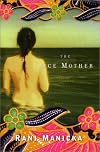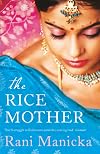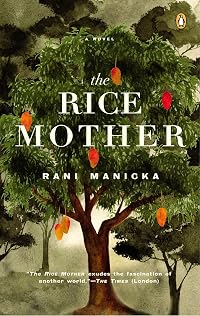
The Rice Mother
by Rani Manicka
On This Page
Description
Beguiled by promises of wealth, fourteen-year-old Lakshmi leaves her native Ceylon for Malaysia and marriage to a man many years her senior. But Ayah has lied to her and her family about his circumstances and in fact lives in poverty. A woman of formidable energy and intelligence, Lakshmi provides security, if not luxury, for her family, though at a considerable emotional cost. Then the Japanese army invades during WWII. On the eve of peace, her beloved eldest daughter is raped and killed by show more the occupying army. The family bears deep scars and inflicts those wounds on the next generation. But in Nisha, Lakshmi's great-granddaughter, it is as if Fate has come full circle and the novel ends on a note of reconciliation and hope. show lessTags
Recommendations









Member Reviews
The Rice Mother by Rani Manicka is a multi-generational story about a Sri Lankan family that resides in Malaysia. The book opens in the 1920s with Lakshmi, the beloved daughter who is married at fifteen to Ayah, a 37 year old rich widower who lives in Malaysia. When Lakshmi arrives in Malaysia she learns that this man is far from rich, but he is a decent man who allows Lakshmi to take control of the finances and the household. They go on to have six children and for the most part are contented until the Japanese invade in 1941.
After the war years the family is changed. The father withdraws into himself and Lakshmi falls into fits of rage and lashes out at those she loves. The story follows the children as they grow, marry and have show more children of their own, but this family seems to experience one tragedy after another. Each chapter is told by a different family member right down to the grandchildren and the great-grandchildren.
The Rice Mother is the author’s debut novel and at times this saga of domestic turmoil seems overly ambitious and the writing becomes flowery and heavy but the descriptions of the mixed Malayan culture, customs, religion and culinary delights kept me engaged. show less
After the war years the family is changed. The father withdraws into himself and Lakshmi falls into fits of rage and lashes out at those she loves. The story follows the children as they grow, marry and have show more children of their own, but this family seems to experience one tragedy after another. Each chapter is told by a different family member right down to the grandchildren and the great-grandchildren.
The Rice Mother is the author’s debut novel and at times this saga of domestic turmoil seems overly ambitious and the writing becomes flowery and heavy but the descriptions of the mixed Malayan culture, customs, religion and culinary delights kept me engaged. show less
The first half of novel is outstanding and moving; rich in color like a beautiful, deeply-hued tapestry with new images to see each time one looks at it. But the second half, after Lakshmi's wedding, the novel felt bleached out and forced, possibly reflecting the culture of marrying girls too young to understand how their lives would change. (The lies and manipulations to arrange many marriages - in any culture - are just plain evil.)
Lakshmi was smarter than many young wives, learning quickly how to manage her husband, babies, neighbors and vendors. She was strong in dealing with challenging situations especially the Japanese occupation, little money or food, and family illness. Because she was stubborn, and had too much control over show more her family, the mistakes she did make after the family's overwhelming loss caused irreversible pain to her children, scarring them, and leaving them ill-prepared for the future.
I enjoyed the sections Lakshmi narrated far more than the sections narrated by the others, except for Ayah. He was exceptionally kind, loving and considered his life blessed.
While mostly a good read, the characterizations of some of Lakshmi's children and the sections they narrated didn't feel real or alive to me. show less
Lakshmi was smarter than many young wives, learning quickly how to manage her husband, babies, neighbors and vendors. She was strong in dealing with challenging situations especially the Japanese occupation, little money or food, and family illness. Because she was stubborn, and had too much control over show more her family, the mistakes she did make after the family's overwhelming loss caused irreversible pain to her children, scarring them, and leaving them ill-prepared for the future.
I enjoyed the sections Lakshmi narrated far more than the sections narrated by the others, except for Ayah. He was exceptionally kind, loving and considered his life blessed.
While mostly a good read, the characterizations of some of Lakshmi's children and the sections they narrated didn't feel real or alive to me. show less
The saga of a Ceylonese family living in Malaysia from pre-WWII era to the present. The first section tells the story of Lakshmi, who arrives in her new country after being tricked into a bad marriage by a calculating matchmaker. Lakshmi eventually has six children whom she fiercely protects throughout the brutalities of the Japanese occupation, until one horrible day. This tragedy reverberates through the generations until years later, when Lakshmi's great-granddaughter compiles the stories of her broken family and finally brings them all together.
This was a very ambitious novel and for the most part the author was up to the task. The story is told by various narrating family members over the years. Although I appreciated that some of show more the narrators were male -- not common in this type of family saga -- in the end there were just too many different voices. The story would have been better told by only four or five principal characters. Also, Lakshmi's opening section was so vivid and powerful and her character so interesting that I really missed her when she was gone. She overshadowed the later generations, which was intentional by the author, but it was a bit of a letdown to switch from her to other, less engaging family members.
The writing was colorful and detailed about everyday life in Malaysia. There was also particular emphasis on rituals of family and community, as well as an undercurrent of superstition. I would definitely be interested in reading more by Rani Manicka. show less
This was a very ambitious novel and for the most part the author was up to the task. The story is told by various narrating family members over the years. Although I appreciated that some of show more the narrators were male -- not common in this type of family saga -- in the end there were just too many different voices. The story would have been better told by only four or five principal characters. Also, Lakshmi's opening section was so vivid and powerful and her character so interesting that I really missed her when she was gone. She overshadowed the later generations, which was intentional by the author, but it was a bit of a letdown to switch from her to other, less engaging family members.
The writing was colorful and detailed about everyday life in Malaysia. There was also particular emphasis on rituals of family and community, as well as an undercurrent of superstition. I would definitely be interested in reading more by Rani Manicka. show less
This is my first Rani Manicka book (not sure if she's written more), but being Malaysian, it is always enjoyable to read a piece of stylised history of my home country. Rani's writing is very stylised and poetic, using a lot of symbolism, which is enjoyable to a certain extent, after which you simply want the story to move along. The book is divided into different 'tellings' by various members of the family. The Malaysian Indian culture in Malaysia is very prevalent, so even as a Chinese, I found the people and places depicted to be a slice of home that's very real, yet very mystical.
The plot, sadly, seems a little stunted at the end, as though Rani is tired of writing the novel and wants to end it as quickly as possible. I'd wished show more for a more polished finish. show less
The plot, sadly, seems a little stunted at the end, as though Rani is tired of writing the novel and wants to end it as quickly as possible. I'd wished show more for a more polished finish. show less
This book is beautifully written. If you liked "In the Shadow of the Banyan", you will love "The Rice Mother." Manicka's descriptions are captivating. Example, describing Ratha's cooking - "In the kitchen Ratha set about turning the market produce into exotic meals. She was like an alchemist. She took some meat, spices, and vegetables and turned them into sumptuous meals that clouded your senses and drugged you into asking senselessly, "Is there any more?" Her genius was undeniable. She prepared jars of ginger marmalade and tomato chutney that followed you into tomorrow and next week. Unflinchingly, she beheaded adorable wood pigeons and unsuspecting wild fowl, marinading the dark meat in papaya skins to tenderize them. They melted in show more the mouth like butter." ...And you should read about the desserts...decadent!
Lakshmi is a young Ceylonese girl who is married to a Malayan man at the age of 14 and goes on to have six children by the age of 19. It starts in the 1930s. This is the story of the strengths of families and how families can destroy, of strong women and weak men. There are several narrators throughout the book but it is pretty easy to keep them straight.
The book goes through the Japanese occupation of Malaya and the atrocities inflicted upon the natives. The land was changed forever after their occupation.
The book was hard to put down after about the first half. There is little rejoicing but lots of heartache. Malaya came alive for me, as did the characters. show less
Lakshmi is a young Ceylonese girl who is married to a Malayan man at the age of 14 and goes on to have six children by the age of 19. It starts in the 1930s. This is the story of the strengths of families and how families can destroy, of strong women and weak men. There are several narrators throughout the book but it is pretty easy to keep them straight.
The book goes through the Japanese occupation of Malaya and the atrocities inflicted upon the natives. The land was changed forever after their occupation.
The book was hard to put down after about the first half. There is little rejoicing but lots of heartache. Malaya came alive for me, as did the characters. show less
Originally posted here
The Rice Mother is a multi-generational, multi-viewpoint story mainly set in Malaysia. The story begins in the 1930s, chronicles the Japanese occupation, and continues until the early 2000s. This book is full of beautiful descriptions of cultural traditions and customs, it really was an absolute delight to read. I found myself completely enchanted with Lakshmi's story and how her poor marriage affected her life and subsequently, her children's lives. There is a lot of heartache that befalls Lakshmi's family, friends and neighbours.
What I loved most about this book was the magical realism that was woven into the narrative. There is plenty of superstition and magic sprinkled throughout. Many plants and objects have show more mysterious power and meaning which gives a magical aura to the story. I became so attached to Lakshmi's family and I felt that each member had a very distinct voice. The narrators are each unreliable in their own ways as their points of view constantly differ and contradict each other, and I really enjoyed seeing how all the different viewpoints converged at the end.
The only disappointing aspect of this book was the way it ended. The beginning of the book was very strong but the ending was abrupt and strange, once the last character tells their side of a particular storyline the book ends. I found myself wanting so much more and would have gladly welcomed viewpoints from additional family members that were briefly mentioned. Overall I thoroughly enjoyed this book I can see myself re-reading it in future. show less
This historical saga, set in Malaysia, covers several generations of a family, descended from a strong-willed matriarch. The author's writing is beautiful and the intertwined storylines are interesting. However, the characters' stories are also quite bleak and at times, I longed for some happy moments to relieve the misery.
Members
- Recently Added By
Lists

Book wishlist
78 works; 1 member
Author Information

13 Works 991 Members
Some Editions
Awards and Honors
Common Knowledge
- Canonical title
- The Rice Mother
- Original title
- Rice Mother
- Original publication date
- 2002
- People/Characters
- Lakshmi; Ayah; Lakshmanan; Mohini; Anna; Sevenese (show all 22); Jeyan; Lalita; Rani; Nash; Dimple; Bela; Rata; Luke Stedman; Nisha; Rosette; Aunt Pani; Bilal; Mui Tsai; Mr. Soong; Professor Rao; Radja
- Important places
- Malaysia; Kuantan, Malaysia; Kuala Lumpur, Malaysia; Singapore
- Important events
- Japanese occupation of Malaysia
- Dedication*
- Para mis padres, mis dioses protectores desde el comienzo de mi días.
- First words
- It was on my uncle the mango trader's knees that I first heard of the amazing bird's-nest collectors, living in a faraway land called Malaya.
- Last words
- (Click to show. Warning: May contain spoilers.)Outside the wind rustled the indigo leaves, and at the bottom of the garden, the old bamboo grove burst into song.
- Original language
- English
*Some information comes from Common Knowledge in other languages. Click "Edit" for more information.
Classifications
Statistics
- Members
- 804
- Popularity
- 34,433
- Reviews
- 21
- Rating
- (3.72)
- Languages
- 10 — Danish, Dutch, English, Finnish, French, German, Italian, Portuguese, Spanish, Swedish
- Media
- Paper, Audiobook, Ebook
- ISBNs
- 29
- UPCs
- 1
- ASINs
- 8