
David Davidar
Author of The House of Blue Mangoes: A Novel
About the Author
Image credit: Lucy Cavender
Works by David Davidar
A Clutch of Indian Masterpieces: Extraordinary Short Stories from the 19th Century to the Present (2014) 53 copies, 2 reviews
A Case of Indian Marvels - Dazzling Stories from the Country’s Finest New Writers (2022) 2 copies, 1 review
Tagged
Common Knowledge
Members
Reviews
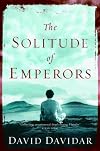
The Solitude of Emperors
by David Davidar
McClelland & Stewart, 288 pages, $32.99
“It was in December 1992 that Bombay lost its way.”
In 1992, Hindu nationalists destroyed a mosque in the town of Ahodhya, India. Muslim retaliation was to be expected, and the resulting sectarian violence led to one of the bloodiest and most shameful incidents in India’s long history.
David Davidar, president of Penguin Canada and author of The Solitude of Emperors, presents the riots with unflinching show more directness. As his protagonist Vijay watches people being torn apart in the street, “internal organs visible as if in a urology lab demonstration,” the nature of mob violence attains a gruesome intimacy.
It is not violence, however, that drives Davidar’s plot, but the lust for power in those who would feign religious righteousness as a masquerade for their dreams of glory. And in a world that sees the increasing reliance on fundamentalist dogma rather than logic to guide those in power, the themes of The Solitude of Emperors are all too familiar.
Vijay is an aspiring journalist with the Bombay-based newspaper The Indian Secularist. After a close brush with death during the riots, he is sent to the tea town of Meham to relax, but discovers instead that the religious tensions of the big cities are slowly making inroads into rural India as well.
While Solitude is ostensibly Vijay’s story, Davidar interweaves his tale with the words of an unpublished treatise on past leaders of India, written by Vijay’s mentor Mr Sorabjee. In this fashion, Davidar manages the not-inconsiderable feat of seamlessly couching a diatribe on India’s “compact with the Gods” within a personal drama of sizeable power.
Attempting to encapsulate the timeless lessons of Ashoka, Akbar, and Gandhi, while tying them to the state of the country in the 1990s, Mr Sorabjee hopes that his text will serve as a call to arms for young Indians. While admitting that poverty and poor educational resources are rampant throughout the nation, “our surfeit of Gods, one for every three or four of us, more than makes up for any lack of doctors, policemen, school teachers, nuclear scientists, and judges.”
Sadly, while India may very well be the most religiously diverse country on Earth, Mr Sorabjee worries its reputation as a nation of tolerance is rapidly being eroded by “small-minded men who will use [religion] to advance their own petty ends.” Vijay’s adventures do nothing to dispel this belief, and as the plot steadily advances toward an almost-foregone conclusion, the hideous inevitability of conflict creates almost unbearable tension.
While there is undeniable bleakness in Davidar’s words, it would be a disfavor to label The Solitude of Emperors as disheartening. As Mr Sorabjee ends his essay with words of hope, asking the young to “fight in whatever way you can to restore sanity and decency to our nation,” so too does Davidar, arguing that the solutions to such religious dilemmas are far more complicated than the overt easiness of blind fundamentalism would have us believe.
Starting a war is a straightforward affair; ending a war requires compassion, thought, and reason. The Solitude of Emperors never offers any answer but this one certainty, and in reminding us of it, Davidar may be gearing us up for what lies ahead.
Originally published in The Winnipeg Free Press, September 9, 2007. show less
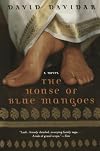
Davidar, one of the founders of Penguin India, wrote this multi-generational saga of a family in South India—Davidar’s home. It is an easy read, well-plotted, informative, and pleasant. It’s not an especially thought-provoking book. Davidar is good at showing social change, and although there is some food for thought, it has a relatively narrow focus and seems most intent on the depiction of lives and intrafamily dynamics. Its themes are expected and expectable, the story line largely show more unsurprising, and there is an attractive wistfulness or nostalgia running throughout. Davidar has created a quite believable world, interesting characters, and just enough suspense to keep the reader engaged. If I didn’t have a to-be-read list of many (or maybe I should write “MANY!”) other works that I expect to challenge me more, I’d find time for one of his two other novels. I enjoyed the book, I just think I might have enjoyed something else more. show less
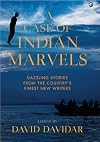
My interest in Indian writers and authors augments every day! Indian fiction writers, in English or regional languages across India, are setting high standards regarding story-telling and plot. To acknowledge and laud a writer’s work is not only to hold literary festivals, functions, competitions, and awards but also to recognize the unsung talent from every nook and corner of the country. India is a vast and diversified land of traditions, cultures and languages; many writers and authors show more are to be brought into the broad limelight.
Today’s Indian writers ( fiction and non-fiction ) are yet to be celebrated largely because, somewhere, the readers are still stuck with the writers from the 1960s to 1980s. Of course, that was the Golden era of poets, writers and authors in all the main languages, but a gap was found as the decades passed. Gen Z or people from the post-2000 era have been reading mostly the English language and probably foreign authors, precisely from the US and UK. Whereas the translated Japanese fiction also made its way, Indian writers that cater to the young generation were missing. Fortunately, after 2003, writers like Chetan Bhagat, Amish Tripathi, Ashwin Sanghi, Preeti Shenoy, Sudha Murthy, Ravinder Singh and so on have paved a new path in the new age of Indian writing. Thus, new writers emerged, and Indian writing started seeing fresh work. Many independent agencies and publishing houses thus came into action, and Aleph Book Company being one, also has a huge role. All these publishing houses and their affiliates started felicitating the young writers, which was inspiring.
This book - A case of Indian Marvels by David Davidar, the founder of Aleph Book Company, has compiled 40 stories written in English or translated into English from many languages and is a commendable job. While I applaud David’s idea behind bringing out this book, it also takes immense pleasure to share that one of the stories by a Telugu writer Vempalle Shareef, who happens to be a good friend of mine, makes a place in this book!
It is also important to share with the readers that Aleph Book Company has brought a series - The Greatest Short Stories Ever Told. The stories are picked up from 9 regional Indian languages. Including these 9 books, I recommend A case of Indian Marvels by David Davidar, strongly. show less
Today’s Indian writers ( fiction and non-fiction ) are yet to be celebrated largely because, somewhere, the readers are still stuck with the writers from the 1960s to 1980s. Of course, that was the Golden era of poets, writers and authors in all the main languages, but a gap was found as the decades passed. Gen Z or people from the post-2000 era have been reading mostly the English language and probably foreign authors, precisely from the US and UK. Whereas the translated Japanese fiction also made its way, Indian writers that cater to the young generation were missing. Fortunately, after 2003, writers like Chetan Bhagat, Amish Tripathi, Ashwin Sanghi, Preeti Shenoy, Sudha Murthy, Ravinder Singh and so on have paved a new path in the new age of Indian writing. Thus, new writers emerged, and Indian writing started seeing fresh work. Many independent agencies and publishing houses thus came into action, and Aleph Book Company being one, also has a huge role. All these publishing houses and their affiliates started felicitating the young writers, which was inspiring.
This book - A case of Indian Marvels by David Davidar, the founder of Aleph Book Company, has compiled 40 stories written in English or translated into English from many languages and is a commendable job. While I applaud David’s idea behind bringing out this book, it also takes immense pleasure to share that one of the stories by a Telugu writer Vempalle Shareef, who happens to be a good friend of mine, makes a place in this book!
It is also important to share with the readers that Aleph Book Company has brought a series - The Greatest Short Stories Ever Told. The stories are picked up from 9 regional Indian languages. Including these 9 books, I recommend A case of Indian Marvels by David Davidar, strongly. show less
The House of Blue Mangos is a well told story of three generations of the "Dorai" family in South India, mostly in the modern day state of Tamil Nadu, but under the British Raj, the Madras Presidency. Davidar has a strong command of the sights, sounds, tastes and even smells of South India, and does a fantastic job of bringing these all to life. As a non-Indian currently living in South India I found that the book provided beautiful insights into the region while telling a good story.
The show more story itself is good, not great. As other reviewers have noted, the first section of the book about the first generation was by far the best told portion of the story. However, unlike some other reviewers, I did enjoy reading about the second and third generation of the Dorai family as Dravidar moves from village caste violence to "International caste violence" under the guise of Nationalism and WWII.
For the most part, Dravidar does a good job of developing the characters. The only flaw is his lack of fully explaining the decisions of the third-generation, Kannan. I often felt that his decisions were predictable and cliche, and Dravidar never fully explained how all of his decisions fit within the character mold Dravidar had developed for Kannan. His supposed "stubborn Dorai character" sometimes leads him to being fiercely loyal, and at other times led him to completely give up on certain relationships, but you never understood how that stubborness fully informed that decision.
Further, Dravidar could have made the book a bit more compelling by describing more of the changes to the South India region from the 1880s to 1946 (when the novel ends). To the reader, it almost seems as all customs and traditions remained completely static in village communities, which is certainly not accurate. Some of the characters could have fit within any generation of the story, which made it sometimes hard to believe that the novel was progressing through time. If there were no mentions of nationalism or WWII, the reader might completely forget that the story encompasses nearly a century.
In the end I thoroughly enjoyed this novel and recommend it. show less
The show more story itself is good, not great. As other reviewers have noted, the first section of the book about the first generation was by far the best told portion of the story. However, unlike some other reviewers, I did enjoy reading about the second and third generation of the Dorai family as Dravidar moves from village caste violence to "International caste violence" under the guise of Nationalism and WWII.
For the most part, Dravidar does a good job of developing the characters. The only flaw is his lack of fully explaining the decisions of the third-generation, Kannan. I often felt that his decisions were predictable and cliche, and Dravidar never fully explained how all of his decisions fit within the character mold Dravidar had developed for Kannan. His supposed "stubborn Dorai character" sometimes leads him to being fiercely loyal, and at other times led him to completely give up on certain relationships, but you never understood how that stubborness fully informed that decision.
Further, Dravidar could have made the book a bit more compelling by describing more of the changes to the South India region from the 1880s to 1946 (when the novel ends). To the reader, it almost seems as all customs and traditions remained completely static in village communities, which is certainly not accurate. Some of the characters could have fit within any generation of the story, which made it sometimes hard to believe that the novel was progressing through time. If there were no mentions of nationalism or WWII, the reader might completely forget that the story encompasses nearly a century.
In the end I thoroughly enjoyed this novel and recommend it. show less
Awards

You May Also Like


Statistics
- Works
- 11
- Members
- 601
- Popularity
- #41,821
- Rating
- 3.2
- Reviews
- 12
- ISBNs
- 45
- Languages
- 7
- Favorited
- 1