On This Page
Description
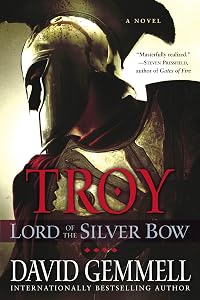
Three lives will change the destiny of nations. Hellkaon, the young prince of Dardania, haunted by a scarred and traumatic childhood. The priestess Andromache, whose fiery spirit and fierce Independence threatens the might of kings. And the legendary warrior Argurios, cloaked in loneliness and driven only by thoughts of revenge. In Troy they find a city torn apart by destructive rivalries - a maelstrom of jealousy, deceit and murderous treachery. And beyond its fabled walls blood-hungry show more enemies eye its riches and plot its downfall. It is a time of bravery and betrayal; a time of bloodshed and fear. A time for heroes. In Lord of the Silver Bow, the first in an epic trilogy, David Gemmell combines vivid characterization with a wealth of historical detail in a compelling, unputdownable novel of love and hatred, ambition and rivalry, peace and war. show lessTags
Recommendations





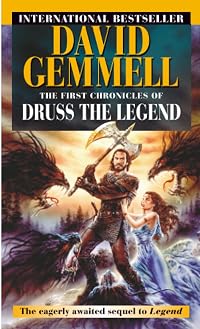
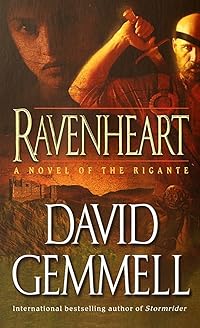
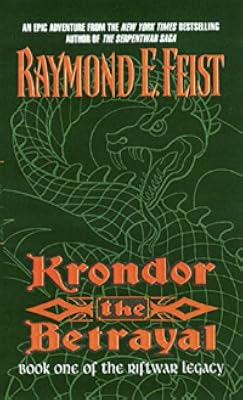
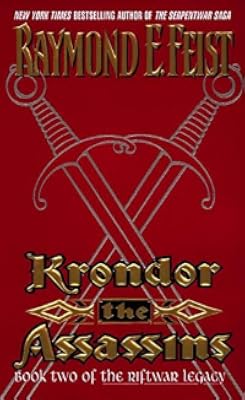

Member Recommendations
Member Reviews
Fantastic heroic fantasy (historical fiction this time around) from David Gemmell, who is quickly becoming the face of the genre for me. I'd previously only read Legend, written some 20 years before this novel, and there's a very clear step up here in writing quality and characterization. The writing style is breezy and not difficult, but avoids being simple or childish.
Drawing heavily from the famous figures of the Greek epics, Gemmell weaves a tale here that's both subtly familiar and refreshingly unique.Being familiar with many of the major characters (namely Aeneas, Odysseus, Hektor, and Priam) from the Iliad, Odyssey, and the Aeneid, at first I was a bit confused since Gemmell's characterizations didn't match up 1:1 with how they show more are presented in the original works. Once you cast aside those preconceived notions and realize this isn't simply a retelling of myth, you can really sink into the writing and appreciate it.
There's not a single bad or flat character in the novel. Some get more screen time and have their motivations explored more deeply, but everyone feels like a human. The characters are larger than life, perfect representations of the Age of Heroes, and Gemmell paints the Greek world vividly, masterfully capturing the themes and emotions that have made Ancient Greece so famous.
Much like Legend, this book also features a siege. And like that novel, it's done so well. I've read a lot of fantasy and historical fiction and so have read more than a few sieges, but I don't think anyway does it better than David Gemmell. Tense and visceral throughout.
This was a hard book to put down. Gemmell is slowly working his way up into my favorite authors, and while he's sadly no longer with us he has quite a collection for me to get through. show less
Drawing heavily from the famous figures of the Greek epics, Gemmell weaves a tale here that's both subtly familiar and refreshingly unique.Being familiar with many of the major characters (namely Aeneas, Odysseus, Hektor, and Priam) from the Iliad, Odyssey, and the Aeneid, at first I was a bit confused since Gemmell's characterizations didn't match up 1:1 with how they show more are presented in the original works. Once you cast aside those preconceived notions and realize this isn't simply a retelling of myth, you can really sink into the writing and appreciate it.
There's not a single bad or flat character in the novel. Some get more screen time and have their motivations explored more deeply, but everyone feels like a human. The characters are larger than life, perfect representations of the Age of Heroes, and Gemmell paints the Greek world vividly, masterfully capturing the themes and emotions that have made Ancient Greece so famous.
Much like Legend, this book also features a siege. And like that novel, it's done so well. I've read a lot of fantasy and historical fiction and so have read more than a few sieges, but I don't think anyway does it better than David Gemmell. Tense and visceral throughout.
This was a hard book to put down. Gemmell is slowly working his way up into my favorite authors, and while he's sadly no longer with us he has quite a collection for me to get through. show less
"Danger is the seed from which courage grows."
Odysseus in David Gemmell's "Lord of the Silver Bow"
I had tried reading David Gemmell's "Lord of the Silver Bow" about 9 months ago. It was heavy, plodding, and confusing. I was looking for a fun story full of action and adventure, and I love history...but, alas, I stopped reading after about 50 pages, and kind of figured that I was simply beyond the age when testosterone-fueled adventures could carry a story. I gave it a second shot, and it turns out, I was wrong. This first in Gemmell's trilogy that retells the story of the Trojan War is enjoyable, fun, and surprisingly deep.
Gemmell's language and themes are audacious and often mythic. The story and themes are soaked in an age of heroism show more when Gods were considered real, and honor and courage were as coveted as bronze. The dialogue drives big and bold themes; addressed by bigger and bolder men (mostly); and acted upon in the most courageous (and sometimes cowardly) ways. This isn't a fantasy novel. This is historical fiction...taking nuggets from the well-trodden story of Troy, and molding them into a new shining historical epic.
"No force under the stars is more powerful than hatred."
War's a' brewin' on the wine-dark-sea, and Aeneas, known by his nickname Helikaon, isn't helping the situation through his enflamed vendetta against the Mykene general Kolanos. Aeneas is at the center of "Silver Bow", and he has anger issues. He would go on, as legend would tell, to establish one the greatest of ancient empires: Rome. He's one of the most respected men across the Aegaen despite the fact that he's beloved in the East and hated in the West.
Battlefield philosophy rings loudly throughout the book. Helikaon states, "A great man once told me there can be no courage without fear. He was right. Remember that when you're belly trembles and your legs grow weak." And later, Odysseus says, "A man who rushes into battle fearlessly is not a hero. He is merely a strong man with a big sword. An act of courage requires the overcoming of rear."
One of the most predominant and heavy themes is the consideration of what makes a person good or bad; moral or evil. Not unlike the gods of Greek mythology, the characters in "Lord" all have aspects of weakness. While the deeds and emotions are enormous, very few characters are pure evil or purely heroic. Their decisions and actions are just 'right' enough, or just 'wrong' enough to balance the scales towards one end or the other. An Egyptian joins Helikaon's crew and brings his own brand of philosophical views into the equation. He states that good and evil are in everyone and at constant war. "All of us are capable of great compassion and love or hatred and horror. Sadly, we can take joy from both."
In another theme, Gemmell's characters explore loss and the context of what it means, and it's lasting impact. The emotions felt by the characters are deep and acute. And in the context of this story, with all of its mythological proportions, the sometimes melodramatic emotions fit. Who wouldn't feel the internal slice of a lost love; or the death of someone close? The pain doesn't slip away quickly or easily.
"Lord of the Silver Bow" is a terrific book. Your expectations must revolve around the fact that this is a fictional retelling of the enormous, and enormously dramatic, historical-fantasy of The Illiad. In that context, the book hits on almost all cylinders. show less
Odysseus in David Gemmell's "Lord of the Silver Bow"
I had tried reading David Gemmell's "Lord of the Silver Bow" about 9 months ago. It was heavy, plodding, and confusing. I was looking for a fun story full of action and adventure, and I love history...but, alas, I stopped reading after about 50 pages, and kind of figured that I was simply beyond the age when testosterone-fueled adventures could carry a story. I gave it a second shot, and it turns out, I was wrong. This first in Gemmell's trilogy that retells the story of the Trojan War is enjoyable, fun, and surprisingly deep.
Gemmell's language and themes are audacious and often mythic. The story and themes are soaked in an age of heroism show more when Gods were considered real, and honor and courage were as coveted as bronze. The dialogue drives big and bold themes; addressed by bigger and bolder men (mostly); and acted upon in the most courageous (and sometimes cowardly) ways. This isn't a fantasy novel. This is historical fiction...taking nuggets from the well-trodden story of Troy, and molding them into a new shining historical epic.
"No force under the stars is more powerful than hatred."
War's a' brewin' on the wine-dark-sea, and Aeneas, known by his nickname Helikaon, isn't helping the situation through his enflamed vendetta against the Mykene general Kolanos. Aeneas is at the center of "Silver Bow", and he has anger issues. He would go on, as legend would tell, to establish one the greatest of ancient empires: Rome. He's one of the most respected men across the Aegaen despite the fact that he's beloved in the East and hated in the West.
Battlefield philosophy rings loudly throughout the book. Helikaon states, "A great man once told me there can be no courage without fear. He was right. Remember that when you're belly trembles and your legs grow weak." And later, Odysseus says, "A man who rushes into battle fearlessly is not a hero. He is merely a strong man with a big sword. An act of courage requires the overcoming of rear."
One of the most predominant and heavy themes is the consideration of what makes a person good or bad; moral or evil. Not unlike the gods of Greek mythology, the characters in "Lord" all have aspects of weakness. While the deeds and emotions are enormous, very few characters are pure evil or purely heroic. Their decisions and actions are just 'right' enough, or just 'wrong' enough to balance the scales towards one end or the other. An Egyptian joins Helikaon's crew and brings his own brand of philosophical views into the equation. He states that good and evil are in everyone and at constant war. "All of us are capable of great compassion and love or hatred and horror. Sadly, we can take joy from both."
In another theme, Gemmell's characters explore loss and the context of what it means, and it's lasting impact. The emotions felt by the characters are deep and acute. And in the context of this story, with all of its mythological proportions, the sometimes melodramatic emotions fit. Who wouldn't feel the internal slice of a lost love; or the death of someone close? The pain doesn't slip away quickly or easily.
"Lord of the Silver Bow" is a terrific book. Your expectations must revolve around the fact that this is a fictional retelling of the enormous, and enormously dramatic, historical-fantasy of The Illiad. In that context, the book hits on almost all cylinders. show less
This here my review begins with a question. What do you get when you update to a more contemporary narration style Homer’s Iliad, add and subtract characters, massively edit the plot, and demythologize the myth? A long, convoluted question begets a short answer 😀. You get “Troy”, David Gemmell’s reimagined three volume work of the original epos. This is a review of the first book “Lord of the Silver Bow”. Within all the familiarities that remind you on Homer’s hexameter verses, David Gemmell managed to be innovative, even original. There is the setting, the names of locations we so intimately know but he also expands on Homer’s geography.
There are (most) of the familiar characters (Agamemnon, Paris, Hector, Priam show more Odysseus)and there are many new ones. As of this first volume Achilles is notably missing, however, one of the main characters, the eponymous Lord of the Silver Bow or simply Helikaon seems to be a close match. He also reminds me, to a certain degree, on Homer’s Aeneas and interestingly enough that is another of the names this important player goes by.
The characters are not of the black and white kind, they are complex real life characters which entails that we love them as much as we may hate them other times. As we read on we hunger for the introduction of characters we so intimately know from the Iliad and wonder what re-inventive literary magic the author is able to apply to them. Noteworthy is also the mention of the Trojan Horse which does not refer to the mystical wooden horse but in a witty wordplay is, in fact, Hector’s elite cavalry force.
There is the well-known plot but there are many twists and additions to it. His narration adds dimension and explanatory depth as he often has two very different characters tell of the same event. His narration never feels divided. There are no seemingly lost strands of events, nor does the author gets carried introducing too many characters and their stories. At all times newly introduced events, characters and their flashbacks dovetail seamlessly into the storyline. Yes, and of course, to continue the deserved praise, the end of this first volume is both touching and ingenious. It ties all that happened neatly together and at the same time beautifully opens the conflict and suspense for what is sure to follow in volume two.
On a final note, David Gemmel knows his Greek mythology and the ancient Greeks overall. He shows great imagination in his writing but bases it on some very educated guesses of what could have given rise to the manufactured myth. Whether you have read the Iliad or not, this should be a great read for anybody. - very recommendable. 😀 show less
There are (most) of the familiar characters (Agamemnon, Paris, Hector, Priam show more Odysseus)and there are many new ones. As of this first volume Achilles is notably missing, however, one of the main characters, the eponymous Lord of the Silver Bow or simply Helikaon seems to be a close match. He also reminds me, to a certain degree, on Homer’s Aeneas and interestingly enough that is another of the names this important player goes by.
The characters are not of the black and white kind, they are complex real life characters which entails that we love them as much as we may hate them other times. As we read on we hunger for the introduction of characters we so intimately know from the Iliad and wonder what re-inventive literary magic the author is able to apply to them. Noteworthy is also the mention of the Trojan Horse which does not refer to the mystical wooden horse but in a witty wordplay is, in fact, Hector’s elite cavalry force.
There is the well-known plot but there are many twists and additions to it. His narration adds dimension and explanatory depth as he often has two very different characters tell of the same event. His narration never feels divided. There are no seemingly lost strands of events, nor does the author gets carried introducing too many characters and their stories. At all times newly introduced events, characters and their flashbacks dovetail seamlessly into the storyline. Yes, and of course, to continue the deserved praise, the end of this first volume is both touching and ingenious. It ties all that happened neatly together and at the same time beautifully opens the conflict and suspense for what is sure to follow in volume two.
On a final note, David Gemmel knows his Greek mythology and the ancient Greeks overall. He shows great imagination in his writing but bases it on some very educated guesses of what could have given rise to the manufactured myth. Whether you have read the Iliad or not, this should be a great read for anybody. - very recommendable. 😀 show less
I'm a sucker for historical fiction. So when I stumbled on this book, I just had to grab it. I'm quite glad I did.
Written by the late David Gemmel, Troy: Lord of the Silver Bow is his take on the Trojan myth, although set some time before the actual Trojan War. Despite my lack of knowledge of the myth, or perhaps because of it, I was completely mesmerized by Gemmel's interpretation of the legend, and the events that, ultimately, will lead to that famous war.
Set in the Antiquity, Lord of the Silver Bow follows three main characters; Helikaon, also known as Aeneas, a young Dardanian prince and captain of the largest ship ever built, named the Xanthos; Andromache, a priestess of the island of Thera and future bride of Hector, and Argurios, show more legendary warrior, who lives to serve, and is bound by honor.
The lands surrounding the Great Green enjoy relative peace, but tension is rising, and the threat of war looms. Pirates are increasingly present, looting, plundering, killing, raping. Most of them are Mykene pirates, publicly condemned by Agamemnon King, but he secretly approves of them, since they increase his already considerable wealth.
Many eyes are set on legendary Troy, city of dreams, city of legends, city of heroes. Ruled by Priam King, father to the mythical Hektor, she is said to be the richest and most powerful city of all the Great Green. Her reputation alone feeds the greed of many kings and nobles. However, not is all as it seems; many of Priam's sons and subjects despise their king, and would revel in his downfall, or death.
We first see Helikaon at the very beginning of the novel, ready to set sail on the Xanthos, said to be the largest ship ever built. Many are wary of it, but she will prove during her maiden voyage to Troy, that she can swim with Poseidon, God of the Sea. Two Mykene ambassadors sail with him, one of which is Argurios, who is bent on killing the Dardanian Prince out of revenge.
Shortly before beaching on the Bay of the Blue Owl, the Xanthos rescues a enigmatic castaway who goes by the name of Gershom. Eventually, she will also bring Andromache to Troy, where she is to wed the mighty Hektor. We also meet Odysseus of the Golden Tongue, he who weaves a tale like no other.
The novel strikes a balance between life at sea and life in Troy, each taking the spotlight for much of the story. Ultimately, the main characters become closely involved with each other and the events of the legendary city; the string of events is nothing more than an elaborate game of chess, where people are naught but pawns, where enemies strike alliances, where supposedly loyal allies become treacherous.
All the main characters are well developed, each with a well though background story within the novel. We see how Helikaon, with Odysseus' help, became the man he is today. We see how Andromache, fierce, independent, and holding men in contempt, will come to love one of their kind. And Argurios, once a brooding man living to serve his king, will finally find happiness and contentment after many devastating trials.
Gemmel, in Lord of the Silver Bow, weaves a wonderfully complex and political tale of morality and values, of love and honour, of duty and betrayal. He brings forth a long list of strong supporting characters, which are very well fleshed out, and none of the characters take the spotlight at the expense of another.
The author explores amazingly well the inner conflicts and ulterior motives of all involved; their views on morality, the fine line between right and wrong, between black and white, between good and evil, their struggles with their own emotions and their values, their sense of duty. We see this particularly with Helikaon, who almost becomes mad with revenge, when Mykene pirates torture and murder his best friend, then attack his country and burn his younger brother Diomedes alive.
The pacing is almost perfect, as there is a good balance between storms and calm. However, it would have benefited from an additional chapter or two, as it seems to end too quickly, and the thoughts of one of the supporting characters, of whom we see no notice of in the latter part of the book.
While this world is blessed with relative peace, rape, murder and savagery are unfortunately very present. War threatens the safety of all, and rivers will turn red with the blood of warriors.
This trilogy holds great promise, and I'm already excited to read Shield of Thunder, which is the second installment. show less
Written by the late David Gemmel, Troy: Lord of the Silver Bow is his take on the Trojan myth, although set some time before the actual Trojan War. Despite my lack of knowledge of the myth, or perhaps because of it, I was completely mesmerized by Gemmel's interpretation of the legend, and the events that, ultimately, will lead to that famous war.
Set in the Antiquity, Lord of the Silver Bow follows three main characters; Helikaon, also known as Aeneas, a young Dardanian prince and captain of the largest ship ever built, named the Xanthos; Andromache, a priestess of the island of Thera and future bride of Hector, and Argurios, show more legendary warrior, who lives to serve, and is bound by honor.
The lands surrounding the Great Green enjoy relative peace, but tension is rising, and the threat of war looms. Pirates are increasingly present, looting, plundering, killing, raping. Most of them are Mykene pirates, publicly condemned by Agamemnon King, but he secretly approves of them, since they increase his already considerable wealth.
Many eyes are set on legendary Troy, city of dreams, city of legends, city of heroes. Ruled by Priam King, father to the mythical Hektor, she is said to be the richest and most powerful city of all the Great Green. Her reputation alone feeds the greed of many kings and nobles. However, not is all as it seems; many of Priam's sons and subjects despise their king, and would revel in his downfall, or death.
We first see Helikaon at the very beginning of the novel, ready to set sail on the Xanthos, said to be the largest ship ever built. Many are wary of it, but she will prove during her maiden voyage to Troy, that she can swim with Poseidon, God of the Sea. Two Mykene ambassadors sail with him, one of which is Argurios, who is bent on killing the Dardanian Prince out of revenge.
Shortly before beaching on the Bay of the Blue Owl, the Xanthos rescues a enigmatic castaway who goes by the name of Gershom. Eventually, she will also bring Andromache to Troy, where she is to wed the mighty Hektor. We also meet Odysseus of the Golden Tongue, he who weaves a tale like no other.
The novel strikes a balance between life at sea and life in Troy, each taking the spotlight for much of the story. Ultimately, the main characters become closely involved with each other and the events of the legendary city; the string of events is nothing more than an elaborate game of chess, where people are naught but pawns, where enemies strike alliances, where supposedly loyal allies become treacherous.
All the main characters are well developed, each with a well though background story within the novel. We see how Helikaon, with Odysseus' help, became the man he is today. We see how Andromache, fierce, independent, and holding men in contempt, will come to love one of their kind. And Argurios, once a brooding man living to serve his king, will finally find happiness and contentment after many devastating trials.
Gemmel, in Lord of the Silver Bow, weaves a wonderfully complex and political tale of morality and values, of love and honour, of duty and betrayal. He brings forth a long list of strong supporting characters, which are very well fleshed out, and none of the characters take the spotlight at the expense of another.
The author explores amazingly well the inner conflicts and ulterior motives of all involved; their views on morality, the fine line between right and wrong, between black and white, between good and evil, their struggles with their own emotions and their values, their sense of duty. We see this particularly with Helikaon, who almost becomes mad with revenge, when Mykene pirates torture and murder his best friend, then attack his country and burn his younger brother Diomedes alive.
The pacing is almost perfect, as there is a good balance between storms and calm. However, it would have benefited from an additional chapter or two, as it seems to end too quickly, and the thoughts of one of the supporting characters, of whom we see no notice of in the latter part of the book.
While this world is blessed with relative peace, rape, murder and savagery are unfortunately very present. War threatens the safety of all, and rivers will turn red with the blood of warriors.
This trilogy holds great promise, and I'm already excited to read Shield of Thunder, which is the second installment. show less
4.5 stars. This was awesome! Unexpectedly so, in fact. I've always loved Greek mythology, ever since I was little. Especially stories about Troy and the Trojan War. I read the blurb to this one, and it sounded great. I also like historical fiction, so it was intriguing to pick up a rendering of the Homeric period that was based more on a real (or possible) history of the region. In short, a tale about the people rather than the Gods and magic stuff.
So why was I hesitant and not expecting a great read? Well, I'd recently read [b:Legend|618177|Legend (Drenai Saga, #1)|David Gemmell|http://photo.goodreads.com/books/1320471224s/618177.jpg|1805413], by the same author. I'd found it to be written in a rather juvenile manner, with thin show more characterizations and weak plotting. The battle scenes were pretty good, but the story didn't do much for me. Plus, the ending was horrible. Well, that's the book that Gemmell's known for; it's what the Gemmell Legend award is named after, matter of fact. If that was an example of his work, I was turned off.
But my friend Emma had recommended this trilogy, and the premise of it still intrigued me. So I gave it a go, and I was very pleased. It was very close to being 5-star material, though the pace did slow down a little through the middle. The writing was great, the characters were memorable and very sympathetic, even some of the antagonists. The ending was heartfelt and struck home too. I had to admit, I wondered if this was really written by the same guy. Of course, since it was published some 20 years after [b:Legend|618177|Legend (Drenai Saga, #1)|David Gemmell|http://photo.goodreads.com/books/1320471224s/618177.jpg|1805413], it's quite possible that Gemmell's style simply improved.
I'm definitely looking forward to the other two books in the series. show less
So why was I hesitant and not expecting a great read? Well, I'd recently read [b:Legend|618177|Legend (Drenai Saga, #1)|David Gemmell|http://photo.goodreads.com/books/1320471224s/618177.jpg|1805413], by the same author. I'd found it to be written in a rather juvenile manner, with thin show more characterizations and weak plotting. The battle scenes were pretty good, but the story didn't do much for me. Plus, the ending was horrible. Well, that's the book that Gemmell's known for; it's what the Gemmell Legend award is named after, matter of fact. If that was an example of his work, I was turned off.
But my friend Emma had recommended this trilogy, and the premise of it still intrigued me. So I gave it a go, and I was very pleased. It was very close to being 5-star material, though the pace did slow down a little through the middle. The writing was great, the characters were memorable and very sympathetic, even some of the antagonists. The ending was heartfelt and struck home too. I had to admit, I wondered if this was really written by the same guy. Of course, since it was published some 20 years after [b:Legend|618177|Legend (Drenai Saga, #1)|David Gemmell|http://photo.goodreads.com/books/1320471224s/618177.jpg|1805413], it's quite possible that Gemmell's style simply improved.
I'm definitely looking forward to the other two books in the series. show less
I obtained this book as it had good reviews, and I am reading quite a few retellings of the Trojan War and Greek mythology in general. Unfortunately I found it a bit disappointing. The characters are for the most part not well delineated. The male heroes are rugged men of action, dark and brooding etc, apart from Hektor who appears at the end of the story and is a giant of a man, unbeatable in battle, and coming across more as a 'hale fellow well-met' type but just as cliched. The only surprise is Priam: much more physically vigorous than usually portrayed and a sexual predator, who not only forces himself on slaves but insists on a kind of droit du seigneur with the wives of his sons. He also enjoys humiliating people in other ways, show more especially family members, and has various members of his family executed.
The character I liked best was Odysseus who is interestingly portrayed as a larger than life raconteur - the various iconic stories of the Odyssey are tall tales he invented - although with a lethal edge underneath the bonhomie. I also liked Andromache, who is a crack shot with the more powerful Phyrgian bow, having spent a few years as a priestess of Thera before her sister died, and who is sent to Troy to marry Hektor in her place. She is the only one with the guts to stand up to Priam. But both characters play a relatively minor part.
The story veers around a lot, taking up some characters which the reader might be justified in thinking would be a main part of the story and then dropping them. For example, it starts with Gershom, shipwrecked at sea, but although his real identity is later revealed, he remains a bit part in the story so it's an odd choice to spend so much time in his viewpoint early on. Another character is deftly sketched but is soon horribly killed off, and it seems was only there to act as a catalyst for Helikaon, the main male character, to go off the rails and commit an atrocity to avenge him. Similarly, a bedfellow of Helikaon (for some reason the alternative name for Aeneas) appears early on in the book but is then dropped because she lives in Kypros which is not the setting for the rest of the novel.
The author developed the Mediterranean culture quite well, though with the focus always on the warlike aspects. I wasn't convinced by the side references to Ancient Egypt though: if the version of Troy is the one that fell in 1300 BC (I consulted the Wikipedia article after finishing the novel), since the later ones showed gradual decline and no indication of a prestigious ruling class etc, the Prince Rameses mentioned must be Rameses II otherwise known as Rameses the Great. Despite the references to killing slaves to bury them with Egyptian Kings, that practice had ceased centuries before, and the workmen who built the royal tombs were respected craftspeople who had their own village which has been excavated. Similarly, Ancient Egypt granted more legal and social freedoms to women than most other Middle Eastern countries of the period so I found the references in Gershom's backstory to be anachronistic.
The title is a bit odd: I think it stems from a child mistaking Helikaon for Apollo early on. At some point, he is called that but I can't remember if he ever fires a bow and the title almost fits Andromache, who does something heroic using her bow, much better.
For me this was a slow read: I would read a chapter then set it aside to read something else. It took me a lot longer to get through than any other book during the period and left me with no desire to read the rest of the trilogy. So for all these reasons, for me this was only an OK 2 stars. show less
The character I liked best was Odysseus who is interestingly portrayed as a larger than life raconteur - the various iconic stories of the Odyssey are tall tales he invented - although with a lethal edge underneath the bonhomie. I also liked Andromache, who is a crack shot with the more powerful Phyrgian bow, having spent a few years as a priestess of Thera before her sister died, and who is sent to Troy to marry Hektor in her place. She is the only one with the guts to stand up to Priam. But both characters play a relatively minor part.
The story veers around a lot, taking up some characters which the reader might be justified in thinking would be a main part of the story and then dropping them. For example, it starts with Gershom, shipwrecked at sea, but although his real identity is later revealed, he remains a bit part in the story so it's an odd choice to spend so much time in his viewpoint early on. Another character is deftly sketched but is soon horribly killed off, and it seems was only there to act as a catalyst for Helikaon, the main male character, to go off the rails and commit an atrocity to avenge him. Similarly, a bedfellow of Helikaon (for some reason the alternative name for Aeneas) appears early on in the book but is then dropped because she lives in Kypros which is not the setting for the rest of the novel.
The author developed the Mediterranean culture quite well, though with the focus always on the warlike aspects. I wasn't convinced by the side references to Ancient Egypt though: if the version of Troy is the one that fell in 1300 BC (I consulted the Wikipedia article after finishing the novel), since the later ones showed gradual decline and no indication of a prestigious ruling class etc, the Prince Rameses mentioned must be Rameses II otherwise known as Rameses the Great. Despite the references to killing slaves to bury them with Egyptian Kings, that practice had ceased centuries before, and the workmen who built the royal tombs were respected craftspeople who had their own village which has been excavated. Similarly, Ancient Egypt granted more legal and social freedoms to women than most other Middle Eastern countries of the period so I found the references in Gershom's backstory to be anachronistic.
The title is a bit odd: I think it stems from a child mistaking Helikaon for Apollo early on. At some point, he is called that but I can't remember if he ever fires a bow and the title almost fits Andromache, who does something heroic using her bow, much better.
For me this was a slow read: I would read a chapter then set it aside to read something else. It took me a lot longer to get through than any other book during the period and left me with no desire to read the rest of the trilogy. So for all these reasons, for me this was only an OK 2 stars. show less
A highly readable and deftly written re-imagining of the Trojan War, Lord of the Silver Bow crackles with tense energy, vividly-drawn characters, and violent encounters. The author definitely doesn't pull any punches. Terrible things happen to decent people and the story swerves in unpredictable ways. Gritty but engrossing.
Members
- Recently Added By
Lists

Top Five Books of 2020
982 works; 348 members

The Trojan War
109 works; 13 members

Aeneas
15 works; 1 member
Author Information

Some Editions
Awards and Honors
Awards
Series

Common Knowledge
- Canonical title
- Lord of the Silver Bow
- Original title
- Lord of the Silver Bow
- Original publication date
- 2005
- People/Characters
- Aeneas (Helikaon); Odysseus; Priam; Andromache; Agamemnon; Khalkeus "The Madman from Miletos" (show all 25); Argurios; "Ox" Zidantas; Gershom; Xander; Oniacus; Attalus/Karpophorus; Kolanos; Hecuba; Laodice; Antiphonus; Agathon; Creusa; Hector (Hektor); Cassandra (of Troy); Deiphobus (Dios); Macaon; Kalliades; Banokles; Halysia
- Important places
- Troy; Dardanus; Blue Owl Bay; Ancient Greece
- First words
- To sleep is to die
The twelve men, in ankle length cloaks of black wool, stood silently at the cave mouth. - Last words
- (Click to show. Warning: May contain spoilers.)But for this one, glorious moment, she no longer cared.
- Blurbers
- Pressfield, Steven; Iggulden, Conn
Classifications
Statistics
- Members
- 1,376
- Popularity
- 17,263
- Reviews
- 30
- Rating
- (4.22)
- Languages
- 9 — Czech, Dutch, English, French, German, Hungarian, Italian, Polish, Spanish
- Media
- Paper, Audiobook, Ebook
- ISBNs
- 26
- ASINs
- 12