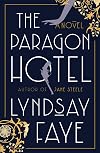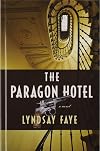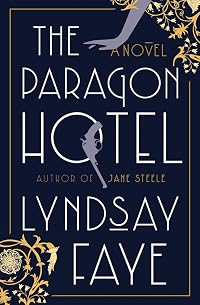
The Paragon Hotel
by Lyndsay Faye
On This Page
Description
A gun moll with a knack for disappearing flees from Prohibition-era Harlem to Portland's Paragon Hotel.The year is 1921, and "Nobody" Alice James has just arrived in Oregon with a bullet wound, a lifetime's experience battling the New York Mafia, and fifty thousand dollars in illicit cash. She befriends Max, a black Pullman porter who reminds her achingly of home and who saves Alice by leading her to the Paragon Hotel. But her unlikely sanctuary turns out to be an all-black hotel in a Jim show more Crow city, and its lodgers seem unduly terrified of a white woman on the premises.
As she meets the churlish Dr. Pendleton, the stately Mavereen, and the club chanteuse Blossom Fontaine, she understands their dread. The Ku Klux Klan has arrived in Portland in fearful numbers—burning crosses, electing officials, infiltrating newspapers, and brutalizing blacks. And only Alice and her new Paragon "family" are searching for a missing mulatto child who has mysteriously vanished into the woods. To untangle the web of lies and misdeeds around her, Alice will have to answer for her own past, too.
A richly imagined novel starring two indomitable heroines, The Paragon Hotel at once plumbs the darkest parts of America's past and the most redemptive facets of humanity. From international-bestselling, multi-award-nominated writer Lyndsay Faye, it's a masterwork of historical suspense. show less
Tags
Recommendations











Member Reviews
Alice James barely made it out of Harlem alive. Working for the local mobster, she had to flee with two bullet holes in her side. She hopped the first train going west and got off in Portland, OR. In the 1920s, Oregon wanted to be a lily white state and actually barred Blacks from living there. However, Alice who was white, was savaed by Max, a train porter who was Black.
Max took Alice to the Paragon Hotel, patterned after Portland's Golden West Hotel, was a hotel for Blacks. Having a white woman staying there, even though she was ill, was bound to cause problems...especially in a city where the KKK was quite active.
Alice gets involved in the daily life of the Paragon's inhabitants, befriending Blossom Fontaine primarily.
Faye traces show more Alice's life in New York, the daughter of a prostitute, the recruitment by organized crime and her subsequent departure in the THEN chapters while Alice's current activities are recounted in the NOW chapters. Either way, Faye has written an original, engrossing book recounting both history and fiction. Her Historical Notes section puts everyting in perspective.
Even though it's early in the year (January) I'm thinking this could be in my top 10 books of 2019. show less
Max took Alice to the Paragon Hotel, patterned after Portland's Golden West Hotel, was a hotel for Blacks. Having a white woman staying there, even though she was ill, was bound to cause problems...especially in a city where the KKK was quite active.
Alice gets involved in the daily life of the Paragon's inhabitants, befriending Blossom Fontaine primarily.
Faye traces show more Alice's life in New York, the daughter of a prostitute, the recruitment by organized crime and her subsequent departure in the THEN chapters while Alice's current activities are recounted in the NOW chapters. Either way, Faye has written an original, engrossing book recounting both history and fiction. Her Historical Notes section puts everyting in perspective.
Even though it's early in the year (January) I'm thinking this could be in my top 10 books of 2019. show less
Oregon has a history of discrimination against people of color. Three infamous “exclusion laws,” passed in 1848, 1850, and 1857, banned blacks as Oregon sought to become a state; it even wrote the exclusion of blacks into its constitution:
"No free negro or mulatto, not residing in this State at the time of the adoption of this constitution, shall ever come, reside, or be within this State, or hold any real estate, or make any contract, or maintain any suit therein; and the Legislative Assembly shall provide by penal laws for the removal by public officers of all such free negroes and mulattoes, and for their effectual exclusion from the State, and for the punishment of persons who shall bring them into the State, or employ or harbor show more them therein.”
As the Washington Post reports:
"Oregon is the only state in the United States that actually began as literally whites-only,” said Winston Grady-Willis, director of Portland State University’s School of Gender, Race and Nations. 'Even though there was subsequent legislation that challenged those statutes, the statutes were not removed from the books until 1922.’”
In the 1920s, Oregon had the largest KKK organization [per capita] west of the Mississippi River. The Southern Poverty Law Center (SPLC), in a history of the KKK, observed:
"Oregon in the spring of 1921 was as unlikely a potential Ku Klux Klan stronghold as any state in the nation. It was peaceful and quiet, its fine school system had virtually banished illiteracy, and no one was making fiery speeches about race (97 percent of the people were white) or immigrants (87 percent were native born).
Incredibly, within a year of the arrival of a single Klan salesman, Oregon was so firmly in the grasp of the hooded nightriders that the governor admitted they controlled the state."
This history forms the backdrop for Lyndsay Faye’s latest historical fiction/crime novel, which is set in Portland, Oregon in 1921. As with her previous historical fiction books, each chapter is preceded by actual excerpts of writings from that period which are germane to the action, adding a great deal of insight into what the atmosphere was like at the time.
Alice James, 25, a “ward” of an Italian mob boss in Harlem, has reason to flee for her life, and gets on a train going west. By the time she gets to Portland, Oregon, she is in mortal danger from a festering gunshot wound. A black train porter, Max Burton, takes her to the Paragon Hotel in the city for treatment. The Paragon Hotel [patterned after Portland’s historic Golden West Hotel] is the only hotel in Portland where people of color are allowed, and because Max has to touch Alice to help her - indeed, he has to carry her - he can’t very well show up with her at a white place lest he be lynched. The denizens of the hotel put her in a room and get their doctor to stitch her up.
Before long, Alice feels she has new friends and a new “family” of sorts. But the wonderful cast of characters who live and work at the hotel are harboring a slew of secrets, which come oozing out of the woodwork after a little boy who lives at the hotel goes missing. Blacks can’t safely comb the surrounding woods without risking being part of a Ku Klux Klan bonfire, and most of the police won’t protect them. On the contrary, blacks need protection from the racist and corrupt police.
As the chapters go back and forth in time, we also learn about Alice’s past in mob-ruled Harlem. Her life was dangerous in both places, but she has attributes that help her survive in both. But she is white; the survival of the others is up in the air.
The story ends with a wonderful “It’s just Chinatown” coda as Alice finally leaves the Paragon Hotel:
“…the Paragon Hotel spits me out, I turn to look back at it. Its dozens of windows with its hundreds of guests, all of them hiding something. All of them fighting for something. All of them frightened of something. That’s the kicker about hotels - they aren’t homes, they’re more like the paragon of waiting rooms. … you burrow underneath one another’s surfaces, air the cupboards, life the drapes, and everyone is unhappy, and everyone is searching, and everyone is both cruel and kind.”
Discussion: There are wonderful aspects to this story, not the least of which are bits of historical information provided by the author. Her language, too, is lovely, as she veers from the slang of the time to more dazzling and timeless prose, such as these descriptions of the vistas in Portland, so different from what she grew up with in Harlem:
“The skies are enormous, flung open and sprawling. A bucket of spilled cerulean.”
“I took a streetcar in the salmon sunrise…”
Even the horrific is at times couched in eloquence, as she muses about how the blacks in Portland might think about death (reminiscent of the song “Strange Fruit,” sung so movingly by Billie Holiday):
“Wondering when their own time comes, whether they’ll drift up to heaven from their warm beds or from the cool rustling of strange tree branches.”
When she sees a sliver of the moon it makes her think about the secrets she carries, and the secrets carried by everyone she has met:
“The moon has risen, slender and delicate. Seeming awfully small. But that’s the trick about the moon… that doesn’t mean the rest of the moon isn’t there. Only that it’s waiting for the right time to be visible. Showing sharp white sickles of itself until suddenly it’s flooding wheat fields and coastlines, shocking everyone over how much was hidden all that while.”
The theme of a paragon, or exemplar, enters in the story in several ways, most notably in Alice’s “salute” at the end of the book:
“So here’s to the saps and the sinners. To survival of the fittest and the terribly unfit. To the paragon of animals in all our many forms. . . . .”
Rating: This is another terrific book by this author. (I can’t think of one that hasn’t been excellent.) Highly recommended! show less
"No free negro or mulatto, not residing in this State at the time of the adoption of this constitution, shall ever come, reside, or be within this State, or hold any real estate, or make any contract, or maintain any suit therein; and the Legislative Assembly shall provide by penal laws for the removal by public officers of all such free negroes and mulattoes, and for their effectual exclusion from the State, and for the punishment of persons who shall bring them into the State, or employ or harbor show more them therein.”
As the Washington Post reports:
"Oregon is the only state in the United States that actually began as literally whites-only,” said Winston Grady-Willis, director of Portland State University’s School of Gender, Race and Nations. 'Even though there was subsequent legislation that challenged those statutes, the statutes were not removed from the books until 1922.’”
In the 1920s, Oregon had the largest KKK organization [per capita] west of the Mississippi River. The Southern Poverty Law Center (SPLC), in a history of the KKK, observed:
"Oregon in the spring of 1921 was as unlikely a potential Ku Klux Klan stronghold as any state in the nation. It was peaceful and quiet, its fine school system had virtually banished illiteracy, and no one was making fiery speeches about race (97 percent of the people were white) or immigrants (87 percent were native born).
Incredibly, within a year of the arrival of a single Klan salesman, Oregon was so firmly in the grasp of the hooded nightriders that the governor admitted they controlled the state."
This history forms the backdrop for Lyndsay Faye’s latest historical fiction/crime novel, which is set in Portland, Oregon in 1921. As with her previous historical fiction books, each chapter is preceded by actual excerpts of writings from that period which are germane to the action, adding a great deal of insight into what the atmosphere was like at the time.
Alice James, 25, a “ward” of an Italian mob boss in Harlem, has reason to flee for her life, and gets on a train going west. By the time she gets to Portland, Oregon, she is in mortal danger from a festering gunshot wound. A black train porter, Max Burton, takes her to the Paragon Hotel in the city for treatment. The Paragon Hotel [patterned after Portland’s historic Golden West Hotel] is the only hotel in Portland where people of color are allowed, and because Max has to touch Alice to help her - indeed, he has to carry her - he can’t very well show up with her at a white place lest he be lynched. The denizens of the hotel put her in a room and get their doctor to stitch her up.
Before long, Alice feels she has new friends and a new “family” of sorts. But the wonderful cast of characters who live and work at the hotel are harboring a slew of secrets, which come oozing out of the woodwork after a little boy who lives at the hotel goes missing. Blacks can’t safely comb the surrounding woods without risking being part of a Ku Klux Klan bonfire, and most of the police won’t protect them. On the contrary, blacks need protection from the racist and corrupt police.
As the chapters go back and forth in time, we also learn about Alice’s past in mob-ruled Harlem. Her life was dangerous in both places, but she has attributes that help her survive in both. But she is white; the survival of the others is up in the air.
The story ends with a wonderful “It’s just Chinatown” coda as Alice finally leaves the Paragon Hotel:
“…the Paragon Hotel spits me out, I turn to look back at it. Its dozens of windows with its hundreds of guests, all of them hiding something. All of them fighting for something. All of them frightened of something. That’s the kicker about hotels - they aren’t homes, they’re more like the paragon of waiting rooms. … you burrow underneath one another’s surfaces, air the cupboards, life the drapes, and everyone is unhappy, and everyone is searching, and everyone is both cruel and kind.”
Discussion: There are wonderful aspects to this story, not the least of which are bits of historical information provided by the author. Her language, too, is lovely, as she veers from the slang of the time to more dazzling and timeless prose, such as these descriptions of the vistas in Portland, so different from what she grew up with in Harlem:
“The skies are enormous, flung open and sprawling. A bucket of spilled cerulean.”
“I took a streetcar in the salmon sunrise…”
Even the horrific is at times couched in eloquence, as she muses about how the blacks in Portland might think about death (reminiscent of the song “Strange Fruit,” sung so movingly by Billie Holiday):
“Wondering when their own time comes, whether they’ll drift up to heaven from their warm beds or from the cool rustling of strange tree branches.”
When she sees a sliver of the moon it makes her think about the secrets she carries, and the secrets carried by everyone she has met:
“The moon has risen, slender and delicate. Seeming awfully small. But that’s the trick about the moon… that doesn’t mean the rest of the moon isn’t there. Only that it’s waiting for the right time to be visible. Showing sharp white sickles of itself until suddenly it’s flooding wheat fields and coastlines, shocking everyone over how much was hidden all that while.”
The theme of a paragon, or exemplar, enters in the story in several ways, most notably in Alice’s “salute” at the end of the book:
“So here’s to the saps and the sinners. To survival of the fittest and the terribly unfit. To the paragon of animals in all our many forms. . . . .”
Rating: This is another terrific book by this author. (I can’t think of one that hasn’t been excellent.) Highly recommended! show less
”Blossom’s back is turned to me, but her laugh alone could still land her in the hoosegow in seven or eight states. So I intervene.” (Page 138)
Yep, I’m once again wallowing in Lyndsay Faye’s inimitable brand of historical fiction, peppered with terms and phrases used at the time in history that she’s depicting. She’s really a master at making you feel the authenticity of the time period. Hoosegow?? Oh yeah. Not a term you hear much these days.
Alice James is the daughter of a prostitute growing up in Harlem where the Sicilian Mafia dominates everything in the early years of the twentieth century. Alice gets herself in some trouble and ends up with a gunshot wound and traveling on a train to Portland, Oregon. You know show more Portland. Bastion of liberal politics. Oh and also the racist city in the very racist state of Oregon that doesn’t allow African Americans to move into the state thereby eliminating the need to take a stand against slavery. In the early twenties the Ku Klux Klan is very active. (Interesting that I just learned this historical fact in Jill Lepore’s wonderful [These Truths: A History of the United States].) On the train the black porter, Max, takes Alice under his wing and delivers her to the Paragon Hotel, which is the only hotel in the city where African Americans are allowed to stay. Alice is white so it creates some obvious problems.
Faye establishes these two time lines, a before Portland and an after Portland throughout the book and creates a thriller that is impeccably wrought with wonderfully complex characters and a real mystery to solve. I loved these characters. Alice, Max, Wednesday Joe, Davy Lee but most of all, Blossom. She steals the show. And my heart. Very highly recommended. show less
Yep, I’m once again wallowing in Lyndsay Faye’s inimitable brand of historical fiction, peppered with terms and phrases used at the time in history that she’s depicting. She’s really a master at making you feel the authenticity of the time period. Hoosegow?? Oh yeah. Not a term you hear much these days.
Alice James is the daughter of a prostitute growing up in Harlem where the Sicilian Mafia dominates everything in the early years of the twentieth century. Alice gets herself in some trouble and ends up with a gunshot wound and traveling on a train to Portland, Oregon. You know show more Portland. Bastion of liberal politics. Oh and also the racist city in the very racist state of Oregon that doesn’t allow African Americans to move into the state thereby eliminating the need to take a stand against slavery. In the early twenties the Ku Klux Klan is very active. (Interesting that I just learned this historical fact in Jill Lepore’s wonderful [These Truths: A History of the United States].) On the train the black porter, Max, takes Alice under his wing and delivers her to the Paragon Hotel, which is the only hotel in the city where African Americans are allowed to stay. Alice is white so it creates some obvious problems.
Faye establishes these two time lines, a before Portland and an after Portland throughout the book and creates a thriller that is impeccably wrought with wonderfully complex characters and a real mystery to solve. I loved these characters. Alice, Max, Wednesday Joe, Davy Lee but most of all, Blossom. She steals the show. And my heart. Very highly recommended. show less
A grand historical novel set in Harlem, NY, and Portland, OR, in the early 20th century, amid Italian immigrant communities coping with the tyranny of their own brutal criminal element, and a black hotel in the heart of a state where people of color were forbidden to live. Our heroine, Alice James (or "Nobody", as she often refers to herself) has escaped with her life, barely, from a Mafia war set in motion by people she loved. Through the insight and compassion of a Pullman porter she has landed at the Paragon Hotel, a refuge for black travelers with a no-damned-nonsense matron who isn't keen on the presence of a white woman in their midst. When a young boy goes missing from the hotel, Nobody uses her talent of disappearing in plain show more sight to assist the search, and finds herself enmeshed in more than one tangled and mysterious web of relationships. Recommended. show less
I received this book through Netgalley.
With Paragon Hotel, Lyndsay Faye reaffirms that she’s one of the best authors out there of historical fiction. Not only does she illuminate historical eras with stunning realistic detail (see her Timothy Wilde trilogy set in 1840s New York), but she creates utterly human characters you can’t help but love and hate. The way she utilizes period patter with such flow leaves me in awe as an author.
In Paragon Hotel, we meet Nobody as she’s dying of a gunshot wound on a westbound train. She was trained to be an anti-Mafia spy, to become wallpaper in any room; she’s not even sure who she is anymore. The kind black porter, a veteran of the War, realizes her perilous condition and takes her to a show more dangerous place in order to save her life: the Paragon Hotel, an all-black establishment in Oregon, a state where black people are not allowed.
The historical facts behind the fiction are stunning. Oregon was established as a white utopia. In the 1920s, it was a hotbed of KKK activity. A black men were lynched for even looking at a white woman, and here is Nobody, requiring the aid of a black doctor and other hotel staff in order to stay alive. Each character is vivid and complex, with many secrets—which Nobody soon begins to uncover.
This is a book that is, in turns, beautiful and horrible… and all the more horrible because of the reality it is based upon. As in her other series, Faye does an incredible job of representing diverse perspectives on matters of race, sexuality, and mental illness.
This is one of the best books I have read in recent years, and I read a lot of books. show less
With Paragon Hotel, Lyndsay Faye reaffirms that she’s one of the best authors out there of historical fiction. Not only does she illuminate historical eras with stunning realistic detail (see her Timothy Wilde trilogy set in 1840s New York), but she creates utterly human characters you can’t help but love and hate. The way she utilizes period patter with such flow leaves me in awe as an author.
In Paragon Hotel, we meet Nobody as she’s dying of a gunshot wound on a westbound train. She was trained to be an anti-Mafia spy, to become wallpaper in any room; she’s not even sure who she is anymore. The kind black porter, a veteran of the War, realizes her perilous condition and takes her to a show more dangerous place in order to save her life: the Paragon Hotel, an all-black establishment in Oregon, a state where black people are not allowed.
The historical facts behind the fiction are stunning. Oregon was established as a white utopia. In the 1920s, it was a hotbed of KKK activity. A black men were lynched for even looking at a white woman, and here is Nobody, requiring the aid of a black doctor and other hotel staff in order to stay alive. Each character is vivid and complex, with many secrets—which Nobody soon begins to uncover.
This is a book that is, in turns, beautiful and horrible… and all the more horrible because of the reality it is based upon. As in her other series, Faye does an incredible job of representing diverse perspectives on matters of race, sexuality, and mental illness.
This is one of the best books I have read in recent years, and I read a lot of books. show less
What do you associate with Portland, Oregon?
Sure.
Of course.
Definitely.
No? Think again.
No free Negro, or Mulatto, not residing in this state at the time of the adoption of this constitution, shall come, reside, or be within this state, or hold any real estate, or make any contracts, or maintain any suit therein; and the Legislative Assembly shall provide by penal laws, for the removal, by public officers, of all such Negroes, and Mulattos, and for their effectual exclusion from the state, and for the punishment of the persons who shall bring them into the state, or employ, or harbor them.
This excerpt from the Oregon State Constitution (Article 1, Section 35, 1857) opens The Paragon Hotel with this sickening footnote: The "Negro and show more Mulatto" section of Oregon's constitution was technically repealed in 1926 but was only later amended to remove all antiquated racist language in November of the year 2002. The vote was 867,901 in favor of modernizing it and 352,027 against. (She doesn't mention that the 14th Amendment to the federal Constitution legally invalidated state level black exclusion laws, but that didn't keep Oregonians from trying.)
Ms. Faye's new novel opens 5 years before 62.5% of Oregonians voted to formally repeal the law. The Paragon Hotel is based on The Golden West Hotel, a blacks-only hotel, where Alice "Nobody" James finds herself after fleeing NYC with a bullet wound in her side. She's been the ward and employee of a businessman with many less-than-legal activities. The story of her life before fleeing via train is revealed in alternating "Then" chapters, which some readers don't like, but I found almost as intriguing as the "Now" Portland story. Oh, and all is is framed by a prologue written by Alice to an unnamed companion, who she tells "It's not a book. This was never a book. This is a love letter."
Who is "Nobody"? She can be "an easygoing flapper on the run from a dreadfully cruel gentleman caller, Yonkers born, midlevel typist...likes to chew the fat about the latest plays over Darjeeling spiked with bootleg rum. Likes cats. That sort." Or she can be a music teacher, "devoutly Protestant...embarrassed to be unmarried. Knitter. That sort." With a perfectly forgettable face, she's an expert at blending in and being whoever will get furthest in a given situation. But her white face doesn't blend with the residents and staff of The Paragon, which makes life difficult for everyone.
The rest of the novel is populated with equally fascinating characters: Alice's prostitute mother Catrin, her childhood friend Nicolo, Pullman porter Max who brings her to The Paragon, chanteuse Ms. Blossom Fontaine, Dr. Pendleton who owns The Paragon and stitches up Alice's wound, and assorted others who have survived worse places to find refuge at The Paragon in the midst of a Ku Klux Klan campaign. When a biracial foundling who lives at The Paragon disappears, Alice tries to help by being whatever Nobody will get the best response from the Portland police and other white residents. Along the way, she forms relationships with the residents, discovers secrets that she might wish she left alone, and starts to discover who Alice actually is.
I adored Ms. Faye's last novel [b:Jane Steele|25868918|Jane Steele|Lyndsay Faye|https://i.gr-assets.com/images/S/compressed.photo.goodreads.com/books/1459272823l/25868918._SY75_.jpg|45741473], which also featured a smart, independent young heroine, albeit in a much different (Jane Eyre-inspired) historical setting. If you haven't already, you should read them both. She's definitely an author to watch. show less
Sure.
Of course.
Definitely.
No? Think again.
No free Negro, or Mulatto, not residing in this state at the time of the adoption of this constitution, shall come, reside, or be within this state, or hold any real estate, or make any contracts, or maintain any suit therein; and the Legislative Assembly shall provide by penal laws, for the removal, by public officers, of all such Negroes, and Mulattos, and for their effectual exclusion from the state, and for the punishment of the persons who shall bring them into the state, or employ, or harbor them.
This excerpt from the Oregon State Constitution (Article 1, Section 35, 1857) opens The Paragon Hotel with this sickening footnote: The "Negro and show more Mulatto" section of Oregon's constitution was technically repealed in 1926 but was only later amended to remove all antiquated racist language in November of the year 2002. The vote was 867,901 in favor of modernizing it and 352,027 against. (She doesn't mention that the 14th Amendment to the federal Constitution legally invalidated state level black exclusion laws, but that didn't keep Oregonians from trying.)
Ms. Faye's new novel opens 5 years before 62.5% of Oregonians voted to formally repeal the law. The Paragon Hotel is based on The Golden West Hotel, a blacks-only hotel, where Alice "Nobody" James finds herself after fleeing NYC with a bullet wound in her side. She's been the ward and employee of a businessman with many less-than-legal activities. The story of her life before fleeing via train is revealed in alternating "Then" chapters, which some readers don't like, but I found almost as intriguing as the "Now" Portland story. Oh, and all is is framed by a prologue written by Alice to an unnamed companion, who she tells "It's not a book. This was never a book. This is a love letter."
Who is "Nobody"? She can be "an easygoing flapper on the run from a dreadfully cruel gentleman caller, Yonkers born, midlevel typist...likes to chew the fat about the latest plays over Darjeeling spiked with bootleg rum. Likes cats. That sort." Or she can be a music teacher, "devoutly Protestant...embarrassed to be unmarried. Knitter. That sort." With a perfectly forgettable face, she's an expert at blending in and being whoever will get furthest in a given situation. But her white face doesn't blend with the residents and staff of The Paragon, which makes life difficult for everyone.
The rest of the novel is populated with equally fascinating characters: Alice's prostitute mother Catrin, her childhood friend Nicolo, Pullman porter Max who brings her to The Paragon, chanteuse Ms. Blossom Fontaine, Dr. Pendleton who owns The Paragon and stitches up Alice's wound, and assorted others who have survived worse places to find refuge at The Paragon in the midst of a Ku Klux Klan campaign. When a biracial foundling who lives at The Paragon disappears, Alice tries to help by being whatever Nobody will get the best response from the Portland police and other white residents. Along the way, she forms relationships with the residents, discovers secrets that she might wish she left alone, and starts to discover who Alice actually is.
I adored Ms. Faye's last novel [b:Jane Steele|25868918|Jane Steele|Lyndsay Faye|https://i.gr-assets.com/images/S/compressed.photo.goodreads.com/books/1459272823l/25868918._SY75_.jpg|45741473], which also featured a smart, independent young heroine, albeit in a much different (Jane Eyre-inspired) historical setting. If you haven't already, you should read them both. She's definitely an author to watch. show less
I did not know that Oregon was (in 2016, and quite likely still today) the 'whitest state in America.' Given the history detailed in The Paragon Hotel however, I guess I'm not surprised.
This was such a good book - despite the dual timelines it raced right along, and I found both the past and present stories interesting (as usual, though, the present beat out the past, but in this case by just a little). Alice/Nobody is a great, brave, fun character, Blossom even more so, and Max made me want to take a cross-country train journey asap. Fun to read while also occasionally soul-crushing. That is a trick you don't see very often.
Loved it and will certainly recommend to others who are torn as to what to read next.
This was such a good book - despite the dual timelines it raced right along, and I found both the past and present stories interesting (as usual, though, the present beat out the past, but in this case by just a little). Alice/Nobody is a great, brave, fun character, Blossom even more so, and Max made me want to take a cross-country train journey asap. Fun to read while also occasionally soul-crushing. That is a trick you don't see very often.
Loved it and will certainly recommend to others who are torn as to what to read next.
Members
- Recently Added By
Published Reviews
A young white woman named Alice James flees Prohibition-era Harlem by rail with an oozing bullet wound and a satchel containing $50,000 in cash. She makes it cross-country to Portland, Oregon, where Max, a kindly, strapping black Pullman porter and World War I veteran, whisks her away to the novel's eponymous hotel, populated mostly with African-Americans besieged by threats from the local Ku show more Klux Klan. You needn't be an aficionado of crime melodrama or period romance for those two sentences to have you at "Hello," and Faye (Jane Steele, 2016, etc.) more than delivers on this auspicious premise with a ravishing novel that rings with nervy elegance and simmers with gnawing tension. The myriad elements of Faye's saga are carried along by the jaunty, attentive voice of Alice, who came by her nickname "Nobody" as a young girl growing up on the crime-infested Upper West Side of Manhattan, where she acquired the ability to hide in plain sight among the neighborhood's mobsters, leg- breakers, and bootleggers. She calls upon this chameleonlike talent as she embeds herself among her newfound protectors, some of whom are wary of her presence. But Alice has at least one Paragon resident solidly in her corner: the stunning Blossom Fontaine, a dauntingly sophisticated cabaret singer whose own past is as enigmatic and checkered as Alice's. Blossom, Max, and the rest of the hotel's residents dote on a precocious, inquisitive mixed-race child named Davy Lee who vanishes from their sight one afternoon at an amusement park. As the Klan begins to show signs of renewed aggression toward Portland's black citizenry and corrupt cops start throwing their weight around the hotel, Alice is compelled to deploy her street-wise skills with greater urgency to help find Davy Lee. In doing so, she also unravels secrets within secrets that carry deadly and transformative implications for her and for everybody around her. This historical novel, which carries strong reverberations of present-day social and cultural upheavals, contains a message from a century ago that's useful to our own time: "We need to do better at solving things." A riveting multilevel thriller of race, sex, and mob violence that throbs with menace as it hums with wit. show less
added by kthomp25
Lists

Kirkus Starred Fiction Reviews of Books Published in 2019
411 works; 12 members

Fiction: Crime, Detective, Mystery
350 works; 3 members
Author Information

14+ Works 5,333 Members
Awards and Honors
Common Knowledge
- Original publication date
- 2018
- People/Characters
- Alice James; Nicolo Benenati; Mauro Salvatici; Blossom Fontaine; Evelina 'Evy'; Maximilian 'Max' (show all 10); Doddridge B. Pendleton; Mavereen Meader; Jenny Kiona; Zachariah 'Rye'
- Important places
- Harlem, New York, New York, USA; Portland, Oregon, USA
- Important events
- Prohibition in the United States
- Epigraph
- No free Negro, or Mulatto, not residing in this state at the time of the adoption of this constitution, shall come, reside, or be within this state, or hold any real estate, or make any contracts, or maintain any suit t... (show all)herein; and the Legislative Assembly shall provide by penal laws, for the removal, by public officers, of all such Negroes, and Mulattos, and for their effectual exclusion from the state, and for the punishment of the persons who shall bring them into the state, or employ, or harbor them.
— Oregon State Constitution, Article 1, Section 35, 1857
The “Negro and Mulatto” section of Oregon’s constitution was technically repealed in 1926 but was only later amended to remove all antiquated racial language in November of the year 2002. The vote was 867,901 in favor of modernizing it and 352,027 against. - Dedication
- For Bethy
- First words
- You’re supposing that you hold in your hands a manuscript.
- Quotations
- It’s not a book. This was never a book.
This is a love letter.
“You think that decorum and virtue will make a difference to them. And I am here to tell you, honey, that it will not,” Blossom states. “You can use the proper cutlery for the length of an entire eight-course din... (show all)ner. You can wear your modest Sunday best daily, with a five-dollar hat and a pocket Bible in your handbag. You can abstain from liquor and convince dozens of the unwashed poor to sign the temperance pledge. You can cultivate tea roses. You can pawn all your earthly luxuries and spend the money to build an orphanage. You can vote Democrat. You can bow and scrape and mind your place and speak when spoken to and smile when you’re slapped. You’re still a nigger to them.”
Muriel Snider clears her throat officiously. “‘The Knights of the Ku Klux Klan, as a patriotic, fraternal, benevolent order, does not discriminate against a man on account of his religious or political creed so long as it... (show all) does not antagonize the sacred right guaranteed by our civil government or conflict with Christian ideals and institutions. The Klan asks the support of churchmen everywhere in the great work of uniting into one organization, under one banner, all native-born Protestant Gentile Americans.’”
It’s an awfully empowering feeling, to be against something.
Have you ever looked at a picture in a penny arcade in the high summer, with salt in your hair and sand on your toes, and been asked, is this an evil witch or a beautiful princess? Is this a face, or is it a vase of flowers? ... (show all)And you’re in a tearing great rush to get it right, because you think there’s only one answer. So you choose the first one you see, and you’re so strong for it that you can’t see the other. But it’s there the whole time. And if you squint the peepers, hey presto, the whole image changes, and you wonder why you couldn’t see it before.
“You wanted a world where people fought back against the unspeakable, so you did something unspeakable to make them fight.”
That’s the kicker about hotels—they aren’t homes, they’re more like the paragon of waiting rooms. Unless you’re part of the inner circle of this one, and you burrow underneath one another’s surfaces, air the cupbo... (show all)ards, lift the drapes, and everyone is unhappy, and everyone is searching, and everyone is both cruel and kind. - Last words
- (Click to show. Warning: May contain spoilers.)Let’s make it last.
- Publisher's editor
- Kolen, Kerri
- Blurbers
- Davis, Fiona; Willig, Lauren; McNeal, Laura Lane
Classifications
Statistics
- Members
- 478
- Popularity
- 63,575
- Reviews
- 37
- Rating
- (3.73)
- Languages
- English
- Media
- Paper, Audiobook, Ebook
- ISBNs
- 8
- ASINs
- 2