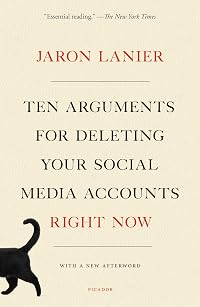
Ten Arguments for Deleting Your Social Media Accounts Right Now
by Jaron Lanier
On This Page
Description
Ten Arguments for Deleting Your Social Media Accounts Right Now is a timely call-to-arms from a Silicon Valley pioneer. You might have trouble imagining life without your social media accounts, but virtual reality pioneer Jaron Lanier insists that we're better off without them. In his important new audiobook, Lanier, who participates in no social media, offers powerful and personal reasons for all of us to leave these dangerous online platforms behind before it's too late. Lanier's reasons show more for freeing ourselves from social media's poisonous grip include its tendency to bring out the worst in us, to make politics terrifying, to trick us with illusions of popularity and success, to twist our relationship with the truth, to disconnect us from other people even as we are more "connected" than ever, to rob us of our free will with relentless targeted ads. How can we remain autonomous in a world where we are under continual surveillance and are constantly being prodded by algorithms run by some of the richest corporations in history that have no way of making money other than being paid to manipulate our behavior? How could the "benefits" of social media possibly outweigh the catastrophic losses to our personal dignity, happiness, and freedom? Lanier remains a tech optimist, so while demonstrating the evil that rules social media business models today, he also envisions a humanistic setting for social networking that can direct us towards richer and fuller way of living and connecting with our world. show lessTags
Recommendations
















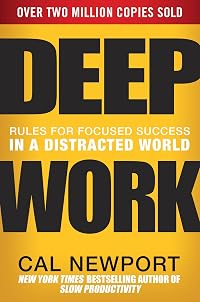
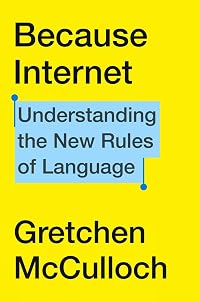
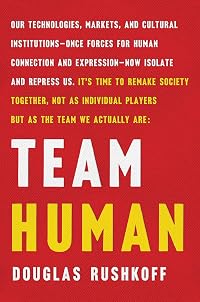

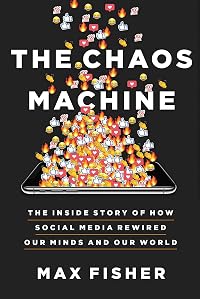













Member Recommendations

Member Reviews
For such a short work, Jaron Lanier's Ten Arguments conjured quite a lot of feelings in me, and most of them smacked of frustration, embarrassment, and exasperation. It's not that I find myself disagreeing with his core ten-point encapsulation of reasons to remove one's self from the influence of social media, which is satisfyingly listed on the back of the book (and which caused me to purchase it in the first place). These feelings are instead much more the product of having so many problems with Lanier's logic, opacity, and style – all of which feel plainly pedestrian and in fact belie the back cover's promise of what should be a vital read.
No question that Lanier has established his chops as a seasoned veteran of Silicon Valley, show more contributing to the early days of the Internet in both structure and service, including AI and VR tech as well as digital models of economic sustainability. Despite these accomplishments, he is not so adept at putting his ideas down into a digestible form with any semblance of cohesion, flow, or professionalism. The book is therefore a slog and his scattered and terribly flawed presentation undermines the arguments he is attempting to posit.
If the difficulties were all about style and layout, Ten Arguments might be more readily accepted as a definitive treatise on shucking the behavioral control imposed by the social media corps. But even these issues make what should be a simple read into something more akin to copy editing a high-schooler's conspiracy manifesto. Lanier's prose is informal, self-congratulatory, and overly precious, and he repeatedly falls into bad writing habits like incessantly asking questions without answering them in situ, instead choosing to waste space by explaining that he will explore those answers in a later chapter. This happens nearly a dozen times in a 146-page book, which is well beyond annoying. He fails to understand how footnotes should be used, choosing to attach them to word rather than sentence – and this results in one of his sentences having six distinct footnotes where a single one would have sufficed at the end of the sentence. His citations are maddening, almost every one being long strings of arcanely formatted URLs with no titles, dates, or author information contained within. I cannot see anyone in their right minds trying to type some of these in to their browser to further examine his sources; at the very least, a simple title would be far easier to look up. I even checked his personal website (which looks like it was designed in 1987) for live links to these sources, but the only "web resources" associated with the book were self-promotional ones. I also found the titles he has chosen for the many sections within his text to be overly clever, needlessly twee, and often simply irrelevant to the matter that follows.
The real issues with Ten Arguments, however, go beyond Lanier's style and are products of a handful of anemic thought experiments and many pages of pop-psychology standing in for what should be (and apparently could be, if his sources were more incisive) investigative journalism from the unique perspective given to him by his many experiences in the industry. Lanier is a computer scientist, but his bio simply states "scientist", perhaps affording him the freedom to intermittently ramble about utopian philosophies and posit unfounded psychological models ("addiction is a neurological process that we don't understand completely") that come off as uninspired café-counter conversation. He makes some valid points at times, but these are often engulfed by what reads as mental riffing that Lanier, himself, is not necessarily convinced he believes. Terms like "universal cognitive blackmail" and "the unbounded nature of nature" are particularly cringeworthy, as is his forced, ubiquitous acronym of "BUMMER", the anthropomorphized villain of this cautionary tale. The latter is so omnipresent in the text and stands out so greatly on the page that it actually derails the comprehension process of reading the book. And flaccid political statements like "something is drawing young people away from democracy" hang by themselves in the room like dirty jokes cracked at a funeral. There is no exploration, no exposition, no definition of this aphorism, so what, exactly, is its point?
I can appreciate the underlying dangers of which Lanier warns and it would be difficult not to believe the general social trajectory that he describes, but I just don't feel that his arguments are as effective as they could be. Despite the fact that he has witnessed a lot of what happens behind the scenes, he is reluctant to satisfactorily describe what is going into the sausage and who is ultimately to blame. It's a cop-out to repeatedly incriminate Twitter, Facebook, Amazon, Google, etc. while simultaneously condemning the vile "unknown third parties" who are paying these companies to conduct "mass behavior modification" and promulgate destructive "network approach". The fact that he is currently employed by Microsoft might have something to do with that opacity, and this might even be construed to brand Lanier as some measure of evangelical hypocrite, but since I do not know the man, I can only speculate. Yet I cannot help but think that his contribution here would have been better served and more instructive to unmask those third parties, if not with direct evidence, then at least with more detail about the algorithmic secrets that Lanier claims are more closely guarded than national intelligence. Even a mockup of one of these schemes would be more insightful than the final chapter of the book is, which instead argues that social media "hates your soul" and allegorically contends that BUMMER is essentially a religion with a goal of subsuming our free will, which presumably will be sacrificed to the god of virality. That last chapter is a real doozy and closes things out on a pretty low note.
Despite these moral and ethical imperatives that threaten to undo us all, Lanier repeatedly absolves himself of any responsibility for telling us what we should do, and he meekly liberalizes his manifesto by acknowledging that we know what's best for us individually – just in case he appears to step on any toes (thanks for that indulgence!). All of this is then invalidated by his fatuous assertion that "if you want to be a real person, delete your accounts", and others like it throughout the text. Furthermore, Lanier has a tendency to speak of himself as part of the Silicon Valley apparatus from an elitist perspective, claiming that despite all the best intentions that were seeded as the industry was ramping up, everything has gone south and it's now up to the public – who are being used as "product" – to right these wrongs by quitting their social media accounts. This, on the assumption that a mass exodus from corporate behavioral control will somehow then spur his colleagues in Silicon Valley to set up new, less nefarious methods of capitalizing on interpersonal communication in the age of digital media. At one point, he brazenly states, "If you don't quit, you are not creating the space in which Silicon Valley can act to improve itself". Really? Well, I'm sorry, Jaron, but who screwed it all up in the first place? Whose job is it to fix this? Thanks for nothing.
It's not all drek, though, and that is why this review offers two stars to Ten Arguments. Lanier excels when recounting the history of tech in the Valley and is clearly most comfortable when discussing his industry's early intentions and theories about how things perhaps should have gone. He is obviously correct to claim that the widespread use of social media has a marked deleterious effect on interpersonal compassion and empathy, and that big data is being used by hidden parties to manipulate favor and behavior on a grand, international scale. Terms like "invisible social vandalism" and AI being "a cover for sloppy engineering" are adroit and fall directly in Lanier's wheelhouse. Likewise, Lanier's discussion of context being applied to statements on social media after the fact is painfully accurate, and his thought-model on a corporate-controlled Wikipedia is memorable, proving that he can, indeed, enunciate important ideas. I only wish there were more of them. Perhaps in his other books, but I won't have the patience to attempt to read them.
I personally believe, however, that the needlessly meandering and clumsy Ten Arguments for Deleting Your Social Media Accounts Right Now can be summarized by a single phrase from Argument Three: Social Media is Making You Into an Asshole: "Your character is the most precious thing about you. Don't let it degrade." Now that is clear, concise, and vital writing. show less
No question that Lanier has established his chops as a seasoned veteran of Silicon Valley, show more contributing to the early days of the Internet in both structure and service, including AI and VR tech as well as digital models of economic sustainability. Despite these accomplishments, he is not so adept at putting his ideas down into a digestible form with any semblance of cohesion, flow, or professionalism. The book is therefore a slog and his scattered and terribly flawed presentation undermines the arguments he is attempting to posit.
If the difficulties were all about style and layout, Ten Arguments might be more readily accepted as a definitive treatise on shucking the behavioral control imposed by the social media corps. But even these issues make what should be a simple read into something more akin to copy editing a high-schooler's conspiracy manifesto. Lanier's prose is informal, self-congratulatory, and overly precious, and he repeatedly falls into bad writing habits like incessantly asking questions without answering them in situ, instead choosing to waste space by explaining that he will explore those answers in a later chapter. This happens nearly a dozen times in a 146-page book, which is well beyond annoying. He fails to understand how footnotes should be used, choosing to attach them to word rather than sentence – and this results in one of his sentences having six distinct footnotes where a single one would have sufficed at the end of the sentence. His citations are maddening, almost every one being long strings of arcanely formatted URLs with no titles, dates, or author information contained within. I cannot see anyone in their right minds trying to type some of these in to their browser to further examine his sources; at the very least, a simple title would be far easier to look up. I even checked his personal website (which looks like it was designed in 1987) for live links to these sources, but the only "web resources" associated with the book were self-promotional ones. I also found the titles he has chosen for the many sections within his text to be overly clever, needlessly twee, and often simply irrelevant to the matter that follows.
The real issues with Ten Arguments, however, go beyond Lanier's style and are products of a handful of anemic thought experiments and many pages of pop-psychology standing in for what should be (and apparently could be, if his sources were more incisive) investigative journalism from the unique perspective given to him by his many experiences in the industry. Lanier is a computer scientist, but his bio simply states "scientist", perhaps affording him the freedom to intermittently ramble about utopian philosophies and posit unfounded psychological models ("addiction is a neurological process that we don't understand completely") that come off as uninspired café-counter conversation. He makes some valid points at times, but these are often engulfed by what reads as mental riffing that Lanier, himself, is not necessarily convinced he believes. Terms like "universal cognitive blackmail" and "the unbounded nature of nature" are particularly cringeworthy, as is his forced, ubiquitous acronym of "BUMMER", the anthropomorphized villain of this cautionary tale. The latter is so omnipresent in the text and stands out so greatly on the page that it actually derails the comprehension process of reading the book. And flaccid political statements like "something is drawing young people away from democracy" hang by themselves in the room like dirty jokes cracked at a funeral. There is no exploration, no exposition, no definition of this aphorism, so what, exactly, is its point?
I can appreciate the underlying dangers of which Lanier warns and it would be difficult not to believe the general social trajectory that he describes, but I just don't feel that his arguments are as effective as they could be. Despite the fact that he has witnessed a lot of what happens behind the scenes, he is reluctant to satisfactorily describe what is going into the sausage and who is ultimately to blame. It's a cop-out to repeatedly incriminate Twitter, Facebook, Amazon, Google, etc. while simultaneously condemning the vile "unknown third parties" who are paying these companies to conduct "mass behavior modification" and promulgate destructive "network approach". The fact that he is currently employed by Microsoft might have something to do with that opacity, and this might even be construed to brand Lanier as some measure of evangelical hypocrite, but since I do not know the man, I can only speculate. Yet I cannot help but think that his contribution here would have been better served and more instructive to unmask those third parties, if not with direct evidence, then at least with more detail about the algorithmic secrets that Lanier claims are more closely guarded than national intelligence. Even a mockup of one of these schemes would be more insightful than the final chapter of the book is, which instead argues that social media "hates your soul" and allegorically contends that BUMMER is essentially a religion with a goal of subsuming our free will, which presumably will be sacrificed to the god of virality. That last chapter is a real doozy and closes things out on a pretty low note.
Despite these moral and ethical imperatives that threaten to undo us all, Lanier repeatedly absolves himself of any responsibility for telling us what we should do, and he meekly liberalizes his manifesto by acknowledging that we know what's best for us individually – just in case he appears to step on any toes (thanks for that indulgence!). All of this is then invalidated by his fatuous assertion that "if you want to be a real person, delete your accounts", and others like it throughout the text. Furthermore, Lanier has a tendency to speak of himself as part of the Silicon Valley apparatus from an elitist perspective, claiming that despite all the best intentions that were seeded as the industry was ramping up, everything has gone south and it's now up to the public – who are being used as "product" – to right these wrongs by quitting their social media accounts. This, on the assumption that a mass exodus from corporate behavioral control will somehow then spur his colleagues in Silicon Valley to set up new, less nefarious methods of capitalizing on interpersonal communication in the age of digital media. At one point, he brazenly states, "If you don't quit, you are not creating the space in which Silicon Valley can act to improve itself". Really? Well, I'm sorry, Jaron, but who screwed it all up in the first place? Whose job is it to fix this? Thanks for nothing.
It's not all drek, though, and that is why this review offers two stars to Ten Arguments. Lanier excels when recounting the history of tech in the Valley and is clearly most comfortable when discussing his industry's early intentions and theories about how things perhaps should have gone. He is obviously correct to claim that the widespread use of social media has a marked deleterious effect on interpersonal compassion and empathy, and that big data is being used by hidden parties to manipulate favor and behavior on a grand, international scale. Terms like "invisible social vandalism" and AI being "a cover for sloppy engineering" are adroit and fall directly in Lanier's wheelhouse. Likewise, Lanier's discussion of context being applied to statements on social media after the fact is painfully accurate, and his thought-model on a corporate-controlled Wikipedia is memorable, proving that he can, indeed, enunciate important ideas. I only wish there were more of them. Perhaps in his other books, but I won't have the patience to attempt to read them.
I personally believe, however, that the needlessly meandering and clumsy Ten Arguments for Deleting Your Social Media Accounts Right Now can be summarized by a single phrase from Argument Three: Social Media is Making You Into an Asshole: "Your character is the most precious thing about you. Don't let it degrade." Now that is clear, concise, and vital writing. show less
I picked up [b:Ten Arguments For Deleting Your Social Media Accounts Right Now|37830765|Ten Arguments For Deleting Your Social Media Accounts Right Now|Jaron Lanier|https://i.gr-assets.com/images/S/compressed.photo.goodreads.com/books/1526958131l/37830765._SY75_.jpg|59513117] in the library after being intrigued by a Guardian interview with Jaron Lanier. He has some insightful thoughts on generative AI at that link and is similarly thoughtful in his analysis of social media in this book. However, someone needs to persuade these smart tech guys to read some goddamn social theory, as the book is tragically lacking in theoretical grounding. Hopefully the techsperts have all read [b:The Age of Surveillance Capitalism: The Fight for a Human show more Future at the New Frontier of Power|26195941|The Age of Surveillance Capitalism The Fight for a Human Future at the New Frontier of Power|Shoshana Zuboff|https://i.gr-assets.com/images/S/compressed.photo.goodreads.com/books/1521733914l/26195941._SY75_.jpg|46170685] by now? [b:Ten Arguments For Deleting Your Social Media Accounts Right Now|37830765|Ten Arguments For Deleting Your Social Media Accounts Right Now|Jaron Lanier|https://i.gr-assets.com/images/S/compressed.photo.goodreads.com/books/1526958131l/37830765._SY75_.jpg|59513117] was published a year before it so sadly could not benefit from that excellent theoretical structure. In the absence of any real theory, Lanier makes up nonsense about wolves that undermined my appreciation of his good points:
There are whole disciplines of psychology and sociology out there! Please stop insulting wolves and humans with this reductive silliness and read some social science. Vague and misunderstood simplifications of evolution are absolutely not the best way to explain human behaviour in the twenty-first century. This wolf thing is too much of a false dichotomy to even be useful as a metaphor.
I had to get that off my chest before getting into Lanier's main arguments, which are very sensible. He summarises how surveillance capitalism works very neatly and explains the irony of how it came about:
I could have told them this at the age of 16 after learning about it in economics A-level; another example of why tech guys should (have) read social theory. Although I'm not keen on his acronym BUMMER (Behaviours of Users Modified and Made into an Empire for Rent) and prefer the term surveillance capitalism, this is an excellent point:
I don't think it's unreasonable to hypothesise that without algorithmic social media platforms, Trump and Bolsanaro would not have become president and the UK would not have voted for brexit. Throughout, Lanier's reasons to delete social media are both macro (societal impact) and micro (personal impact). I think he combines the two well. This is another excellent point with both individual and social implications:
This leads to defensiveness in anticipation of bad faith responses, which is not a good basis for communication. Lanier is also prescient. I learned recently from the garbage day newsletter that the below now happens on tiktok:
Lanier makes clear what he is arguing against: algorithmic social media and data-harvesting tech monopolies/monopsonies. The internet could be different, although he admits it's difficult to see a route out:
Near the end of the book, Lanier comments that, 'the most dangerous thing about BUMMER is the widespread illusion that BUMMER is the only possibility.' Much like fossil fuel dependence and neoliberalism, surveillance capitalism insists upon there being No Alternative despite its myriad of harms. [b:Ten Arguments For Deleting Your Social Media Accounts Right Now|37830765|Ten Arguments For Deleting Your Social Media Accounts Right Now|Jaron Lanier|https://i.gr-assets.com/images/S/compressed.photo.goodreads.com/books/1526958131l/37830765._SY75_.jpg|59513117] doesn't pretend that it's easy to avoid algorithmic social media or that deleting yours is sufficient to dismantle the whole business model. On the personal front, though, my life was improved by deleting twitter. Non-algorithmic social media does exist and is much less addictive and corrosive to the soul. I've found it's impossible to doomscroll on mastodon. Technically the goodreads feed is algorithmic, but I ignore it as I don't really think of goodreads as social media so much as a database of my reading. (Which is why I often forget to answer comments, sorry.) Anyway, a final argument for deleting social media is that you contribute in some tiny way to Elon Musk losing billions. That certainly gives me a warm glow of schadenfreude. Perhaps this twitter clusterfuck will prove that sufficient incompetence can overcome network effects; it would be lovely to have such a case study of the surveillance capitalism business model destroying itself.
If you ignore the wolf stuff, [b:Ten Arguments For Deleting Your Social Media Accounts Right Now|37830765|Ten Arguments For Deleting Your Social Media Accounts Right Now|Jaron Lanier|https://i.gr-assets.com/images/S/compressed.photo.goodreads.com/books/1526958131l/37830765._SY75_.jpg|59513117] makes a convincing argument that we're better off avoiding algorithmic social media as much as possible. It is a succinct and thought-provoking analysis of social media's harms, albeit not making any points I hadn't come across before in other books. If you're after a brief and readable analysis, it fits the bill. If you want more depth, detail, and theoretical grounding, though, I thoroughly recommend [b:The Chaos Machine: The Inside Story of How Social Media Rewired Our Minds and Our World|58950736|The Chaos Machine The Inside Story of How Social Media Rewired Our Minds and Our World|Max Fisher|https://i.gr-assets.com/images/S/compressed.photo.goodreads.com/books/1632076475l/58950736._SX50_.jpg|92907286] and [b:The Age of Surveillance Capitalism: The Fight for a Human Future at the New Frontier of Power|26195941|The Age of Surveillance Capitalism The Fight for a Human Future at the New Frontier of Power|Shoshana Zuboff|https://i.gr-assets.com/images/S/compressed.photo.goodreads.com/books/1521733914l/26195941._SY75_.jpg|46170685]. show less
My working hypothesis has long been that there's a switch deep in every human personality that can be set in one of two modes. We're like wolves. We can either be solitary or members of a pack of wolves. I call this switch the Solitary/Pack switch.
When we're solitary wolves, we're more free. We're cautious, but also capable of more joy. We think for ourselves, improvise, create. We scavenge, hunt, hide. We howl once in a while out of pure exuberance.
Once we're in a pack, interactions with others become the most important thing in the world. I don't know how far that goes with wolves, but it's dramatic in people. When people are locked in a competitive, hierarchical power structure, as in a corporation, they can lose sight of the reality of what they're doing because the immediate power struggle looms larger than reality itself.
There are whole disciplines of psychology and sociology out there! Please stop insulting wolves and humans with this reductive silliness and read some social science. Vague and misunderstood simplifications of evolution are absolutely not the best way to explain human behaviour in the twenty-first century. This wolf thing is too much of a false dichotomy to even be useful as a metaphor.
I had to get that off my chest before getting into Lanier's main arguments, which are very sensible. He summarises how surveillance capitalism works very neatly and explains the irony of how it came about:
Everyone [working on scaling the internet in the 1990s] knew that these functions and many others would be needed. We figured it would be wiser to let entrepreneurs fill in the blanks than to leave that task to government. What we didn't consider was that the fundamental digital needs like [persistent information, payments, and locating others] would lead to new kinds of massive monopolies because of network effects and lock-in. We foolishly laid the foundations for global monopolies. We did their hardest work for them. More precisely, since you're the product, not the customer of social media, the proper word is 'monopsonies'. Our early libertarian idealism resulted in gargantuan, global data monopsonies.
I could have told them this at the age of 16 after learning about it in economics A-level; another example of why tech guys should (have) read social theory. Although I'm not keen on his acronym BUMMER (Behaviours of Users Modified and Made into an Empire for Rent) and prefer the term surveillance capitalism, this is an excellent point:
Since BUMMER's influence is statistical, the menace is a little like climate change. You can't say that climate change is responsible for a particular storm, flood, or drought, but you can say it changes the odds that they'll happen. In the longer term, the most horrible stuff like sea level rise and the need to relocate most people and find new sources of food would be attributable to climate change, but by then the argument would have been lost.
Similarly, I can't prove that any particular asshole has been made more asshole-y by BUMMER, nor can I prove that any particular degradation of our society would have happened anyway. There's no certain way to know if BUMMER has changed your behaviour. [...] While can't know what details in our world would be different without BUMMER, we can know about the big picture. Like climate change, BUMMER will lead us into hell if we don't self-correct.
I don't think it's unreasonable to hypothesise that without algorithmic social media platforms, Trump and Bolsanaro would not have become president and the UK would not have voted for brexit. Throughout, Lanier's reasons to delete social media are both macro (societal impact) and micro (personal impact). I think he combines the two well. This is another excellent point with both individual and social implications:
Social media mashes up meaning. Whatever you say will be contextualised and given meaning by the way algorithms, crowds, and crowds of fake people who are actually algorithms mash it up with what other people say.
No-one ever knows exactly how what they're saying will be received, but in non-BUMMER situations you usually have reasonable guesses. I speak in public sometimes, and I instinctively adjust my presentation to an audience. I say different things to high school students than I do to a room full of quants. This is just a normal part of communication.
Speaking through social media isn't really speaking at all. Context is applied to what you say after you say it, for someone else's purposes and profit.
This leads to defensiveness in anticipation of bad faith responses, which is not a good basis for communication. Lanier is also prescient. I learned recently from the garbage day newsletter that the below now happens on tiktok:
I'll invent a way to ruin podcasting. Nobody do this, okay? [...]
You'd hear a rapid-fire sequence of people saying things about the subject. You would not hear what had come just before each snippet or what comes next. The snippets would go by so fast, and there'd be so many of them, that even if a computer voice identified where each snipper was snipped from, you wouldn't be able to take it in.
[...] Oh, and there would be ads mixed in.
Lanier makes clear what he is arguing against: algorithmic social media and data-harvesting tech monopolies/monopsonies. The internet could be different, although he admits it's difficult to see a route out:
What really bugs me about the way social media companies talk about this problem is that they'll say, "Sure we make you sad, but we do more good in the world than harm." But then the good things they brag about are all things that are intrinsic to the internet, that could - as far as we know - be had without the bad stuff, without BUMMER. Yes, of course it's great that people can be connected, but why must they accept manipulation by a third party as the price of that connection? What if the manipulation, not the connection, is the real problem?
Near the end of the book, Lanier comments that, 'the most dangerous thing about BUMMER is the widespread illusion that BUMMER is the only possibility.' Much like fossil fuel dependence and neoliberalism, surveillance capitalism insists upon there being No Alternative despite its myriad of harms. [b:Ten Arguments For Deleting Your Social Media Accounts Right Now|37830765|Ten Arguments For Deleting Your Social Media Accounts Right Now|Jaron Lanier|https://i.gr-assets.com/images/S/compressed.photo.goodreads.com/books/1526958131l/37830765._SY75_.jpg|59513117] doesn't pretend that it's easy to avoid algorithmic social media or that deleting yours is sufficient to dismantle the whole business model. On the personal front, though, my life was improved by deleting twitter. Non-algorithmic social media does exist and is much less addictive and corrosive to the soul. I've found it's impossible to doomscroll on mastodon. Technically the goodreads feed is algorithmic, but I ignore it as I don't really think of goodreads as social media so much as a database of my reading. (Which is why I often forget to answer comments, sorry.) Anyway, a final argument for deleting social media is that you contribute in some tiny way to Elon Musk losing billions. That certainly gives me a warm glow of schadenfreude. Perhaps this twitter clusterfuck will prove that sufficient incompetence can overcome network effects; it would be lovely to have such a case study of the surveillance capitalism business model destroying itself.
If you ignore the wolf stuff, [b:Ten Arguments For Deleting Your Social Media Accounts Right Now|37830765|Ten Arguments For Deleting Your Social Media Accounts Right Now|Jaron Lanier|https://i.gr-assets.com/images/S/compressed.photo.goodreads.com/books/1526958131l/37830765._SY75_.jpg|59513117] makes a convincing argument that we're better off avoiding algorithmic social media as much as possible. It is a succinct and thought-provoking analysis of social media's harms, albeit not making any points I hadn't come across before in other books. If you're after a brief and readable analysis, it fits the bill. If you want more depth, detail, and theoretical grounding, though, I thoroughly recommend [b:The Chaos Machine: The Inside Story of How Social Media Rewired Our Minds and Our World|58950736|The Chaos Machine The Inside Story of How Social Media Rewired Our Minds and Our World|Max Fisher|https://i.gr-assets.com/images/S/compressed.photo.goodreads.com/books/1632076475l/58950736._SX50_.jpg|92907286] and [b:The Age of Surveillance Capitalism: The Fight for a Human Future at the New Frontier of Power|26195941|The Age of Surveillance Capitalism The Fight for a Human Future at the New Frontier of Power|Shoshana Zuboff|https://i.gr-assets.com/images/S/compressed.photo.goodreads.com/books/1521733914l/26195941._SY75_.jpg|46170685]. show less
This is possibly the best and socially most important non-fiction book I've read in the last 15-20 years. I've marked up about half the book because every time I turned around he was making great points or giving great information that causes me to learn and reflect, and it's so concise and clear. As a tech entrepreneur who's been in the industry from very early on, he understands how social platforms and their algorithms work as very few people do, so he has terrific knowledge and perspective to reflect and analyze how they work and what their effects are, and additionally he's able to explain things very well for laypeople. The book was written in 2017 and published in 2018, but rather than seeming dated, it's seems prophetic.
His presentation is a bit too glib, but it's hard to naysay his positions, which include that social media not only gets you addicted and makes you lonelier, but helps turn you into an asshole. Not to mention its extraordinarily deleterious effects on the world body politic, as we've all seen; Lanier says that the alarming turn so many countries have made from democracy to authoritarian nationalism cannot be fully understood without factoring in the influence of Facebook and similar services. I think he's right. In any case, despite the cute acronyms and offbeat humor, this is a serious book that needs to be read by people on all sides of the issue, because there's an argument we need to have.
Un libro importante da leggere oggi, direi quasi “da far leggere a scuola”. Non ci si lasci ingannare dal titolo: non si tratta semplicemente di chiudere un account social per “protesta” contro le grandi corporation. Si tratta di ragionare con consapevolezza sull’effetto dei social media sulle nostre vite. Lanier a tratti assume toni fin troppo alti, paragonando la condotta di Facebook o Google a quella di sette religiose… ma non fanno forse lo stesso i loro portavoce, parlando di progetti pensati per rendere le persone immortali o le macchine più intelligenti di noi? Le 10 tesi di questo libro aiutano a capire perché siamo sempre più distanti, intolleranti e razzisti, con conseguenza politiche davanti agli occhi di show more tutti. Senza i social media e la non-etica che propongono, fatta di individualismo, popolarità e gare a chi fa la voce più grossa, in Italia probabilmente non avremmo al governo Lega e 5 stelle. A un livello forse meno radicale, questo libro aiuta a capire che cosa veramente abbiamo offerto in cambio di software che, gratis, sembrano semplificarci la vita. show less
Facebook, Google and The Rapture
Jaron Lanier wants to be known for his music and his appreciation of cats (He likes to say he is one). But where he is best known, and most useful, is in his appreciation of the internet. In You Are Not A Gadget (2010), he created a manifesto to free us from the clutches of the corporations installing their systems in our daily lives. Now, things are much worse. Ten Arguments For Deleting Your Social Media Accounts Right Now is a more specific and desperate appeal. The social media corporates have improved their models to be far more intrusive and behavior-modifying than anything we have ever seen outside of fiction. They no longer even bother to sugar-coat it. They make billions from personal data, even show more if it’s just clicks. Their customers use it to change user behavior. Because it works.
Lanier creates a new acronym, BUMMER, which stands for Behavior of Users Modified, and Made into an Empire for Rent. BUMMER reduces freedom, ends economic dignity and destroys souls. It is an inherently cruel con game, he says. “We have enshrined the belief that the only way to finance a connection between two people is through a third person who is paying to manipulate them.”
Memes feed the BUMMER machine, spreading negativity and reinforcing artificial intelligence’s (AI) ability to digest anything humans create. Facebook and the others of its ilk are becoming the new ransomware of the internet, he says. He gives the example of Facebook offering whole onsite teams to both the Trump and Clinton campaigns in 2016. (Only Trump accepted.) Facebook is a gatekeeper to brains, and/or an existential mafia. Lanier says it is like paying indulgences to the medieval Roman Catholic Church.
Every meme and trope sends the BUMMER AI machine creating new buckets to sort users, stereotype them, and sell the results to advertisers. It really doesn’t matter what users like or who they follow. Whatever they click adds to their demise as persons and adds to their value as targets.
This is strong stuff, and Lanier’s easy text draws readers into a very dark tale. The ten arguments in a nutshell:
1. You are losing your free will. If you don’t quit, "you are not creating the space in which Silicon Valley can act to improve itself".
2. Quitting social media is the most finely targeted way to resist the insanity of our times. It’s more efficient at harming society than at improving it. Simply quitting can change the world.
3. Social media is making you into an asshole. Lanier says Donald Trump is a victim of his own addiction to twitter (37,400 tweets). For the most powerful politician in the world, his behavior is no better than a teenaged troll. He is not alone.
4. Social media is undermining truth. A twitter account called Blacktivist turns out to be owned and operated by the Russians. “They’re using our pain for their gain,” says Tawanda Jones, a real black activist. The twitter account @realJaronLanier isn’t. He has no account.
5. Social media is making what you say meaningless.
6. Social media is destroying your capacity for empathy.
7. Social media is making you unhappy.
8. Social media doesn’t want you to have economic dignity. This is the most jarring argument. Lanier says the free model everyone pushed for in the 80s and 90s gave rise to the ad model, and with it the ability to create uncountable millions of fake humans and their corresponding spam and troll activity.
9. Social media is making politics impossible. “There are so few independent news sites, and they’re precious ... Our huge nation is only a few organizations away from having no independent newsrooms with resources and clout.“
10. Social media hates your soul. Facebook’s statement of purpose now says it is “assuring“ that “every single person has a sense of purpose and community” to which Lanier adds “because it presumes that was lacking before. If that is not a new religion, I don’t know what is.” Google has funded a project to “solve death”, to which Lanier adds “I’m surprised the religions of the world didn’t serve Google with a copyright infringement takedown notice.” Google’s Ray Kurzweil’s stated purpose is to upload everyone’s consciousness to Google’s servers. His “Singularity” is AI’s answer to The Rapture, Lanier says.
I don’t agree with everything Lanier writes. He spends a lot of time misapplying the solitary/pack switch. People act differently as solitary operators than they do in a pack (So do wolves, birds, and electrons). He narrows it to the point where he can apply it to social media: independent operators aren’t irrational trolls because they don’t follow pack rules and pack sheltering. In a pack, users can hide and be as obnoxious as they want, because nearly everyone is obnoxious at some point, and it is no longer outrageous. The solitary person is self-reliant, independent, and self-conscious. S/he can supposedly walk away from troll taunts and clickbait, and not contribute any either.
He gives the false example of Linked In, which he considers the least corrupted social media service. But people on Linked In are the most packbound and cowed of all. They are all afraid to step out of line lest it wreck their career path. Everything everyone posts there is Pabulum.
The pack, for better or for worse, is the condition of all mankind today because our numbers are too high to tolerate loners. We need traffic lights and everyone must obey them. We need sanitation facilities because we produce far more refuse than the planet can absorb. Noise ordinances kick in at 10PM. Loners are automatically suspect. Security defeats freedom. We have no choice but to bow to the pack.
The book is a straight line descent from the friendly to the fiendish. It gets heavier and more worrying with every step. But the solution is always present, at least to Lanier. It’s the subscription model. If people have to pay, the fake people will disappear, fewer will sign up, services will become manageable and reliable, the quality of the discussion will improve and the overall value will skyrocket. Assumptions and generalizations about Homo sapiens will diminish and AI will have a harder time taking over.
Good luck with that. Really.
David Wineberg show less
Jaron Lanier wants to be known for his music and his appreciation of cats (He likes to say he is one). But where he is best known, and most useful, is in his appreciation of the internet. In You Are Not A Gadget (2010), he created a manifesto to free us from the clutches of the corporations installing their systems in our daily lives. Now, things are much worse. Ten Arguments For Deleting Your Social Media Accounts Right Now is a more specific and desperate appeal. The social media corporates have improved their models to be far more intrusive and behavior-modifying than anything we have ever seen outside of fiction. They no longer even bother to sugar-coat it. They make billions from personal data, even show more if it’s just clicks. Their customers use it to change user behavior. Because it works.
Lanier creates a new acronym, BUMMER, which stands for Behavior of Users Modified, and Made into an Empire for Rent. BUMMER reduces freedom, ends economic dignity and destroys souls. It is an inherently cruel con game, he says. “We have enshrined the belief that the only way to finance a connection between two people is through a third person who is paying to manipulate them.”
Memes feed the BUMMER machine, spreading negativity and reinforcing artificial intelligence’s (AI) ability to digest anything humans create. Facebook and the others of its ilk are becoming the new ransomware of the internet, he says. He gives the example of Facebook offering whole onsite teams to both the Trump and Clinton campaigns in 2016. (Only Trump accepted.) Facebook is a gatekeeper to brains, and/or an existential mafia. Lanier says it is like paying indulgences to the medieval Roman Catholic Church.
Every meme and trope sends the BUMMER AI machine creating new buckets to sort users, stereotype them, and sell the results to advertisers. It really doesn’t matter what users like or who they follow. Whatever they click adds to their demise as persons and adds to their value as targets.
This is strong stuff, and Lanier’s easy text draws readers into a very dark tale. The ten arguments in a nutshell:
1. You are losing your free will. If you don’t quit, "you are not creating the space in which Silicon Valley can act to improve itself".
2. Quitting social media is the most finely targeted way to resist the insanity of our times. It’s more efficient at harming society than at improving it. Simply quitting can change the world.
3. Social media is making you into an asshole. Lanier says Donald Trump is a victim of his own addiction to twitter (37,400 tweets). For the most powerful politician in the world, his behavior is no better than a teenaged troll. He is not alone.
4. Social media is undermining truth. A twitter account called Blacktivist turns out to be owned and operated by the Russians. “They’re using our pain for their gain,” says Tawanda Jones, a real black activist. The twitter account @realJaronLanier isn’t. He has no account.
5. Social media is making what you say meaningless.
6. Social media is destroying your capacity for empathy.
7. Social media is making you unhappy.
8. Social media doesn’t want you to have economic dignity. This is the most jarring argument. Lanier says the free model everyone pushed for in the 80s and 90s gave rise to the ad model, and with it the ability to create uncountable millions of fake humans and their corresponding spam and troll activity.
9. Social media is making politics impossible. “There are so few independent news sites, and they’re precious ... Our huge nation is only a few organizations away from having no independent newsrooms with resources and clout.“
10. Social media hates your soul. Facebook’s statement of purpose now says it is “assuring“ that “every single person has a sense of purpose and community” to which Lanier adds “because it presumes that was lacking before. If that is not a new religion, I don’t know what is.” Google has funded a project to “solve death”, to which Lanier adds “I’m surprised the religions of the world didn’t serve Google with a copyright infringement takedown notice.” Google’s Ray Kurzweil’s stated purpose is to upload everyone’s consciousness to Google’s servers. His “Singularity” is AI’s answer to The Rapture, Lanier says.
I don’t agree with everything Lanier writes. He spends a lot of time misapplying the solitary/pack switch. People act differently as solitary operators than they do in a pack (So do wolves, birds, and electrons). He narrows it to the point where he can apply it to social media: independent operators aren’t irrational trolls because they don’t follow pack rules and pack sheltering. In a pack, users can hide and be as obnoxious as they want, because nearly everyone is obnoxious at some point, and it is no longer outrageous. The solitary person is self-reliant, independent, and self-conscious. S/he can supposedly walk away from troll taunts and clickbait, and not contribute any either.
He gives the false example of Linked In, which he considers the least corrupted social media service. But people on Linked In are the most packbound and cowed of all. They are all afraid to step out of line lest it wreck their career path. Everything everyone posts there is Pabulum.
The pack, for better or for worse, is the condition of all mankind today because our numbers are too high to tolerate loners. We need traffic lights and everyone must obey them. We need sanitation facilities because we produce far more refuse than the planet can absorb. Noise ordinances kick in at 10PM. Loners are automatically suspect. Security defeats freedom. We have no choice but to bow to the pack.
The book is a straight line descent from the friendly to the fiendish. It gets heavier and more worrying with every step. But the solution is always present, at least to Lanier. It’s the subscription model. If people have to pay, the fake people will disappear, fewer will sign up, services will become manageable and reliable, the quality of the discussion will improve and the overall value will skyrocket. Assumptions and generalizations about Homo sapiens will diminish and AI will have a harder time taking over.
Good luck with that. Really.
David Wineberg show less
Jaron Lanier, who developed virtual reality, is basically a founding father of Silicon Valley. His 2010 book "You are Not a Gadget" had a profound impact on my work as a reference librarian, when I taught middle-aged and elderly adults how to use computers/software/internet. It was deeply important to me that these learners understood that technology was there for them, not the other way around, so therefore, 1. there is no shame in not having already learned how to use these tools at a late age, and 2. pay attention to whether or not these tools are enhancing or taking away from your life/time/normal activities.
So I was extremely interested in Lanier's insider perspective on social media, and this perspective is indeed alarming. show more Social Media appears to be making us angry, ill-informed, impatient; we are unhappier than just a decade ago and our ability to empathize has been eroded. Just how did this happen? Social Media functions as a behavior modification machine whose goals are dictated by those who are both purchasing data on how we behave and also modifying what shows up in our feeds.
The algorithyms behind Twitter/Facebook/Instagram/YouTube work to keep you engaged in looking at your screen; unfortunately, what seems to capture and keep our attention are posts that incite our outrage. Personalized news feeds further this high pitch of anxiety by keeping us in our own idealogical thought bubbles where we don't have to entertain points of view which differ from ours. Now add outside players with nefarious intent; how many of us have forwarded political posts that originated from foreign agents?
How can we combat this manipulation? If unplugging from Facebook during our current quarantine seems daunting, we can at least stop consuming news from social media and pay for it directly from newsmedia outlets. When we find ourselves angry at posts we read on social media, we can stop, recognize the manipulation CHOOSE NOT TO CONTINUE POSTING THE OUTRAGE. For now, I'm going to stick to posting pictures of cats and roosters, making my corner of the Facebook a bit nicer, although a bit cluttered with advertisements for coops and other chicken paraphernalia. show less
So I was extremely interested in Lanier's insider perspective on social media, and this perspective is indeed alarming. show more Social Media appears to be making us angry, ill-informed, impatient; we are unhappier than just a decade ago and our ability to empathize has been eroded. Just how did this happen? Social Media functions as a behavior modification machine whose goals are dictated by those who are both purchasing data on how we behave and also modifying what shows up in our feeds.
The algorithyms behind Twitter/Facebook/Instagram/YouTube work to keep you engaged in looking at your screen; unfortunately, what seems to capture and keep our attention are posts that incite our outrage. Personalized news feeds further this high pitch of anxiety by keeping us in our own idealogical thought bubbles where we don't have to entertain points of view which differ from ours. Now add outside players with nefarious intent; how many of us have forwarded political posts that originated from foreign agents?
How can we combat this manipulation? If unplugging from Facebook during our current quarantine seems daunting, we can at least stop consuming news from social media and pay for it directly from newsmedia outlets. When we find ourselves angry at posts we read on social media, we can stop, recognize the manipulation CHOOSE NOT TO CONTINUE POSTING THE OUTRAGE. For now, I'm going to stick to posting pictures of cats and roosters, making my corner of the Facebook a bit nicer, although a bit cluttered with advertisements for coops and other chicken paraphernalia. show less
Members
- Recently Added By
Published Reviews
ThingScore 53
"Uma maneira de enquadrar o problema seria dizer que ele [Lanier] pensa como um engenheiro, no sentido de que seu argumento é uma explicação de como um sistema específico, as mídias sociais, opera e como ele pode ser aprimorado por meio de ajustes em certos aspectos. O que significa que Dez Argumentos se concentra implacavelmente nas poucas maçãs ruins, sem levar muito a sério o show more barril... Há uma tendência a generalizações exageradas desse tipo ao longo do livro... O que Lanier parece não perceber é que continuamos acelerando nossas linhas do tempo, rolando para baixo no abismo linear de declarações, em grande parte devido à possibilidade sempre presente de lermos algo que nos faça rir às gargalhadas. É verdade que não é a visão de uma utopia florescente, mas não é nada. Lanier é, até a medula dos ossos, um sábio do Vale do Silício: sua prosa, apesar de sua postura polidamente resistente, é uma mistura de palestras TED, palestras e conclusões. Lendo o livro dele, fiquei com vontade de que ele se aprofundasse mais." show less
added by Caio_DeMorais
“Quando acessamos a internet, afirma Lanier, somos como os cegos desenhando em brasa diferentes partes do elefante. Alguns de nós veem o tronco de uma árvore, outros, uma cobra. A vigilância e a coleta de dados, semelhantes às da Stasi, garantem que nossas buscas no Google e os feeds do Facebook – as portas da percepção digital – sejam tão manipulados por algoritmos que obtemos show more uma visão subjetiva e totalmente personalizada do que antes assumimos ser um espaço consensual e objetivo.” show less
added by Caio_DeMorais
"Os Dez Argumentos de Jaron Lanier para Excluir Suas Contas de Redes Sociais Agora Mesmo são atrevidos... Embora dado à ventania, Lanier é um crítico astuto, capaz de enxergar coisas que os outros não percebem. Mas sua análise é distorcida por uma suposição falha... é ingênuo pensar que, se simplesmente apertarmos o botão de reset, o Vale do Silício se reformará e corrigirá seus show more erros." show less
added by Caio_DeMorais
Lists

Books That Changed Our Perspective
423 works; 168 members
Author Information

Some Editions
Awards and Honors
Awards
Distinctions
The Guardian Book of the Day (2018-05-30)
Common Knowledge
- Canonical title*
- Dieci ragioni per cancellare subito i tuoi account social
- Original title
- Ten Arguments for Deleting Your Social Media Accounts Right Now
*Some information comes from Common Knowledge in other languages. Click "Edit" for more information.
Classifications
- Genres
- Technology, Sociology, General Nonfiction, Nonfiction
- DDC/MDS
- 302.23 — Society, government, & culture Social sciences, sociology & anthropology Mass Communication & Media Communication Media (Means of communication)
- LCC
- HM851 .L3579 — Social sciences Sociology (General) Sociology Social change
- BISAC
Statistics
- Members
- 864
- Popularity
- 31,513
- Reviews
- 41
- Rating
- (3.53)
- Languages
- 10 — Dutch, English, Estonian, Finnish, French, German, Italian, Portuguese, Spanish, Swedish
- Media
- Paper, Audiobook, Ebook
- ISBNs
- 28
- ASINs
- 7