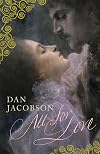
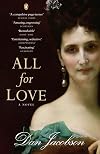
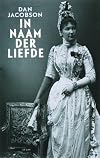
All for Love
by Dan Jacobson
On This Page
Description
She was a princess, the daughter of King Leopold II of the Belgians, the wife of a prince, and a familiar figure in the court of the aged Emperor, Franz Joseph of Austria-Hungary. Her lover was second lieutenant Geza Mattachich. Ten years younger than the princess, a dashing figure in his fitted tunic and shiny boots, he was an unknown, undistinguished, unmoneyed subaltern: a man of dubious origin and extravagant ambition. Ahead of them both lay assignations, adultery, flight, the show more squandering of a fortune (not his; not hers either, as things worked out), a duel, imprisonment, bankruptcy, morphine, madness (or alleged madness). And, as well, a real-life heroine - in the form of canteen-worker Maria Stoger - who was no less ready than the princess and her soldier to risk all for love. Beautifully handled, romantic, sumptuous, full of wit and a real treat to read, the action of Dan Jacobson's All For Love moves from one end to the other of pre-First World War Europe. show lessTags
Recommendations










Member Reviews
In All for Love, Dan Jacobson takes a true story, documented in two autobiographies by the participants, and invents his own fictional account of the tale.
Princess Louise was the daughter of King Leopold II of Belgium , and a cousin to Queen Victoria of England . She was indulged and spoiled, and unsurprisingly, when she grew older and married, soon grew bored and restless with her husband, whom she dubbed, “Fatso.”
When Louise met Geza Mettanich, it was instant and magnetic, their attraction. She soon began an audacious affair with him, going so far as to install him as a member of her household, demanding enormous favors of “Fatso,” and risking proper decorum by allowing herself to be seen going into a hotel room alone with show more her lover.
The King reached the limits of his royal patience, and summoned Louise to hear his verdict – she was to be banished from her home and from royal life. Louise seemed to think that this was a huge joke, and with Mettanich swept restlessly across the continent, setting up glamorous residences in Paris and Vienna , shopping exorbitantly and expecting “Fatso” to pick up the tab. This story is the thoughtless and scandalous remains of Louise and Geza's tattered love affair.
Dan Jacobson was reading a non-fiction book when he heard of this story, and wondered what it might be like to fictionalize the tale of two real-life people, especially ones who had written their own autobiographies. He embarked on the project.
While the writing in All for Love is exceptional, and at times transcendent, the reader becomes all too aware of how the lines between fiction and non-fiction blur. Jacobson's writing, in fact, suggests that he is merely reporting the facts, rather than imagining a long-past story. The novel is laden with footnotes, attributing quotes to various books that Jacobson used in his research, contributing to the impression that this, in fact, is a work of non-fiction. Jacobson veers back and forth between narrating a historical tale and addressing the reader in a conscious aside that references such modern technology as laser-guided missiles, television, and modern-day supermarkets. The effect is disjointed, often detracting from the narrative flow of the novel. show less
Princess Louise was the daughter of King Leopold II of Belgium , and a cousin to Queen Victoria of England . She was indulged and spoiled, and unsurprisingly, when she grew older and married, soon grew bored and restless with her husband, whom she dubbed, “Fatso.”
When Louise met Geza Mettanich, it was instant and magnetic, their attraction. She soon began an audacious affair with him, going so far as to install him as a member of her household, demanding enormous favors of “Fatso,” and risking proper decorum by allowing herself to be seen going into a hotel room alone with show more her lover.
The King reached the limits of his royal patience, and summoned Louise to hear his verdict – she was to be banished from her home and from royal life. Louise seemed to think that this was a huge joke, and with Mettanich swept restlessly across the continent, setting up glamorous residences in Paris and Vienna , shopping exorbitantly and expecting “Fatso” to pick up the tab. This story is the thoughtless and scandalous remains of Louise and Geza's tattered love affair.
Dan Jacobson was reading a non-fiction book when he heard of this story, and wondered what it might be like to fictionalize the tale of two real-life people, especially ones who had written their own autobiographies. He embarked on the project.
While the writing in All for Love is exceptional, and at times transcendent, the reader becomes all too aware of how the lines between fiction and non-fiction blur. Jacobson's writing, in fact, suggests that he is merely reporting the facts, rather than imagining a long-past story. The novel is laden with footnotes, attributing quotes to various books that Jacobson used in his research, contributing to the impression that this, in fact, is a work of non-fiction. Jacobson veers back and forth between narrating a historical tale and addressing the reader in a conscious aside that references such modern technology as laser-guided missiles, television, and modern-day supermarkets. The effect is disjointed, often detracting from the narrative flow of the novel. show less
In "All for Love" Dan Jacobson fleshes out the illicit affair carried on by Princess Louise of the Saxe-Coburgs (daughter of ghastly King Leopold of Belgium and married to a secondary prince of Austria-Hungary) and a jumped-up Croatian cavalryman who claimed a spurious nobility. The torrid affair elicited royal and societal disapproval, with all the weight such disapproval carries.
The story Jacobson weaves happened to real people, in turbulent late-19th and early- 20th century Europe. Jacobson uses primary sources - stories written by the lovers themselves - and adds his own reasoning and imagination to present the tale in novel form. Or he says he does. This construct doesn't really work for me. It never rises above the documentary show more form, in my opinion, and Jacobson is never very far from the surface, and often breaks through the narrative to address the reader directly.
The strong points here: we get knowing and compassionate protraits of flawed, spoiled, self-centered people, and follow their exploits to their logical ends: scandal, bankruptcy, fugitive flight, still more bankruptcy. At length we must take Louise and the cavalryman (Geza Mattachich by name) and their devotion at face value. Through desparate flight, imprisonment on both sides, his dalliances with other women, and all the notoriety attending, they never become estranged, never stop to wonder why they got together in the first place.
This is a diverting romp with two flawed and self-important lovers who remain true to each other. show less
The story Jacobson weaves happened to real people, in turbulent late-19th and early- 20th century Europe. Jacobson uses primary sources - stories written by the lovers themselves - and adds his own reasoning and imagination to present the tale in novel form. Or he says he does. This construct doesn't really work for me. It never rises above the documentary show more form, in my opinion, and Jacobson is never very far from the surface, and often breaks through the narrative to address the reader directly.
The strong points here: we get knowing and compassionate protraits of flawed, spoiled, self-centered people, and follow their exploits to their logical ends: scandal, bankruptcy, fugitive flight, still more bankruptcy. At length we must take Louise and the cavalryman (Geza Mattachich by name) and their devotion at face value. Through desparate flight, imprisonment on both sides, his dalliances with other women, and all the notoriety attending, they never become estranged, never stop to wonder why they got together in the first place.
This is a diverting romp with two flawed and self-important lovers who remain true to each other. show less
A book I appreciated rather than fully engaged with.
As it was based on a true event but fictionalised I did consistently wonder what was fact and what was conjecture and this did on occasion detract from my enjoyment
The historic footnotes where also distracting and did interupt the flow of the novel.
Geza and the Princess are truly mind boggling in their lack of thought about anything other than their mutual pleasure and I cannot imagine a similar scandal happening today.
The News of the World and National Enquirer would have had a field day with these two.
Overall a good book but not once I think I'll be returning too in a hurry
As it was based on a true event but fictionalised I did consistently wonder what was fact and what was conjecture and this did on occasion detract from my enjoyment
The historic footnotes where also distracting and did interupt the flow of the novel.
Geza and the Princess are truly mind boggling in their lack of thought about anything other than their mutual pleasure and I cannot imagine a similar scandal happening today.
The News of the World and National Enquirer would have had a field day with these two.
Overall a good book but not once I think I'll be returning too in a hurry
AARGGHH NO!
I am sorry, I couldn't do it. I got to page 18 struggling to concentrate. The footnotes are SO annoying, the writing style is irritating, and I just had to put it in my bag and find a paper on the train. I am shipping this off to Fleebo before the book get accidently wild released on a train when I fall asleep.
At least I tried!
I am sorry, I couldn't do it. I got to page 18 struggling to concentrate. The footnotes are SO annoying, the writing style is irritating, and I just had to put it in my bag and find a paper on the train. I am shipping this off to Fleebo before the book get accidently wild released on a train when I fall asleep.
At least I tried!
Ratings
Members
- Recently Added By
Lists

Booker Prize
491 works; 62 members

Man Booker Prize Longlist 2005
17 works; 3 members
Author Information

32+ Works 509 Members
Dan Jacobson was born in Johannesburg, South Africa on March 7, 1929. He received a degree in English from the University of Witwatersrand in 1949 and became a professor at University College London. He became a novelist and critic. His works include The Beginners, The Rape of Tamar, The Wonder Worker, The Confessions of Josef Baisz, The Story of show more the Stories: The Chosen People and Its God, and Heshel's Kingdom. He died on June 12, 2014 at the age of 85. (Bowker Author Biography) show less
Awards and Honors
Awards
Classifications
- Genres
- Fiction and Literature, General Fiction, Historical Fiction
- DDC/MDS
- 823.914 — Literature & rhetoric English & Old English literatures English fiction 1900- 1901-1999 1945-1999
- LCC
- PR9369.3 .J3 .A79 — Language and Literature English English Literature English literature: Provincial, local, etc.
- BISAC
Statistics
- Members
- 77
- Popularity
- 411,138
- Reviews
- 4
- Rating
- (2.64)
- Languages
- Dutch, English
- Media
- Paper, Ebook
- ISBNs
- 7
- ASINs
- 1