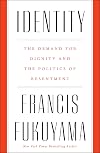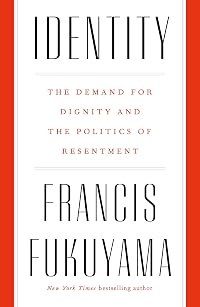
Identity: The Demand for Dignity and the Politics of Resentment
by Francis Fukuyama
On This Page
Description
"A provocative examination of modern identity politics: its origins, its effects, and what it means for our democracy and international affairs of state. In 2014, Francis Fukuyama wrote that American and global institutions were in a state of decay as the United States was captured by powerful interest groups. Two years later, his predictions were borne out by the rise to power of a series of political outsiders whose economic nationalism and authoritarian tendencies threatened to show more destabilize the entire international order. These populist nationalists seek direct charismatic connection to 'the people,' who are usually defined in narrow identity terms that offer an irresistible call to an in-group and exclude large parts of the population as a whole. The demands of identity fuel much of what is going on in world politics today. The universal recognition on which liberal democracy is founded has been increasingly challenged by restrictive forms of recognition and resentment based on nation, religion, sect, race, ethnicity, or gender, which have resulted in anti-immigrant populism, the upsurge of politicized Islam, the fractious environment of many college campuses, and the hideous emergence of white nationalism. The struggle for recognition cannot be transcended--but we must begin to direct it in a way that supports rather than undermines democracy. [This] is an urgent and necessary book: a sharp warning that unless we forge a universal understanding of human dignity, we will doom ourselves to continual conflict."--Dust jacket. show lessTags
Recommendations






























Member Reviews
Identifying is innate
Francis Fukuyama’ Identity starts off very badly, with a bizarre defense of his famous claim that the crumbling of the USSR and the dismantling of the Berlin Wall constituted “the end of history”. Like a Donald Trump (who gets more criticism than everyone else in the book combined), he doubles down on the statement by claiming what it says is nothing like what he meant. He claims to have used a completely different meaning for the word “end” as in “target” or “objective”. Similarly, “history” is actually a word from “Hegelian-Marxist terminology” meaning “development” or “modernization”. Finally, the original use, as an essay title, had a question mark at the end (the later book of show more the same title did not). So apparently, Fukuyama was saying “The Objective of Modernization?” but it came out End of History. Our bad. It all reminds me of the Rodney King trial, in which police lawyers made the jury review every frame of the beating video until they “proved” that no beating ever took place.
With that out of the way, Identity settles down into a treatise on identity through the ages. From Socrates lecturing on choices to Rousseau on how the first man to have found a use for minerals claimed the land it was on as his own private property – and everybody acquiescing. Next up is Martin Luther, who disintermediated the Catholic Church – or thought he did. Through it all, identity kept changing.
Fukuyama’s current thinking is that there are three parts to identity – thymos, or need for recognition, the recognition of the inner self as opposed to the outer, and dignity, which touches on respect and equality.
His excuse for the disappearance of the left worldwide, particularly in an era of increasingly outrageous inequality is that the message was “misdelivered by the post office”. It went to religions and to nationalists instead of classes. Later, he adds that the left abandoned the masses for specific groups, thus losing the support of the many. Meanwhile identity became enormously fashionable in elections.
Identity is a non-economic analysis of how we got where we are, replacing the rise of capitalism and neoliberalism with the rise of active government and isothymia- the need for recognition by individuals.
Identity reads like a TED talk. An awful lot on one subject, a lot of top line headlines, with not much new information, and little in the way of new insight. Fukuyama deals with the tribalism of Man by ignoring it. He skips straight to nation-states, where borders move, governments change, and international agreements all make keeping a consistent identity difficult. This is a very old frustration for citizens all over the world. Mort Sahl used to say that anyone who kept a consistent foreign policy position in America would eventually have to be tried for treason. Identity is the same kind of moving target. (Or end.)
What Fukuyama misses completely is the splintering back into tribes. There was an era when it was thought bodies like the League of Nations or United Nations could unite us and actually speak for us. But the opposite is happening. Countries are riven by independence movements of tiny enclaves. Nations bristle at the thought of regional associations like the European Union having jurisdiction over them. Everyone seems to be identifying with smaller and smaller groups.
Identity is in a constant flux of redefinition. Lead, follow, or get out of the way. That’s all that need be said. It’s not really worth a whole book.
David Wineberg show less
Francis Fukuyama’ Identity starts off very badly, with a bizarre defense of his famous claim that the crumbling of the USSR and the dismantling of the Berlin Wall constituted “the end of history”. Like a Donald Trump (who gets more criticism than everyone else in the book combined), he doubles down on the statement by claiming what it says is nothing like what he meant. He claims to have used a completely different meaning for the word “end” as in “target” or “objective”. Similarly, “history” is actually a word from “Hegelian-Marxist terminology” meaning “development” or “modernization”. Finally, the original use, as an essay title, had a question mark at the end (the later book of show more the same title did not). So apparently, Fukuyama was saying “The Objective of Modernization?” but it came out End of History. Our bad. It all reminds me of the Rodney King trial, in which police lawyers made the jury review every frame of the beating video until they “proved” that no beating ever took place.
With that out of the way, Identity settles down into a treatise on identity through the ages. From Socrates lecturing on choices to Rousseau on how the first man to have found a use for minerals claimed the land it was on as his own private property – and everybody acquiescing. Next up is Martin Luther, who disintermediated the Catholic Church – or thought he did. Through it all, identity kept changing.
Fukuyama’s current thinking is that there are three parts to identity – thymos, or need for recognition, the recognition of the inner self as opposed to the outer, and dignity, which touches on respect and equality.
His excuse for the disappearance of the left worldwide, particularly in an era of increasingly outrageous inequality is that the message was “misdelivered by the post office”. It went to religions and to nationalists instead of classes. Later, he adds that the left abandoned the masses for specific groups, thus losing the support of the many. Meanwhile identity became enormously fashionable in elections.
Identity is a non-economic analysis of how we got where we are, replacing the rise of capitalism and neoliberalism with the rise of active government and isothymia- the need for recognition by individuals.
Identity reads like a TED talk. An awful lot on one subject, a lot of top line headlines, with not much new information, and little in the way of new insight. Fukuyama deals with the tribalism of Man by ignoring it. He skips straight to nation-states, where borders move, governments change, and international agreements all make keeping a consistent identity difficult. This is a very old frustration for citizens all over the world. Mort Sahl used to say that anyone who kept a consistent foreign policy position in America would eventually have to be tried for treason. Identity is the same kind of moving target. (Or end.)
What Fukuyama misses completely is the splintering back into tribes. There was an era when it was thought bodies like the League of Nations or United Nations could unite us and actually speak for us. But the opposite is happening. Countries are riven by independence movements of tiny enclaves. Nations bristle at the thought of regional associations like the European Union having jurisdiction over them. Everyone seems to be identifying with smaller and smaller groups.
Identity is in a constant flux of redefinition. Lead, follow, or get out of the way. That’s all that need be said. It’s not really worth a whole book.
David Wineberg show less
If you're confused about the place of national identity vs identity politics based on gender, race and other group characteristics in the contemporary West, then you can find fewer deeply learned guides than Fukuyama through this terrain. A call to develop a kind of inclusive nationalism, and a reminder of the dangers of ethno-nationalism from the right and diversity celebration without recognition of civic virtues by some on the left. Fukuyama reminds us of the importance of citizenship in a nation that is based on some common commitments such as the rule of law, speaking a common language and knowing something about the history of the country one is living in.
The last thing I read of Fukuyama was [b:The End of History and the Last Man|57981|The End of History and the Last Man|Francis Fukuyama|https://images.gr-assets.com/books/1391572633s/57981.jpg|56476], over 20 years ago. It was a beautifully reasoned analysis of then-current events. This book is every bit as good.
Fukuyama traces the evolution of "identity" as a social/political construct, starting with Aristotle. In some eras, "identity" has referred more to what the individual owes the state. In others, like ours, identity takes on more of an internal definition, one that demands something of the state. If all that matters in a nation is the ways in which we're different, and if we put an ever finer-toothed-comb on how we see show more difference, and if we focus identity on gaining respect for how we differ from each other, it's not hard to see that any unifying culture becomes impossible. This is the direction much of the industrialized world is going -
It's a short book, and well worth your time. show less
Fukuyama traces the evolution of "identity" as a social/political construct, starting with Aristotle. In some eras, "identity" has referred more to what the individual owes the state. In others, like ours, identity takes on more of an internal definition, one that demands something of the state. If all that matters in a nation is the ways in which we're different, and if we put an ever finer-toothed-comb on how we see show more difference, and if we focus identity on gaining respect for how we differ from each other, it's not hard to see that any unifying culture becomes impossible. This is the direction much of the industrialized world is going -
It's a short book, and well worth your time. show less
3.5 stars: there is nothing really new here, and there is nothing horribly, terribly wrong here, either. I wish that there was a little more explicit attention paid to e.g. the history of "identity politics" as used to justify slavery, Jim Crow, etc. Then again, maybe Fukuyama felt that, especially in a short work, the obvious didn't need to be stated (if you don't understand that the power of white racism was nigh 100% expressed through identity politics, up to and including making it legal to own, torture, kill, etc. people, then you are hopelessly lost; to state it as boilerplate just to prove you know it is nothing but virtue signaling...) Nonetheless, there were a couple of moments where I was left with of a bit of a sense that a show more false equivalency was being made.
The biggest drawback for me was that the book, for being so short, zoomed out to the broad international, then to the US, then to the EU/EU region, back to the US, etc. A tighter focus would have helped make his point more strongly.
Some reviews seem angry that Fukuyama falls into the trap of claiming that activists/minorities/women/etc. invented identity politics or some such. I do not get that read at all. Modern IP (60's - 10's) is a creature of the left. The never-quite-gone-away and neo-nativist IP of white identitarians is a reaction to that left IP. That doesn't deny the fact that there is continuity with white racisms of the past, or that racism is an animator of those politics today.
What is new, what the book is about, is the growing (and some would say already outsized) role IP plays on the left, how that has displaced (imperfectly) more universal groupings, and where all that, in tandem with the already existing white racism and white identity politics that is being consolidated by the right, will lead us. I think reviews like e.g. Mehrsa's somewhat miss this point.
It critiques like that (couched as a critique of historical accuracy) that makes me reflect on the confusions --or the continuums-- that I sum up as Identity Politics != politics with an identity != having social identities != tribalism != personal identities.
A critique of the book that I would give, and a critique of the critiques I've read, is that they don't seem to acknowledge how grievance/desire for respect can move separately from political, or even social, activity. Though, I suppose, it depends on what you mean by the word. A desire for acceptance isn't necessarily the same as a desire for dignity/respect...
There is definitely a lot here to think about, even if ultimately I think the book leaves a lot to be desired. show less
The biggest drawback for me was that the book, for being so short, zoomed out to the broad international, then to the US, then to the EU/EU region, back to the US, etc. A tighter focus would have helped make his point more strongly.
Some reviews seem angry that Fukuyama falls into the trap of claiming that activists/minorities/women/etc. invented identity politics or some such. I do not get that read at all. Modern IP (60's - 10's) is a creature of the left. The never-quite-gone-away and neo-nativist IP of white identitarians is a reaction to that left IP. That doesn't deny the fact that there is continuity with white racisms of the past, or that racism is an animator of those politics today.
What is new, what the book is about, is the growing (and some would say already outsized) role IP plays on the left, how that has displaced (imperfectly) more universal groupings, and where all that, in tandem with the already existing white racism and white identity politics that is being consolidated by the right, will lead us. I think reviews like e.g. Mehrsa's somewhat miss this point.
It critiques like that (couched as a critique of historical accuracy) that makes me reflect on the confusions --or the continuums-- that I sum up as Identity Politics != politics with an identity != having social identities != tribalism != personal identities.
A critique of the book that I would give, and a critique of the critiques I've read, is that they don't seem to acknowledge how grievance/desire for respect can move separately from political, or even social, activity. Though, I suppose, it depends on what you mean by the word. A desire for acceptance isn't necessarily the same as a desire for dignity/respect...
There is definitely a lot here to think about, even if ultimately I think the book leaves a lot to be desired. show less
3.5
After hearing about the book on NPR my husband suggested I read Identity: The Demand for Dignity and the Politics of Resentment by Frances Fukuyama.
One thing I appreciated about this book is how the author presents his arguments, explains them, and before he moves on restates his case to that point. It really makes it easier for the general reader because this is a theoretical book.
The author begins with a brief history of the development of identity, from the ancient Greeks through the Reformation and the Age of Enlightenment and revolutions in France and America to establish the rising concept of individual's need for dignity and personal recognition. He discusses how democratic governments have failed to "fully live up to their show more underlying ideals of freedom and equality," with the violation of the rights of the poor and weaker citizens at the hand of the few rich and powerful.
Another aspect he traces is the rise of industrialization and cities which broke down traditional communities. The social upheaval and adjustment to a blended society left a nostalgia for a remembered and idealized past.
He blames the contemporary left for focusing on "ever smaller groups" instead of "large collectivities such as the working class or economically exploited." He also blames the rise of "self-actualization" as a form of narcissism. He sees the rise of Multiculturalism as divisive. Fukuyama calls for the need of a strong national identity, with an official language and civics classes and share cultural values. This need not negate diversity. He writes, 'National identities can be built around liberal and democratic political values, and the common experiences that provide the connect tissue around which diverse communities can thrive." He mentions India, France, Canada as countries who have successfully created a strong national identity that embraces a diverse population.
Fukuyama asks, "How do we translate these abstract ideas into concrete policies at the current movement?" He continues, "We can start by trying to counter the specific abuses that have driven assertions of identity," by protecting the rights of minorities and women, and promoting "creedal national identities" based on the ideals of a liberal democracy. He also calls for better assimilation of immigrants.
My frustration is that the policies presented are not easily or quickly accomplished. This past week Democratic leaders were targeted with pipe bombs and a gunman walked into a synagogue and murdered Jewish worshippers. A friend told me her coworkers believe that these events are hoaxes propagated by Democrats. Considering the political leaders who are today in control of the American government, I don't see the implementation of any useful policies coming out of Washington, D.C.
Theis book was a challenging reads and I am glad I read it but I left with the need for something more to hold on to, something concrete that offers me real hope and surety. show less
After hearing about the book on NPR my husband suggested I read Identity: The Demand for Dignity and the Politics of Resentment by Frances Fukuyama.
One thing I appreciated about this book is how the author presents his arguments, explains them, and before he moves on restates his case to that point. It really makes it easier for the general reader because this is a theoretical book.
The author begins with a brief history of the development of identity, from the ancient Greeks through the Reformation and the Age of Enlightenment and revolutions in France and America to establish the rising concept of individual's need for dignity and personal recognition. He discusses how democratic governments have failed to "fully live up to their show more underlying ideals of freedom and equality," with the violation of the rights of the poor and weaker citizens at the hand of the few rich and powerful.
Another aspect he traces is the rise of industrialization and cities which broke down traditional communities. The social upheaval and adjustment to a blended society left a nostalgia for a remembered and idealized past.
He blames the contemporary left for focusing on "ever smaller groups" instead of "large collectivities such as the working class or economically exploited." He also blames the rise of "self-actualization" as a form of narcissism. He sees the rise of Multiculturalism as divisive. Fukuyama calls for the need of a strong national identity, with an official language and civics classes and share cultural values. This need not negate diversity. He writes, 'National identities can be built around liberal and democratic political values, and the common experiences that provide the connect tissue around which diverse communities can thrive." He mentions India, France, Canada as countries who have successfully created a strong national identity that embraces a diverse population.
Fukuyama asks, "How do we translate these abstract ideas into concrete policies at the current movement?" He continues, "We can start by trying to counter the specific abuses that have driven assertions of identity," by protecting the rights of minorities and women, and promoting "creedal national identities" based on the ideals of a liberal democracy. He also calls for better assimilation of immigrants.
My frustration is that the policies presented are not easily or quickly accomplished. This past week Democratic leaders were targeted with pipe bombs and a gunman walked into a synagogue and murdered Jewish worshippers. A friend told me her coworkers believe that these events are hoaxes propagated by Democrats. Considering the political leaders who are today in control of the American government, I don't see the implementation of any useful policies coming out of Washington, D.C.
Theis book was a challenging reads and I am glad I read it but I left with the need for something more to hold on to, something concrete that offers me real hope and surety. show less
Rather than read the often distorting reviews, I suggest you read the book itself. It is a slim volume that is well-thought out and guaranteed to irritate the extremes of right and left. But Fukuyama's is a reasoned analysis and empathetic review of much of what ails the modern liberal democracy today.
I received an advanced copy of this book from NetGalley. I found it to be a thought-provoking, accessible, and timely book on political philosophy. I think it's deserving of 4.5 stars, so I rounded up. Fukuyama examines the history of how Western democracies ended up with the problem of identity politics and offers ideas for positive change. I liked that the book ended on a hopeful note considering the current state of politics.
Members
- Recently Added By
Author Information

67+ Works 8,211 Members
Yoshihiro Francis Fukuyama was born October 27, 1952 in the Hyde Park neighborhood of Chicago. Fukuyama received his Bachelor of Arts degree in classics from Cornell University, where he studied political philosophy under Allan Bloom. He initially pursued graduate studies in comparative literature at Yale University, going to Paris for six months show more to study under Roland Barthes and Jacques Derrida, but became disillusioned and switched to political science at Harvard University. There, he studied with Samuel P. Huntington and Harvey Mansfield, among others. He earned his Ph.D. in Political Science from Harvard for his thesis on Soviet threats to intervene in the Middle East. In 1979, he joined the global policy think tank RAND Corporation. Fukuyama was the Omer L. and Nancy Hirst Professor of Public Policy in the School of Public Policy at George Mason University from 1996 to 2000. Until July 10, 2010, he was the Bernard L. Schwartz Professor of International Political Economy and Director of the International Development Program at the Paul H. Nitze School of Advanced International Studies of Johns Hopkins University, located in Washington, D.C. He is now Olivier Nomellini Senior Fellow and resident in the Center on Democracy, Development, and the Rule of Law at the Freeman Spogli Institute for International Studies at Stanford University. Fukuyama is best known as the author of The End of History and the Last Man, in which he argued that the progression of human history as a struggle between ideologies is largely at an end, with the world settling on liberal democracy after the end of the Cold War and the fall of the Berlin Wall in 1989. Fukuyama predicted the eventual global triumph of political and economic liberalism. He has written a number of other books, among them Trust: The Social Virtues and the Creation of Prosperity and Our Posthuman Future: Consequences of the Biotechnology Revolution. His latest work The Origins of Political Order: From Prehistoric Times to the French Revolution made Publisher's Weekly Best Seller's List for 2011. (Bowker Author Biography) show less
Awards and Honors
Distinctions
The Guardian Book of the Day (2018-09-29)
Classifications
- Genres
- Politics and Government, Philosophy, Nonfiction, General Nonfiction
- DDC/MDS
- 320.01 — Society, government, & culture Political science Types of Government Political Science Philosophy and Theory
- LCC
- JF799 .F85 — Political Science Political institutions and public administration Political institutions and public administration General. Comparative government Political rights. Political participation
- BISAC
Statistics
- Members
- 559
- Popularity
- 53,225
- Reviews
- 12
- Rating
- (3.71)
- Languages
- 8 — Dutch, English, Finnish, German, Italian, Polish, Portuguese, Spanish
- Media
- Paper, Audiobook, Ebook
- ISBNs
- 22
- ASINs
- 5