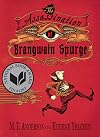
The Assassination of Brangwain Spurge
by M. T. Anderson, Eugene Yelchin (Illustrator)
On This Page
Description
"Uptight elfin historian Brangwain Spurge is on a mission: survive being catapulted across the mountains into goblin territory, deliver a priceless peace offering to their mysterious dark lord, and spy on the goblin kingdom -- from which no elf has returned alive in more than a hundred years. Brangwain's host, the goblin archivist Werfel, is delighted to show Brangwain around. They should be the best of friends, but a series of extraordinary double crosses, blunders, and cultural show more misunderstandings throws these two bumbling scholars into the middle of an international crisis that may spell death for them -- and war for their nations. Witty mixed media illustrations show Brangwain's furtive missives back to the elf kingdom, while Werfel's determinedly unbiased narrative tells an entirely different story." -- From publisher. show lessTags
Recommendations


Member Reviews
This illustrated novel for young people reads quickly and engagingly -- I polished it off easily in just a couple of hours. The reason for that is one of the book's most interesting features: interstitial chapters that consist entirely of illustrations and move the story along in fascinating and sometimes contradictory ways. How fast you move through the book may depend on how long you linger on the images, more than how fast you read; Yelchin's artistic style is as intriguing as the prose and we follow the path of a certain elfin ambassador to the goblin kingdom from different points of view in each mode.
The attentive adult reader will probably see the book's lesson coming from the very first interaction between prose chapter and show more illustrated chapter -- this is a book about political misunderstandings and the perceptions two cultures hold about each other and anyone in tune with the current moment knows how relevant such a topic might be just now -- and each set shows us that elves and goblins can have very different takes on the same event. The plot is classic folklore/fantasy, with some quite pointed updates that make it feel fresh and pertinent. Anderson and Yelchin share a sharp sense of humor, which reveals itself verbally and visually throughout.
While I don't know that such a book will be the thing that many children select off the shelf for themselves, it is well worth reading and well worth handing to the smart kid in your life, so that they can learn the lesson within, and handing to the grown-ups in life so that they can be reminded of what they should have learned long ago. show less
The attentive adult reader will probably see the book's lesson coming from the very first interaction between prose chapter and show more illustrated chapter -- this is a book about political misunderstandings and the perceptions two cultures hold about each other and anyone in tune with the current moment knows how relevant such a topic might be just now -- and each set shows us that elves and goblins can have very different takes on the same event. The plot is classic folklore/fantasy, with some quite pointed updates that make it feel fresh and pertinent. Anderson and Yelchin share a sharp sense of humor, which reveals itself verbally and visually throughout.
While I don't know that such a book will be the thing that many children select off the shelf for themselves, it is well worth reading and well worth handing to the smart kid in your life, so that they can learn the lesson within, and handing to the grown-ups in life so that they can be reminded of what they should have learned long ago. show less
 This review was written for LibraryThing Early Reviewers.
M. T. Anderson-- my favorite working YA writer-- has a new book out, The Assassination of Brangwain Spurge. It gives equal billing to its illustrator, Eugene Yelchin, and this is because it's a story where words and images are of equal importance. Sometimes the images offer a different set of events than the words; at other times, the images convey events not directly indicated in the text at all. It's about two scholars from warring nations, a goblin and an elf. The text gives the goblin's perspective as he accommodates an elfin guest; the images show the spy reports the elf is sending back to HQ. (There's also occasional letters from an elfin spymaster to their king.)
It's clever, though given it's by M. T. Anderson, I kind of wanted show more it to be cleverer; by the book's end, it's clear that the text is usually accurate and the illustrations not, and I would have appreciated more ambiguity. It's also a bit lightweight. Which isn't a problem, I don't think Anderson was aiming for the kind of depth of character he went for in Feed or Octavian Nothing or even Landscape with Invisible Hand. It's a cute idea, well executed, with some decent jokes, and you do come to like this odd couple by the novel's end. (The way they achieve their joint comeuppance over the military through scholarly debate is quite nice.)
The art and book design are excellent. Yelchin's style makes me think of medieval art, it's all grotesque, and delightful in its grotesqueries. Really unique, and perfectly suited to the project, given it's an elf's understanding of a goblin civilization. Lots of imagination.
For any other writer, this would probably be a high watermark; for Anderson, it's just another pretty good book. show less
It's clever, though given it's by M. T. Anderson, I kind of wanted show more it to be cleverer; by the book's end, it's clear that the text is usually accurate and the illustrations not, and I would have appreciated more ambiguity. It's also a bit lightweight. Which isn't a problem, I don't think Anderson was aiming for the kind of depth of character he went for in Feed or Octavian Nothing or even Landscape with Invisible Hand. It's a cute idea, well executed, with some decent jokes, and you do come to like this odd couple by the novel's end. (The way they achieve their joint comeuppance over the military through scholarly debate is quite nice.)
The art and book design are excellent. Yelchin's style makes me think of medieval art, it's all grotesque, and delightful in its grotesqueries. Really unique, and perfectly suited to the project, given it's an elf's understanding of a goblin civilization. Lots of imagination.
For any other writer, this would probably be a high watermark; for Anderson, it's just another pretty good book. show less
This review was written for LibraryThing Early Reviewers.So. Damn. Good.
The first thing that grabbed me was the art. The illustrations are…well, they’re like Albrecht Dürer and Edward Gorey had a baby but then tragically died so the child had to be raised by Hieronymus Bosch. The people who say, “don’t judge a book by its cover” and, “the pictures aren’t the most important part, you know,” are the same cheap-asses who don’t want to pay to hire a decent designer. People haven’t been gawping over the Book of Kells for 1,200 years because it was so well-written. The artwork is freaking great and deserves to be noticed. Besides, what makes the illustrations especially especial this time around is that they’re not just embellishments to the story, they’re an essential show more part of it, being another point of view.
Not that the story isn’t good too! Brief synopsis: The elf and goblin kingdoms have been at war for centuries. A pair of well-meaning academics (historians; Brangwain the elf, Werfel the goblin) believe they are trying to make peace and foster an era of cultural exchange and understanding. But the politicians have a completely different agenda in mind. Don’t they always. Seriously, there are the official party lines, then there’s what they tell their operatives is the ‘real’ agenda, and then there’s what they tell themselves about what they told the operatives to cover up what the REAL ‘real’ agenda is. It's not all deliberate deception, either. Our two protagonists, being from vastly different cultures, give very different accounts of the same events (the elf via the illustrations, the goblin through the text). Eventually our heroes reach an understanding, but it’s handled with subtlety and realism, there’s nothing preachy, sanctimonious, or “Oh, look how woke we are!” about it.
This story is basically an object lesson in double-speak, deception, and well-meant good intentions being completely misinterpreted. A great deal of cultural exchange is insulting, and two-thirds of diplomacy is trying not to be offended long enough to realize that you have nothing to be offended by. And to think this book was intended for mere 10 to teen-year-olds! These are highly useful social skills being laid out that many adults I could mention could use a refresher course in. Particularly in these irritating times when even people who are on the same side of the fence, politically speaking, are ready to bite each other’s heads off over the least little thing. Forget Call of the Wild and crap like that, THIS should be required reading in schools.
All in all, it's an especially great book for kids because it’s never too early to start teaching one’s children about the duplicity of those in power: “You were useful,” said Werfel. “But just because you’re useful to the wealthy doesn’t mean they’ll reward you. It just means they’ll use you.” show less
The first thing that grabbed me was the art. The illustrations are…well, they’re like Albrecht Dürer and Edward Gorey had a baby but then tragically died so the child had to be raised by Hieronymus Bosch. The people who say, “don’t judge a book by its cover” and, “the pictures aren’t the most important part, you know,” are the same cheap-asses who don’t want to pay to hire a decent designer. People haven’t been gawping over the Book of Kells for 1,200 years because it was so well-written. The artwork is freaking great and deserves to be noticed. Besides, what makes the illustrations especially especial this time around is that they’re not just embellishments to the story, they’re an essential show more part of it, being another point of view.
Not that the story isn’t good too! Brief synopsis: The elf and goblin kingdoms have been at war for centuries. A pair of well-meaning academics (historians; Brangwain the elf, Werfel the goblin) believe they are trying to make peace and foster an era of cultural exchange and understanding. But the politicians have a completely different agenda in mind. Don’t they always. Seriously, there are the official party lines, then there’s what they tell their operatives is the ‘real’ agenda, and then there’s what they tell themselves about what they told the operatives to cover up what the REAL ‘real’ agenda is. It's not all deliberate deception, either. Our two protagonists, being from vastly different cultures, give very different accounts of the same events (the elf via the illustrations, the goblin through the text). Eventually our heroes reach an understanding, but it’s handled with subtlety and realism, there’s nothing preachy, sanctimonious, or “Oh, look how woke we are!” about it.
This story is basically an object lesson in double-speak, deception, and well-meant good intentions being completely misinterpreted. A great deal of cultural exchange is insulting, and two-thirds of diplomacy is trying not to be offended long enough to realize that you have nothing to be offended by. And to think this book was intended for mere 10 to teen-year-olds! These are highly useful social skills being laid out that many adults I could mention could use a refresher course in. Particularly in these irritating times when even people who are on the same side of the fence, politically speaking, are ready to bite each other’s heads off over the least little thing. Forget Call of the Wild and crap like that, THIS should be required reading in schools.
All in all, it's an especially great book for kids because it’s never too early to start teaching one’s children about the duplicity of those in power: “You were useful,” said Werfel. “But just because you’re useful to the wealthy doesn’t mean they’ll reward you. It just means they’ll use you.” show less
Two academics, an elf and a goblin, meet as representatives of their eternally-warring kingdoms to learn more about each other. At least, that's what they think. But really, the elf Brangwain Spurge is disliked by his peers and was sent to the Kingdom of Goblins to get rid of him. The elves are using the "research" about goblins that Brangwain transmits back home as intel to plan an invasion. In the Kingdom of Goblins, Brangwain is such a bigoted jerk to all the goblins that he and his host, Werfel the Archivist, goblin historian, have to go on the run together or face execution. But they'll be fine, because the other elves will totally come rescue Brangwain, right?
This story is told in three forms. Some scenes are beautiful, black and show more white, wordless illustrations by Eugene Yelchin which represent the images that Brangwain transmits back to Elfland, other sections are letters from Brangwain's boss to the King of Elfland, and the remaining scenes are straightforward prose narrative from Werfel's point of view. While a fascinating premise, which made the pages fly by, the result felt a little lop-sided. The story is about two educated men realizing that they have been fed propaganda their whole lives, and learning who their "enemy" really is as a person. But that message is a little undercut by having two-thirds of the book from elf POV and one from goblin POV. Brangwain is presented as having a lot more growing to do than Werfel. Also, the goblins are led by a giant octopus that came from another planet specifically to be king of the goblins and this is just never examined??
Overall, a very enjoyable read with a great message, though not as poignant as it could be. I'm not sure what age it's exactly written for, but adults will definitely appreciate it. show less
This story is told in three forms. Some scenes are beautiful, black and show more white, wordless illustrations by Eugene Yelchin which represent the images that Brangwain transmits back to Elfland, other sections are letters from Brangwain's boss to the King of Elfland, and the remaining scenes are straightforward prose narrative from Werfel's point of view. While a fascinating premise, which made the pages fly by, the result felt a little lop-sided. The story is about two educated men realizing that they have been fed propaganda their whole lives, and learning who their "enemy" really is as a person. But that message is a little undercut by having two-thirds of the book from elf POV and one from goblin POV. Brangwain is presented as having a lot more growing to do than Werfel. Also, the goblins are led by a giant octopus that came from another planet specifically to be king of the goblins and this is just never examined??
Overall, a very enjoyable read with a great message, though not as poignant as it could be. I'm not sure what age it's exactly written for, but adults will definitely appreciate it. show less
This review was written for LibraryThing Early Reviewers.The elves and goblins have been at war for as long as most people can remember. In a time of relative peace, when they discover what appears to be a goblin artifact, the elves decide to send it back to the goblin kingdom via ambassador in a gesture of goodwill. The elf chosen for this seemingly illustrious task is weedy historian Brangwain Spurge. Without further ado, Brangwain is sent via cannon shot to the goblin kingdom, with strict orders to report back via magical transmission as often as possible. Eagerly awaiting him is his goblin historian counterpart, Werfel, who is excited to welcome a fellow historian into his home, discuss elven and goblin culture, and show Brangwain around the goblin kingdom. But before they can be friends, show more Brangwain and Werfel will have to overcome ingrained differences and prejudices -- not to mention two whole kingdoms stacked against them.
This was such an interesting book! Told in alternating chapters of Anderson's prose and Yelchin's drawings (similar to The Invention of Hugo Cabret), the two authors create an extremely compelling world. This book is more than just a fantasy story -- the two authors use their storytelling mediums to show how appearances can be deceiving and impressions can be entirely wrong, as sometimes the words and images will totally contradict each other -- just like Werfel and Brangwain's impressions of what is going on. Really well done, and a really quick read once you get into it. I had trouble acclimating to the prose/images style the first few times I tried to start. One thing is certain -- I don't think anything Anderson writes is anything like anything else he has written. Despite that, I've enjoyed all of his books I've read for entirely different reasons. show less
This was such an interesting book! Told in alternating chapters of Anderson's prose and Yelchin's drawings (similar to The Invention of Hugo Cabret), the two authors create an extremely compelling world. This book is more than just a fantasy story -- the two authors use their storytelling mediums to show how appearances can be deceiving and impressions can be entirely wrong, as sometimes the words and images will totally contradict each other -- just like Werfel and Brangwain's impressions of what is going on. Really well done, and a really quick read once you get into it. I had trouble acclimating to the prose/images style the first few times I tried to start. One thing is certain -- I don't think anything Anderson writes is anything like anything else he has written. Despite that, I've enjoyed all of his books I've read for entirely different reasons. show less
This review was written for LibraryThing Early Reviewers.This review and others posted over at my blog.
I won a copy of this book from LibraryThing in exchange for my honest review.
I had zero idea what to expect when I requested this book from LibraryThing – I just love M.T. Anderson and I’m a sucker for illustrated novels. This book blew my non-existent expectations out of the water!
First, let’s talk format. In case you missed it, I’ve already done a Judging post (because how could I not?!) and I’m head over heels for this entire book design. Yelchin (yes, related to Anton) knocked this out of the park and I’m happy to see Candlewick publish this hardcover with gold foil accents and debossed title. From title page to endpapers to bookplate, every page was thoughtfully designed. We show more need more books like this!
On top of the fantastic design, the illustrations aren’t just embellishments for the story, they tell part of it! Everything from Spurge’s point of view is told via Yelchin’s detailed illustrations. The narrative follows Werfel and his thoughts, which are often opposed by what Spurge’s images depict. It was an interesting concept and not one I’ve encountered before.
Through Spurge’s eyes, readers see a terrifying world of hideous goblins and the creatures they control. As Werfel tries to show his guest the finest entertainments goblins have to offer and provide him with the choicest meals, Spurge is focused on his mission to protect the artifact until such time as he can present it to the goblin leader (which happens to be a mysterious creature from space). Spurge reports his findings back to his homeland by going into a magical trance and transmitting his images which are printed out for his superiors to peruse.
Periodically there are letters from Lord Clivers, spymaster to the elfin king, which reveal another layer of the plot and also provide some extra humor. But the majority of the tale is told from Werfel’s perspective. I never imagined I’d identify with a goblin.
Werfel is an archivist nerd through and through. He’s so excited to talk history and compare notes and share local artifacts and customs with his visitor. He’s concerned for Spurge’s journey across the land, hoping the emissary is comfortable – meanwhile, Spurge was placed in a barrel and fired from a giant trebuchet – and all the while he is prepping the champagne fountain and wondering if elves enjoy complimentary chocolates on their pillows.
Werfel does his best to accommodate the downright rude Spurge, all the while still dreaming of sharing their historical knowledge and hoping for friendship to blossom. Werfel is nerdy, nervous and polite, but throughout the story, grows a backbone and defends his people against constant insults from Spurge. I really loved Werfel – he’s a goblin I can get behind and I totally relate to the mix of anxiety and excitement revolving around meeting new people and wanting them to become your friend. I never warmed to Spurge, though I think maybe I was supposed to by the end. He’s just such a dink! Werfel and Spurge definitely fall into the unlikely duo category and despite my dislike of Spurge, I loved their interactions.
This story, at its heart, is about understanding the differences and similarities between different nations and being open to the views of others. Trust me, I was surprised this goofy, illustrated book elf and goblin relations had some pretty clear messages to deliver.
There’s plenty of disagreement about who started the wars that drove the goblins out of the forests near the elfin kingdoms, but more poignant are the differences between the two races. Readers come to learn many of Spurge’s views of the goblin city and race in general are based on his assumptions and prejudices, rather than the reality that surrounds him.
Werfel references an old saying…
“In the end, goblins and elves were not so different, were they? Werfel thought of the old saying: Elf and goblin, we all have pointy ears. So true.”
…and it’s certainly one of the central themes of the story. (“Milliebot, you actually notice themes?” I can hear you asking. And yes, sometimes I do!)
We even gain insight through one of Lord Clivers’s letters – the general view of elves is that goblins are savage and unrefined. One such example Clivers writes about is how goblin women fight alongside their men and he describes them as strong “ugly beasts.” He then goes on to comment that elfin beauties are “bred for their delicacy to be ornaments to society” and that goblins lack nobility and chivalry because they don’t view their women the same way. Boy did that rankle my modern feminist sensibilities!
There’s a lot of talk about personal growth from Werfel. Goblins shed their skins every few years as they grow. Werfel talks about this often, as Spurge finds it disgusting and disturbing, and I’ve highlighted a few of his eloquent examples:
In reference to keeping previously shed skins – “It’s important to see who you’re growing into and who you used to be.”
“It happens every few years. It itches at first. All over your body. And you flake. But it is also a matter of pride. It means you are becoming someone new. You have grown to the point where your old shape is no longer exactly your new shape.”
It’s maybe a stretch, but you could compare it to keeping a photo album (which, I shudder to think, is probably antiquated in this day and age) or even an Instagram account and looking back at photos of yourself. They tell a story of who you were and where you’ve been.
Look, this book is just friggen’ awesome. It’s touching, it’s funny, there’s action and beautiful, detail illustrations. It’s somehow relatable, despite how far-fetched it as at times and I would love to see more from this duo and the world they created!
I most certainly recommend if:
+ You love well-designed, lavishly illustrated, beautiful-to-behold books
+ You’re looking for a middle-grade fantasy that’s fun and meaningful (whether a younger or older reader)
+ You like finding unexpected characters to identify with show less
I won a copy of this book from LibraryThing in exchange for my honest review.
I had zero idea what to expect when I requested this book from LibraryThing – I just love M.T. Anderson and I’m a sucker for illustrated novels. This book blew my non-existent expectations out of the water!
First, let’s talk format. In case you missed it, I’ve already done a Judging post (because how could I not?!) and I’m head over heels for this entire book design. Yelchin (yes, related to Anton) knocked this out of the park and I’m happy to see Candlewick publish this hardcover with gold foil accents and debossed title. From title page to endpapers to bookplate, every page was thoughtfully designed. We show more need more books like this!
On top of the fantastic design, the illustrations aren’t just embellishments for the story, they tell part of it! Everything from Spurge’s point of view is told via Yelchin’s detailed illustrations. The narrative follows Werfel and his thoughts, which are often opposed by what Spurge’s images depict. It was an interesting concept and not one I’ve encountered before.
Through Spurge’s eyes, readers see a terrifying world of hideous goblins and the creatures they control. As Werfel tries to show his guest the finest entertainments goblins have to offer and provide him with the choicest meals, Spurge is focused on his mission to protect the artifact until such time as he can present it to the goblin leader (which happens to be a mysterious creature from space). Spurge reports his findings back to his homeland by going into a magical trance and transmitting his images which are printed out for his superiors to peruse.
Periodically there are letters from Lord Clivers, spymaster to the elfin king, which reveal another layer of the plot and also provide some extra humor. But the majority of the tale is told from Werfel’s perspective. I never imagined I’d identify with a goblin.
Werfel is an archivist nerd through and through. He’s so excited to talk history and compare notes and share local artifacts and customs with his visitor. He’s concerned for Spurge’s journey across the land, hoping the emissary is comfortable – meanwhile, Spurge was placed in a barrel and fired from a giant trebuchet – and all the while he is prepping the champagne fountain and wondering if elves enjoy complimentary chocolates on their pillows.
Werfel does his best to accommodate the downright rude Spurge, all the while still dreaming of sharing their historical knowledge and hoping for friendship to blossom. Werfel is nerdy, nervous and polite, but throughout the story, grows a backbone and defends his people against constant insults from Spurge. I really loved Werfel – he’s a goblin I can get behind and I totally relate to the mix of anxiety and excitement revolving around meeting new people and wanting them to become your friend. I never warmed to Spurge, though I think maybe I was supposed to by the end. He’s just such a dink! Werfel and Spurge definitely fall into the unlikely duo category and despite my dislike of Spurge, I loved their interactions.
This story, at its heart, is about understanding the differences and similarities between different nations and being open to the views of others. Trust me, I was surprised this goofy, illustrated book elf and goblin relations had some pretty clear messages to deliver.
There’s plenty of disagreement about who started the wars that drove the goblins out of the forests near the elfin kingdoms, but more poignant are the differences between the two races. Readers come to learn many of Spurge’s views of the goblin city and race in general are based on his assumptions and prejudices, rather than the reality that surrounds him.
Werfel references an old saying…
“In the end, goblins and elves were not so different, were they? Werfel thought of the old saying: Elf and goblin, we all have pointy ears. So true.”
…and it’s certainly one of the central themes of the story. (“Milliebot, you actually notice themes?” I can hear you asking. And yes, sometimes I do!)
We even gain insight through one of Lord Clivers’s letters – the general view of elves is that goblins are savage and unrefined. One such example Clivers writes about is how goblin women fight alongside their men and he describes them as strong “ugly beasts.” He then goes on to comment that elfin beauties are “bred for their delicacy to be ornaments to society” and that goblins lack nobility and chivalry because they don’t view their women the same way. Boy did that rankle my modern feminist sensibilities!
There’s a lot of talk about personal growth from Werfel. Goblins shed their skins every few years as they grow. Werfel talks about this often, as Spurge finds it disgusting and disturbing, and I’ve highlighted a few of his eloquent examples:
In reference to keeping previously shed skins – “It’s important to see who you’re growing into and who you used to be.”
“It happens every few years. It itches at first. All over your body. And you flake. But it is also a matter of pride. It means you are becoming someone new. You have grown to the point where your old shape is no longer exactly your new shape.”
It’s maybe a stretch, but you could compare it to keeping a photo album (which, I shudder to think, is probably antiquated in this day and age) or even an Instagram account and looking back at photos of yourself. They tell a story of who you were and where you’ve been.
Look, this book is just friggen’ awesome. It’s touching, it’s funny, there’s action and beautiful, detail illustrations. It’s somehow relatable, despite how far-fetched it as at times and I would love to see more from this duo and the world they created!
I most certainly recommend if:
+ You love well-designed, lavishly illustrated, beautiful-to-behold books
+ You’re looking for a middle-grade fantasy that’s fun and meaningful (whether a younger or older reader)
+ You like finding unexpected characters to identify with show less
This review was written for LibraryThing Early Reviewers.... this was an amazing book. First, it's told in a completely unique way. One point of view is told through images, mental pictures sent from the titular elfin character back to his government. The other point of view is told in words, by a goblin archivist named Werfel, who is hosting Brangwain on his historic state visit after years of animosity. The difference between the two accounts is noticeable and is affected by each character's background and the history they were taught. It's an amazing exposure for middle grade students to the concept of "history being written by the victors". But it's also a darkly funny and infinitely perilous story about how to mend relationships that need not remain fractured. This is such an incredibly show more timely book and I hope it finds its way into lots of elementary and middle school libraries.
https://webereading.com/2018/10/ripxiii-update-3.html show less
https://webereading.com/2018/10/ripxiii-update-3.html show less
Members
- Recently Added By
Lists

Top Five Books of 2019
387 works; 111 members

Amazon best fictional genre picks monthly for 2018
418 works; 9 members

Books Read in 2019
4,052 works; 110 members

Books Read in 2020
4,379 works; 124 members

Recommendations for Rachel
35 works; 1 member

Club Read's Graphic Stories Recommendations
127 works; 2 members

Books Read in 2025
4,091 works; 97 members

Favorite Kids Books (chapter, middle grade)
168 works; 4 members
Author Information

38+ Works 16,985 Members

Some Editions
Awards and Honors
Awards
Distinctions
Notable Lists
Common Knowledge
- Original publication date
- 2018-09-25
- People/Characters
- Magister Brangwain Spurge; Archivist Werfel; Lord Ysoret Clivers; Ghohg; Lady du Burgh; Reginald du Burgh (show all 10); Skardebek; Druzmilla; Ethelfritha the Slit-Neck; The Elf King
- Dedication
- To Tarquin, Dot, and LaRue, who I think would really love this book if they were human --- M. T. A.
In memory of Anton --- E. Y. - First words
- How can we ever tell what the world really looks like?
- Last words
- (Click to show. Warning: May contain spoilers.)It was not yet dinnertime, but among friends --- friends who want to change the world together --- new beginnings always call for a celebration.
- Original language
- English
Classifications
- Genres
- Tween, Fiction and Literature, Kids, Fantasy
- DDC/MDS
- 813.54 — Literature & rhetoric American literature in English American fiction in English 1900-1999 1945-1999
- LCC
- PZ7 .A54395 .A — Language and Literature Fiction and juvenile belles lettres Fiction and juvenile belles lettres Juvenile belles lettres
- BISAC
Statistics
- Members
- 437
- Popularity
- 70,344
- Reviews
- 36
- Rating
- (4.25)
- Languages
- English
- Media
- Paper, Audiobook, Ebook
- ISBNs
- 10
- ASINs
- 1