On This Page
Description
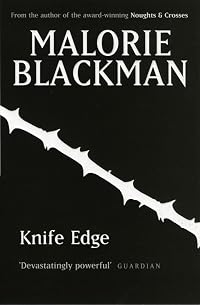
Following Callum's death, the people who loved him relate how their lives have been changed, especially in reference to his girlfriend, Sephy, and their mixed-race child. Persephone Hadley is six months pregnant with a mixed-race baby. In their society this fact alone will threaten the child's life every day. To make matters worse, the baby's father, Callum, is dead. He was hanged for terrorism months ago, but his presence still torments Sephy. And she's not alone. Callum's brother, Jude, show more blames Sephy for the death, and thirsts for revenge...in the form of her life. Obviously, Sephy is not fond of Jude, but when his actions take him to the brink of disaster, his life poised on a knife edge, can she stand by and do nothing? Will she be forced -- once again -- to take sides in a chilling racial drama? show lessTags
Recommendations

Member Reviews
These days it's cool to be reading teen books when well past your teens as I am. Always intended to read on in this trilogy, but I really should not have left it three years after reading the first - it took a while before the plot came back to me, and all the way through it kept referring to events in the previous book that I could barely remember.
That said, this would probably just about work as a stand-alone novel. It's written in a simple, direct style, and has less twists and turns than the first but a comparable dollop of violence on the side. The viewpoint shifts from chapter to chapter, all the chapters are short and and to the point, and are finished off with a punchy statement of defiance (along the lines of 'I was going to show more kick his head if it was the last thing I did'....), all it needed to top it off in each case was the drumbeat that heralds the credits in EastEnders.
The main value of these books, for me, was the theme of racial prejudice, the clever way in which it is turnedf on its head in the imaginary country in which the stories are set, to make white people the ones discriminated against. Again and again it demonstrates small ways in which a racial group can be treated badly, but nobody thinks anything of it - from patronising tokenism in soap operas to the colour of sticking plasters. It is as though the author is exposing the individual atoms that build up to form racial prejudice and inequality of opportunity, and it provides food for thought for everyone. show less
That said, this would probably just about work as a stand-alone novel. It's written in a simple, direct style, and has less twists and turns than the first but a comparable dollop of violence on the side. The viewpoint shifts from chapter to chapter, all the chapters are short and and to the point, and are finished off with a punchy statement of defiance (along the lines of 'I was going to show more kick his head if it was the last thing I did'....), all it needed to top it off in each case was the drumbeat that heralds the credits in EastEnders.
The main value of these books, for me, was the theme of racial prejudice, the clever way in which it is turnedf on its head in the imaginary country in which the stories are set, to make white people the ones discriminated against. Again and again it demonstrates small ways in which a racial group can be treated badly, but nobody thinks anything of it - from patronising tokenism in soap operas to the colour of sticking plasters. It is as though the author is exposing the individual atoms that build up to form racial prejudice and inequality of opportunity, and it provides food for thought for everyone. show less
From the beginning, this is a sad tale as it follows Jude, a nought who has tried to make himself invulnerable by ceasing to feel or care, and Sephy, a Cross who is struggling to come to terms with her life. She is alone except for her new baby and generally despised by her community for giving birth to a ‘halfer’ child.
Although the mood is sad and tense initially, there are moments which suggest positive possibilities for some kind of resolution until two fifths of the way through when two deeply shocking and traumatic events occur. From then on, Jude is set on a path of total destruction and Sephy loses all hope for the future. Thereafter almost relentlessly bleak and depressing, this is not a novel that can be treated show more lightly.
Blackman emphasises the increasing agony of her central characters by moving through the colour spectrum, from red to violet: from anger to despair. Possible new ventures wither for Sephy and Jude’s malevolence is stunning. The ending, while leaving Sephy’s ultimate intentions ambiguous, will leave you reeling. The warning on the back cover should be adhered to: this book is ‘not suitable for younger readers’. This is a sequel which I would recommend reading swiftly to allow you to turn to the final book in the trilogy. show less
Although the mood is sad and tense initially, there are moments which suggest positive possibilities for some kind of resolution until two fifths of the way through when two deeply shocking and traumatic events occur. From then on, Jude is set on a path of total destruction and Sephy loses all hope for the future. Thereafter almost relentlessly bleak and depressing, this is not a novel that can be treated show more lightly.
Blackman emphasises the increasing agony of her central characters by moving through the colour spectrum, from red to violet: from anger to despair. Possible new ventures wither for Sephy and Jude’s malevolence is stunning. The ending, while leaving Sephy’s ultimate intentions ambiguous, will leave you reeling. The warning on the back cover should be adhered to: this book is ‘not suitable for younger readers’. This is a sequel which I would recommend reading swiftly to allow you to turn to the final book in the trilogy. show less
The overwhelmingly strongest feeling I had at the end of this book was hopelessness: the protagonists live in such a divided society that they cannot escape it and the attempts at building bridges and making amends will fail, sooner or later.
Now an 18-year-old single parent, Persephone (Sephy) Hadley is raising her inter-racial daughter in a sharply divided alternate England, where black Crosses suppress the white Naughts. She faces pressure from both her less than understanding Cross family, her disintegrating Naught family, and everyone in between. When her brother-in-law’s violent behavior leads to murder, Sephy provides a false alibi to save Jude, but doing so irreparably damages other lives. Second in Blackman’s trilogy, this work presents similar themes with the same lack of subtlety that dominated the first work; Blackman’s approach to communicating racism is to change instances of black disenfranchisement to white. The most popular white rocker is actually show more black; white performers must use the back doors to enter venues; popular desserts have racist names. Such a heavy hand leaves readers alienated from the dark history of racism. Jude and Sephy dominate the narrative, though occasionally other voices are included. Stiff language and murky motivation hampers the thin characters from generating emotional suspense. Woodson’s If you come softly (1998) and Krishner’s Spite Fences (1994) address very similar issues, but with rich characters and taut feeling. show less
Oh no. What a disappointing follow-up to Noughts and Crosses.
I was blown away by Noughts and Crosses the first time I read it and this week when I read it for the second time I still highly enjoyed it. But Knife Edge just didn't really do it for me. I wanted to know what happened to Sephy and the baby, yes, and I got that. I also got a look into who Jude was and that he still has weaknesses and a vulnerability (interesting!). But I feel like more could have been done with this. The world building really could have been explored and more dimensions added. I liked how more of the rest of the world was developed through Jude's interactions with Cara and when Sephy sang in the band at clubs, but at the same time there was a lot of nothing show more going on in this book. Sephy's first few chapters are boring, saying only how she hated her daughter and then all of a sudden her feelings changed, new mother stuff. Sephy was still quite naive at the beginning, although her voice had matured. I feel like she's lost her fight though, and that's upsetting, because I had always loved her spunk and how she believed in equality.
The look into Jude's mind was interesting. He's a very angry, hostile young man but it feels like for him, the fight is not about equality. Its about vengeance. This is something I picked up in the previous book and was glad that Morgan challenged him about it. I was disappointed, though, that this was not further explored. There was a lot of potential for this to go somewhere and instead it became something Jude neve thought about again.
I'm still interested enough in the story and the characters to continue reading the two remaining books, but I was still disappointed with this one and hope they will improve and return to the same calibre as Noughts and Crosses. show less
I was blown away by Noughts and Crosses the first time I read it and this week when I read it for the second time I still highly enjoyed it. But Knife Edge just didn't really do it for me. I wanted to know what happened to Sephy and the baby, yes, and I got that. I also got a look into who Jude was and that he still has weaknesses and a vulnerability (interesting!). But I feel like more could have been done with this. The world building really could have been explored and more dimensions added. I liked how more of the rest of the world was developed through Jude's interactions with Cara and when Sephy sang in the band at clubs, but at the same time there was a lot of nothing show more going on in this book. Sephy's first few chapters are boring, saying only how she hated her daughter and then all of a sudden her feelings changed, new mother stuff. Sephy was still quite naive at the beginning, although her voice had matured. I feel like she's lost her fight though, and that's upsetting, because I had always loved her spunk and how she believed in equality.
The look into Jude's mind was interesting. He's a very angry, hostile young man but it feels like for him, the fight is not about equality. Its about vengeance. This is something I picked up in the previous book and was glad that Morgan challenged him about it. I was disappointed, though, that this was not further explored. There was a lot of potential for this to go somewhere and instead it became something Jude neve thought about again.
I'm still interested enough in the story and the characters to continue reading the two remaining books, but I was still disappointed with this one and hope they will improve and return to the same calibre as Noughts and Crosses. show less
Not as much going on as the first in the series, so not much to say. Liked how more characters were introduced & got to see some of the story from their point of view. & that ending to say I didn't shed a tear would be a lie!
Reviewed by Randstostipher "tallnlankyrn" Nguyen for TeensReadToo.com
It's a disturbing world where blacks, the Crosses, are the over-privileged, and whites, the Noughts, are treated as unequal.
Sephy is a Nought who is also the mother of Callie Rose. Her husband, Callum, was a Cross but was murdered for taking part in the Liberation Militia. Then there is Jude, Callum's brother, the one person who is blaming Sephy for the death of his brother. However, Callum's mother isn't holding a grudge against Sephy.
The one thing on Jude's mind is to get revenge for his brother. And his first step is to get rid of Sephy.
Along the way both Jude and Sephy fall in love with other people: one to get access to money, while the other is just in contempt. show more But also along the way, both of their lives become even more complex, and even more damaged.
One will be helped, one will be betrayed, and only one will be overwhelmed by their current distress and do the unthinkable.
Dark, emotional, and extremely alarming, KNIFE EDGE gets us an inside look at a world separated by color and where hatred and violence flourishes. A great follow-up to NOUGHTS & CROSSES (re-released in paperback as BLACK & WHITE), Malorie Blackman continues to entice us with even more drama. show less
It's a disturbing world where blacks, the Crosses, are the over-privileged, and whites, the Noughts, are treated as unequal.
Sephy is a Nought who is also the mother of Callie Rose. Her husband, Callum, was a Cross but was murdered for taking part in the Liberation Militia. Then there is Jude, Callum's brother, the one person who is blaming Sephy for the death of his brother. However, Callum's mother isn't holding a grudge against Sephy.
The one thing on Jude's mind is to get revenge for his brother. And his first step is to get rid of Sephy.
Along the way both Jude and Sephy fall in love with other people: one to get access to money, while the other is just in contempt. show more But also along the way, both of their lives become even more complex, and even more damaged.
One will be helped, one will be betrayed, and only one will be overwhelmed by their current distress and do the unthinkable.
Dark, emotional, and extremely alarming, KNIFE EDGE gets us an inside look at a world separated by color and where hatred and violence flourishes. A great follow-up to NOUGHTS & CROSSES (re-released in paperback as BLACK & WHITE), Malorie Blackman continues to entice us with even more drama. show less
Members
- Recently Added By
Author Information

107+ Works 8,565 Members
Awards and Honors
Awards
Series

Work Relationships
Is contained in
Is abridged in
Common Knowledge
- Canonical title
- Knife Edge
- Original publication date
- 2004
- People/Characters
- Callie Rose Hadley; Callum McGregor; Persephone Hadley (Sephy); Jasmine Hadley; Meggie McGregor; Jude McGregor
- Epigraph
- He who binds himself to a joy does the winged life destroy; but he who kisses the joy as it flies lives in eternity's sun rise. - William Blake
- Dedication
- This book is dedicated with love to Neil and Elizabeth. Who bring every colour of the rainbow. And more besides.
And a big thank-you to everyone who asked, 'What happened next?' - First words
- 'Oh, come on, Jude. My feet are killing me,' Morgan moaned.
- Last words
- (Click to show. Warning: May contain spoilers.)Breathe. BREATHE. Breathe...
- Disambiguation notice
- The audiobook of Knife Edge narrated by Nina Sosanya, John Hasler, and Joan Walker is an abridged version of the novel (ASIN B000IONGTK). Please keep it separate from the main work.
Classifications
- Genres
- Fiction and Literature, Teen, Young Adult
- DDC/MDS
- 823.914 — Literature & rhetoric English & Old English literatures English fiction 1900- 1901-1999 1945-1999
- LCC
- PZ7 .B532337 .K — Language and Literature Fiction and juvenile belles lettres Fiction and juvenile belles lettres Juvenile belles lettres
- BISAC
Statistics
- Members
- 1,035
- Popularity
- 25,059
- Reviews
- 18
- Rating
- (3.82)
- Languages
- English, French, German, Portuguese
- Media
- Paper, Audiobook, Ebook
- ISBNs
- 24
- ASINs
- 11