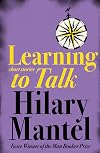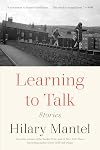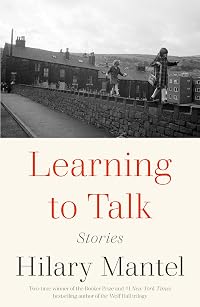
Learning to Talk
by Hilary Mantel
On This Page
Description
"In the wake of Hilary Mantel's brilliant conclusion to her award-winning Wolf Hall trilogy, this collection of loosely autobiographical stories locates the transforming moments of a haunted childhood. Sharp and funny, these drawn-from-life stories begin in the 1950s in an insular northern village "scoured by bitter winds and rough gossip tongues." For the child narrator, the only way to survive is to get up, get on, get out. In "King Billy Is a Gentleman," the child must come to terms with show more the loss of a father and the puzzle of a fading Irish heritage. "Curved Is the Line of Beauty" is a story of friendship, faith, and a near-disaster in a scrap-yard. The title story sees our narrator ironing out her northern vowels with the help of an ex-actress with one lung and a Manchester accent. In "Third Floor Rising," she watches, amazed, as her mother carves out a stylish new identity. With a deceptively light touch, Mantel illuminates the poignant experiences of childhood that leave each of us forever changed"-- show lessTags
Recommendations








Member Reviews
Signpost to Childhood
I’m biased as in my eyes, Mantel can not put a pen wrong. The seven short stories in Learning to Talk transported me back to my own childhood as no other writings have. When you can almost completely identify with another’s memories as described by an accomplished writer, what’s not to like?
I was transported back to my own childhood by descriptions of the constant moving to new houses and the accompanying upheavals, by the absent father and the associated embarrassment of the child, but perhaps most startling were the descriptions of every-day family life and the associated now archaic vocabulary.
In “Curved is the Line of Beauty”, the family gets lost as the substitute father attempts to navigate the show more northern English countryside with not just the absence of GPS, but with the absence of “signposts”. The children draw with “double-ended pencils”. The children roam free in an urban countryside, getting lost in a car-wrecking site. None of their adults in their families even notice their absence. Mundane stuff but the language and the un-supervision is that of my own childhood.
Being six and saying the F word out loud when no one is around, just to hear yourself say it. Maybe all kids did. I remember I did, though I said “F god”, to see what would happen.
The realization that one’s mother doesn’t know everything. The surprise of it. Getting into a “good” school and concerns over the cost of the school uniform. Davey Crockett hats. Doctor Kildare on the TVs of the neighbors.
Despising the baby brother and the wonder of him. Eating plums. Wondering what to call father substitutes and at the stupidity of adults.
“Destroyed” tells the story of two dogs with opposite personalities. I’m not a dog person but was quite drawn in by this little story.
The final story, “Giving up the Ghost” has a lot of detail on Mantel’s childhood up to the end of elementary school when she she sits for the “Eleven Plus” an exam that with determine her academic future.
It is at this stage that her mother moves on, and Mantel writes, My childhood ended, so, in this occluded way: darkened by the smoke from my mother’s burning boats..
And there endeth the collection. I enjoyed all the stories but how much was my enjoyment to do with a perceived shared past? For apart from the Catholicism, of which I was spared, there were so many similarities.
I’m not sure. The stories need to be read as standalone. There’re no obvious connective thread apart from the subject matter. The writing is beautiful, crisp and evocative. The final story is set apart in that it details Mantel’s pre-twelve year’s in chronological order. The others highlight discrete events or feelings.
Read them if you enjoy Mantel. You will not be disappointed. show less
I’m biased as in my eyes, Mantel can not put a pen wrong. The seven short stories in Learning to Talk transported me back to my own childhood as no other writings have. When you can almost completely identify with another’s memories as described by an accomplished writer, what’s not to like?
I was transported back to my own childhood by descriptions of the constant moving to new houses and the accompanying upheavals, by the absent father and the associated embarrassment of the child, but perhaps most startling were the descriptions of every-day family life and the associated now archaic vocabulary.
In “Curved is the Line of Beauty”, the family gets lost as the substitute father attempts to navigate the show more northern English countryside with not just the absence of GPS, but with the absence of “signposts”. The children draw with “double-ended pencils”. The children roam free in an urban countryside, getting lost in a car-wrecking site. None of their adults in their families even notice their absence. Mundane stuff but the language and the un-supervision is that of my own childhood.
Being six and saying the F word out loud when no one is around, just to hear yourself say it. Maybe all kids did. I remember I did, though I said “F god”, to see what would happen.
The realization that one’s mother doesn’t know everything. The surprise of it. Getting into a “good” school and concerns over the cost of the school uniform. Davey Crockett hats. Doctor Kildare on the TVs of the neighbors.
Despising the baby brother and the wonder of him. Eating plums. Wondering what to call father substitutes and at the stupidity of adults.
“Destroyed” tells the story of two dogs with opposite personalities. I’m not a dog person but was quite drawn in by this little story.
The final story, “Giving up the Ghost” has a lot of detail on Mantel’s childhood up to the end of elementary school when she she sits for the “Eleven Plus” an exam that with determine her academic future.
It is at this stage that her mother moves on, and Mantel writes, My childhood ended, so, in this occluded way: darkened by the smoke from my mother’s burning boats..
And there endeth the collection. I enjoyed all the stories but how much was my enjoyment to do with a perceived shared past? For apart from the Catholicism, of which I was spared, there were so many similarities.
I’m not sure. The stories need to be read as standalone. There’re no obvious connective thread apart from the subject matter. The writing is beautiful, crisp and evocative. The final story is set apart in that it details Mantel’s pre-twelve year’s in chronological order. The others highlight discrete events or feelings.
Read them if you enjoy Mantel. You will not be disappointed. show less
Full disclosure: I revere Hilary Mantel. If she never published another word, I would feel like she had done enough. More than enough. I have a fantasy of stalking her to her village, bumping into her on the street, and meekly and politely saying only: "Ms. Mantel, I am in awe of you and your work. Thank you for enriching my life." And walking away. (Hoping, of course, that she would call me back and ask me to tea. Or into the local for a drink.)
So of course I loved this. I just love her images, her sentences, the way she thinks. And - as I have said in my review of Giving Up The Ghost - she does better than anyone at portraying the strange blend of keen observation, misinterpretation, unease and resistance that children can feel as show more they witness what goes on around them. How they - or I suppose I should say she - see and ponder, and make up stories to themselves to make sense of it all as best they can. This book is a sort of accompaniment to Ghost, comprising six stories (which often blend fiction with memoir) and an excerpt from it, all exploring her childhood, memory, youth, and how she fit - or didn't - into the life where fate had dropped her.
It is a slight book. I admit that it was likely published because she is Hilary Mantel, and needs no other justification. But I will be reading it again, just to see how a sentence should be written. show less
So of course I loved this. I just love her images, her sentences, the way she thinks. And - as I have said in my review of Giving Up The Ghost - she does better than anyone at portraying the strange blend of keen observation, misinterpretation, unease and resistance that children can feel as show more they witness what goes on around them. How they - or I suppose I should say she - see and ponder, and make up stories to themselves to make sense of it all as best they can. This book is a sort of accompaniment to Ghost, comprising six stories (which often blend fiction with memoir) and an excerpt from it, all exploring her childhood, memory, youth, and how she fit - or didn't - into the life where fate had dropped her.
It is a slight book. I admit that it was likely published because she is Hilary Mantel, and needs no other justification. But I will be reading it again, just to see how a sentence should be written. show less
This slim volume collects six stories written years apart but thematically related. Each features a child in Derbyshire struggling with complicated domestic arrangements that make their family the subject of neighborhood gossip. The stories are bookended by a preface and a final contribution, which shares the title of her memoir, Giving Up the Ghost. In both, she ruminates on her compulsive reworking of events from her childhood. She writes that these stories are not autobiographical but autoscopic, a neologism that makes sense.
All the stories demonstrate Mantel’s mastery of prose. My first thought was that she was incapable of writing a dull sentence. But anyone who has tried to write knows that isn’t true. She grappled with her show more obsessions, which are by their nature complicated, made the simplest sense of them she could, and then crafted each sentence until it was no longer ordinary. It makes her decision to use the title of one of these stories for the entire collection clear: Mantel has learned to talk about these things.
One of the cliche adjectives harried book reviewers rely on is “luminous”. Applied to this book, it fits. Mantel shines a light on her dark childhood; we readers share in the illumination. show less
All the stories demonstrate Mantel’s mastery of prose. My first thought was that she was incapable of writing a dull sentence. But anyone who has tried to write knows that isn’t true. She grappled with her show more obsessions, which are by their nature complicated, made the simplest sense of them she could, and then crafted each sentence until it was no longer ordinary. It makes her decision to use the title of one of these stories for the entire collection clear: Mantel has learned to talk about these things.
One of the cliche adjectives harried book reviewers rely on is “luminous”. Applied to this book, it fits. Mantel shines a light on her dark childhood; we readers share in the illumination. show less
I enjoyed these stories and she certainly knows how to write evocative, literary, emotional scenes. But these "stories" adhere so closely to her autobiography--as evidenced in the final selection in the book, which is essay and not fiction--that I wonder whether or not to regard these as fiction. They seem more like memory pieces. This doesn't take anything away from her writing skills, but I wonder why she insists on defining them as fiction. What's the difference? Well, the overlay of imagination, for one thing. In fiction, one can start with memory and then create a different outcome, new characters, changed lives. But Ms. Mantel seems not to have chosen that path and I'm left puzzled.
Learning to Talk: Stories, by Hilary Mantel, is a collection of short stories that are semi-autobiographical and, as one expects from Mantel, very well written.
This appears to be a reissue, the original coming out about the same time as her memoir. Thematically it fits better there but is such a strong collection of stories that even without the memoir being fresh in a reader's mind it is worth reading.
I can't imagine admitting to not reading many short stories then having the audacity to make a sweeping condemnation of the current state of short story writing, but such is life. There are a lot of good writers writing a lot of good short stories and this, while not brand new, is an example. I also can't imagine thinking it is a show more compliment to think about offering a writer of Mantel's caliber my castaway story ideas because I don't feel like writing them, but again, arrogance knows no bounds. Needless to say, Mantel comes up with, and has the ability to write, wonderful stories.
In addition to readers who enjoy short stories in general I would also recommend this to those who have an interest in the intersection of childhood and (borderline?) dysfunctional households and upbringing.
Reviewed from a copy made available by the publisher via NetGalley. show less
This appears to be a reissue, the original coming out about the same time as her memoir. Thematically it fits better there but is such a strong collection of stories that even without the memoir being fresh in a reader's mind it is worth reading.
I can't imagine admitting to not reading many short stories then having the audacity to make a sweeping condemnation of the current state of short story writing, but such is life. There are a lot of good writers writing a lot of good short stories and this, while not brand new, is an example. I also can't imagine thinking it is a show more compliment to think about offering a writer of Mantel's caliber my castaway story ideas because I don't feel like writing them, but again, arrogance knows no bounds. Needless to say, Mantel comes up with, and has the ability to write, wonderful stories.
In addition to readers who enjoy short stories in general I would also recommend this to those who have an interest in the intersection of childhood and (borderline?) dysfunctional households and upbringing.
Reviewed from a copy made available by the publisher via NetGalley. show less
Beautifully written, wistful and so so sad at the root of it all. This collection of short stories, clearly autobiographical in origin are moving and heart-breaking in the way that only a child's distress and loneliness can be.
Incredible book. She tries to explain in a preface, but I’m still not clear how much of this is fiction and how much memoir. I guess it doesn’t matter much. Astonishingly beautiful and powerful writing about how it feels to be a child and how those feelings are remembered later.
Here are some quotes from the book that I figured out how to export from the Kindle app. Do you agree with me about the strength of her writing?
“The story of my own childhood is a complicated sentence that I am always trying to finish, to finish and put behind me.”
“When I was very small, small enough to trip every time on the raised curbstone outside the back door, the dog Victor used to take me for a walk. We would proceed at caution across the yard, show more my hand plunged deep into the ruff of bristly fur at the back of his neck. He was an elderly dog, and the leather of his collar had worn supple and thin. My fingers curled around it, while sunlight struck stone and slate, dandelions opened in the cracks between paving stones, and old ladies aired themselves in doorways, nodding on kitchen chairs and smoothing their skirts over their knees. Somewhere else, in factories, fields and coal mines, England went dully on.”
“In that one moment it seemed to me that the world was blighted, and that every adult throat bubbled, like a garbage pail in August, with the syrup of rotting lies.”
“There should be support groups, like a twelve-step program, for young people who hate being young.” show less
Here are some quotes from the book that I figured out how to export from the Kindle app. Do you agree with me about the strength of her writing?
“The story of my own childhood is a complicated sentence that I am always trying to finish, to finish and put behind me.”
“When I was very small, small enough to trip every time on the raised curbstone outside the back door, the dog Victor used to take me for a walk. We would proceed at caution across the yard, show more my hand plunged deep into the ruff of bristly fur at the back of his neck. He was an elderly dog, and the leather of his collar had worn supple and thin. My fingers curled around it, while sunlight struck stone and slate, dandelions opened in the cracks between paving stones, and old ladies aired themselves in doorways, nodding on kitchen chairs and smoothing their skirts over their knees. Somewhere else, in factories, fields and coal mines, England went dully on.”
“In that one moment it seemed to me that the world was blighted, and that every adult throat bubbled, like a garbage pail in August, with the syrup of rotting lies.”
“There should be support groups, like a twelve-step program, for young people who hate being young.” show less
Members
- Recently Added By
Author Information

64+ Works 38,785 Members
Hilary Mantel was born in Glossop, Derbyshire, England on July 6, 1952. She studied law at the London School of Economics and Sheffield University. She worked as a social worker in Botswana for five years, followed by four years in Saudi Arabia. She returned to Britain in the mid-1980s. In 1987 she was awarded the Shiva Naipaul Memorial Prize for show more an article about Jeddah. She worked as a film critic for The Spectator from 1987 to 1991. She has written numerous books including Eight Months on Ghazzah Street, A Place of Greater Safety, A Change of Climate, The Giant, O'Brien, Giving up the Ghost: A Memoir, and Beyond Black. She has won several awards for her work including the Winifred Holtby Memorial Prize, the Cheltenham Prize and the Southern Arts Literature Prize for Fludd; the 1996 Hawthornden Prize for An Experiment in Love, the 2009 Man Booker Prize for Wolf Hall, and the 2012 Man Booker Prize for Bring up the Bodies. She made The New York Times Best Seller List with her title The Assassination of Margaret Thatcher. (Bowker Author Biography) show less
Some Editions
Awards and Honors
Work Relationships
Contains
Has the adaptation
Common Knowledge
- Canonical title
- Learning to Talk
- Original publication date
- 2003; 2022-06-21
- Important places
- England, UK
Classifications
Statistics
- Members
- 246
- Popularity
- 131,959
- Reviews
- 14
- Rating
- (3.84)
- Languages
- Dutch, English, Spanish
- Media
- Paper, Audiobook, Ebook
- ISBNs
- 15
- ASINs
- 6