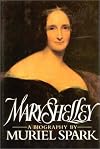
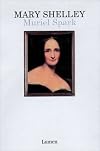
Mary Shelley
by Muriel Spark
On This Page
Description
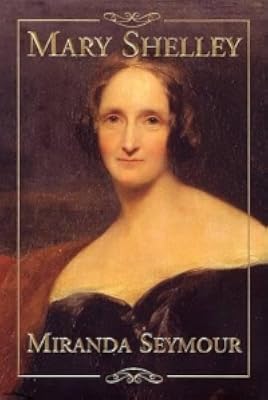
Painting a portrait of a gothic icon, this biography recounts Mary Shelley’s dramatic life, from her youth and turbulent marriage to her career as writer and editor. At the age of 20, Mary Shelley secured her place in history by writing Frankenstein, now acknowledged as one of the great literary classics. The daughter of radical philosopher William Godwin and pioneering feminist Mary Wollstonecraft, Mary Shelley led an unconventional life, which is depicted—with previously unpublished show more material—in this remarkable biography that was originally released in 1987 as a thorough revision of Muriel Spark's 1951 book Child of Light. Spark lends her own talents as an accomplished writer and her sharp intelligence to this fascinating examination of Mary Shelley's life and writings. show lessTags
Recommendations



















Member Reviews
Muriel Spark wrote her biography of Mary Shelley before she published her first novel. Decades later she substantially revised the biography. Although she doesn't explicitly state this, I'm sure her experience as a novelist informed the revision, particularly the critical section of the book. I like reading novelists on other novelists because they have a different insight into the creative process than biographers who write only non-fiction.
I appreciated Spark's comment in the introduction that she “ha{s} always disliked the sort of biography which states 'X lay on the bed and watched the candle flickering on the roof beams,' when there is no evidence that X did so.” I also dislike that sort of biography, and when I read them I show more always end up questioning the facts as well as the added color. Spark comes across as a careful and conscientious biographer who does not speculate farther than is warranted by the historical evidence and, where her interpretation differs from Shelley's other biographers, acknowledges these differences of opinion.
I read this biography as a companion to Shelley's Frankenstein on audio and I'm glad I decided to do that. I knew the barest details about how Shelley had come to write Frankenstein, but not enough of the details of Shelley's life to affect my interpretation of the novel. Shelley's husband, poet Percy Bysshe Shelley, died young, and all but one of the couple's children died in infancy or early childhood. I didn't realize that Mary Shelley only knew her famous mother, Mary Woollstonecraft, through her writings and the stories she heard from others since Mary Woollstonecraft died very soon after her daughter's birth. Mary Shelley lost other family members and friends to illness or accident while she was still in her twenties, and the accumulation of loss affected her writing.
Shelley's life is covered in the first two thirds of the book, while the last third contains a critical reflection on her work. Readers whose primary interest is in one or the other could read just the section corresponding to their interest. However, it's worthwhile to read the work as a whole since there are some critical comments in the biographical section and the critical section refers to some of the biographical details of Shelley's life. show less
I appreciated Spark's comment in the introduction that she “ha{s} always disliked the sort of biography which states 'X lay on the bed and watched the candle flickering on the roof beams,' when there is no evidence that X did so.” I also dislike that sort of biography, and when I read them I show more always end up questioning the facts as well as the added color. Spark comes across as a careful and conscientious biographer who does not speculate farther than is warranted by the historical evidence and, where her interpretation differs from Shelley's other biographers, acknowledges these differences of opinion.
I read this biography as a companion to Shelley's Frankenstein on audio and I'm glad I decided to do that. I knew the barest details about how Shelley had come to write Frankenstein, but not enough of the details of Shelley's life to affect my interpretation of the novel. Shelley's husband, poet Percy Bysshe Shelley, died young, and all but one of the couple's children died in infancy or early childhood. I didn't realize that Mary Shelley only knew her famous mother, Mary Woollstonecraft, through her writings and the stories she heard from others since Mary Woollstonecraft died very soon after her daughter's birth. Mary Shelley lost other family members and friends to illness or accident while she was still in her twenties, and the accumulation of loss affected her writing.
Shelley's life is covered in the first two thirds of the book, while the last third contains a critical reflection on her work. Readers whose primary interest is in one or the other could read just the section corresponding to their interest. However, it's worthwhile to read the work as a whole since there are some critical comments in the biographical section and the critical section refers to some of the biographical details of Shelley's life. show less
An interesting biography, with an equally interesting second section of literary analysis. I love Muriel Spark, but had only read her fiction, so was very curious about this work. Based on that last section, I'm now reading [b:The Last Man|30668013|The Last Man|Mary Wollstonecraft Shelley|https://i.gr-assets.com/images/S/compressed.photo.goodreads.com/books/1466482782l/30668013._SY75_.jpg|835097] by Mary Shelley.
Since nobody else has reviewed this excellent biography, I'll write a quick one. Muriel Spark wrote the first version of this in 1951, which was published in the U.K. but not in the U.S. She revised it in 1987. She chose to write the biography first and then to write her criticism of three of MS's most important works. I regret that she didn't integrate the two sections, but the division works well enough.
Spark sees MS as a figure born into the 18th century milieu but cast into the Romanticism of the 19th century. She says that this explains the disparity between her personal presence and her writing. Her life with Shelley was tumultuous; her life after his death continued the struggle. She is too important a figure to excite pity, but show more her story makes me more grateful than ever for my own quiet little life. show less
Spark sees MS as a figure born into the 18th century milieu but cast into the Romanticism of the 19th century. She says that this explains the disparity between her personal presence and her writing. Her life with Shelley was tumultuous; her life after his death continued the struggle. She is too important a figure to excite pity, but show more her story makes me more grateful than ever for my own quiet little life. show less
Ratings
Members
- Recently Added By
Lists

Bram Stoker Award
238 works; 5 members

le donne raccontano
116 works; 1 member

Best Biographies of Notable Women
279 works; 101 members
Author Information

101+ Works 22,842 Members
Muriel Spark has been called "our most chillingly comic writer since Evelyn Waugh" by the London Spectator, and the New Yorker praised her novel Memento Mori ri (1959) as "flawless." Her fiction is marked by its remarkable diversity, wit, and craftsmanship. "She happens to be, by some rare concatenation of grace and talent, an artist, a show more serious---and most accomplished---writer, a moralist engaged with the human predicament, wildly entertaining, and a joy to read" (SRSR). She became widely known in the United States when the New Yorker devoted almost an entire issue to The Prime of Miss Jean Brodie (1961). Set in Edinburgh in the 1930s, this is the story of a schoolteacher, her unorthodox approach to life, and its effect on her select group of adolescent girls. Though their idol turns out to have feet of clay, she leaves an indelible mark on their lives. The Girls of Slender Means (1963), also warmly praised, is a sardonic look at the vivacity of youth and the anxieties of young womanhood. Reviewing The Mandelbaum Gate (1965) for the New Republic, Honor Tracy wrote: "There is an abundance here of invention, humor, poetry, wit, perception, that all but takes the breath away. . . . The story, in fact, is pure adventure, with the suspense as artfully maintained as anywhere by Graham Greene, but this is only one ingredient. There are memorable descriptions of the Holy Land, fascinating insights into the jumble of intrigue and piety surrounding the Holy Places, and penetrating studies of Arabs. . . . In each of [Spark's] novels heretofore one of her qualities has tended to predominate over the others. Here for the first time they are all impressively marshaled side by side, resulting in her best work so far." The daughter of an Englishwoman and a Scottish-Jewish father, Spark was born and educated in Edinburgh. After her marriage in 1938, she lived for some years in Central Africa, a period rarely reflected in her work. During World War II, she returned to Britain, where she worked in the Political Intelligence Department of the Foreign Office after the breakup of her marriage. She has been a magazine editor and written poetry and literary criticism. Spark has lived in London's Camberwell section, the setting of The Ballad of Peckham Rye (1960), but now makes her home in New York. Her novels reflect her conversion to Roman Catholicism. (Bowker Author Biography) Writer Muriel Spark was born in Edinburgh on February 1, 1918. In 1934-1935 she took a course in commercial correspondence and précis writing at Heriot-Watt College. After her marriage in 1937, she lived for some years in Central Africa. During World War II, she returned to Britain, where she worked in the Political Intelligence Department of the Foreign Office after the breakup of her marriage. After the war, she began her literary career. She became General Secretary of the Poetry Society, worked as an editor and wrote studies of Mary Shelley, John Masefield and the Brontë sisters. Her first book of poetry, The Fanfarlo and Other Verse, was published in 1952 and her first novel, The Comforters, was published in 1957. She wrote over twenty books including The Prime of Miss Jean Brodie and The Finishing School. She won numerous awards and honors including the 1965 James Tait Black Memorial Prize for The Mandelbaum Gate, the 1992 U. S. Ingersoll Foundation T. S. Eliot Award, the 1997 David Cohen British Literature Prize for Lifetime Achievement, and in 1993 she became Dame Commander of the Order of the British Empire in recognition of her services to literature. The Scottish Arts Council created the Muriel Spark International Fellowship in 2004. She died on April 13, 2006. (Bowker Author Biography) show less
Some Editions
Awards and Honors
Awards
Common Knowledge
- Canonical title
- Mary Shelley
- Original publication date
- 1951 (as Child of Light) (as Child of Light); 1987 (revised) (revised)
- People/Characters
- Mary Wollstonecraft Shelley; Percy Bysshe Shelley; Fanny Imlay; Claire Clairmont
- First words
- We are hardly impressed with a sense of love and light when we look back now on that period of transition between the eighteenth and nineteenth centuries--the period of revolution and reaction which gave effect to the fame of... (show all) Mary Shelley's parents, William Godwin and Mary Wollstonecraft.
- Last words
- (Click to show. Warning: May contain spoilers.)It was a fair and suggestive enough prophecy for May that he placed on feminine lips:
These were forebodings of my fate--before
A woman's heart beat in my virgin breast,
It had been nurtured in divinest lore:
A dying poet gave me books, and blessed
With wild but holy talk the sweet unrest
In which I watched him as he died away--
A youth with hoary hair--a fleeting guest
Of our lone mountains: and this lore did sway
My spirit like a storm, contending there alawy. - Blurbers
- Winterson, Jeanette
Classifications
Statistics
- Members
- 245
- Popularity
- 132,351
- Reviews
- 4
- Rating
- (3.77)
- Languages
- 5 — English, French, German, Italian, Spanish
- Media
- Paper, Ebook
- ISBNs
- 20
- ASINs
- 5