School's Out
by Christophe Dufosse
On This Page
Description
"When a teacher is found dead, having apparently committed suicide, his friend Pierre Hoffman takes over class 4F and finds himself responsible for a group of strangely subdued, well-behaved and yet menacing pupils. Assuming their behaviour to be a response to the trauma of their teacher's death, Pierre Hoffman at first takes it easy with the precocious class, refusing to embrace the hostility felt by other staff members towards the children. Over the weeks that follow, however, he receives show more a series of signals and warnings that cause him to question the motivations of his pupils and the circumstances of his colleague's suicide. Refusing to believe that the situation can be any more sinister than his suspicious imagination, Hoffman applauds and supports class 4F's decision to organise a school trip to the Normandy coast. Only once the trip has begun, however, does Hoffman begin to understand the extent of their bizarre solidarity and their ultimate goal... show lessTags
Recommendations















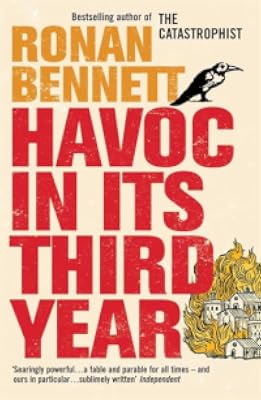
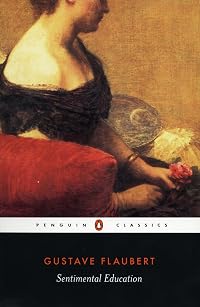
Member Recommendations
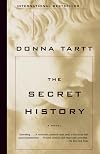
anonymous user Executed 100% better than Dufosse's School's Out, Tartt's book is a masterpiece that is truly chilling. You won't forget it.
Member Reviews
***NO SPOILERS***
What School's Out is supposed to be about: a class of sinister freshman students with murderous tendencies. What it is instead: 321 pages of random tangents, plus five pages of an unfocused, yawn-inducing main plot. This is such a frustrating book. Here are just some of the tangents I was subjected to while impatiently waiting for the main story: a detailed memory of a punk rock concert; the narrator's ramblings about the television shows he likes to watch, the various sounds he can hear from his apartment, and his oddball neighbors; a television show the narrator liked to watch as a child, with special mention of the show's theme song; excessive detail of a home's gardens and property; and a bizarre out-of-the-blue show more incestuous encounter between the narrator and his sister. Just when Dufosse focuses on the main plot, just when the pace finally quickens the slightest bit, he switches back to some completely irrelevant, utterly boring, pages-long tangent. The pace then reverts to a snail's crawl. I was desperate for more details--about the students, the dead teacher, the history the students had with each other, something having to do with the main plot line.
Possibly the biggest problem with this book, though, is that there is considerably more telling than showing. A few characters mention these students are "peculiar" and "scary," but the students never are shown actually doing anything criminal; my curiosity never was piqued much. I was supposed to accept these kids are threatening and clannish simply because they are. As for the few creepy student-teacher moments...they're laughably underwhelming--at least to modern readers hardened by stories of real-life school massacres.
The characters in this book are so cardboard, though, that I'm not even sure seeing them commit a crime would be that scary. The most dimension Dufosse gave each student, for instance, was a first and last name--at one point even listing all twenty-four full names--as if full names are the most important kind of characterization. The students barely even speak. Additionally, this book has at least twelve extraneous non-student characters; they in no way relate to the main plot or serve any purpose at all, really. It feels almost as if Dufosse mistakenly believed that to achieve a certain level of literary sophistication he had to cram his work full of characters.
Stylistically, School's Out is flawed, without a doubt. Many, many sentences are wordy and convoluted to the point of nonsense, which means reading this book is slow going. I'm not sure whether the fault lies with the translator or the author. Could this have been better translated? Or is Dufosse just an extremely wordy writer? Regardless, it's pure torture: "The well-proportioned quasi-neutrality of her silhouette, of her appearance, even in a seated position, the fragile rectitude of it all, evoked in me an irreversible negation, flaws concealed beneath a deceptive classicism." Gobbledegook like this completely halts the pace about every two pages.
The ending is supposed to be dramatic and shocking but is just meaningless. Again, because Dufosse barely focused on the main plot and failed entirely to flesh out his main characters (and show them acting criminal), the ending has zero impact and frankly, doesn't even make sense.
I honestly can't praise a single thing about this book. As a short story or novella, this tale could have turned out beautifully, as Dufosse would have been forced to zoom in on main characters and main plot only. The premise is provocative, and it seems clear Dufosse wanted to create something chilling and memorable, but unfortunately, he failed entirely in its execution. show less
What School's Out is supposed to be about: a class of sinister freshman students with murderous tendencies. What it is instead: 321 pages of random tangents, plus five pages of an unfocused, yawn-inducing main plot. This is such a frustrating book. Here are just some of the tangents I was subjected to while impatiently waiting for the main story: a detailed memory of a punk rock concert; the narrator's ramblings about the television shows he likes to watch, the various sounds he can hear from his apartment, and his oddball neighbors; a television show the narrator liked to watch as a child, with special mention of the show's theme song; excessive detail of a home's gardens and property; and a bizarre out-of-the-blue show more incestuous encounter between the narrator and his sister. Just when Dufosse focuses on the main plot, just when the pace finally quickens the slightest bit, he switches back to some completely irrelevant, utterly boring, pages-long tangent. The pace then reverts to a snail's crawl. I was desperate for more details--about the students, the dead teacher, the history the students had with each other, something having to do with the main plot line.
Possibly the biggest problem with this book, though, is that there is considerably more telling than showing. A few characters mention these students are "peculiar" and "scary," but the students never are shown actually doing anything criminal; my curiosity never was piqued much. I was supposed to accept these kids are threatening and clannish simply because they are. As for the few creepy student-teacher moments...they're laughably underwhelming--at least to modern readers hardened by stories of real-life school massacres.
The characters in this book are so cardboard, though, that I'm not even sure seeing them commit a crime would be that scary. The most dimension Dufosse gave each student, for instance, was a first and last name--at one point even listing all twenty-four full names--as if full names are the most important kind of characterization. The students barely even speak. Additionally, this book has at least twelve extraneous non-student characters; they in no way relate to the main plot or serve any purpose at all, really. It feels almost as if Dufosse mistakenly believed that to achieve a certain level of literary sophistication he had to cram his work full of characters.
Stylistically, School's Out is flawed, without a doubt. Many, many sentences are wordy and convoluted to the point of nonsense, which means reading this book is slow going. I'm not sure whether the fault lies with the translator or the author. Could this have been better translated? Or is Dufosse just an extremely wordy writer? Regardless, it's pure torture: "The well-proportioned quasi-neutrality of her silhouette, of her appearance, even in a seated position, the fragile rectitude of it all, evoked in me an irreversible negation, flaws concealed beneath a deceptive classicism." Gobbledegook like this completely halts the pace about every two pages.
The ending is supposed to be dramatic and shocking but is just meaningless. Again, because Dufosse barely focused on the main plot and failed entirely to flesh out his main characters (and show them acting criminal), the ending has zero impact and frankly, doesn't even make sense.
I honestly can't praise a single thing about this book. As a short story or novella, this tale could have turned out beautifully, as Dufosse would have been forced to zoom in on main characters and main plot only. The premise is provocative, and it seems clear Dufosse wanted to create something chilling and memorable, but unfortunately, he failed entirely in its execution. show less
I looked over online reviews for School's Out, was taken aback by the hostility against so thoughtful and well-written a book, and wanted to add to the few web words of praise for it.
On one hand the novel is one of suspense, with a sense of the ominous causing tension that strengthens through the course of it even as Dufosse suggests, as the story progresses, reason to rather sympathise with the uncanny and violent students; on the other it's a convincing portrayal of a character, the students' teacher Pierre Hoffman. Hoffman is the reallest fictional character I've read about recently; the character is filled out bit by bit by those 'digressions' and 'ramblings' that caused complaint and like real people has an unfathomable bed of show more layers that fictional characters usually lack and that make him like real people essentially unknowable.
A good book. show less
On one hand the novel is one of suspense, with a sense of the ominous causing tension that strengthens through the course of it even as Dufosse suggests, as the story progresses, reason to rather sympathise with the uncanny and violent students; on the other it's a convincing portrayal of a character, the students' teacher Pierre Hoffman. Hoffman is the reallest fictional character I've read about recently; the character is filled out bit by bit by those 'digressions' and 'ramblings' that caused complaint and like real people has an unfathomable bed of show more layers that fictional characters usually lack and that make him like real people essentially unknowable.
A good book. show less
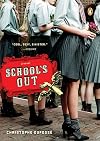
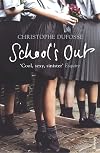
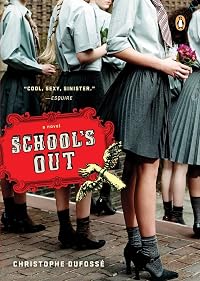
Quite a disappointment. The blurb on the cover says, "Cool, sexy and sinister". I would say, "Pretentious, no sex and sinister" - they got the last bit right, anyway. I suppose it's a bit of a psychological thriller, but it's too wordy and, well, pretentious. Maybe it lost out in the translation, but I suspect it's just a dense style of writing. I find the characters rather unbelievable.
I do give it credit for the ending, though. It was obvious that something dark was going to happen, but I certainly didn't guess exactly what until the last few pages.
I do give it credit for the ending, though. It was obvious that something dark was going to happen, but I certainly didn't guess exactly what until the last few pages.
'A triumph of surreal wit'? Not for me. I didn't see the black humour in this book at all - this may be a cultural difference, but it just wasn't happening for me. The author spends a great deal of time telling us about teacher Pierre's relationships with various people from colleagues and friends to his complex relationship with his sister. However, these descriptions seemed more like separate vignettes rather than helping the story to develop in anyway.
The main problem for me was that the book tried to be too clever by half. The author's attempt to baffle us with his vast vocabulary meant that the characters' voices didn't ring true. They all sounded the same from the philosophical deep thinking teacher to the 13-year-old pupils. I show more know they were meant to be a weird group, but they just sounded like everyone else in the story which actually made them rather bland.
I was also left a bit mystified by the classmates. I didn't really get what their story was. Maybe it was all a bit over my head I don't know, but I'm baffled by the motives of most of the characters. In some ways I think this would have made a better short story than a book of this length. Not a very long book, but too long to sustain my attention. show less
The main problem for me was that the book tried to be too clever by half. The author's attempt to baffle us with his vast vocabulary meant that the characters' voices didn't ring true. They all sounded the same from the philosophical deep thinking teacher to the 13-year-old pupils. I show more know they were meant to be a weird group, but they just sounded like everyone else in the story which actually made them rather bland.
I was also left a bit mystified by the classmates. I didn't really get what their story was. Maybe it was all a bit over my head I don't know, but I'm baffled by the motives of most of the characters. In some ways I think this would have made a better short story than a book of this length. Not a very long book, but too long to sustain my attention. show less
The cover on the book is very clever and the summary on the back definately gets your interest but the book itself is such a disappointment. I read the start, skipped the middle and read the end - something I very rarely do. Most of the detail in the book I found uninteresting and only served to alienate me from the main character rather than make me like him or at least remain interested in him. Very disappointing read!
Na de zelfmoord van een vereenzaamde leraar Aardrijkskunde en Geschiedenis neemt Pierre Hofmann diens lessen in klas 3F over en tracht zich een beeld te vormen van die in zichzelf gekeerde groep, die, naar hij te weten komt, vanaf de basisschool steeds bij elkaar is gebleven. Naast de onbestemde dreiging die hij in de klas proeft en die hem uit zijn evenwicht brengt, moet hij als jonge leraar en vrijgezel ook nog eens de schoolse beslommeringen en zijn persoonlijk reilen en zeilen op elkaar zien af te stemmen. Dat levert een vileine sfeertekening van de onderwijscultuur en tal van andere fraaie scènes op: leraren bij elkaar op bezoek, bureaucratische manipulaties, een vergadering van de oudercommissie, een avondje zappen in zijn show more eentje, herinneringen aan de eigen jeugdjaren, enz. Zeer herkenbaar. Maar het bizarre organisme dat deze klas vormt, laat zich niet doorgronden noch sturen en bereidt een noodlottige vlucht voor. De auteur (1963) verwierf met deze veelzijdige debuutroman de Prix du premier roman 2002. show less
May 1, 2012Dutch
1
Un libro sulla scuola, scritto da un professore. Leggermente pretenzioso, soprattutto nell'esasperante ricercatezza del linguaggio, ha il merito di condurci senza retoriche nel mondo dell'insegnamento di oggi, caratterizzato da disagi e contraddizioni tra generazioni di alunni sovente introversi, ostili e crudeli e insegnanti che dinanzi al muro appaiono frustrati se non addirittura terribilmente a disagio, fino ad epiloghi drammatici.
Dec 30, 2013Italian
Members
- Recently Added By
Lists

Teachers
16 works; 2 members
Author Information
5 Works 188 Members
Some Editions
Awards and Honors
Awards
Series
Belongs to Publisher Series
Gallimard, Folio (4002)
Common Knowledge
- Canonical title
- School's Out
- Original title
- L'Heure de la sortie
- Original publication date
- 2002
- People/Characters
- Pierre Hoffman
- Epigraph
- There is no question here of suspicion or innocence. Please say no more about it. We are strangers to each other, our acquaintance is no older than the church steps are high. Where would we end up if we immediately started ta... (show all)lking about our innocence? (Franz Kafka, Description of a Struggle)
'This is really a good time', Vern said simply, and he didn't just mean being off-limits inside the dump, or fudging our folks, or going on a hike up the railroad tracks into Harlow; he meant those things but it seems to me n... (show all)ow that there was more, and that we all knew it. Everything was there and around us. We knew exactly who we were and exactly where we were going. It was grand. (Stephen King, 'The Body') - Dedication
- For A
- First words
- Eric Capadis died in the Accident and Emergency department of the Trousseau Hospital at five pm on Monday, 19 February, 1995.
- Last words
- (Click to show. Warning: May contain spoilers.)That was the precise time when the last witnesses say they saw the bus crashing through the barriers to fly towards the sea.
- Publisher's editor*
- Mondolibri
- Original language*
- Francese
*Some information comes from Common Knowledge in other languages. Click "Edit" for more information.
Classifications
Statistics
- Members
- 179
- Popularity
- 183,088
- Reviews
- 7
- Rating
- (2.85)
- Languages
- 6 — Dutch, English, French, German, Italian, Norwegian (Bokmål)
- Media
- Paper
- ISBNs
- 11
- UPCs
- 1
- ASINs
- 2