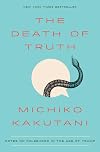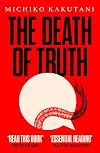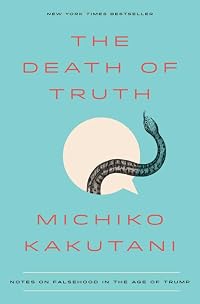
The Death of Truth: Notes on Falsehood in the Age of Trump
by Michiko Kakutani
On This Page
Description
We live in a time when the very idea of objective truth is mocked and discounted by the occupants of the White House. Discredited conspiracy theories and ideologies have resurfaced, proven science is once more up for debate, and Russian propaganda floods our screens. The wisdom of the crowd has usurped research and expertise, and we are each left clinging to the beliefs that best confirm our biases. How did truth become an endangered species in contemporary America? Former New York Times show more critic Michiko Kakutani takes a penetrating look at the cultural forces that contributed to this gathering storm. In social media and literature, television, academia, and politics, Kakutani identifies the trends -- originating on both the right and the left -- that have combined to elevate subjectivity over factuality, science, and common values. And she returns us to the words of the great critics of authoritarianism, writers like George Orwell and Hannah Arendt, whose work is newly and eerily relevant. show lessTags
Recommendations













Member Reviews
Any clear-eyed analysis of the current state of discourse in politics is likely to be frightening. So many actors are at work undermining the very bases of rational debate that it surely does seem as though truth itself is at risk. Where does one turn for insight (or comfort) at such times other than towards the mirrors lining one’s own information silo? It doesn’t seem like a useful strategy. Michiko Kakutani relies instead on that old journalistic trick of citing what people actually say and do. And that ought to be enough in the present case to damn them all (but it won’t).
Kakutani writes in a straightforward fashion, providing an overview of what she believes led us to this sorry state. The death of truth —note that show more hyperbole is the now the norm — has been a long time coming, though its primary injuries were incurred in the 20th century, and then exponentially exacerbated through the “information” tools provided in the Internet-era. The usual suspects are trotted out — Lenin, Stalin, Hitler, Putin, the GOP, and, of course, the hero/dupe Trump. But Kakutani has another bugbear that she wants to stomp on as well - post-modernism. Here, she specifically has in mind the French literary theories of Jacques Derrida, Paul de Man, and Jean Baudrillard. Wait, really? Yes. Repeatedly she swings her focus back on those nasty close-readers with their fuzzy logic and waving hands. And this is where she somewhat undermines her otherwise solid case. However, I imagine there is a much longer and larger story to tell here and I’m just getting the backwash. In any case, this does not overly compromise the otherwise usefulness of this book.
One disappointment is the relative absence in the book of a way forward, or indeed of any hope. If the analysis of nihilism can only breed despair, the entire undertaking might be called into question. However, I think we have not reached the point of utter debasement of language. Even a “post-truth” society is parasitic upon Kakutani’s favoured conception of “objective truth”. (And the same glimmer of hope is available in the face of post-modernist critiques of literature; as evidenced by the fact that people keep writing novels.)
Recommended for those who feel they’ve been observing on the periphery and would like some insight into what has been happening. For those inside their respective silos, there is no point reading this book. You already know that you either love it or hate it. show less
Kakutani writes in a straightforward fashion, providing an overview of what she believes led us to this sorry state. The death of truth —note that show more hyperbole is the now the norm — has been a long time coming, though its primary injuries were incurred in the 20th century, and then exponentially exacerbated through the “information” tools provided in the Internet-era. The usual suspects are trotted out — Lenin, Stalin, Hitler, Putin, the GOP, and, of course, the hero/dupe Trump. But Kakutani has another bugbear that she wants to stomp on as well - post-modernism. Here, she specifically has in mind the French literary theories of Jacques Derrida, Paul de Man, and Jean Baudrillard. Wait, really? Yes. Repeatedly she swings her focus back on those nasty close-readers with their fuzzy logic and waving hands. And this is where she somewhat undermines her otherwise solid case. However, I imagine there is a much longer and larger story to tell here and I’m just getting the backwash. In any case, this does not overly compromise the otherwise usefulness of this book.
One disappointment is the relative absence in the book of a way forward, or indeed of any hope. If the analysis of nihilism can only breed despair, the entire undertaking might be called into question. However, I think we have not reached the point of utter debasement of language. Even a “post-truth” society is parasitic upon Kakutani’s favoured conception of “objective truth”. (And the same glimmer of hope is available in the face of post-modernist critiques of literature; as evidenced by the fact that people keep writing novels.)
Recommended for those who feel they’ve been observing on the periphery and would like some insight into what has been happening. For those inside their respective silos, there is no point reading this book. You already know that you either love it or hate it. show less
Kakutani masterfully demonstrates how the displacement of objective reality with subjective reality has led to the denigration of truth and the rise of Trump. She has a particular gift for distilling complex, far-reaching ideas into short, elegant explanations; going forward, I plan on using her explanation of postmodernism anytime I’m asked to describe it. A powerful argument for the concept of objective truth.
Does exactly what it says on the cover. A short, clear, hard-hitting summary of the violence that Trump and his supporters do to truth, facts, and objective debate, and the dangers that that brings for liberal democracy around the world. There won't be much that is new here for anyone who reads a newspaper from time to time, but Kakutani does join up a few dots here and there to help us understand what's going on, particularly the surprising ways that both the far-right nationalists in the US and their self-invited guests from Moscow are using propaganda techniques that owe as much to Lenin as they do to Goebbels. Kakutani warns us that we can save democracy only by resisting the nihilism and resignation the propagandists are trying to show more push us into, and suggests that engaging in collective action instead of clicking on endless depressing news stories is the best way to retain a sense of what democracy actually means. show less
I sometimes see on Facebook little memes or links to things about how the U.S. is heading pretty assertively down the same sort of road that Germany did heading into the middle of the last century. I haven't quite written it off as hyperbole, but I've also not given it a whole lot of credence because, you know, it's the internet. Kakutani in this book offers some compelling evidence that we may indeed be on that track, and she writes about some of what has led us there even before Trump took the political stage. She writes some about the culture wars and about postmodernism and its use -- in particular its tendency toward a sort of relativism or -- to sort of perversely try to prop up right-wing positions, for example the proposal that show more we should teach junk science alongside science because they're merely different perspectives and both deserve to be heard.
The book is not comprehensive, but it is certainly terrifying. It's a quick read that I found useful. Kakutani is certainly partisan and makes no real bones about it, so if you seek something that feels like it gives equal consideration to the Trump viewpoint, this is not the book for you. show less
The book is not comprehensive, but it is certainly terrifying. It's a quick read that I found useful. Kakutani is certainly partisan and makes no real bones about it, so if you seek something that feels like it gives equal consideration to the Trump viewpoint, this is not the book for you. show less
I bet you've never thought of Trump as a postmodernist, but according to legendary literary critic Michiko Kakutani, Trump is a product of the postmodern school of thought. According to Kakutani, a consequence of the postmodern movement was a prevalent spirit of skepticism toward "the establishment," i.e. an attitude of doubt when considering mainstream news, scholarly facts/statistics, and even established science. A product of the times, Trump has latched on to this viewpoint and, alongside his right-wing media cronies, constantly attacks any facts he doesn't like, such as global warming, immigration, and any news that casts him in a negative light (FAKE NEWS). There is always another set of facts to every story, Trump says. show more Terrifyingly, in Trump’s world, our world, alternative facts prevail as the notion of absolute truth decays.
Kakutani has been reading and writing about these issues for almost four decades. Her objective in The Death of Truth is to discuss Donald Trump's war on language, his efforts to normalize the abnormal, and the way the technology of the internet age has affected how we, the people, process and share information. Kakutani draws upon the extensive list of books she has read (if you are someone who likes to jot down book recommendations as they are mentioned in the text, you're in trouble; Kakutani references a different book on almost every page, and now my Amazon wish-list has grown quite a bit) and her analysis of current events to "connect some of the dots about the assault on truth and situate them in context with broader social and political dynamics that have been percolating through our culture for years."
This book isn't very long (only 173 pages before the notes section) but it's quite dense and requires a careful reading to answer the questions Kakutani presents to us. Truth is a cornerstone of our democracy. So, what happened to it? show less
Kakutani has been reading and writing about these issues for almost four decades. Her objective in The Death of Truth is to discuss Donald Trump's war on language, his efforts to normalize the abnormal, and the way the technology of the internet age has affected how we, the people, process and share information. Kakutani draws upon the extensive list of books she has read (if you are someone who likes to jot down book recommendations as they are mentioned in the text, you're in trouble; Kakutani references a different book on almost every page, and now my Amazon wish-list has grown quite a bit) and her analysis of current events to "connect some of the dots about the assault on truth and situate them in context with broader social and political dynamics that have been percolating through our culture for years."
This book isn't very long (only 173 pages before the notes section) but it's quite dense and requires a careful reading to answer the questions Kakutani presents to us. Truth is a cornerstone of our democracy. So, what happened to it? show less
Kakutani, Michiko. The Death of Truth: Notes on Falsehood in the Age of Trump. HarperCollins, 2018.
In The Death of Truth, Michiko Kakutani, longtime book reviewer for the New York Times, ties the undermining of political discourse by Donald Trump and his minions to a longstanding assault on rationality in American culture. Kakutani traces the loss of faith in reason in our politics to the culture wars championed on the right, but also connects it with the postmodern subjectivism of such leftwing culture critics as Jacques Derrida that and inspired a general loss of faith in official American narratives and institutions in the post-Vietnam era. Kakutani agrees with George Orwell that “political chaos is connected with the decay of show more language” that divorces words from meaning. We have, she says, indeed entered an era of Newspeak that keeps us all in our information silos. Newspeak is exacerbated by the information overload and fragmenting of public attention made worse by new information technologies. She concludes that our democracy needs a new commitment to truth and reason, however difficult that may be to achieve. The book’s tone is too polemical for my taste, but its argument seems sound. 4 stars. show less
In The Death of Truth, Michiko Kakutani, longtime book reviewer for the New York Times, ties the undermining of political discourse by Donald Trump and his minions to a longstanding assault on rationality in American culture. Kakutani traces the loss of faith in reason in our politics to the culture wars championed on the right, but also connects it with the postmodern subjectivism of such leftwing culture critics as Jacques Derrida that and inspired a general loss of faith in official American narratives and institutions in the post-Vietnam era. Kakutani agrees with George Orwell that “political chaos is connected with the decay of show more language” that divorces words from meaning. We have, she says, indeed entered an era of Newspeak that keeps us all in our information silos. Newspeak is exacerbated by the information overload and fragmenting of public attention made worse by new information technologies. She concludes that our democracy needs a new commitment to truth and reason, however difficult that may be to achieve. The book’s tone is too polemical for my taste, but its argument seems sound. 4 stars. show less
This isn't a very long book--it's more of an extended essay on truth, the media, and Donald Trump. It's not necessarily new if you're a regular news reader, but Kakutani is a good (if enraged) writer, and her background in literary criticism lets her tie in a lot of examples.
There's a clear anti-Trump bias here, but she doesn't let the left off the hook: she argues that the ground was prepared by postmodernist theory. Once bastardized and filtered down, it set the stage for truth being subjective. The left has had its own issues with rejection of facts and science, as well.
Mostly, though, it's about the current state of affairs--which has led to a situation where Trump supporters don't care about facts, because they don't believe they show more are real or that relativism means they don't matter since all politicians lie.
It's an interesting short read, but won't convince anyone who doesn't already agree with her. show less
There's a clear anti-Trump bias here, but she doesn't let the left off the hook: she argues that the ground was prepared by postmodernist theory. Once bastardized and filtered down, it set the stage for truth being subjective. The left has had its own issues with rejection of facts and science, as well.
Mostly, though, it's about the current state of affairs--which has led to a situation where Trump supporters don't care about facts, because they don't believe they show more are real or that relativism means they don't matter since all politicians lie.
It's an interesting short read, but won't convince anyone who doesn't already agree with her. show less
Members
- Recently Added By
Lists

Huxley's Reading Log 2019
24 works; 1 member

Club Read's Recommended Nonfiction Written by Women
618 works; 30 members
Author Information

5+ Works 1,249 Members
Michiko Kakutani is an American literary critic and writer. Her alma mater is Yale University. Early in her career she worked for The Washington Post and then Time magazine. She began at The New York Times in 1979 as a cultural reporter. She is the former chief book critic of The New York Times. In 1998, she won the Pulitzer Prize for Criticism. show more Her debut book was published in July 2018 and is entitled The Death of Truth: Notes on Falsehood in the Age of Trump. (Bowker Author Biography) show less
Common Knowledge
- Canonical title*
- Der Tod der Wahrheit. Gedanken zur Kultur der Lüge
- Original title
- The Death of Truth. Notes on Falsehood in the Age of Trump
- Original publication date
- 2018
- People/Characters*
- Donald Trump
- Important places*
- Washington
- Dedication*
- Für alle Journalisten, die daran arbeiten, Nachrichten zu verbreiten
- First words*
- Im 20. Jahrhundert kamen zwei der ungeheuerlichsten Regime aller Zeiten an die Macht.
- Original language*
- English
- Canonical DDC/MDS
- 306.20973
- Canonical LCC
- JK1726
*Some information comes from Common Knowledge in other languages. Click "Edit" for more information.
Classifications
- Genres
- General Nonfiction, Nonfiction, History, Politics and Government, Philosophy
- DDC/MDS
- 306.20973 — Society, government, & culture Social sciences, sociology & anthropology Social Behavior - Dating, Marriage, Divorce Political institutions Biography And History Political sociology--United States
- LCC
- JK1726 — Political Science Political institutions and public administration (United States) Political institutions and public administration United States Political rights. Practical politics
- BISAC
Statistics
- Members
- 508
- Popularity
- 59,312
- Reviews
- 20
- Rating
- (3.74)
- Languages
- 6 — Dutch, English, German, Italian, Portuguese, Spanish
- Media
- Paper, Audiobook, Ebook
- ISBNs
- 19
- ASINs
- 5