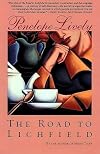
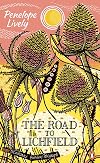
The Road to Lichfield
by Penelope Lively
On This Page
Description
While visiting her dying father in a nursing home, a middle aged daughter discovers a man and a world she never knew.Tags
Recommendations
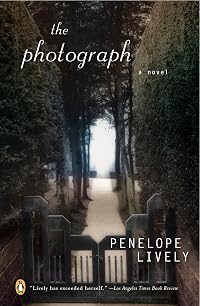



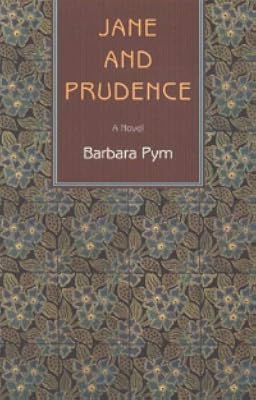


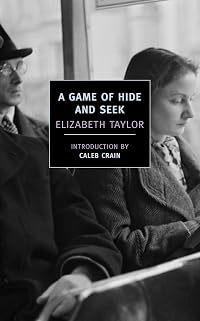
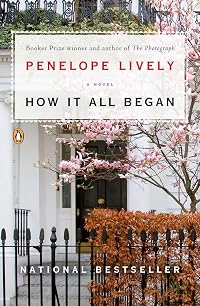















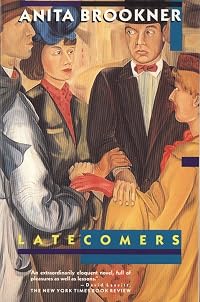


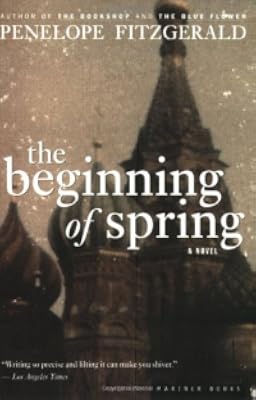

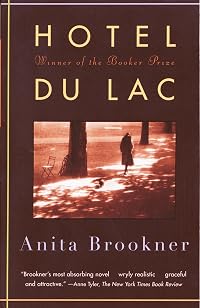

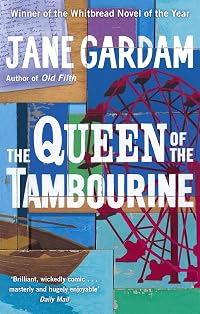


Member Recommendations
Member Reviews
“But when you are eighteen – or twenty-three – it is inconceivable that the choices you make must be worn like albatrosses around your neck for the rest of your life. And when you are forty-two it seems the ultimate malevolence that one should have been faced with those choices at the point in life when most of us are least equipped to make them.”
Protagonist Anne Linton lives in Cuxing with her husband and two children. She travels regularly to Lichfield, where her widowed father is in a nursing home. During these trips, Anne learns one of her father’s secrets, which changes her perception of her past, and finds an unexpected relationship, which changes her perception of her present (specifically, her marriage). She loses her show more job as a history teacher and becomes involved in a local effort to save a historically significant cottage.
It is hard to describe the impact of this book in a few sentences. It is slow in developing, and I was not sure where it was headed, but once I finished, I felt like I “got it.” This book examines a person’s history, of the passage of time, and memories, and how these elements impact one’s perceptions of life. The tone is quiet and contemplative. The characters are well developed and easy to picture.
If you enjoy “slice of life” books, you will find much to appreciate in this one. Lively’s writing style is delightful. I had previously read How It All Began, which I very much enjoyed, and plan to read more of her works.
“Oh, the past is disagreeable all right, she thought, no wonder we'd rather not know. And it has this way of jumping out at you from behind corners when you're least expecting it, so that you have to spend time and energy readjusting to it, redigesting it. Or it hangs around your neck like an albatross, so that there is no putting it aside ever, even if you wanted to.” show less
Protagonist Anne Linton lives in Cuxing with her husband and two children. She travels regularly to Lichfield, where her widowed father is in a nursing home. During these trips, Anne learns one of her father’s secrets, which changes her perception of her past, and finds an unexpected relationship, which changes her perception of her present (specifically, her marriage). She loses her show more job as a history teacher and becomes involved in a local effort to save a historically significant cottage.
It is hard to describe the impact of this book in a few sentences. It is slow in developing, and I was not sure where it was headed, but once I finished, I felt like I “got it.” This book examines a person’s history, of the passage of time, and memories, and how these elements impact one’s perceptions of life. The tone is quiet and contemplative. The characters are well developed and easy to picture.
If you enjoy “slice of life” books, you will find much to appreciate in this one. Lively’s writing style is delightful. I had previously read How It All Began, which I very much enjoyed, and plan to read more of her works.
“Oh, the past is disagreeable all right, she thought, no wonder we'd rather not know. And it has this way of jumping out at you from behind corners when you're least expecting it, so that you have to spend time and energy readjusting to it, redigesting it. Or it hangs around your neck like an albatross, so that there is no putting it aside ever, even if you wanted to.” show less
“But when you are eighteen – or twenty-three – it is inconceivable that the choices you make must be worn like albatrosses around your neck for the rest of your life. And when you are forty-two it seems the ultimate malevolence that one should have been faced with those choices at the point in life when most of us are least equipped to make them.”
Protagonist Anne Linton lives in Cuxing with her husband and two children. She travels regularly to Lichfield, where her widowed father is in a nursing home. During these trips, Anne learns one of her father’s secrets, which changes her perception of her past, and finds an unexpected relationship, which changes her perception of her present (specifically, her marriage). She loses her show more job as a history teacher and becomes involved in a local effort to save a historically significant cottage.
It is hard to describe the impact of this book in a few sentences. It is slow in developing, and I was not sure where it was headed, but once I finished, I felt like I “got it.” This book examines a person’s history, of the passage of time, and memories, and how these elements impact one’s perceptions of life. The tone is quiet and contemplative. The characters are well developed and easy to picture.
If you enjoy “slice of life” books, you will find much to appreciate in this one. Lively’s writing style is delightful. I had previously read How It All Began, which I very much enjoyed, and plan to read more of her works.
“Oh, the past is disagreeable all right, she thought, no wonder we'd rather not know. And it has this way of jumping out at you from behind corners when you're least expecting it, so that you have to spend time and energy readjusting to it, redigesting it. Or it hangs around your neck like an albatross, so that there is no putting it aside ever, even if you wanted to.” show less
Protagonist Anne Linton lives in Cuxing with her husband and two children. She travels regularly to Lichfield, where her widowed father is in a nursing home. During these trips, Anne learns one of her father’s secrets, which changes her perception of her past, and finds an unexpected relationship, which changes her perception of her present (specifically, her marriage). She loses her show more job as a history teacher and becomes involved in a local effort to save a historically significant cottage.
It is hard to describe the impact of this book in a few sentences. It is slow in developing, and I was not sure where it was headed, but once I finished, I felt like I “got it.” This book examines a person’s history, of the passage of time, and memories, and how these elements impact one’s perceptions of life. The tone is quiet and contemplative. The characters are well developed and easy to picture.
If you enjoy “slice of life” books, you will find much to appreciate in this one. Lively’s writing style is delightful. I had previously read How It All Began, which I very much enjoyed, and plan to read more of her works.
“Oh, the past is disagreeable all right, she thought, no wonder we'd rather not know. And it has this way of jumping out at you from behind corners when you're least expecting it, so that you have to spend time and energy readjusting to it, redigesting it. Or it hangs around your neck like an albatross, so that there is no putting it aside ever, even if you wanted to.” show less
I think this novel suffers a little from the attempt to draw out a vague theme. That theme seems to be the sense of uncertainty brought on by the passage of time. Points of view will alter; what once were certainties fragment, often with no resolution.
These themes are examined by a middle class woman who travels regularly on the same road to visit a dying father in Lichfield. This episode impacts on her perceptions of a rather tiresome marriage, once she discovers her father had a mistress, and she has a brief affair with another married man on her away visits to attend to her father.
She adjusts her points of view over the course of the novel and embarks on changes in life, seeing them as inevitable, unreliable, yet constant.
These themes are examined by a middle class woman who travels regularly on the same road to visit a dying father in Lichfield. This episode impacts on her perceptions of a rather tiresome marriage, once she discovers her father had a mistress, and she has a brief affair with another married man on her away visits to attend to her father.
She adjusts her points of view over the course of the novel and embarks on changes in life, seeing them as inevitable, unreliable, yet constant.
For me this book really worked. That's probably more a reflection on where I am, than a judgment in any absolute sense. I could completely understand if someone gave it only one star and said it was boring!
What impressed me most was the way the authored captured a certain mood. I'm having a great deal of difficulty putting it into words myself, but Penelope Lively has cleverly expressed the main character's confusion about how she feels about work; her relationship with her husband, her father and her father's friend; her relationship with the past; the impact of change on her life - all in the context of travel along a road!
It left me with a feeling that if we can only discern it, life is more like traveling along a road than sitting show more in one place. Even if that traveling involves going up & down the same road fairly often, we see different things each time. By implication, perhaps if I open my eyes a bit more (outwardly, inwardly, back in time) there's a lot which can be revealed.
Hmmm....lousy review; great book. Thanks "Mrs Lively" (as the publisher's blurb calls her - well it was 1977) show less
What impressed me most was the way the authored captured a certain mood. I'm having a great deal of difficulty putting it into words myself, but Penelope Lively has cleverly expressed the main character's confusion about how she feels about work; her relationship with her husband, her father and her father's friend; her relationship with the past; the impact of change on her life - all in the context of travel along a road!
It left me with a feeling that if we can only discern it, life is more like traveling along a road than sitting show more in one place. Even if that traveling involves going up & down the same road fairly often, we see different things each time. By implication, perhaps if I open my eyes a bit more (outwardly, inwardly, back in time) there's a lot which can be revealed.
Hmmm....lousy review; great book. Thanks "Mrs Lively" (as the publisher's blurb calls her - well it was 1977) show less
4.5 stars- just wonderful. Penelope’s extraordinary prose makes everyday events glow with reality and importance. As usual her lead character, Annie, is someone you wish you knew. I guess a couple of things Annie does are odd and don’t quite ring true with the rest of her character- one is her choice of husband. The other will be clear to you upon finishing.
This was Penelope Lively's first novel for adults, and it was shortlisted for the 1977 Booker Prize, which was won that year by Paul Scott's [b:Staying On|414824|Staying On|Paul Scott|https://images.gr-assets.com/books/1174533395s/414824.jpg|404036]. As always Lively's writing is intelligent and perceptive, even if the plot is rather slight.
The story is told me an omniscient narrator, but occasionally slips into the first person. At its centre is Annie, who travels from her home in Berkshire to the home in Dr Johnson's home town of Lichfield to visit her dying father. Annie is married to the dull but reliable Don, and has a more flamboyant elder brother Graham who works as a television producer and has never married. At her father's show more bedside she meets David, a teacher who was her father's fishing companion, and an affair ensues. Parallel to this narrative, Annie discovers that her father has been giving money regularly to the daughter of a former mistress she knew nothing about. Annie is a historian, and another plot concerns the fate of an old but dilapidated farmhouse in her Berkshire village and the failed campaign to save it from developers.
A quiet book and as always with Lively a pleasure to read, but perhaps not her best work. It is full of little details that remind the reader how much England has changed in the last 40 years. show less
The story is told me an omniscient narrator, but occasionally slips into the first person. At its centre is Annie, who travels from her home in Berkshire to the home in Dr Johnson's home town of Lichfield to visit her dying father. Annie is married to the dull but reliable Don, and has a more flamboyant elder brother Graham who works as a television producer and has never married. At her father's show more bedside she meets David, a teacher who was her father's fishing companion, and an affair ensues. Parallel to this narrative, Annie discovers that her father has been giving money regularly to the daughter of a former mistress she knew nothing about. Annie is a historian, and another plot concerns the fate of an old but dilapidated farmhouse in her Berkshire village and the failed campaign to save it from developers.
A quiet book and as always with Lively a pleasure to read, but perhaps not her best work. It is full of little details that remind the reader how much England has changed in the last 40 years. show less
Clearly a "first novel." Ms. Lively improves, as time passes. One can feel her talent and sensitivity to domestic moments in this one, but "Passing On," the only other one of hers I've read so far, is more sophisticated, more focused, better paced, and more involving.
Members
- Recently Added By
Lists

Booker Prize
491 works; 62 members

Man Booker Prize Longlist 1977
6 works; 1 member

Booker Prize Shortlist: Titles Not Yet Read
161 works; 4 members
Author Information

73+ Works 14,541 Members
Penelope Lively has written over 18 books for children, and over 15 titles for adults, distinguishing herself on both levels. Among the awards she has received are the coveted Booker Prize for the adult novel "Moon Tiger" (1987) and the Carnegie Medal for the highly acclaimed juvenile work, "The Ghost of Thomas Kempe" (1973). In Lively's writing, show more for both adults and children, the recurrent theme is interpreting the past through exploring the function of memory. "My particular preoccupation as a writer is with memory. Both with memory in the historical sense and memory in the personal sense." Beginning her writing career in the early 1970's, Lively wrote exclusively for children for over a decade. Because children have limited memories, devices were used to explore their perceptions of the past, such as ghosts in "Uninvited Ghosts and Other Stories" (1985), and a sampler in "A Stitch in Time' (1976). Lively's first adult novel, "The Road to Lichfield" (1977) was the result of turning to an older audience when she felt inspiration running out. Her adult novels include "Passing On" (1995), the story of a mother's legacy to her children and 'Oleander, Jacarandi: A Childhood Perceived' (1994) which is a memoir of Lively's childhood. Penelope (Low) Lively, born March 17, 1933 in Cairo, Egypt, had a most unusual childhood. She grew up in Cairo with no formal education until age 12, when her family put her in boarding school in England. After earning a B.A. in history at Oxford in 1955, she married Jack Lively, a university professor, whom she calls her most useful critic. They have a son and a daughter, Adam and Josephine. (Bowker Author Biography) show less
Some Editions
Awards and Honors
Awards
Series
Belongs to Publisher Series
Common Knowledge
- Original publication date
- 1977
- People/Characters
- Anne Linton
- Important places
- Lichfield, Staffordshire, England, UK
- First words
- Anne Linton drove north to Lichfield through the morning.
- Last words
- (Click to show. Warning: May contain spoilers.)The car swept on, channelled as though by tramlines, and she sat looking ahead, seeing nothing, thinking backwards through the day, the year.
Classifications
Statistics
- Members
- 319
- Popularity
- 99,331
- Reviews
- 11
- Rating
- (3.67)
- Languages
- English, German
- Media
- Paper, Ebook
- ISBNs
- 12
- ASINs
- 3