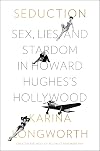
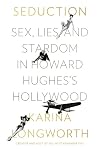
Seduction: Sex, Lies, and Stardom in Howard Hughes's Hollywood
by Karina Longworth
On This Page
Description
In this riveting popular history, the creator of You Must Remember This probes the inner workings of Hollywood's glamorous golden age through the stories of some of the dozens of actresses pursued by Howard Hughes, to reveal how the millionaire mogul's obsessions with sex, power and publicity trapped, abused, or benefitted women who dreamt of screen stardom. In recent months, the media has reported on scores of entertainment figures who used their power and money in Hollywood to sexually show more harass and coerce some of the most talented women in cinema and television. But as Karina Longworth reminds us, long before the Harvey Weinsteins there was Howard Hughes--the Texas millionaire, pilot, and filmmaker whose reputation as a cinematic provocateur was matched only by that as a prolific womanizer. His supposed conquests between his first divorce in the late 1920s and his marriage to actress Jean Peters in 1957 included many of Hollywood's most famous actresses, among them Billie Dove, Katharine Hepburn, Ava Gardner, and Lana Turner. From promoting bombshells like Jean Harlow and Jane Russell to his contentious battles with the censors, Hughes--perhaps more than any other filmmaker of his era--commoditized male desire as he objectified and sexualized women. Yet there were also numerous women pulled into Hughes's grasp who never made it to the screen, sometimes virtually imprisoned by an increasingly paranoid and disturbed Hughes, who retained multitudes of private investigators, security personnel, and informers to make certain these actresses would not escape his clutches. Vivid, perceptive, timely, and ridiculously entertaining, The Seducer is a landmark work that examines women, sex, and male power in Hollywood during its golden age--a legacy that endures nearly a century later. show lessTags
Recommendations







Member Reviews
it's karina longworth so it's entertaining, nuanced, devastating, interested in the female perspective and fantastically written. i also just want to add that i didn't immediately pick this up when it came out even though i'm a huge "you must remember this" fan because i wasn't familiar with (or interested in) howard hughes at all and i can't emphasize enough how much this book is FOR people who don't know or care about howard hughes–- she uses his life as a wealthy, controlling, strange, mediocre man to write really insightfully about hollywood and specifically about the actresses in his orbit who are all 500 times more interesting and talented than he could ever be, and the tragedy of these women coming into contact with him.
also, show more as always, i was in a reading rut and this book had me up until 2am frantically turning pages. show less
also, show more as always, i was in a reading rut and this book had me up until 2am frantically turning pages. show less
Review of: Seduction: Sex, Lies, and Stardom in Howard Hughes's Hollywood,
by Karina Longworth
by Stan Prager (7-31-20)
“When people ask me if I went to film school, I tell them, 'No, I went to films,'” Quentin Tarantino famously quipped. While I’m no iconic director, I too “went to films,” in a manner of speaking. I was raised by my grandmother in the 1960s—with a little help from a 19” console TV in the living room and seven channels delivered via rooftop antenna. When cartoons, soaps, or prime time westerns and sitcoms like Bonanza and Bewitched weren’t broadcasting, all the remaining airtime was filled with movies. All kinds of movies: drama, screwball comedies, war movies, gangster movies, horror movies, sci-fi, show more musicals, love stories, murder mysteries—you name the genre, it ran. And ran. And ran. For untold hours and days and weeks and years.
Grandma—rest in peace—loved movies. Just loved them. All kinds of movies. But she didn’t have much of a discerning eye: for her, The Treasure of the Sierra Madre was no better or worse than Bedtime for Bonzo. At first, I didn’t know any better, and whether I was four or fourteen I watched whatever was on, whenever she was watching. But I took a keen interest. The immersion paid dividends. My tastes evolved. One day I began calling them films instead of movies, and even turned into something of a “film geek,” arguing against the odds that Casablanca is a better picture than Citizen Kane, promoting Kubrick’s Paths of Glory over 2001, and shamelessly confessing to screening Tarantino’s Kill Bill I and II back-to-back more than a dozen times. In other words, I take films pretty seriously. So, when I noticed that Seduction: Sex, Lies, and Stardom in Howard Hughes's Hollywood was up for grabs in an early reviewer program, I jumped at the opportunity. I was not to be disappointed.
In an extremely well-written and engaging narrative, film critic and journalist Karina Longworth has managed to turn out a remarkable history of Old Hollywood, in the guise of a kind of biography of Howard Hughes. In films, a “MacGuffin” is something insignificant or irrelevant in itself that serves as a device to trigger the plot. Examples include the “Letters of Transit” in Casablanca, the statuette in The Maltese Falcon, and the briefcase in Tarantino’s Pulp Fiction. Howard Hughes himself is the MacGuffin of sorts in Seduction, which is far less about him than his female victims and the peculiar nature of the studio system that enabled predators like Hughes and others who dominated the motion picture industry.
Howard Hughes was once one of the most famous men in America, known for his wealth and genius, a larger-than-life legend noted both for his exploits as aviator and flamboyance as a film producer given to extravagance and star-making. But by the time I was growing up, all that was in the distant past, and Hughes was little more than a specter in supermarket tabloids, an eccentric billionaire turned recluse. It was later said that he spent most days alone, sitting naked in a hotel room watching movies. Long unseen by the public, at his death he was nearly unrecognizable, skeletal and covered in bedsores. Director Martin Scorsese resurrected him for the big screen in his epic biopic “The Aviator,” headlined by Leonardo DiCaprio and a star-studded cast, which showcased Hughes as a heroic and brilliant iconoclast who in turn took on would-be censors, the Hollywood studio system, the aviation industry and anyone who might stand in the way of his quest for glory—all while courting a series of famed beauties. Just barely in frame was the mental instability, the emerging Obsessive-Compulsive Disorder that later brought him down.
Longworth finds Hughes a much smaller and more despicable man, an amoral narcissist and manipulator who was seemingly incapable of empathy for other human beings. (Yes, there is indeed a palpable resemblance to a certain president!) While Hughes carefully crafted an image of a titan who dominated the twin arenas of flight and film, in Longworth’s portrayal he seems to crash more planes than he lands, and churns out more bombs than blockbusters. In the public eye, he was a great celebrity, but off-screen he comes off as an unctuous villain, a charlatan whose real skill set was self-promotion empowered by vast sums of money and a network of hangers-on. The author gives him his due by denying him top billing as the star of the show, rather giving scrutiny to those in his orbit, the females in supporting roles whom he in turn dominated, exploited and discarded. You can almost hear refrains of Carly Simon’s You’re So Vain interposed in the narrative, taunting the ghost of Hughes with the chorus: “You probably think this song is about you”—which by the way would make a great soundtrack if there’s ever a screen adaptation of the book.
If not Hughes, the real main character is Old Hollywood itself, and with a skillful pen, Longworth turns out a solid history—a decidedly feminist history—of the place and time that is nothing less than superlative. The author recreates for us the early days before the tinsel, when a sleepy little “dry” town no one had ever heard of almost overnight became the celluloid capital of the country. Pretty girls from all over America would flock there on a pilgrimage to fame; most disappointed, many despairing, more than a few dead. Nearly all were preyed upon by a legion of the contemptible, used and abused with a thin tissue of lies and promises that anchored them not only to the geography but to the predominantly male movers and shakers who dominated the studio system that literally dominated everything else. This is a feminist history precisely because Longworth focuses on these women—more specifically ten women involved with Hughes—and through them brilliantly captures Hollywood’s golden age as manifested in both the glamorous and the tawdry.
Howard Hughes was not the only predator in Tinseltown, of course, but arguably its most depraved. If Hollywood power-brokers overpromised fame to hosts of young women just to bed them, for Hughes sex was not even always the principal motivation. It went way beyond that, often to twisted ends perhaps unclear to even Hughes himself. He indeed took many lovers, but those he didn’t sleep with were not exempt to his peculiar brand of exploitation. What really got Howard Hughes off was exerting power over women, controlling them, owning them. He virtually enslaved some of these women, stripping them of their individual freedom of will for months or even years with vague hints at eventual stardom, abetted by assorted handlers appointed to spy on them and report back to him. Even the era of “Me Too” lacks the appropriate vocabulary to describe his level of “creepy!”
One of the women he apparently did not take to bed was Jane Russell. Hughes cast the beautiful, voluptuous nineteen year old in The Outlaw, a film that took forever to produce and release largely due to his fetishistic obsession with Russell’s breasts—and the way these spilled out of her a dress in a promotional poster that provoked the ire of censors. Longworth’s treatment of the way Russell unflappably endured her long association with Hughes—despite his relentless domination over her life and career—is just one of the many delightful highlights in Seduction.
The Outlaw, incidentally, was one of the movies I recall watching with Grandma back in the day. Her notions of Hollywood had everything to do with the glamorous and the glorious, of handsome leading men and lovely leading ladies up on the silver screen. I can’t help wondering what she might think if she learned how those ladies were tormented by Hughes and other moguls of the time. I wish I could tell her about it, about this book. Alas, that’s not possible, but I can urge anyone interested in this era to read Seduction. If authors of film history could win an Academy Award, Longworth would have an Oscar on her mantle to mark this outstanding achievement.
Review of: Seduction: Sex, Lies, Stardom in Howard Hughes's Hollywood, by Karina Longworth https://regarp.com/2020/07/31/review-of-seduction-sex-lies-stardom-in-howard-hug... show less
by Karina Longworth
by Stan Prager (7-31-20)
“When people ask me if I went to film school, I tell them, 'No, I went to films,'” Quentin Tarantino famously quipped. While I’m no iconic director, I too “went to films,” in a manner of speaking. I was raised by my grandmother in the 1960s—with a little help from a 19” console TV in the living room and seven channels delivered via rooftop antenna. When cartoons, soaps, or prime time westerns and sitcoms like Bonanza and Bewitched weren’t broadcasting, all the remaining airtime was filled with movies. All kinds of movies: drama, screwball comedies, war movies, gangster movies, horror movies, sci-fi, show more musicals, love stories, murder mysteries—you name the genre, it ran. And ran. And ran. For untold hours and days and weeks and years.
Grandma—rest in peace—loved movies. Just loved them. All kinds of movies. But she didn’t have much of a discerning eye: for her, The Treasure of the Sierra Madre was no better or worse than Bedtime for Bonzo. At first, I didn’t know any better, and whether I was four or fourteen I watched whatever was on, whenever she was watching. But I took a keen interest. The immersion paid dividends. My tastes evolved. One day I began calling them films instead of movies, and even turned into something of a “film geek,” arguing against the odds that Casablanca is a better picture than Citizen Kane, promoting Kubrick’s Paths of Glory over 2001, and shamelessly confessing to screening Tarantino’s Kill Bill I and II back-to-back more than a dozen times. In other words, I take films pretty seriously. So, when I noticed that Seduction: Sex, Lies, and Stardom in Howard Hughes's Hollywood was up for grabs in an early reviewer program, I jumped at the opportunity. I was not to be disappointed.
In an extremely well-written and engaging narrative, film critic and journalist Karina Longworth has managed to turn out a remarkable history of Old Hollywood, in the guise of a kind of biography of Howard Hughes. In films, a “MacGuffin” is something insignificant or irrelevant in itself that serves as a device to trigger the plot. Examples include the “Letters of Transit” in Casablanca, the statuette in The Maltese Falcon, and the briefcase in Tarantino’s Pulp Fiction. Howard Hughes himself is the MacGuffin of sorts in Seduction, which is far less about him than his female victims and the peculiar nature of the studio system that enabled predators like Hughes and others who dominated the motion picture industry.
Howard Hughes was once one of the most famous men in America, known for his wealth and genius, a larger-than-life legend noted both for his exploits as aviator and flamboyance as a film producer given to extravagance and star-making. But by the time I was growing up, all that was in the distant past, and Hughes was little more than a specter in supermarket tabloids, an eccentric billionaire turned recluse. It was later said that he spent most days alone, sitting naked in a hotel room watching movies. Long unseen by the public, at his death he was nearly unrecognizable, skeletal and covered in bedsores. Director Martin Scorsese resurrected him for the big screen in his epic biopic “The Aviator,” headlined by Leonardo DiCaprio and a star-studded cast, which showcased Hughes as a heroic and brilliant iconoclast who in turn took on would-be censors, the Hollywood studio system, the aviation industry and anyone who might stand in the way of his quest for glory—all while courting a series of famed beauties. Just barely in frame was the mental instability, the emerging Obsessive-Compulsive Disorder that later brought him down.
Longworth finds Hughes a much smaller and more despicable man, an amoral narcissist and manipulator who was seemingly incapable of empathy for other human beings. (Yes, there is indeed a palpable resemblance to a certain president!) While Hughes carefully crafted an image of a titan who dominated the twin arenas of flight and film, in Longworth’s portrayal he seems to crash more planes than he lands, and churns out more bombs than blockbusters. In the public eye, he was a great celebrity, but off-screen he comes off as an unctuous villain, a charlatan whose real skill set was self-promotion empowered by vast sums of money and a network of hangers-on. The author gives him his due by denying him top billing as the star of the show, rather giving scrutiny to those in his orbit, the females in supporting roles whom he in turn dominated, exploited and discarded. You can almost hear refrains of Carly Simon’s You’re So Vain interposed in the narrative, taunting the ghost of Hughes with the chorus: “You probably think this song is about you”—which by the way would make a great soundtrack if there’s ever a screen adaptation of the book.
If not Hughes, the real main character is Old Hollywood itself, and with a skillful pen, Longworth turns out a solid history—a decidedly feminist history—of the place and time that is nothing less than superlative. The author recreates for us the early days before the tinsel, when a sleepy little “dry” town no one had ever heard of almost overnight became the celluloid capital of the country. Pretty girls from all over America would flock there on a pilgrimage to fame; most disappointed, many despairing, more than a few dead. Nearly all were preyed upon by a legion of the contemptible, used and abused with a thin tissue of lies and promises that anchored them not only to the geography but to the predominantly male movers and shakers who dominated the studio system that literally dominated everything else. This is a feminist history precisely because Longworth focuses on these women—more specifically ten women involved with Hughes—and through them brilliantly captures Hollywood’s golden age as manifested in both the glamorous and the tawdry.
Howard Hughes was not the only predator in Tinseltown, of course, but arguably its most depraved. If Hollywood power-brokers overpromised fame to hosts of young women just to bed them, for Hughes sex was not even always the principal motivation. It went way beyond that, often to twisted ends perhaps unclear to even Hughes himself. He indeed took many lovers, but those he didn’t sleep with were not exempt to his peculiar brand of exploitation. What really got Howard Hughes off was exerting power over women, controlling them, owning them. He virtually enslaved some of these women, stripping them of their individual freedom of will for months or even years with vague hints at eventual stardom, abetted by assorted handlers appointed to spy on them and report back to him. Even the era of “Me Too” lacks the appropriate vocabulary to describe his level of “creepy!”
One of the women he apparently did not take to bed was Jane Russell. Hughes cast the beautiful, voluptuous nineteen year old in The Outlaw, a film that took forever to produce and release largely due to his fetishistic obsession with Russell’s breasts—and the way these spilled out of her a dress in a promotional poster that provoked the ire of censors. Longworth’s treatment of the way Russell unflappably endured her long association with Hughes—despite his relentless domination over her life and career—is just one of the many delightful highlights in Seduction.
The Outlaw, incidentally, was one of the movies I recall watching with Grandma back in the day. Her notions of Hollywood had everything to do with the glamorous and the glorious, of handsome leading men and lovely leading ladies up on the silver screen. I can’t help wondering what she might think if she learned how those ladies were tormented by Hughes and other moguls of the time. I wish I could tell her about it, about this book. Alas, that’s not possible, but I can urge anyone interested in this era to read Seduction. If authors of film history could win an Academy Award, Longworth would have an Oscar on her mantle to mark this outstanding achievement.
Review of: Seduction: Sex, Lies, Stardom in Howard Hughes's Hollywood, by Karina Longworth https://regarp.com/2020/07/31/review-of-seduction-sex-lies-stardom-in-howard-hug... show less
 This review was written for LibraryThing Early Reviewers.
As a devoted fan of Longworth's podcast "You Must Remember This," I was eager to read this book and was not disappointed. The writing is accessible to any casual fan of Hollywood history, although the length of the book and depth of detail requires a deeper interest level. Many books about Hollywood and its stars rely on sensationalized rumors and unsubstantiated gossip, but Longworth fact-checks rumors that are part of the common lore and lays out the verifiable facts of the stories. Stars are not romanticized and behavior is called what it is (racist, sexist, etc.). I found every bit of this book fascinating.
This review was written for LibraryThing Early Reviewers.I thought this book was fascinating not only in capturing history through the points of view of women entangled in the life of Howard Hughes, but also for how that history is reflected in our own time. The narratives surrounding female film stars, and women in general, today are not radically different than they were in the 20s, 30s, 40s, 50s, and on. What Longworth is able to do is show through a series of portraits of women involved with Hughes is how different women were able to shape, or be shaped by those narratives. It is a beautiful work of empathy and respect for the women caught in the net of one powerful and insane man's lies.
At first glance one wonders why this book, ostensibly a biography of Howard Hughes, is titled "Seduction: Sex, Lies, and Stardom..." Is the author just using a more sensational title to attract attention? But once you get into it, you realize that this is not just about Hughes. Yes, he is the central figure whose birth to death is the through line of the story, with all the various events swirling around him. But the majority of the book is more the careers of the many women in Hughes's life, from Jean Harlow to Katherine Hepburn to Ava Gardner to Terry Moore. And these stories take place against the background of a history of Hollywood, from its silent movie beginnings to the blacklist of the '50s. The book is decidedly oriented toward show more the view of the women, rather than of Hughes, as it is focused on how Hollywood, and he particularly, treated them, as objects and ways to make money. Their views and interactions are set forth in much detail, so it is a very personal and human story, which keeps it from being a dry historical account. The author is an experienced writer and researcher about Hollywood, and the book shows it in its extensive documentation, down to every detail. However, the author has a light touch and a sense of humor. So although some biographies can be a bit boring, I found myself caught up in the story and eager to follow it through to the final pages, where Hughes ends up in the more publicly known reclusive phase of his life. show less
This review was written for LibraryThing Early Reviewers.The first thing to know about this book is that it is everything I look for in a historical text: It reads like a novel, and it is exhaustively researched. This incredible history of the Classic Hollywood era examines the prices paid by the beautiful female faces that lit up the silver screen from the mid-1920s through the mid-1950s. Using Howard Hughes and the various women that cycled through his life as a lens (Billie Dove, Jean Harlow, Katherine Hepburn to name a few), Longworth takes a deep dive into the lives of women who for too long have been reduced to their movies and looks. What results is a stunning examination of the origins and effects of the Hollywood machine which is truly thought-provoking in an era of #metoo.
It is rare show more to find a non-fiction historical text as readable as this. Longworth has taken the time to imbue her subjects with humanity, and tells their stories in an intersecting narrative style that is unafraid of revealing a bit of emotion. The text is underpinned with a strong research method rooted in archival materials, period films, oral histories, and more, and Longworth points out these sourcing choices within the text. Historiographically, this book adds much to the literature on Classic Hollywood at the intersection of womens rights, labor rights, and feminism.
All personalities in this book - including Hughes - are laid bare, and Longworth seeks to paint accurate pictures of her subjects while also injecting copious observations from their contemporaries and press coverage from the era.
In short, this book has everything for many audiences - voracious readers in search of an engrossing book, historians of the 20th century, particularly pop culture and film, and readers interested in the deep legacy of #metoo across decades. show less
It is rare show more to find a non-fiction historical text as readable as this. Longworth has taken the time to imbue her subjects with humanity, and tells their stories in an intersecting narrative style that is unafraid of revealing a bit of emotion. The text is underpinned with a strong research method rooted in archival materials, period films, oral histories, and more, and Longworth points out these sourcing choices within the text. Historiographically, this book adds much to the literature on Classic Hollywood at the intersection of womens rights, labor rights, and feminism.
All personalities in this book - including Hughes - are laid bare, and Longworth seeks to paint accurate pictures of her subjects while also injecting copious observations from their contemporaries and press coverage from the era.
In short, this book has everything for many audiences - voracious readers in search of an engrossing book, historians of the 20th century, particularly pop culture and film, and readers interested in the deep legacy of #metoo across decades. show less
This review was written for LibraryThing Early Reviewers.Karina Longworth's Seduction: Sex, Lies, and Stardom in Howard Hughes's Hollywood actually tells the much broader story of the eccentric millionaire mogul's life and times, rather than just the seamy and salacious aspects of his often obsessive and compulsive relationships with dozens of actresses. The title suggests a much narrower focus than the book actually delivers, as Longworth delves in detail into Hughes's many business enterprises and activities including the Hughes Tool company, his aviation exploits, his film production company, the purchase and ownership of RKO Studios, and his testimony before the House Un-American Activities Committee. This expansive approach gives the book considerable heft and substance, but simultaneous show more distracts from what is ostensibly its main thrust. But there is still a great deal of the promised sex and seduction laced throughout this biography. His sordid and shameful treatment of women is painstakingly detailed: all the abusive relationships, the affairs, the lies, the obsessions, the marriages, the divorces, and later in his life the virtual collection, imprisonment, (albeit in well appointed accommodations) and inevitable discarding of dozens of young and naïve would-be starlets hopelessly hoping to become Hollywood stars under his ultimately non-existant tutelage and attention. Longworth has ably chronicled Hughes's bizarre and shameful treatment of women, but overall the book would have been more effective if she had trimmed away some of the extraneous biographical material. show less
This review was written for LibraryThing Early Reviewers.Members
- Recently Added By
Lists

Best Biographies, Autobiographies and Memoirs
465 works; 160 members
Author Information

7 Works 293 Members
One of America's most insightful film historians, Karina Longworth is the creator, writer, and host of You Must Remember This, a podcast on the secret and forgotten history of twentieth-century Hollywood. She lives in Los Angeles.
Common Knowledge
- Original publication date
- 2018
- People/Characters
- Howard Hughes; Billie Dove; Jean Harlow; Ida Lupino; Ginger Rogers; Katharine Hepburn (show all 27); Jane Russell; Ava Gardner; Faith Domergue; Jean Peters; Terry Moore; Rupert Hughes; Ella Rice Hughes; Lincoln Quarberg; Ben Lyon; Gloria Vanderbilt; Johnny Meyer; Yvonne de Carlo; Lana Turner; Linda Darnell; Gina Lollobrigida; Robert Mitchum; Walter Kane; Yvonne Schubert; Ingrid Bergman; Roberto Rossellini; Ann Dvorak
- Important places
- Hollywood, Los Angeles, California, USA; Las Vegas, Nevada, USA
- Related movies
- Hell's Angels (1930 | IMDb); The Outlaw (1943 | IMDb); The Age for Love (1931 | IMDb); Cock of the Air (1932 | IMDb); Red-Headed Woman (1932 | IMDb); Platinum Blonde (1931 | IMDb) (show all 19); A Bill of Divorcement (1932 | IMDb); Scarface (1932 | IMDb); Stage Door (1937 | IMDb); Kitty Foyle (1940 | IMDb); Crossfire (1947 | IMDb); Outrage (1950 | IMDb); Vendetta (1950 | IMDb); Stromboli (1950 | IMDb); His Kind of Woman (1951 | IMDb); Come Back, Little Sheba (1952 | IMDb); Macao (1952 | IMDb); Wait Till the Sun Shines, Nellie (1952 | IMDb); Gentlemen Prefer Blondes (1953 | IMDb)
Classifications
Statistics
- Members
- 223
- Popularity
- 146,327
- Reviews
- 23
- Rating
- (4.11)
- Languages
- English
- Media
- Paper, Audiobook, Ebook
- ISBNs
- 10
- ASINs
- 3