
Cathedral, Forge, and Waterwheel: Technology and Invention in the Middle Ages
by Frances Gies (Author), Joseph Gies (Author)
Medieval Life
On This Page
Description
In this account of Europe's rise to world leadership in technology, Frances and Joseph Gies make use of recent scholarship to destroy two time-honored myths. Myth One: that Europe's leap forward occurred suddenly in the "Renaissance," following centuries of medieval stagnation. Not so, say the Gieses: Early modern technology and experimental science were direct outgrowths of the decisive innovations of medieval Europe, in the tools and techniques of agriculture, craft industry, metallurgy, show more building construction, navigation, and war. Myth Two: that Europe achieved its primacy through "Western" superiority. On the contrary, the authors report, many of Europe's most important inventions - the horse harness, the stirrup, the magnetic compass, cotton and silk cultivation and manufacture, papermaking, firearms, "Arabic" numerals - had their origins outside Europe, in China, India, and Islam. The Gieses show how Europe synthesized its own innovations - the three-field system, water power in industry, the full-rigged ship, the putting-out system - into a powerful new combination of technology, economics, and politics. From the expansion of medieval man's capabilities, the voyage of Columbus with all its fateful consequences is seen as an inevitable product, while even the genius of Leonardo da Vinci emerges from the context of earlier and lesser-known dreamers and tinkerers. Cathedral, Forge, and Waterwheel is illustrated with more than 90 photographs and drawings. It is a Split Main Selection of the Book-of-the-Month Club. show lessTags
Recommendations

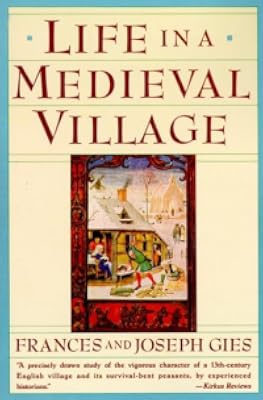
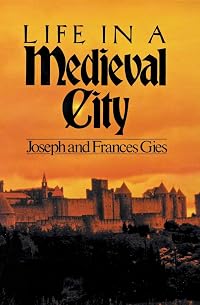

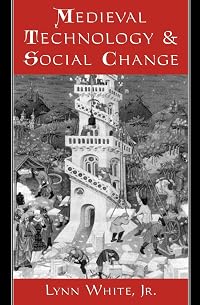
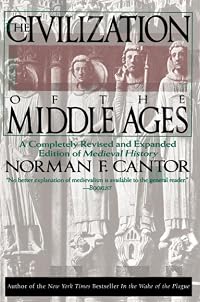


















Member Recommendations

TLCrawford Nuts and Bolts of the past follows the same themes as Cathedral, Forge and Waterwheel, the incremental advancements achieved in technology and the resulting changes in the workplace.
Member Reviews
First published in 1991, this one held up as well as can be expected. In the 90s, the myth of the "Dark Ages" hadn't quite been debunked. Historians, like the Gies, set out to undo years of revisionism. It's no easy task to condense such a massive breadth of information and research into a general overview.
What early historians vainly sought in the "Dark Ages" was an era on par with their own Industrial Revolution. Changing perspective, it's instead an era of social change, economical reorganization and unique adaptation. For example, Europe couldn't claim the invention of the gristmill or castle, but both transformed into a symbol of feudalism. On the other hand, watermills, fairs, and family holdings proved population growth. show more Europeans did not invent dikes, but the Netherlands were completely transformed because of them. Lowly wooden churches became massive, stone cathedrals. Over time, guilds, trade agreements, and the emergence of the "urban" center resulted in a Commercial Revolution in the High Middle Ages.
I expected factual errors, of course, but my issue is that, structurally, it's meanders, and they needed to double down on their premise. The authors, in their enthusiasm for Greek and Roman technology make medieval advancements an afterthought. They're certainly in agreement that China, India, and the Arabian Peninsula were far more developed, that's indisputable. But they kept back-tracking on their own argument. Europe receiving "hand-me-downs," isn't any different than describing it as the "Dark Ages." However the chapters on the Mid- to Late Middle Ages do hold up decently.
I understand it is a classic in its own right, and I appreciate the authors' attempt in making medieval history accessible. You could definitely use this work as a reference for fictional writing, but not as an academic resource. show less
What early historians vainly sought in the "Dark Ages" was an era on par with their own Industrial Revolution. Changing perspective, it's instead an era of social change, economical reorganization and unique adaptation. For example, Europe couldn't claim the invention of the gristmill or castle, but both transformed into a symbol of feudalism. On the other hand, watermills, fairs, and family holdings proved population growth. show more Europeans did not invent dikes, but the Netherlands were completely transformed because of them. Lowly wooden churches became massive, stone cathedrals. Over time, guilds, trade agreements, and the emergence of the "urban" center resulted in a Commercial Revolution in the High Middle Ages.
I expected factual errors, of course, but my issue is that, structurally, it's meanders, and they needed to double down on their premise. The authors, in their enthusiasm for Greek and Roman technology make medieval advancements an afterthought. They're certainly in agreement that China, India, and the Arabian Peninsula were far more developed, that's indisputable. But they kept back-tracking on their own argument. Europe receiving "hand-me-downs," isn't any different than describing it as the "Dark Ages." However the chapters on the Mid- to Late Middle Ages do hold up decently.
I understand it is a classic in its own right, and I appreciate the authors' attempt in making medieval history accessible. You could definitely use this work as a reference for fictional writing, but not as an academic resource. show less
I truly enjoyed reading Frances and Joseph Gies’ Cathedral, Forge and Waterwheel: Technology and Invention in the Middle Ages. When I first picked the book up I was primarily interested in learning about the evolution of the workplace. That was one of many things I learned reading the book. The Gies’ explain that Rome’s gynaeceums (woman’s quarters?) were not just where woman congregated but were filled with looms and material for cloth making. They explain the ‘putting out’ system that developed and spread virtual factories across entire towns. They even illustrate an assembly line system developed in Venice to load ships. I would have been happy with those bits of knowledge but they also illustrated, vividly, the small show more steps that advanced technology throughout the Middle Ages. Incremental improvements like those that took the waterwheel from producing a mere fraction of one horsepower when it was first developed to yielding nearly sixty horsepower by the 1500s.
I also learned some amazing trivia. The barrel is the only pure European invention. Clothing sewn from pieces of cloth developed in Northern Europe where people were accustomed to piecing together clothing from hides. Leonardo DeVinci devised mitered edges for the Chinese style doors on canal locks that allowed them to better seal. There were many other little revelations but for me the biggest discovery was how historians learned these things. A sixth century Chinese scholar wrote that he dare not use the writings of the sages for toilet paper is proof that toilet paper was used in China at that time. Because written history has to a great extent focused on the rich and powerful learning about the common folk, the work they do, and the way they live is often difficult. Seeing how the authors pulled this information from paintings, statues, drawings, and writings on unrelated topics was truly educational. If your idea of history is memorizing names of kings, popes and generals this is not the book for you. If you are interested in how things work and how technology progresses I cannot recommend this book more highly. show less
I also learned some amazing trivia. The barrel is the only pure European invention. Clothing sewn from pieces of cloth developed in Northern Europe where people were accustomed to piecing together clothing from hides. Leonardo DeVinci devised mitered edges for the Chinese style doors on canal locks that allowed them to better seal. There were many other little revelations but for me the biggest discovery was how historians learned these things. A sixth century Chinese scholar wrote that he dare not use the writings of the sages for toilet paper is proof that toilet paper was used in China at that time. Because written history has to a great extent focused on the rich and powerful learning about the common folk, the work they do, and the way they live is often difficult. Seeing how the authors pulled this information from paintings, statues, drawings, and writings on unrelated topics was truly educational. If your idea of history is memorizing names of kings, popes and generals this is not the book for you. If you are interested in how things work and how technology progresses I cannot recommend this book more highly. show less
A pretty basic but comprehensive history of medieval technology, Cathedral, Forge and Waterwheel is best used as an introduction for the interested layperson to other scholarship in the field. The Gies have produced a good overview of various kinds of technologies, but I would disagree quite a bit with the conclusions they draw and the contextualisation they provide. Though written in 1994, it feels curiously old-fashioned at points. To be honest, I'm still a little confused as to why it was assigned for a graduate level course in medieval history—is there nothing more up-to-date and less lightweight out there?—but I don't resent having read it. For what that's worth. :D
Gies and Gies do a great job, once again. This time they present us with the technology of the middle ages and show how it was incorporated into and influential upon the Medieval West. Many a thesis topic lurks undiscovered in the paragraphs, rendering this general work of great relevance to scholars as well.
The brighter side of the Dark Ages ... covers the technology that kept medieval life going, but several errors of fact in various political/social contexts were really distracting. Dated, too. I remembered this book being a lot better than I found it this time through.
A well-written and researched book reviewing the gradual acceleration of technology in North and Western Europe during the medieval period. The illustrations sadly are the weak point as they are muddy, now and again.
For more than a century following the publication in 1776 of Edward Gibbon's massive tome, The Decline and Fall of the Roman Empire, the Middle Ages were indicted as "the triumph of barbarism and religion". In doing this he coupled the two bête noires of the intellectuals of his day, with the Catholic Church especially complicit in its rejection of change in science and agriculture. Yet in the present book the authors proffer evidence that the dark ages were not nearly so dark as assumed by many. They demonstrate this by chronicling the developments in technology over the centuries preceding the Renaissance. Some of these included the magnetic compass which would enable the voyages of discovery in the fifteenth century, water power for show more industry, and new designs for ships with full rigging. Europe did not develop ideas in isolation but was able to adopt ideas originating in the civilizations of Islam, India and China.
The book's scope is the thousand years from the fall of the Western Roman Empire to the discovery of the New World. The authors divide the book into seven chapters into which they arrange most of their material chronologically. In the chapter on "The Not so Dark Ages: A.D. 500-900" the authors debunk the notion that little happened in those four hundred years. The authors discuss warfare, textiles, agriculture, and the ways in which long-distance navigation and trade spurred urban growth in northwest Europe. Using archaeological research published as recently as 1990, the authors describe how "specialized trading settlements called 'emporia' and 'gateway communities' sprang up near the North Sea and Channel coasts" in the seventh and eighth centuries (p. 43).
One of the most valuable chapters is "The Asian Connection." The authors remind us that although the revival of the European economy and the re-urbanization of Europe are often described as a "Renaissance" of classical antiquity, some of the most crucial technological innovations came from beyond Europe. These imports include the trio of gunpowder, the printing press, and the magnetic compass. The physical configuration of early-modern cities, the nature of their intellectual life, and the potential of Europeans to begin a program of overseas expansion depended more upon inventions borrowed from Asia than any revival of Roman technology.
The book also chronicles the onset and expansion of the commercial revolution and the consequent growth of cities. The authors explore the environmental impact of land reclamation and deforestation. They note that "the growing pressures of construction and industry brought Europeans for the first time to a consciousness of the forest's limits" (p. 171). The book concludes with the voyages of Columbus and the products of the genius of Da Vinci as the dawn of the Renaissance was on the horizon. show less
The book's scope is the thousand years from the fall of the Western Roman Empire to the discovery of the New World. The authors divide the book into seven chapters into which they arrange most of their material chronologically. In the chapter on "The Not so Dark Ages: A.D. 500-900" the authors debunk the notion that little happened in those four hundred years. The authors discuss warfare, textiles, agriculture, and the ways in which long-distance navigation and trade spurred urban growth in northwest Europe. Using archaeological research published as recently as 1990, the authors describe how "specialized trading settlements called 'emporia' and 'gateway communities' sprang up near the North Sea and Channel coasts" in the seventh and eighth centuries (p. 43).
One of the most valuable chapters is "The Asian Connection." The authors remind us that although the revival of the European economy and the re-urbanization of Europe are often described as a "Renaissance" of classical antiquity, some of the most crucial technological innovations came from beyond Europe. These imports include the trio of gunpowder, the printing press, and the magnetic compass. The physical configuration of early-modern cities, the nature of their intellectual life, and the potential of Europeans to begin a program of overseas expansion depended more upon inventions borrowed from Asia than any revival of Roman technology.
The book also chronicles the onset and expansion of the commercial revolution and the consequent growth of cities. The authors explore the environmental impact of land reclamation and deforestation. They note that "the growing pressures of construction and industry brought Europeans for the first time to a consciousness of the forest's limits" (p. 171). The book concludes with the voyages of Columbus and the products of the genius of Da Vinci as the dawn of the Renaissance was on the horizon. show less
Members
- Recently Added By
Lists

Chronological 2017
30 works; 1 member

Books Read in 2018
4,360 works; 110 members
Author Information


Joseph Gies was born on October 8, 1916 in Ann Arbor, Mich and attended the University of Michigan and Columbia University. He held jobs with several publishers including Encyclopaedia Britannica, and was editor-in-chief for a division of Doubleday. Gies is best known for several books, such as Life in a Medieval Castle, Life in a Medieval City, show more and Life in a Medieval Village. These books, written with his wife Frances Carney, explore existence in Medieval times. The works, and his others, are noted for their highly readable, but thorough quality. Topics such as archaeology, government, dining, entertainment, and daily life are presented in fascinating detail. (Bowker Author Biography) show less
Series

Common Knowledge
- Canonical title
- Cathedral, Forge, and Waterwheel: Technology and Invention in the Middle Ages
- Original publication date
- 1994
- People/Characters
- Aelred of Rievaulx; Adam of Dryburgh; Boethius (Anicius Manlius Torquatus Severinus | c.480-c.524); John Scotus Erigena; Hugh of St. Victor; Henri Pirenne (show all 11); Benedict of Nursia (Saint); Isidore of Seville; Bede or The Venerable Bede (Saint, Doctor of the Church, 673-735); Alcuin of York; Albertus Magnus
- Important places
- Hamwih, Hampshire, England UK; Ipswich, Suffolk, England, UK; St. Denis, Perigord, France; Lillers, Artois, France
- Important events
- Commercial Revolution
- Dedication
- In memory of Albert Mayio
- First words
- In the centuries following the Middle Ages, thinkers of the European Enlightenment looked back on the previous period as a time "quiet as the dark of the night," when the world slumbered and man's history came to "a full stop... (show all)."
- Last words
- (Click to show. Warning: May contain spoilers.)But operating on instinct, insight, trial and error, and perseverance, the craftsmen and craftswomen, the entrepreneurs, the working monks and the clerical intellectuals, and the artist-engineers, all transformed the world, on balance very much to the world's advantage.
Classifications
Statistics
- Members
- 1,115
- Popularity
- 22,819
- Reviews
- 13
- Rating
- (3.66)
- Languages
- English
- Media
- Paper, Audiobook, Ebook
- ISBNs
- 7
- ASINs
- 9