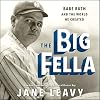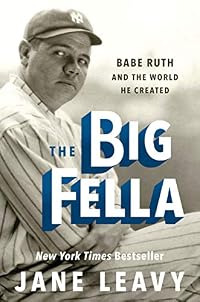
The Big Fella: Babe Ruth and the World He Created
by Jane Leavy
On This Page
Description
He lived in the present tense--in the camera's lens. There was no frame he couldn't or wouldn't fill. He swung the heaviest bat, earned the most money, and incurred the biggest fines. Like all the new-fangled gadgets then flooding the marketplace--radios, automatic clothes washers, Brownie cameras, microphones and loudspeakers--Babe Ruth "made impossible events happen." Aided by his crucial partnership with Christy Walsh--business manager, spin doctor, damage control wizard, and surrogate show more father, all stuffed into one tightly buttoned double-breasted suit--Ruth drafted the blueprint for modern athletic stardom. His was a life of journeys and itineraries--from uncouth to couth, spartan to spendthrift, abandoned to abandon; from Baltimore to Boston to New York, and back to Boston at the end of his career for a finale with the only team that would have him. There were road trips and hunting trips; grand tours of foreign capitals and post-season promotional tours, not to mention those 714 trips around the bases. After hitting his 60th home run in September 1927--a total that would not be exceeded until 1961, when Roger Maris did it with the aid of the extended modern season--he embarked on the mother of all barnstorming tours, a three-week victory lap across America, accompanied by Yankee teammate Lou Gehrig. Walsh called the tour a "Symphony of Swat." The Omaha World Herald called it "the biggest show since Ringling Brothers, Barnum and Bailey, and seven other associated circuses offered their entire performance under one tent." In The Big Fella, acclaimed biographer Jane Leavy recreates that 21-day circus and in so doing captures the romp and the pathos that defined Ruth's life and times. Drawing from more than 250 interviews, a trove of previously untapped documents, and Ruth family records, Leavy breaks through the mythology that has obscured the legend and delivers the man. show lessTags
Recommendations



Member Reviews
Jane Leavy doesn’t write biographies without making a bigger point. This is both a biography of Babe Ruth and a story of the evolution of celebrity and fame in the early twentieth century.
She tells Ruth’s story through the course of a 21 day, coast-to-coast barnstorming tour Ruth and Lou Gehrig took after the Yankees’ 1927 World Series victory over the Pittsburgh Pirates. 1927 was also the year that Ruth hit his record 60 home runs, breaking his own record of 59, set 6 years earlier. He was at the height of his fame, and the height of his fans’ adoration.
Each stop along the way is given its own chapter, with an account of the festivities — at least one exhibition game pitting the Bustin’ Babes against the Larrupin’ Lous, show more with Ruth and Gehrig putting on home run shows and filling out their teams with local talent and friends. Every stop was a big event. Remember this was well before televised sports, so Ruth and Gehrig were mythological figures to the fans in so many of the places the tour stopped — midwestern towns like Omaha, Kansas City (which of course had no Major League team at the time), and Sioux City as well as west coast cities like San Diego, Los Angeles, San Jose, Oakland, and San Francisco. This was a rare chance for fans to see their idols up close, and they packed the small stadiums all along the tour.
Leavy weaves flashbacks into each stop, especially going back to Ruth’s childhood to show how his need for approval and just plain fun grew from his parents’ rejection, entrusting his development to what amounts to incarceration at St. Mary’s Industrial School for Boys. He was left there by his parents at 7 years of age, and he stayed there with little interruption until he began his baseball career 12 years later. The boys at St. Mary’s referred to themselves as “inmates”, and Ruth was confined longer and with less family visitation than most of the others.
The one thing that St. Mary’s gave him (besides training in tailoring) was baseball — St. Mary’s was a hotbed for baseball, and Ruth found a father-figure/mentor there. Brother Matthias taught him about baseball, and he guided him through the conventional education that St. Mary’s could give him. Ruth was ready for professional baseball when he was discovered at St. Mary’s and signed with the minor league Baltimore Orioles, and then was quickly sold to the major league Boston Red Sox as a 19 year old pitcher.
The facts of Ruth’s career — his conversion to the outfield despite a few years as a dominating pitcher and then the revolution he brought to baseball as a power hitter for the Yankees — are well known.
It’s the evolution of Ruth as a celebrity that Leavy really brings to the party. In fact, as much as a biography of Ruth, this is a story about Ruth’s partnership with Christy Walsh, himself a revolutionary figure in the business of celebrity.
The 1920s, by Leavy’s account, became a new era of fame, enabled by new technologies — national radio networks, newsreels and movies, and wire services that could transmit photographs for newspaper publication across the country. Newspapers, with photographic layouts, proliferated especially in New York, with columns that went beyond the facts of athletes’ performances into their professional and personal lives.
Walsh saw the possibilities. He could, in effect, manufacture a Babe Ruth for the public — putting Babe Ruth’s private self on a public stage, but a private self of intentional design. That Babe Ruth would be the idol of kids, a hero to everyone, available for endorsements, events, fantastic stories, all orchestrated by Walsh as a business manager, something that baseball heroes had never had before.
One of the media that Walsh used to produce this private Babe Ruth was ghostwriting. Walsh himself wrote and employed writers to write columns under Ruth’s (and other celebrities’) names. The columns purportedly told the inside thoughts of Ruth (and the other celebrities), making them available for anyone to read in newspapers all across the country, through the Christy Walsh Syndicate beginning in 1921.
Walsh was a genius in his own right, even if a bit unscrupulous at times. In fact, the whole idea was a bit sketchy — the Ruth that Walsh helped produce was not the real Ruth. Ruth certainly had his virtues — he was fun-loving, likable in his way, and he certainly would go well out of his way to entertain kids. Ruth would do whatever he could to make a kid feel special — the connection to his own rejected, neglected childhood is almost too obvious to mention.
But he was also a heavy drinker, a philanderer, and about as self-indulgent as a man making a fortune playing a game could be. Check out Ruth’s stats for 1925 — suddenly the guy who flirted with a .400 batting average and had hit as many as 59 home runs in a season hit .290 with 25 home runs and played in only 98 games. It wasn’t because he pulled a hamstring — he had eaten, drank, smoked, and partied himself into the hospital.
It wasn’t so much that all of that was a secret. It was more that, with Walsh’s management, it wasn’t what was written and told about Ruth. The Ruth that Walsh (and Ruth himself) presented was a guy working out hard to get back into shape, doing roadwork, cutting wood, swearing off alcohol, and isolating himself on his farm with his family in Sudbury, Massachusetts.
Reading Leavy’s account of Walsh’s celebrity machine brings to mind things you see in later years — the newsreels, radio programs, and television programs that took us into celebrities’ living rooms, showing what solid family lives they had, quietly playing cards and listening to music. All a matter of image production that the fans ate up, even if they may have known, when it came down to it, that, no that’s not how Humphrey Bogart spent his evenings.
There’s a very poignant part to the story’s end. Leavy tells how Ruth, sick with the cancer that would soon kill him, attended the premiere of the movie The Babe Ruth Story, starring William Bendix as the Babe. The movie was far from factual. Leavy says, I imagine with some irony, that Ruth, under heavy medication, lasted only 20 minutes at the theatre and “didn’t know the movie was about him.” Well, you could argue it wasn’t.
I probably went on a little long here. Sorry about that. Leavy’s book is far from a dry telling of the facts — I hope my review conveys that. There may be more detailed autobiographies out there, and you could question her using the barnstorming tour as a way to tell Ruth’s story — sometimes the flashbacks feel a little awkward, and I found myself sometimes losing my orientation in time.
But Leavy tells a very good story, and she absolutely did her homework. There are over 100 pages of appendices and notes, detailing her sources, Ruth’s record on the field, and maybe most interestingly, details of the very successful financial partnership between Ruth and Walsh. Ruth and Walsh brought wealth to the baseball field, as well as modern fame. show less
She tells Ruth’s story through the course of a 21 day, coast-to-coast barnstorming tour Ruth and Lou Gehrig took after the Yankees’ 1927 World Series victory over the Pittsburgh Pirates. 1927 was also the year that Ruth hit his record 60 home runs, breaking his own record of 59, set 6 years earlier. He was at the height of his fame, and the height of his fans’ adoration.
Each stop along the way is given its own chapter, with an account of the festivities — at least one exhibition game pitting the Bustin’ Babes against the Larrupin’ Lous, show more with Ruth and Gehrig putting on home run shows and filling out their teams with local talent and friends. Every stop was a big event. Remember this was well before televised sports, so Ruth and Gehrig were mythological figures to the fans in so many of the places the tour stopped — midwestern towns like Omaha, Kansas City (which of course had no Major League team at the time), and Sioux City as well as west coast cities like San Diego, Los Angeles, San Jose, Oakland, and San Francisco. This was a rare chance for fans to see their idols up close, and they packed the small stadiums all along the tour.
Leavy weaves flashbacks into each stop, especially going back to Ruth’s childhood to show how his need for approval and just plain fun grew from his parents’ rejection, entrusting his development to what amounts to incarceration at St. Mary’s Industrial School for Boys. He was left there by his parents at 7 years of age, and he stayed there with little interruption until he began his baseball career 12 years later. The boys at St. Mary’s referred to themselves as “inmates”, and Ruth was confined longer and with less family visitation than most of the others.
The one thing that St. Mary’s gave him (besides training in tailoring) was baseball — St. Mary’s was a hotbed for baseball, and Ruth found a father-figure/mentor there. Brother Matthias taught him about baseball, and he guided him through the conventional education that St. Mary’s could give him. Ruth was ready for professional baseball when he was discovered at St. Mary’s and signed with the minor league Baltimore Orioles, and then was quickly sold to the major league Boston Red Sox as a 19 year old pitcher.
The facts of Ruth’s career — his conversion to the outfield despite a few years as a dominating pitcher and then the revolution he brought to baseball as a power hitter for the Yankees — are well known.
It’s the evolution of Ruth as a celebrity that Leavy really brings to the party. In fact, as much as a biography of Ruth, this is a story about Ruth’s partnership with Christy Walsh, himself a revolutionary figure in the business of celebrity.
The 1920s, by Leavy’s account, became a new era of fame, enabled by new technologies — national radio networks, newsreels and movies, and wire services that could transmit photographs for newspaper publication across the country. Newspapers, with photographic layouts, proliferated especially in New York, with columns that went beyond the facts of athletes’ performances into their professional and personal lives.
Walsh saw the possibilities. He could, in effect, manufacture a Babe Ruth for the public — putting Babe Ruth’s private self on a public stage, but a private self of intentional design. That Babe Ruth would be the idol of kids, a hero to everyone, available for endorsements, events, fantastic stories, all orchestrated by Walsh as a business manager, something that baseball heroes had never had before.
One of the media that Walsh used to produce this private Babe Ruth was ghostwriting. Walsh himself wrote and employed writers to write columns under Ruth’s (and other celebrities’) names. The columns purportedly told the inside thoughts of Ruth (and the other celebrities), making them available for anyone to read in newspapers all across the country, through the Christy Walsh Syndicate beginning in 1921.
Walsh was a genius in his own right, even if a bit unscrupulous at times. In fact, the whole idea was a bit sketchy — the Ruth that Walsh helped produce was not the real Ruth. Ruth certainly had his virtues — he was fun-loving, likable in his way, and he certainly would go well out of his way to entertain kids. Ruth would do whatever he could to make a kid feel special — the connection to his own rejected, neglected childhood is almost too obvious to mention.
But he was also a heavy drinker, a philanderer, and about as self-indulgent as a man making a fortune playing a game could be. Check out Ruth’s stats for 1925 — suddenly the guy who flirted with a .400 batting average and had hit as many as 59 home runs in a season hit .290 with 25 home runs and played in only 98 games. It wasn’t because he pulled a hamstring — he had eaten, drank, smoked, and partied himself into the hospital.
It wasn’t so much that all of that was a secret. It was more that, with Walsh’s management, it wasn’t what was written and told about Ruth. The Ruth that Walsh (and Ruth himself) presented was a guy working out hard to get back into shape, doing roadwork, cutting wood, swearing off alcohol, and isolating himself on his farm with his family in Sudbury, Massachusetts.
Reading Leavy’s account of Walsh’s celebrity machine brings to mind things you see in later years — the newsreels, radio programs, and television programs that took us into celebrities’ living rooms, showing what solid family lives they had, quietly playing cards and listening to music. All a matter of image production that the fans ate up, even if they may have known, when it came down to it, that, no that’s not how Humphrey Bogart spent his evenings.
There’s a very poignant part to the story’s end. Leavy tells how Ruth, sick with the cancer that would soon kill him, attended the premiere of the movie The Babe Ruth Story, starring William Bendix as the Babe. The movie was far from factual. Leavy says, I imagine with some irony, that Ruth, under heavy medication, lasted only 20 minutes at the theatre and “didn’t know the movie was about him.” Well, you could argue it wasn’t.
I probably went on a little long here. Sorry about that. Leavy’s book is far from a dry telling of the facts — I hope my review conveys that. There may be more detailed autobiographies out there, and you could question her using the barnstorming tour as a way to tell Ruth’s story — sometimes the flashbacks feel a little awkward, and I found myself sometimes losing my orientation in time.
But Leavy tells a very good story, and she absolutely did her homework. There are over 100 pages of appendices and notes, detailing her sources, Ruth’s record on the field, and maybe most interestingly, details of the very successful financial partnership between Ruth and Walsh. Ruth and Walsh brought wealth to the baseball field, as well as modern fame. show less
Reviews led me to believe this book is not up to the standard set by Jane Leavy in her biographies of Sandy Koufax and Mickey Mantle. In fact, this is the best examination of the life and impact of Babe Ruth I have read. Leavy carefully researched this book, interviewing hundreds of people and tracking down stories from contemporary local newspapers about Ruth's barnstorming appearances. It is one of the most enjoyable books I have read this year! Of course, I am a baseball fan and read a lot of books about baseball, but The Big Fella is head and shoulders above most other baseball books not written in the first person. Read it and enjoy!
I found this to be a marvelous book, an intricate interweaving of The Babe, Baseball and the general face of mid-'20's America in all of it's hoopla. The combination of what some may see as minutia with a rock-solid overview of the "Big Picture" worked exceptionally well for me, and the fact that this book is about more than just baseball is one of the reasons it worked for me.
I wish I could write like Jane Leavy. She has a great style and produced a fun read with many humorous passages. This is not a cradle to the grave biography, but Leavy uses the back drop of a barnstorming tour to cover Ruth's life. Great history, too, of the rise of celebrity in the 1920s.
Summary: A biography of Babe Ruth, with the narrative of his life connected with a day by day account of a barnstorming tour of the country after his home run record-breaking 1927 season.
He was big in so many ways. He could probably have been a Hall of Fame pitcher. He not only held one season and lifetime home run records for decades, but his day in, day out hitting and slugging percentages and many other statistics place him at the very top of all time hitters. He was physically big, in height and girth, in hands. He not only hit a lot of home runs, but hit with a much heavier bat than most players used, and with a swing studied for its efficiency. He had huge appetites, for food, for women, for clothes, for adulation. He not only show more negotiated record salaries (and Leavy suggests he could have received more) but earned record amounts on appearances and endorsements.
Leavy tells this whole story from the loveless marriage of his parents that ended in divorce, with George, Jr. at St. Mary's Industrial School for Boys, and later St. James home, where he met Brother Matthias, who was probably the closest thing he really had to a father, and who taught him baseball. It is even thought that Babe modeled his swing on Brother Matthias. Leavy traces his career from the minors, his time in Boston and transformation from a pitcher to a hitter who played every day, his trade to New York.
She shows us a Ruth who tried to have a different life in his first marriage to Helen, yet whose appetites led to carousing and many women, and an increasingly distant relationship with Helen, who spent more and more time hospitalized or as an invalid, while Babe developed an extra-marital relationship with Claire who he married after Helen's death.
One of the most fascinating aspects of the book was the role Christy Walsh played in making Ruth "big." Long before agents became commonplace, Walsh worked tirelessly with Ruth to get him to amend his ways enough to stay out of trouble, play the game, endorse products, and make a fortune on post-season appearances. Walsh was the one who understood, in a way Ruth never quite grasped, how much Ruth was worth to the Yankees, and the limited time he had to capitalize on it.
Ruth, having not found love in his family, seems to never have been content with a family. He tried to keep playing when his body no longer could sustain it. Traded by the Yankees back to Boston, he hoped to manage a team, but was never given a chance. He got involved in a movie project that produced an inferior "B" movie. Then the cancer came. Ruth's last years were hard and the "big fella" was reduced to 150 pounds by his tottering farewell appearance at an Old-Timers game at Yankee Stadium. A few months later, he was dead.
Leavy uses the device of a 21 day barnstorming tour across the country with Lou Gehrig following his 1927 season, the peak of his career. Each chapter covers one day of the tour and advances Leavy's narrative of his life. The tour captures in miniature the story of his life from the game to the crowds including the kids, the after hours, and the adulation.
This was the one aspect of the book about which I was ambivalent. It captured an aspect of Babe's life often overlooked in the accounts. But it also seemed distracting and one had to pay attention to when Leavy was writing about the tour, or moving forward the larger narrative of his life. It was an interesting device, but I'm not sure it worked for me.
However, Leavy gives us a portrait of both the power and pathos that were part of the Babe's story. She helped me realize how extensive his accomplishments were long before today's technology enhanced game, and how his presence changed the game. Christy Walsh anticipated the role agents would have in looking out for players' interests, changing a game where the owners held all the power. It also raises the fascinating question of whether any of this would happen without the mentoring of Brother Matthias. One thing was sure. Ruth never forgot. And perhaps neither should we. show less
He was big in so many ways. He could probably have been a Hall of Fame pitcher. He not only held one season and lifetime home run records for decades, but his day in, day out hitting and slugging percentages and many other statistics place him at the very top of all time hitters. He was physically big, in height and girth, in hands. He not only hit a lot of home runs, but hit with a much heavier bat than most players used, and with a swing studied for its efficiency. He had huge appetites, for food, for women, for clothes, for adulation. He not only show more negotiated record salaries (and Leavy suggests he could have received more) but earned record amounts on appearances and endorsements.
Leavy tells this whole story from the loveless marriage of his parents that ended in divorce, with George, Jr. at St. Mary's Industrial School for Boys, and later St. James home, where he met Brother Matthias, who was probably the closest thing he really had to a father, and who taught him baseball. It is even thought that Babe modeled his swing on Brother Matthias. Leavy traces his career from the minors, his time in Boston and transformation from a pitcher to a hitter who played every day, his trade to New York.
She shows us a Ruth who tried to have a different life in his first marriage to Helen, yet whose appetites led to carousing and many women, and an increasingly distant relationship with Helen, who spent more and more time hospitalized or as an invalid, while Babe developed an extra-marital relationship with Claire who he married after Helen's death.
One of the most fascinating aspects of the book was the role Christy Walsh played in making Ruth "big." Long before agents became commonplace, Walsh worked tirelessly with Ruth to get him to amend his ways enough to stay out of trouble, play the game, endorse products, and make a fortune on post-season appearances. Walsh was the one who understood, in a way Ruth never quite grasped, how much Ruth was worth to the Yankees, and the limited time he had to capitalize on it.
Ruth, having not found love in his family, seems to never have been content with a family. He tried to keep playing when his body no longer could sustain it. Traded by the Yankees back to Boston, he hoped to manage a team, but was never given a chance. He got involved in a movie project that produced an inferior "B" movie. Then the cancer came. Ruth's last years were hard and the "big fella" was reduced to 150 pounds by his tottering farewell appearance at an Old-Timers game at Yankee Stadium. A few months later, he was dead.
Leavy uses the device of a 21 day barnstorming tour across the country with Lou Gehrig following his 1927 season, the peak of his career. Each chapter covers one day of the tour and advances Leavy's narrative of his life. The tour captures in miniature the story of his life from the game to the crowds including the kids, the after hours, and the adulation.
This was the one aspect of the book about which I was ambivalent. It captured an aspect of Babe's life often overlooked in the accounts. But it also seemed distracting and one had to pay attention to when Leavy was writing about the tour, or moving forward the larger narrative of his life. It was an interesting device, but I'm not sure it worked for me.
However, Leavy gives us a portrait of both the power and pathos that were part of the Babe's story. She helped me realize how extensive his accomplishments were long before today's technology enhanced game, and how his presence changed the game. Christy Walsh anticipated the role agents would have in looking out for players' interests, changing a game where the owners held all the power. It also raises the fascinating question of whether any of this would happen without the mentoring of Brother Matthias. One thing was sure. Ruth never forgot. And perhaps neither should we. show less
There's a lot of interesting information that was new to me about this mythic figure (I went to the birthplace museum in Baltimore back in 2016, but this book didn't come along until a couple years later). My only complaint was the conceit of starting each chapter by writing about a stop on a barnstorming tour, which occasionally caused confusion in my mind.
Jane Leavy takes a different approach to telling the story of Babe Ruth, whose colorful life could probably fill several volumes. Instead of a chronological approach, Leavy attempts to weave the pieces of Ruth's life around a barnstorming tour after the 1927 season. Each chapter is a city in the story, but then digresses in various directions to weave in other aspects of Ruth's life and times. I credit Leavy for trying a new approach, but unfortunately it didn't work for me. The result is abundant confusion, as the reader gets taken back and forward in time to various events in Ruth's life.
Members
- Recently Added By
Author Information

8+ Works 2,015 Members
Jane Leavy is an American writer who grew up on Long Island, New York. She is a graduate of Barnard College and the Columbia University Graduate School of Journalism. Early in her career she was staff writer for womenSports and Self magazines. From 1979-1988 she worked for the Washington Post covering sports, and later the style section which show more included sports, politics, and pop culture. Her writing has also been published in The New York Times, Newsweek, Sports Illustrated and other prominent publications. Her books include Squeeze Play: A Novel, The Last Boy: Mickey Mantle and the End of America's Childhood, Sandy Koufax: A Lefty's Legacy, and The Big Fella: Babe Ruth and the World He Created. (Bowker Author Biography) show less
Awards and Honors
Awards
Common Knowledge
- People/Characters
- Babe Ruth
- First words
- Twenty-five years ago, when I took my son to visit the Babe Ruth Birthplace and Museum in Baltimore, I was already trying to decide how to write about the Babe.
- Last words
- (Click to show. Warning: May contain spoilers.)The delivery boy opened the box before backing down the hill and driving away.
- Original language
- English
Classifications
- Genres
- Sports and Leisure, Biography & Memoir, Nonfiction, General Nonfiction, History
- DDC/MDS
- 796.357092 — Arts & recreation Recreation, sports, and performing arts Sports Ball sports Ball and stick sports Baseball Biography And History Biography
- LCC
- GV865 .R8 .L43 — Geography, Anthropology and Recreation Recreation. Leisure Recreation. Leisure Sports Ball games: Baseball, football, golf, etc.
- BISAC
Statistics
- Members
- 281
- Popularity
- 114,330
- Reviews
- 10
- Rating
- (3.97)
- Languages
- English
- Media
- Paper, Audiobook, Ebook
- ISBNs
- 10
- ASINs
- 2