On This Page
Description
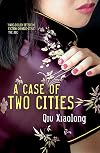
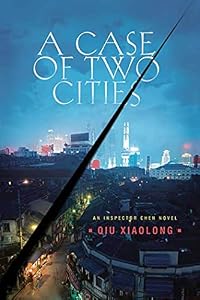
Asked to take the lead in a corruption investigation in which the principal figure and his family have already fled to the U.S., Inspector Chen Cao of the Shanghai Police Bureau is charged to uncover the culprit's partners-in-crime and their organization.Tags
Recommendations










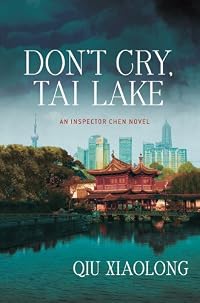
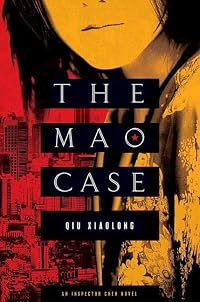




Member Recommendations
teaperson A Case of Two Cities is a fictional mystery that appears to be loosely based on the case described in Inside the Red Mansion. Both explore similar themes of the changes in contemporary China.
20
Member Reviews
Xiaolong's Inspector Chen series offers a fantastic blend of character, atmosphere, and mystery, with all of the books being anchored in poetry and attention to the details of Chinese culture in Shanghai, especially when it comes to food and custom. This is the fourth book in the series, and was somewhat of a departure from the earlier books in the series. Where earlier books felt more centrally focused on a mystery, this one ranged across multiple cases/concerns (multiple continents, even), and seemed just as focused on attending to Chen's character and the literary aspect of the series. That took some getting used to, I admit--it wasn't exactly what I'd expected upon picking up the book--but I ended up enjoying it. And, as always, show more Xiaolong's inclusions of poetry made the book that much richer, even if it sometimes stretched believability that they'd come so easily to the characters' minds.
I would say that, so far, this book is an outlier in the series, and that readers would definitely want to start with the first three books. The other caveat is that it feels like this book ends on less firm footing than normal, and leads directly into the next book--to the extent that it almost feels like this is a two-parter more than a stand-alone in some ways. I'll be making a point of picking up the next book sooner than later because of it, but regardless, I certainly recommend the series. show less
I would say that, so far, this book is an outlier in the series, and that readers would definitely want to start with the first three books. The other caveat is that it feels like this book ends on less firm footing than normal, and leads directly into the next book--to the extent that it almost feels like this is a two-parter more than a stand-alone in some ways. I'll be making a point of picking up the next book sooner than later because of it, but regardless, I certainly recommend the series. show less
3.5*
I really like Chen Cao. In this 4th entry in the series, Chen is asked to work on a case of corruption with connections very high up in the government. The realities of both the difficulties in investigating and the likelihood that most of the high ranking officials involved will end up getting away with it, though well portrayed, were depressing.
I did like the fact that Chen met up with U.S. Marshal Catherine Rhon once again during his visit to the U.S.
I really like Chen Cao. In this 4th entry in the series, Chen is asked to work on a case of corruption with connections very high up in the government. The realities of both the difficulties in investigating and the likelihood that most of the high ranking officials involved will end up getting away with it, though well portrayed, were depressing.
I did like the fact that Chen met up with U.S. Marshal Catherine Rhon once again during his visit to the U.S.
Shanghai's Inspector Chen Cao is assigned to investigate a high-profile corruption case involving a businessman who is seeking asylum in the United States. When a potential informant dies, Chen begins to suspect that his investigation may be for show, and that top officials may not want him to succeed. Might Chen's sudden trip to the U.S. be a diversion or is it the key to solving the case?
Politics is always central to the Inspector Chen novels. This one leans more toward espionage than to crime fiction. It's not particularly light reading, either. The complex plot and ambiguous dialogue require the reader's careful attention. I made the mistake of reading this one when I had a lot of distractions. Perhaps that's why I didn't enjoy it show more as well as the other books I've read in the series. When I'm ready to read the next one, I'll have to make sure I pick a time with fewer distractions. show less
Politics is always central to the Inspector Chen novels. This one leans more toward espionage than to crime fiction. It's not particularly light reading, either. The complex plot and ambiguous dialogue require the reader's careful attention. I made the mistake of reading this one when I had a lot of distractions. Perhaps that's why I didn't enjoy it show more as well as the other books I've read in the series. When I'm ready to read the next one, I'll have to make sure I pick a time with fewer distractions. show less
I've enjoyed the Chen Cao series overall, but this one seems stretched a little too thin between continents. It also has a couple of really implausable moments (Buddhist temple scene, for example). Still, I appreciate the peek into 90's era China and the classic poems scattered throughout.
A CASE OF TWO CITIES opens with seemingly unrelated incidents: the death in somewhat scandalous circumstances of a long serving policeman and Inspector Chen Cao of the Shanghai Police Bureau being put in charge of an investigation into high-level corruption. Chen’s tactics are, of necessity, circuitous but he and the people he chooses to seek help from prove to be in danger. Even when he is appointed at the last minute to head a delegation of Chinese writers on a tour to the USA he is not beyond the reach of those with empires to protect.
I have not read the previous three novels featuring this character and there were a couple of times when it felt like I was missing out on some crucial information, but for the most part it was show more possible to read this book as a standalone novel. For someone who reads crime fiction as much for they way it offers me a window into other places and cultures as for the mysteries A CASE OF TWO CITIES has a lot to offer. Of most interest for me was the small details of life in modern China where a kind of state sponsored capitalism has become the dominant economic force. As Qiu Xiaolong was born in China before moving to the US as an adult I have to assume that this depiction is as authentic as it seemed when reading it and I found this aspect of the book genuinely absorbing. When the book’s action moves to America it is equally interesting seeing a more familiar setting through the eyes of people who are not used to it.
I also enjoyed meeting Chen and seeing him in action. He faces some of the same challenges as fictional police everywhere but having to combine his policing duties with a role as a leading Party cadre adds a layer of complexity and the fact this is topped off with being a recognised poet makes him unique amongst fictional sleuths. His working and personal lives both require a very delicate balancing act between all of these priorities and and this can add both danger and sadness given that he is not always free to do what his heart might want. There are a lot of minor characters in the book and I did find this a bit overwhelming for keeping the story straight in my head plus it meant that none of the other characters was really fleshed out in any depth. His trusted offsider and his wife are probably the only two I’ll be able to remember for any length of time.
Narratively I did find myself getting lost a little at times. Apologies to all the poets out there but the liberal inclusion of poetry and a kind of long-form homage to T.S.Eliot detracted rather than added to the book for me. I’ve never really liked this kind of thing (I do rather like poetry, I just prefer it to be in a separate universe to prose) and here I found it particularly annoying as I was having trouble enough keeping track of all the unfamiliar names and places. But it was probably the style of investigation that made the story harder than normal to follow. I don’t know if was because this case involved such a politically sensitive issue or if this is how Chen’s cases always play out but nothing every really moves in a straight forward direction: every tiny bit of progression has to come via an oblique angle that, at times, isn’t even recognisable as investigative work.
Overall though I really enjoyed A CASE OF TWO CITIES, even if I might have missed a few nuances of the plot and can heartily recommend it to those who like to travel virtually via their crime fiction. The setting, engaging protagonist and understated suspense all make for a very satisfying reading experience. show less
I have not read the previous three novels featuring this character and there were a couple of times when it felt like I was missing out on some crucial information, but for the most part it was show more possible to read this book as a standalone novel. For someone who reads crime fiction as much for they way it offers me a window into other places and cultures as for the mysteries A CASE OF TWO CITIES has a lot to offer. Of most interest for me was the small details of life in modern China where a kind of state sponsored capitalism has become the dominant economic force. As Qiu Xiaolong was born in China before moving to the US as an adult I have to assume that this depiction is as authentic as it seemed when reading it and I found this aspect of the book genuinely absorbing. When the book’s action moves to America it is equally interesting seeing a more familiar setting through the eyes of people who are not used to it.
I also enjoyed meeting Chen and seeing him in action. He faces some of the same challenges as fictional police everywhere but having to combine his policing duties with a role as a leading Party cadre adds a layer of complexity and the fact this is topped off with being a recognised poet makes him unique amongst fictional sleuths. His working and personal lives both require a very delicate balancing act between all of these priorities and and this can add both danger and sadness given that he is not always free to do what his heart might want. There are a lot of minor characters in the book and I did find this a bit overwhelming for keeping the story straight in my head plus it meant that none of the other characters was really fleshed out in any depth. His trusted offsider and his wife are probably the only two I’ll be able to remember for any length of time.
Narratively I did find myself getting lost a little at times. Apologies to all the poets out there but the liberal inclusion of poetry and a kind of long-form homage to T.S.Eliot detracted rather than added to the book for me. I’ve never really liked this kind of thing (I do rather like poetry, I just prefer it to be in a separate universe to prose) and here I found it particularly annoying as I was having trouble enough keeping track of all the unfamiliar names and places. But it was probably the style of investigation that made the story harder than normal to follow. I don’t know if was because this case involved such a politically sensitive issue or if this is how Chen’s cases always play out but nothing every really moves in a straight forward direction: every tiny bit of progression has to come via an oblique angle that, at times, isn’t even recognisable as investigative work.
Overall though I really enjoyed A CASE OF TWO CITIES, even if I might have missed a few nuances of the plot and can heartily recommend it to those who like to travel virtually via their crime fiction. The setting, engaging protagonist and understated suspense all make for a very satisfying reading experience. show less
Qiu Xiaolong lives in the US with a Chinese soul. His hero, inspector Chen, lives in China and deals with corruption and the problems of rapid industrialization. Many aspects make the author precious. Inspector Chen is a poet, and many events remind him of ancient poems, when he does not write one himself. My father was like that: he was a professor of economics but he could quote a poem on every occasion; I clearly remember him quoting Baudelaire to our butcher. My father used to say that poetry had helped him survive the savagery of world war II.
Inspector Chen is also gripped by the rules of ancient cultures.
Because of Victorian times, Europeans are not supposed to ask for something directly (they do not risk/or impose on somebody to show more answer "no"). So they never ask for a cup of coffee, they say "Your coffee is excellent" or "Is there any coffee left", and the hostess understands that the visitor wants more coffee. China has different rules, but it is as complicated, and as a result, inspector Chen is often told what to do in a very symbolic and obscure language (I think this is linked to a principle of deniability). It amuses me. I loved A case of two cities. show less
Inspector Chen is also gripped by the rules of ancient cultures.
Because of Victorian times, Europeans are not supposed to ask for something directly (they do not risk/or impose on somebody to show more answer "no"). So they never ask for a cup of coffee, they say "Your coffee is excellent" or "Is there any coffee left", and the hostess understands that the visitor wants more coffee. China has different rules, but it is as complicated, and as a result, inspector Chen is often told what to do in a very symbolic and obscure language (I think this is linked to a principle of deniability). It amuses me. I loved A case of two cities. show less
I really like Chen Cao. In this 4th entry in the series, Chen is asked to work on a case of corruption with connections very high up in the government. The realities of both the difficulties in investigating and the likelihood that most of the high ranking officials involved will end up getting away with it, though well portrayed, were depressing.
I did like the fact that Chenmet up with U.S. Marshal Catherine Rhon once again during his visit to the U.S. .
I did like the fact that Chen
Members
- Recently Added By
Author Information

42+ Works 5,353 Members
Qiu Xiaolong teaches Chinese Literature at Washington University.
Some Editions
Series

Belongs to Publisher Series
Work Relationships
Common Knowledge
- Canonical title
- A Case of Two Cities
- Original title
- A Case of Two Cities
- Original publication date
- 2006
- People/Characters
- Chen Cao (Chief Inspector); Yu (Detective); Catherine Rhon
- Important places
- Shanghai, China; Los Angeles, California, USA; St. Louis, Missouri, USA
- Dedication
- Journey*
In memory of Mona van Duyn
1921-2004
Out of the train window,
the gaping windows of the buildings
are telling stories all along the line,
about the past, the present, and the futur... (show all)e.
I am not the teller of the stories,
nor the audience,
simply passing through there,
then, full of ignorance,
so full of imagination.
The high tension cables
outline the score of the evening.
Simply passing there,
then -- "Next stop is Halle."
*I wrote the poem during a trip in Germany, looking out of the train window, when I was seized by an inexplicable sadness, and upon my return to the States, I learned about the death of my friend, Mona Van Duyn. - First words
- An anonymous phone call came to the Fujian Police Bureau at 1:15 a.m. on that early May night. (Prologue)
Chief Inspector Chen Cao, of the Shanghai Police Bureau, was invited to a mega bathhouse, Birds Flying, Fishes Jumping, on a May afternoon. - Last words
- (Click to show. Warning: May contain spoilers.)Chief Inspector Chen was ready to go back to Shanghai.
- Original language*
- Engels
*Some information comes from Common Knowledge in other languages. Click "Edit" for more information.
Classifications
Statistics
- Members
- 546
- Popularity
- 54,192
- Reviews
- 24
- Rating
- (3.45)
- Languages
- 9 — Dutch, English, Finnish, French, German, Italian, Norwegian (Bokmål), Spanish, Swedish
- Media
- Paper, Ebook
- ISBNs
- 27
- UPCs
- 1
- ASINs
- 8