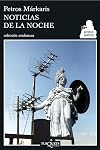
On This Page
Description
When an Albanian husband and wife are found dead in their home, Inspector Costas Haritos, a veteran junta-trained homicide detective on the Athens police force, is called to what seems at first to be an open-and-shut case. For the Greek police, two dead Albanians are hardly a matter of concern. But when Albania's celebrity television news reporter Janna Karayoryi insists that the case was closed too early, Haritos becomes unnerved. He doesn't exactly like the ambitious young journalist, but show more could she be right in thinking the murder has something to do with babies? Before Haritos can find out, Janna is suddenly murdered, moments before she is to go on the air with a startling newsbreak. Did her mysterious report have something to do with the murdered Albanians? Who wanted her silenced, and why? Caught between a bumbling junior officer and higher-ups all too easily influenced by news executives determined to protect their own, Costas Haritos sets out to get to the bottom of the matter-and ends up neck deep in a dark form of capitalism that has emerged in Albania after the dictatorship. show lessTags
Recommendations


























Member Reviews
One of the critics referred to the main character as "the family-stricken Inspector Haritos, with his sly irony and endearingly old-fashioned ways" (from back cover)
I didn't think of his ways as particularly endearing. In fact, the book took me back to the 1950s, when it was fashionable to make crude comments and refer to women by their body shapes. This pervasive attitude toward women, coupled with his cynical view of others in general, made me no fan of Inspector Costas Haritos.
It is usually interesting to read books written in other countries about those countries, as they provide an insight I could never get on my own. We do have that here: both descriptions of places and thoughts about how the world works in Greece.
The book show more revolves around a news reporter, Janna Karoyoryi, who has made a name for herself by exposing persons in high offices. She is about to do more of the same when she is found dead in her dressing room.
Haritos had met her on numerous occasions in his position as investigating officer, and he did not care for her strident, pushy ways. But that doesn't keep him from digging as deep as necessary to find her killer. show less
I didn't think of his ways as particularly endearing. In fact, the book took me back to the 1950s, when it was fashionable to make crude comments and refer to women by their body shapes. This pervasive attitude toward women, coupled with his cynical view of others in general, made me no fan of Inspector Costas Haritos.
It is usually interesting to read books written in other countries about those countries, as they provide an insight I could never get on my own. We do have that here: both descriptions of places and thoughts about how the world works in Greece.
The book show more revolves around a news reporter, Janna Karoyoryi, who has made a name for herself by exposing persons in high offices. She is about to do more of the same when she is found dead in her dressing room.
Haritos had met her on numerous occasions in his position as investigating officer, and he did not care for her strident, pushy ways. But that doesn't keep him from digging as deep as necessary to find her killer. show less
Set in Athens in the 1990s, this book opens with the murder of two Albanians. Inspector Costas Haritos’ homicide division is called to investigate. A news commentator with information related to the case is also murdered. The focus shifts to the murder of the news anchor, and the Albanians are all but forgotten in the media circus.
This story introduces Haritos and is the first book in a series. Haritos is a great character. His hobby is reading dictionaries. He has a gruff exterior but an empathetic heart. He and his wife have a dysfunctional marriage. He tells the story in first person, so we follow his thoughts as he examines the evidence and decides what to do, while juggling challenges introduced by his superiors and the show more reporters.
The mystery is intricate and multi-layered, though some of the characters’ viewpoints feel a bit dated. I do not read many detective and crime mysteries, but I very much enjoyed this one. show less
This story introduces Haritos and is the first book in a series. Haritos is a great character. His hobby is reading dictionaries. He has a gruff exterior but an empathetic heart. He and his wife have a dysfunctional marriage. He tells the story in first person, so we follow his thoughts as he examines the evidence and decides what to do, while juggling challenges introduced by his superiors and the show more reporters.
The mystery is intricate and multi-layered, though some of the characters’ viewpoints feel a bit dated. I do not read many detective and crime mysteries, but I very much enjoyed this one. show less
Set in Athens in the 1990s, this book opens with the murder of two Albanians. Inspector Costas Haritos’ homicide division is called to investigate. A news commentator with information related to the case is also murdered. The focus shifts to the murder of the news anchor, and the Albanians are all but forgotten in the media circus.
This story introduces Haritos and is the first book in a series. Haritos is a great character. His hobby is reading dictionaries. He has a gruff exterior but an empathetic heart. He and his wife have a dysfunctional marriage. He tells the story in first person, so we follow his thoughts as he examines the evidence and decides what to do, while juggling challenges introduced by his superiors and the show more reporters.
The mystery is intricate and multi-layered, though some of the characters’ viewpoints feel a bit dated. I do not read many detective and crime mysteries, but I very much enjoyed this one. show less
This story introduces Haritos and is the first book in a series. Haritos is a great character. His hobby is reading dictionaries. He has a gruff exterior but an empathetic heart. He and his wife have a dysfunctional marriage. He tells the story in first person, so we follow his thoughts as he examines the evidence and decides what to do, while juggling challenges introduced by his superiors and the show more reporters.
The mystery is intricate and multi-layered, though some of the characters’ viewpoints feel a bit dated. I do not read many detective and crime mysteries, but I very much enjoyed this one. show less
I love reading mysteries written by international authors: Fred Vargas, Andrea Camilleri, Henning Mankell, Ragnar Jónasson, Karin Fossum, and Jane Harper are just a few. It goes without saying that I picked up Deadline in Athens with a great deal of anticipation.
The mystery itself is strong. There's a lot going on besides the reporter's death, and the more Haritos teases out clues, he finds that those clues lead to solving all sorts of cases. If I were the type of reader who concentrates on solving the mystery to the exclusion of all else, I would've been happy with this book. But... I'm not. I'm a character-driven reader, so those all-important fictional people mean a great deal to me. I don't have to like every character in a book. show more Sometimes it can be therapeutic to loathe one or two and even cheer on their demise. But sometimes what drives a character can mean a great deal to my enjoyment of a book, and those found in Deadline in Athens seem to luxuriate in being mean-spirited jerks.
Costas Haritos has two hobbies: (1) collecting and reading dictionaries, which would be interesting if he did more with them than lay across the bed, crack one open, and then (2) concoct his latest scheme to get even with his wife. According to Haritos, "The first stage of family life is the joy of living together. The second is children. The third and longest stage is getting your own back at every opportunity. When you get to that stage, you know that you're secure and nothing is going to change." At least it's a good match-- his wife sits on the couch, remote control in hand, watching soap operas and scheming how to get back at him. I won't even go into the morning ritual Haritos performs with his junior officer.
One reason why I enjoy reading mysteries written by international authors is the opportunity to learn about other countries and cultures. There's scarcely any of that to be found in Deadline in Athens. Markaris adds "authentic Greek flavor" by naming each and every street Haritos travels down, how bad the traffic is, and how long it takes him to get to his destination (usually in the pouring rain). Ho hum.
If I weren't so interested in the solution to the mystery, I would've stopped reading within the first fifty pages. In the end, I was very happy with the solution and thrilled that my time spent with the grim Costas Haritos was over. For anyone who wants to experience Greek culture, intriguing mysteries, and solid characters, you'd be well advised to read Jeffrey Siger's excellent Chief Inspector Andreas Kaldis series instead. show less
The mystery itself is strong. There's a lot going on besides the reporter's death, and the more Haritos teases out clues, he finds that those clues lead to solving all sorts of cases. If I were the type of reader who concentrates on solving the mystery to the exclusion of all else, I would've been happy with this book. But... I'm not. I'm a character-driven reader, so those all-important fictional people mean a great deal to me. I don't have to like every character in a book. show more Sometimes it can be therapeutic to loathe one or two and even cheer on their demise. But sometimes what drives a character can mean a great deal to my enjoyment of a book, and those found in Deadline in Athens seem to luxuriate in being mean-spirited jerks.
Costas Haritos has two hobbies: (1) collecting and reading dictionaries, which would be interesting if he did more with them than lay across the bed, crack one open, and then (2) concoct his latest scheme to get even with his wife. According to Haritos, "The first stage of family life is the joy of living together. The second is children. The third and longest stage is getting your own back at every opportunity. When you get to that stage, you know that you're secure and nothing is going to change." At least it's a good match-- his wife sits on the couch, remote control in hand, watching soap operas and scheming how to get back at him. I won't even go into the morning ritual Haritos performs with his junior officer.
One reason why I enjoy reading mysteries written by international authors is the opportunity to learn about other countries and cultures. There's scarcely any of that to be found in Deadline in Athens. Markaris adds "authentic Greek flavor" by naming each and every street Haritos travels down, how bad the traffic is, and how long it takes him to get to his destination (usually in the pouring rain). Ho hum.
If I weren't so interested in the solution to the mystery, I would've stopped reading within the first fifty pages. In the end, I was very happy with the solution and thrilled that my time spent with the grim Costas Haritos was over. For anyone who wants to experience Greek culture, intriguing mysteries, and solid characters, you'd be well advised to read Jeffrey Siger's excellent Chief Inspector Andreas Kaldis series instead. show less
This is the first volume in the Inspector Kostas Charitos series. He is the head of the homicide squad in Athens and is supervised by Nikolaos Gikas. They are not always on the same page, as Charitos is a gut man and his boss only works with facts. Despite many misunderstandings, Gikas has Charitos' back. Charitos is married, and even though he loves his wife, they often have arguments.
Charitos investigates together with Sotiris and Thanassis. They are called to a house where two Albanians have been found dead. Despite questioning the neighbours, they make no progress. If it wasn't for the ambitious journalist Jana Karajorgi, who spreads the word that there must be another child. The TV journalist stops at nothing and keeps spreading show more new stories until she is found murdered shortly before the midnight programme. Now Charitos and his team get a new lead and wonder why the journalist had to die. Her successor is also found dead shortly afterwards. Charitos also realises that there is a mole inside the police department. Who is it?
The case escalates into child trafficking and power games. It is written in such an exciting and varied way that the reader only realises who the culprit is on the last page. show less
Charitos investigates together with Sotiris and Thanassis. They are called to a house where two Albanians have been found dead. Despite questioning the neighbours, they make no progress. If it wasn't for the ambitious journalist Jana Karajorgi, who spreads the word that there must be another child. The TV journalist stops at nothing and keeps spreading show more new stories until she is found murdered shortly before the midnight programme. Now Charitos and his team get a new lead and wonder why the journalist had to die. Her successor is also found dead shortly afterwards. Charitos also realises that there is a mole inside the police department. Who is it?
The case escalates into child trafficking and power games. It is written in such an exciting and varied way that the reader only realises who the culprit is on the last page. show less
Review: The story is a police procedural featuring Costas Haritos and the first of a series. The homicide squad chief is called to the scene of a murder. A famous woman journalist has been killed in the TV broadcasting studio just before she was to go on live with some sensational news. It becomes a struggle between the media and the police. The media is at odds with Haritos and he is nearly suspended. Of course there are twists and turns, the investigation is going in several directions. Is it a spurned lover who murders Janna? Is it an angry pederast that Janna’s journalistic investigation put in prison? Is it the Albanians and foreigners involved in illegal selling of organs and children? The killer can come as a surprise though I show more have to say I had suspected this one.
First sentence: Every morning at nine, we would stare at each other.
Quotes: When you’re a young woman, it’s your mother-in-law who doesn’t want you; when you’re old, it’s your son-in-law. The best age is between forty and fifty. It’s the age when they want you, but you don’t want them.
Last words: Till the next batch of stuffed tomatoes. show less
First sentence: Every morning at nine, we would stare at each other.
Quotes: When you’re a young woman, it’s your mother-in-law who doesn’t want you; when you’re old, it’s your son-in-law. The best age is between forty and fifty. It’s the age when they want you, but you don’t want them.
Last words: Till the next batch of stuffed tomatoes. show less
Αν εξαιρέσουμε τον τρομερά έντονο σεξισμό και τη νοοτροπία "όλα ήταν καλύτερα όταν ήμουν νέος", έχει ενδιαφέρον και πολυπλοκότητα, με καλά σκιαγραφημενους χαρακτήρες.
Members
- Recently Added By
Published Reviews
ThingScore 75
Mit seinem Protagonisten Kostas Charitos erschafft der Autor einen eigensinnigen Antihelden, dessen Ermittlungen nicht immer von Erfolg gekrönt sind und dessen Fehlbarkeit sympathisch wirkt. Neben dem Fall, den Charitos zu bearbeiten hat, finden auch die ironisch geschilderten Ehekonflikte des Kommissars in diesem ungewöhnlichen Kriminalroman Beachtung, ebenso wie seine Vorlieben für show more Wörterbücher und gefüllte Tomaten. Mag der Plot zum Ende hin auch stellenweise konstruiert wirken, so tröstet doch die gewitzte, unkonventionelle Art des Erzählens über diese kleine Schwäche hinweg. show less
added by Indy133
Rezensionsnotiz zu Frankfurter Rundschau, 22.04.2000
Der Verlag hat "aus trüben Gewässern einen Goldfisch geangelt", meint Hans W. Korfmann, der ganz begeistert ist von dem cholerischen Ekelpaket Kommissar Charitos. Zwar könne es ein Weilchen dauern, bis man sich der Leser mit ihm anfreunde, und auch die Themen in diesem Roman wirken auf den ersten Blick eher effekthascherisch und wie eine show more Zusammenstellung aus "Überschriften der Boulevardzeitungen", so der Rezensent. Er lobt allerdings, dass Markaris - obwohl er beiläufig etliche Missstände in Griechenland anspricht - nie moralisierend den Zeigefinger hebt. Dazu wäre Charitos wohl auch kaum der richtige Mann, denn glaubt man Korfmann, so hat ihn der Autor mit nur allzu menschlichen Schwächen ausgestattet. Dennoch mache er als Kommissar "seinen literarischen Vorgängern keine Schande", und am Ende löst sich viel Kompliziertes denn auch ganz logisch auf. Korfmann hat anscheinend normalerweise nicht viel übrig für griechische Autoren. Hier macht er eine Ausnahme. Markaris` "mediterrane Leichtigkeit", seine "Lust am Fabulieren", so merkt er zufrieden an, sei eher untypisch für griechische Intellektuelle. show less
Der Verlag hat "aus trüben Gewässern einen Goldfisch geangelt", meint Hans W. Korfmann, der ganz begeistert ist von dem cholerischen Ekelpaket Kommissar Charitos. Zwar könne es ein Weilchen dauern, bis man sich der Leser mit ihm anfreunde, und auch die Themen in diesem Roman wirken auf den ersten Blick eher effekthascherisch und wie eine show more Zusammenstellung aus "Überschriften der Boulevardzeitungen", so der Rezensent. Er lobt allerdings, dass Markaris - obwohl er beiläufig etliche Missstände in Griechenland anspricht - nie moralisierend den Zeigefinger hebt. Dazu wäre Charitos wohl auch kaum der richtige Mann, denn glaubt man Korfmann, so hat ihn der Autor mit nur allzu menschlichen Schwächen ausgestattet. Dennoch mache er als Kommissar "seinen literarischen Vorgängern keine Schande", und am Ende löst sich viel Kompliziertes denn auch ganz logisch auf. Korfmann hat anscheinend normalerweise nicht viel übrig für griechische Autoren. Hier macht er eine Ausnahme. Markaris` "mediterrane Leichtigkeit", seine "Lust am Fabulieren", so merkt er zufrieden an, sei eher untypisch für griechische Intellektuelle. show less
added by Goethe-InstitutAthen
Lists

Llibres que he llegit el 2006
17 works; 1 member

Greece - a reading list
83 works; 4 members

Books Read in 2025
4,128 works; 98 members
Author Information

70+ Works 2,836 Members
Some Editions
Awards and Honors
Series


Belongs to Publisher Series
detebe (23282)
Common Knowledge
- Canonical title
- Deadline in Athens
- Original title
- Νυχτερινό δελτίο; Nychterino Deltio
- Alternate titles
- Hellas Channel
- Original publication date
- 1995 (original Greek) (original Greek); 2004 (in English) (in English); 2000 (Deutsch) (Deutsch)
- People/Characters*
- Kostas Charitos
- Important places
- Athens, Greece
- First words*
- Jeden Morgen um Punkt neun starren wir einander wortlos an.
- Last words*
- (Click to show. Warning: May contain spoilers.)Bis zu den nächsten gefüllten Tomaten.
- Original language*
- Griechisch
- Disambiguation notice
- Original title: Nychterino Deltio
Deadline in Athens (US and Canada) was also published in English as The Late-night News (UK).
Original title: Nychterino Deltio
*Some information comes from Common Knowledge in other languages. Click "Edit" for more information.
Classifications
- Genres
- Fiction and Literature, Mystery
- DDC/MDS
- 889.334 — Literature & rhetoric Classical & modern Greek literatures Modern Greek literature Fiction 20th century 1945-1999
- LCC
- PA5624 .A713 .N93 — Language and Literature Greek language and literature. Latin language and literature Byzantine and modern Greek literature Individual authors
- BISAC
Statistics
- Members
- 502
- Popularity
- 60,139
- Reviews
- 32
- Rating
- (3.44)
- Languages
- 8 — Dutch, English, French, German, Greek, Italian, Spanish, Swedish
- Media
- Paper, Audiobook, Ebook
- ISBNs
- 34
- ASINs
- 7