Sugar Land
by Tammy Lynne Stoner
On This Page
Description
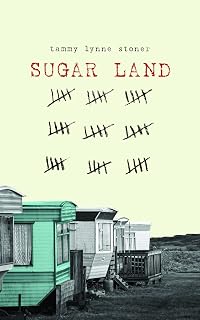
It's 1923 in Midland, Texas, and Miss Dara falls in love with her best friend--who also happens to be a girl. Terrified, Miss Dara takes a job at the Imperial State Prison Farm for men. Once there, she befriends inmate and soon-to-be legendary blues singer Lead Belly, who sings his way out (true story)--but only after he makes her promise to free herself from her own prison.Tags
Recommendations













Member Reviews
Early in this novel the teen-aged Dara kisses the first great love of her life, Rhodie, and in a burst of insight and joy she realizes she is a lesbian. The very next day Dara overhears her uncle, the town sheriff, laughing with another officer about how the two of them had cured four women of their ‘perversion’ by raping them the night before, and in second burst of insight Dara realizes she will never be safe in her home town, and runs away.
If this sort of abrupt, let’s-not-waste-any-time storytelling is okay with you, then you will likely enjoy Sugar Land very much. I did. The novel has a level of sweetness that floats above its main story of homophobia and racism, and the sweetness blurs the edges of things, so that the harsh show more parts of the story never get too difficult to read. In this way it reminded me of Under the Udala Trees, another coming-of-age-while-lesbian story that was thematically true but never so violent that I needed to look away. For some stories I need this level of non-reality, frankly. A gentle, upbeat book with a happy ending sometimes speaks to me more than full-on reality, because I can keep reading. The story that unspools here is beautifully told and I felt safe within these pages.
Another thing I loved about this novel is its depiction of minimum-wage work. Like Dara I have also worked in a cafeteria, and in all-male-except-me settings. I’ll never forget some of the things left on the cafeteria trays coming at me on their way to the conveyor belt to the dishwasher, or the way it feels to hash up slop eight hours a day, or the general awfulness of men in a group when you’re the only woman around, or how your hair smells at the end of the day. This way of life is so well portrayed here that I was almost overcome a few times by bad-gravy memories as I read.
While the people in Sugar Land never feel exactly real, they do feel like fictional people I cared about, and whose welfare I worried about. show less
If this sort of abrupt, let’s-not-waste-any-time storytelling is okay with you, then you will likely enjoy Sugar Land very much. I did. The novel has a level of sweetness that floats above its main story of homophobia and racism, and the sweetness blurs the edges of things, so that the harsh show more parts of the story never get too difficult to read. In this way it reminded me of Under the Udala Trees, another coming-of-age-while-lesbian story that was thematically true but never so violent that I needed to look away. For some stories I need this level of non-reality, frankly. A gentle, upbeat book with a happy ending sometimes speaks to me more than full-on reality, because I can keep reading. The story that unspools here is beautifully told and I felt safe within these pages.
Another thing I loved about this novel is its depiction of minimum-wage work. Like Dara I have also worked in a cafeteria, and in all-male-except-me settings. I’ll never forget some of the things left on the cafeteria trays coming at me on their way to the conveyor belt to the dishwasher, or the way it feels to hash up slop eight hours a day, or the general awfulness of men in a group when you’re the only woman around, or how your hair smells at the end of the day. This way of life is so well portrayed here that I was almost overcome a few times by bad-gravy memories as I read.
While the people in Sugar Land never feel exactly real, they do feel like fictional people I cared about, and whose welfare I worried about. show less
there is a strong and important story here about finding your voice, your true self, and living your truth no matter how long it takes you to get there. the secondary characters strengthen this narrative, as stoner adds in a really nice relationship (that might strain the bounds of plausibility, but i was ok with it) between dara and a black prison inmate in racist texas in the 20's, and between dara and her third-gendered child. that was handled particularly well, as she managed to use language that worked for the 50's, while keeping the sensibilities of today, but in a way that was believable and felt true. dara might not have understood, but she supported, and she saw the parallels between her outsider status and eddie's, and she saw show more what consequences keeping your truth within yourself can have, and so supported eddie living her truth. ("her" in the vernacular of the book, presumably "their"or even "he" in today's language.)
i also almost never believe in a relationship in a book that is only a few weeks long. especially to carry it through a life, to shape everything after, for either party to not be able to let it go. i *never* buy that. i did here. this is literally the first time i can think of that i was sold on both the relationship and the ramifications it had decades later. she managed to make me believe not just in the impact those few weeks could have on both women, but also in everything that happened to them afterwards because of how they handled those feelings. quite a feat.
that said, my expectations were too high going into this one, and overall i'm disappointed.
it's not a bad book, and its point is a good one. most importantly, the writing is good overall and quite good in some places. but the characters needed to be better drawn, and the main arc needed filling in. (we got from point a to point b, but there are holes along the way.) and along the way the main character is inconsistent. i think that's because she just wasn't filled in enough. we had a sketch of her and in the beginning she felt more solid, but as we went on, she was more and more flimsy, less and less there. there are times when she says or does things that feel so out of character, or that aren't backed up with the story. or that are backed up with the story, but later, like she was doing something that she would only grow to be able to do later in the book. in the acknowledgements stoner writes that initially she had some short stories with dara, the main character, and was encouraged to make them into a book. knowing that, i can really see where some of those stories were, and how she weaved them in, and how she needed a little more holding them together.
i also think she made a mistake by making the fiddler a pedophile. if she was trying to make him an outsider, like dara, why choose this way? if not that, why on earth put that in the story? virtually anything else for his outsider status would have been better. if that's not why she did it, i'm really not understanding why. his character was important, i thought, but he was hard to find relatable with his history, and it was hard to mourn his leaving because of it as well.
it's a bigger deal to me that i didn't really believe the relationship dara had with her daughters. it needed more detail and more delineated history; there were too many years there with no contact and then suddenly they were close? she wasn't really their stepmom when she came in at ages 5 and 7? she raised those kids. none of that felt right to me, until her relationship with eddie later in life. the understanding the two of them had together was really nice, but it did come kind of out of nowhere. and stoner handled eddie's gender identity well. as i said before, i think that must have been a fine line to walk, making it acceptable for today's reader, but in the language of the 50's. that was well done. i just with the relationships with both eddie and debbie were stronger from the beginning, or if they were contentious, that it was more a part of the story, and with a reason.
the scene where dara goes to debbie's house to break in and take the photos was a strange addition of kind of slapstick comedy that felt out of place, and was clearly one of those short stories that is well written and tells a story, but just didn't fit in with the rest of the book.
there were so many things i'd take out and replace with more meaningful stories that better round out the characters and their relationships. i just wanted more from this. because the story is a good one, and it's important to tell. it matters. (i love that the telling of her own story - eventually! finally! letting go of those secrets - and giving herself a voice is what ultimately gets her feeling good about herself. "My body filled with my own strength, the power of telling my story." storytelling is life-giving stuff, and i *love* that messaging.) there's good stuff in here, i just wanted more of it. and stoner's writing is good, so i know it could have been better. i know her next one will be, and i'll read it. i also think it's probably hard, especially for a first book, to take a group of short stories and make them into a cohesive novel, and while there were areas where i could see the short story in the larger picture, i'm sure there are places where she threaded it in and i didn't catch it. she really is a talented writer and i hope this isn't the only story she has in her, because i'm looking forward to reading more by her.
"No life is easy, and no life is hard; it's just what adjectives you choose to use to describe it." show less
i also almost never believe in a relationship in a book that is only a few weeks long. especially to carry it through a life, to shape everything after, for either party to not be able to let it go. i *never* buy that. i did here. this is literally the first time i can think of that i was sold on both the relationship and the ramifications it had decades later. she managed to make me believe not just in the impact those few weeks could have on both women, but also in everything that happened to them afterwards because of how they handled those feelings. quite a feat.
that said, my expectations were too high going into this one, and overall i'm disappointed.
it's not a bad book, and its point is a good one. most importantly, the writing is good overall and quite good in some places. but the characters needed to be better drawn, and the main arc needed filling in. (we got from point a to point b, but there are holes along the way.) and along the way the main character is inconsistent. i think that's because she just wasn't filled in enough. we had a sketch of her and in the beginning she felt more solid, but as we went on, she was more and more flimsy, less and less there. there are times when she says or does things that feel so out of character, or that aren't backed up with the story. or that are backed up with the story, but later, like she was doing something that she would only grow to be able to do later in the book. in the acknowledgements stoner writes that initially she had some short stories with dara, the main character, and was encouraged to make them into a book. knowing that, i can really see where some of those stories were, and how she weaved them in, and how she needed a little more holding them together.
i also think she made a mistake by making the fiddler a pedophile. if she was trying to make him an outsider, like dara, why choose this way? if not that, why on earth put that in the story? virtually anything else for his outsider status would have been better. if that's not why she did it, i'm really not understanding why. his character was important, i thought, but he was hard to find relatable with his history, and it was hard to mourn his leaving because of it as well.
it's a bigger deal to me that i didn't really believe the relationship dara had with her daughters. it needed more detail and more delineated history; there were too many years there with no contact and then suddenly they were close? she wasn't really their stepmom when she came in at ages 5 and 7? she raised those kids. none of that felt right to me, until her relationship with eddie later in life. the understanding the two of them had together was really nice, but it did come kind of out of nowhere. and stoner handled eddie's gender identity well. as i said before, i think that must have been a fine line to walk, making it acceptable for today's reader, but in the language of the 50's. that was well done. i just with the relationships with both eddie and debbie were stronger from the beginning, or if they were contentious, that it was more a part of the story, and with a reason.
the scene where dara goes to debbie's house to break in and take the photos was a strange addition of kind of slapstick comedy that felt out of place, and was clearly one of those short stories that is well written and tells a story, but just didn't fit in with the rest of the book.
there were so many things i'd take out and replace with more meaningful stories that better round out the characters and their relationships. i just wanted more from this. because the story is a good one, and it's important to tell. it matters. (i love that the telling of her own story - eventually! finally! letting go of those secrets - and giving herself a voice is what ultimately gets her feeling good about herself. "My body filled with my own strength, the power of telling my story." storytelling is life-giving stuff, and i *love* that messaging.) there's good stuff in here, i just wanted more of it. and stoner's writing is good, so i know it could have been better. i know her next one will be, and i'll read it. i also think it's probably hard, especially for a first book, to take a group of short stories and make them into a cohesive novel, and while there were areas where i could see the short story in the larger picture, i'm sure there are places where she threaded it in and i didn't catch it. she really is a talented writer and i hope this isn't the only story she has in her, because i'm looking forward to reading more by her.
"No life is easy, and no life is hard; it's just what adjectives you choose to use to describe it." show less
I had high hopes for this book, but it turned out to be a little too sentimental for my taste. Also, the Huddie storyline didn't really seem to fit the novel at all. It felt like the author was trying to build the plot around Dara and Huddie's friendship initially, but it just got lost along the way. I can't decide if the book would have been better if that relationship was fleshed out more, or if it would have been better if that storyline was just eliminated all together.
DNF at page 32. The story synopsis sounded great, maybe if I had given it more time and reached the part where Dara evolved into (as one positive blurb put it) "a ballsy broad in a double-wide" I would have liked it as much as some of my GoodReads friends. But I was not in the mood for the cornpone of the first 32 pages, and even the promise of Leadbelly couldn't keep me going. I should beware comparisons to Fannie Flagg.
Stoner, Tammy Lynne. Sugar Land. 9 CDs. unabridged. Brilliance Audio. 2018. ISBN 9781978649071. $24.99.
A southern coming of age story about learning to come to terms with life and what makes your heart ring true. Set in the twenties, a young woman named Dara escapes from Midland, Texas only to run straight into a prison. Dara works in the kitchen and tries to put her past and her great romance to bed. She fell hard for her best friend but is too concerned with what the consequences could be if anyone ever discovered her attraction to girls. Safely ensconced in a prison filled with men, Dara soon befriends Leadbelly, a blues singer destined for stardom, and learns that love is what you make it. Sugar Land follows Dara's journey over the show more decades as she learns to do more than accept the lot life has given her. Brilliantly executed by the talented Donna Postel who throws just the right amount of southern charm into this novel of acceptance and love. Courageous, captivating, and charming, filled with characters that readers won't be able to stop thinking about. For fans of LGBTQ+ romance, historical fiction, and southern charm. - Erin Cataldi, Johnson Co. Public Library, Franklin, IN show less
A southern coming of age story about learning to come to terms with life and what makes your heart ring true. Set in the twenties, a young woman named Dara escapes from Midland, Texas only to run straight into a prison. Dara works in the kitchen and tries to put her past and her great romance to bed. She fell hard for her best friend but is too concerned with what the consequences could be if anyone ever discovered her attraction to girls. Safely ensconced in a prison filled with men, Dara soon befriends Leadbelly, a blues singer destined for stardom, and learns that love is what you make it. Sugar Land follows Dara's journey over the show more decades as she learns to do more than accept the lot life has given her. Brilliantly executed by the talented Donna Postel who throws just the right amount of southern charm into this novel of acceptance and love. Courageous, captivating, and charming, filled with characters that readers won't be able to stop thinking about. For fans of LGBTQ+ romance, historical fiction, and southern charm. - Erin Cataldi, Johnson Co. Public Library, Franklin, IN show less
In a small town in Texas in the summer of 1923, Miss Dara falls in love with a girl. Terrified of what that means and what her family and community would think, she flees to the safety of the kitchen of the farm prison at Sugarland, which isn't a safe place for a young woman, but she makes a place for herself nonetheless.
Sugar Land follows the life of Miss Dara from a young woman falling in love, to a cook in a difficult environment who makes a few friends; an inmate with immense musical talent, another cook whose quiet decency protects her, and the prison warden, to a wife and step-mother and through to the end of her life.
Despite the bleakness of Miss Dara's surroundings and her situation of always have to conceal who she really is, show more Tammy Lynne Stoner keeps the tone of the novel upbeat. Miss Dara is simply too pragmatic and too optimistic to allow herself to do anything other than to persevere and to take joy out of what she can, from a stray cat to the trailer she'll eventually call home.
This is a novel about family, and about loving the family and friends that you are given. It's about learning to accept oneself and to accept others as they are and not as you'd wish them to be. Sugar Land is published by the very small Red Hen Press and it reminded me of how small presses are constantly publishing interesting and unusual novels, and how finding and reading books put out by small presses is always rewarding. show less
Sugar Land follows the life of Miss Dara from a young woman falling in love, to a cook in a difficult environment who makes a few friends; an inmate with immense musical talent, another cook whose quiet decency protects her, and the prison warden, to a wife and step-mother and through to the end of her life.
Despite the bleakness of Miss Dara's surroundings and her situation of always have to conceal who she really is, show more Tammy Lynne Stoner keeps the tone of the novel upbeat. Miss Dara is simply too pragmatic and too optimistic to allow herself to do anything other than to persevere and to take joy out of what she can, from a stray cat to the trailer she'll eventually call home.
This is a novel about family, and about loving the family and friends that you are given. It's about learning to accept oneself and to accept others as they are and not as you'd wish them to be. Sugar Land is published by the very small Red Hen Press and it reminded me of how small presses are constantly publishing interesting and unusual novels, and how finding and reading books put out by small presses is always rewarding. show less
Dec 26, 2018Piratical
Ratings
Members
- Recently Added By
Lists

Kirkus Starred Fiction Reviews of Books Published in 2018
330 works; 3 members
Author Information

1 Work 59 Members
Awards and Honors
Common Knowledge
- Canonical title
- Sugar Land
- Original title
- Sugar Land
- Original publication date
- 2018-10-23
- People/Characters
- Miss Dara; Miss Rhodie; The Warden; Huddie "Lead Belly" Ledbetter; Beauregard; Miss Debbie (show all 10); Edna/Eddie; Fiddler; PD; Miss Tanya May Rogerton
- Important places
- Imperial State Prison/Sugar Land
- Dedication
- To Karena, who I've loved since the day we met -- when we were existential teenagers. All this is because of -- and for -- you.
- First words
- My first workday at the Imperial State Prison Farm for men was February 8, 1923.
- Last words
- (Click to show. Warning: May contain spoilers.)There will be plenty of food, but you can always bring a dish -- and everybody's welcome.
- Blurbers
- Lauren, Jillian; Leavitt, Caroline
- Original language
- English US
Classifications
Statistics
- Members
- 59
- Popularity
- 520,977
- Reviews
- 6
- Rating
- (3.69)
- Languages
- English
- Media
- Paper, Audiobook, Ebook
- ISBNs
- 3
- ASINs
- 1