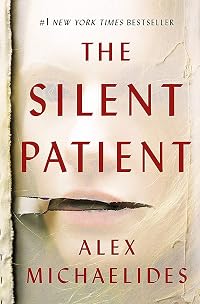
The Silent Patient
by Alex Michaelides
On This Page
Description
Alicia Berenson's life is seemingly perfect. A famous painter married to an in-demand fashion photographer, she lives in a grand house with big windows overlooking a park in one of London's most desirable areas. One evening her husband Gabriel returns home late from a fashion shoot, and Alicia shoots him five times in the face, and then never speaks another word. Alicia's refusal to talk or give any kind of explanation turns a domestic tragedy into something far grander, a mystery that show more captures the public imagination and casts Alicia into notoriety. The price of her art skyrockets, and she, the silent patient, is hidden away from the spotlight of the tabloids at the Grove, a secure forensic unit in North London. Theo Faber is a criminal psychotherapist who has waited a long time for the opportunity to work with Alicia. His search for the truth leads him down a terrifying path and threatens to consume him. show lessTags
Recommendations





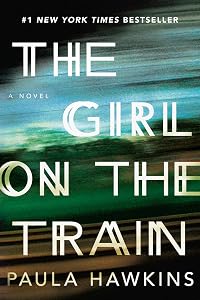

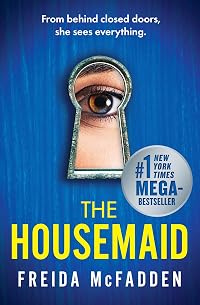
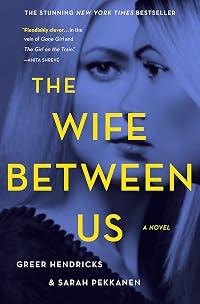
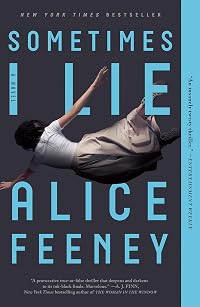
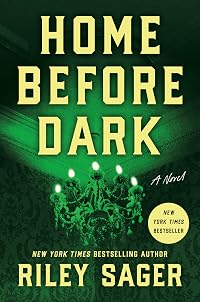


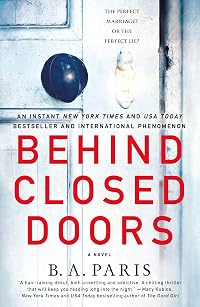
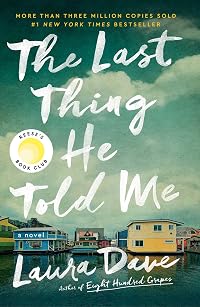


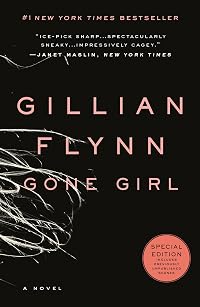








Member Recommendations
Member Reviews
An intoxicating psychological thriller that knows exactly how to keep a reader leaning forward.
The premise is simple and instantly sticky. Alicia Berenson, a celebrated painter in London, shoots her husband Gabriel five times and then stops speaking. Theo Faber, a criminal psychotherapist, talks his way into working at The Grove, a secure forensic unit, convinced he can make her talk and explain why.
What makes this book work is not the mystery mechanics, though those are sharp. It is the character pressure. Alicia’s silence becomes a kind of blank screen that everyone projects onto, doctors, staff, the public, even the people who once loved her. Theo is the real engine, because his narration feels both intimate and increasingly show more suspect, the kind of voice that sounds reasonable right up until it doesn’t. Watching him cross professional lines in the name of truth is compulsive, and the book understands how obsession can dress itself up as care. Compelling.
Michaelides also does something smart with control. Alicia’s agency is taken from her by violence, by institutions, by the story everyone tells about her, and even by the way her art gets commodified after the crime. Theo’s need to interpret her, to explain her, to solve her, plays into that same impulse. The novel keeps asking who gets to speak, who gets believed, and what people will accept as a satisfying narrative when a woman refuses to perform remorse or clarity on demand. The Greek tragedy thread, including Alicia’s painting titled Alcestis, fits the book’s fixation on sacrifice and mythmaking without feeling like homework.
When I finished, I wanted to argue with someone about it immediately. show less
The premise is simple and instantly sticky. Alicia Berenson, a celebrated painter in London, shoots her husband Gabriel five times and then stops speaking. Theo Faber, a criminal psychotherapist, talks his way into working at The Grove, a secure forensic unit, convinced he can make her talk and explain why.
What makes this book work is not the mystery mechanics, though those are sharp. It is the character pressure. Alicia’s silence becomes a kind of blank screen that everyone projects onto, doctors, staff, the public, even the people who once loved her. Theo is the real engine, because his narration feels both intimate and increasingly show more suspect, the kind of voice that sounds reasonable right up until it doesn’t. Watching him cross professional lines in the name of truth is compulsive, and the book understands how obsession can dress itself up as care. Compelling.
Michaelides also does something smart with control. Alicia’s agency is taken from her by violence, by institutions, by the story everyone tells about her, and even by the way her art gets commodified after the crime. Theo’s need to interpret her, to explain her, to solve her, plays into that same impulse. The novel keeps asking who gets to speak, who gets believed, and what people will accept as a satisfying narrative when a woman refuses to perform remorse or clarity on demand. The Greek tragedy thread, including Alicia’s painting titled Alcestis, fits the book’s fixation on sacrifice and mythmaking without feeling like homework.
When I finished, I wanted to argue with someone about it immediately. show less
In its opening, this book appeared to be a statement about psychotherapy. Then it evolved into a murder-mystery. Then it flipped its foundations and resolved in stunning fashion. Clearly, the scope of the plot demonstrates Michaelides’ innate genius. In doing so, however, he educates us about human nature and those professions which are in charge of humanity’s most needy members.
The main character (professionally, a psychotherapist) is unorthodox in his style and functions as a detective in most of the book. He is innately driven about helping one particular patient, who, as the title suggests, is silent. Like any good story, his tale is full of dramatic twists about the intersections of life. The author involves a heavy dose of show more psychological thinking along the way that left me in knots. Then, in a very skilled and controlled way, the tale flips in the fifth and final part to reveal the truth of the matter. It’s almost like Thackeray’s Vanity Fair in its ability to accelerate the narrative – only in about half the space.
Michaelides clearly does a great job in laying out this novel from the start. He carefully crafts each segment to work with itself. Despite this intense weaving at the macro level, the prose is lively and engaging; that is to say, it flows well at the micro level as intrigue steadily builds throughout the novel. Rarely does it seem that the author is writing from a tight outline. In that sense, Michaelides has clearly mastered the craft of mystery-writing.
This book is recommended to all readers – especially, with its adept use of many themes, young readers. Set in London, it reflects the English preoccupation with madness well and shares themes of coming of age and separating (healthily or unhealthily) from one’s family. In addition, this intriguing story demonstrates how effective skilled writing can be. It inspires the reader (or at least, me) to learn to better control my own voice and to better plan my own movements. Brilliantly done! show less
The main character (professionally, a psychotherapist) is unorthodox in his style and functions as a detective in most of the book. He is innately driven about helping one particular patient, who, as the title suggests, is silent. Like any good story, his tale is full of dramatic twists about the intersections of life. The author involves a heavy dose of show more psychological thinking along the way that left me in knots. Then, in a very skilled and controlled way, the tale flips in the fifth and final part to reveal the truth of the matter. It’s almost like Thackeray’s Vanity Fair in its ability to accelerate the narrative – only in about half the space.
Michaelides clearly does a great job in laying out this novel from the start. He carefully crafts each segment to work with itself. Despite this intense weaving at the macro level, the prose is lively and engaging; that is to say, it flows well at the micro level as intrigue steadily builds throughout the novel. Rarely does it seem that the author is writing from a tight outline. In that sense, Michaelides has clearly mastered the craft of mystery-writing.
This book is recommended to all readers – especially, with its adept use of many themes, young readers. Set in London, it reflects the English preoccupation with madness well and shares themes of coming of age and separating (healthily or unhealthily) from one’s family. In addition, this intriguing story demonstrates how effective skilled writing can be. It inspires the reader (or at least, me) to learn to better control my own voice and to better plan my own movements. Brilliantly done! show less
The Silent Patient was a fast-paced, tightly written psychological thriller that kept my attention from start to finish. The writing style was clean and addictive, and the steady psychological tension made even the quieter scenes feel charged. For a shorter book, the character development was just enough — not overly detailed but sufficient to keep me invested in everyone’s motivations and secrets. I also enjoyed the smaller twists sprinkled throughout, which kept the story moving without ever feeling bogged down. Overall, it delivered exactly what thriller fans tend to look for: suspense, atmosphere, and a constant sense that something is just slightly off.
Where the book fell short for me was the ending. While I didn’t predict show more the twist, it didn’t feel fully earned — almost as if there weren’t enough clues (if any) to naturally build toward the reveal. The final pages felt rushed, like the twist arrived before the groundwork had been laid, leaving me feeling a bit cheated. I found the characters interesting but didn’t deeply connect with any of them, which made the abruptness of the ending stand out even more. Still, the story held my interest the entire way through, and I’d definitely recommend it to fans of psychological thrillers and anyone who loves a big, unexpected twist — for better or worse. My 4-star rating comes down entirely to that ending, which just didn’t flow with the rest of an otherwise compelling book. show less
Where the book fell short for me was the ending. While I didn’t predict show more the twist, it didn’t feel fully earned — almost as if there weren’t enough clues (if any) to naturally build toward the reveal. The final pages felt rushed, like the twist arrived before the groundwork had been laid, leaving me feeling a bit cheated. I found the characters interesting but didn’t deeply connect with any of them, which made the abruptness of the ending stand out even more. Still, the story held my interest the entire way through, and I’d definitely recommend it to fans of psychological thrillers and anyone who loves a big, unexpected twist — for better or worse. My 4-star rating comes down entirely to that ending, which just didn’t flow with the rest of an otherwise compelling book. show less
How do you make a best-selling novel out of a story in which the main character, other than the narrator, remains silent? Alex Michaelides found a way in “The Silent Patient” (2019).
Alicia Berenson, a gifted artist, is arrested for murdering her husband by shooting him in the face while he was tied to a chair. Questions remain, like how did she manage to tie him to the chair before shooting him? But she refuses to answer them or to say anything at all. For years.
Theo Faber is a 42-year-old psychotherapist determined to find answers, if not from Alicia then from others who knew her before the killing. Thus the novel becomes part psychological thriller and part murder mystery.
Theo has personal problems of his own. He discovers that show more his beautiful wife is secretly meeting with another man. Rather than confronting her, he follows her, as well as the man she is having the affair with. He contemplates murder. Here the otherwise original novel becomes cliche — the psychotherapist may be as crazy as the patient.
Things begin to come into focus when a silent Alicia hands Theo her secret diary, and at last she begins to speak. But Michaelides holds the final surprises for the exciting climax.
This is a nearly first-rate novel that deserves its best-selling status. show less
Alicia Berenson, a gifted artist, is arrested for murdering her husband by shooting him in the face while he was tied to a chair. Questions remain, like how did she manage to tie him to the chair before shooting him? But she refuses to answer them or to say anything at all. For years.
Theo Faber is a 42-year-old psychotherapist determined to find answers, if not from Alicia then from others who knew her before the killing. Thus the novel becomes part psychological thriller and part murder mystery.
Theo has personal problems of his own. He discovers that show more his beautiful wife is secretly meeting with another man. Rather than confronting her, he follows her, as well as the man she is having the affair with. He contemplates murder. Here the otherwise original novel becomes cliche — the psychotherapist may be as crazy as the patient.
Things begin to come into focus when a silent Alicia hands Theo her secret diary, and at last she begins to speak. But Michaelides holds the final surprises for the exciting climax.
This is a nearly first-rate novel that deserves its best-selling status. show less
Sadly I have read Fifty Shades of Grey, so I cannot call The Silent Patient the absolute worst book ever. Instead I'll just call it awful, truly and in all ways, from its portrayal of mental illness, to its utter lack of believability, to its stupid, stupid, stupid characters. One of whom gets an eyeball gouged out and I almost feel like doing the same to myself for having read this thing from start to stupid finish.
The story takes place in a mental institution, where most of the psychiatric professionals are presumably tweens and teens. Patients are permitted to wander at will carrying items such as broken cue sticks, which I would think might be a bit jagged and sharp and therefore potentially quite dangerous, but, what do I know. show more Theo, the main character-slash-psychotherapist, gets a job at this facility and on his very first day he decides which patient he'd like to treat. He is not only permitted to treat his choice of patient -- he is also, conveniently, given no other duties aside from trying to get this SILENT PATIENT to speak. I feel like he should have at least had some paperwork, some standard mandatory training modules, something. But no.
Anyway, the SILENT PATIENT has been silent for years, ever since murdering her husband, but no one else bothers with her anymore because most of the rest of the staff think she's a "bitch." Theo, in a true flash of psychiatric brilliance, wonders if perhaps her aggressively drugged stupor is preventing her from talking. Really it's a wonder none of the other doctors thought of this. In any case, his boss naturally agrees to reduce the dosage of her medication right away. I am sure that in real mental health facilities this is exactly how it goes.
At one point, Theo discovers that one of the staff has been selling opoids to patients. His immediate thought: "I wondered what else he was up to—perhaps I had been a little too hasty to defend him so determinedly to Stephanie. I’d better keep an eye on him." YES, Theo, definitely KEEP AN EYE ON HIM. Jesus.
In the meantime, Theo decides to harass his patient's family and friends to see if they might provide clues as to why she won't talk. There is a dramatic scene in which a cousin takes Theo up onto a roof. For no reason. "This is where we were when we heard her father say the thing he said to make her crazy for the rest of her life," or some such nonsense. AHA, it's all coming together now!
As to why Alicia, the patient, won't talk?Well, she'd just been held captive by a masked man for hours, and when her husband arrived home he suggested that the masked man kill her instead of him, most likely because he didn't realize he was in a novel and that such husbands in modern fiction do stand a good chance of being murdered by their fictional wives. For whatever reason, at that point the masked man decided he'd had enough for one day and left, killing neither of the two. And then Alicia, presumably perturbed at her husband's less-than-chivalrous behavior, shot him five times in the face. And apparently after all that, she simply had nothing to say. That is really the reason.
*Thanks universe that this was a library book and not an actual purchase* show less
The story takes place in a mental institution, where most of the psychiatric professionals are presumably tweens and teens. Patients are permitted to wander at will carrying items such as broken cue sticks, which I would think might be a bit jagged and sharp and therefore potentially quite dangerous, but, what do I know. show more Theo, the main character-slash-psychotherapist, gets a job at this facility and on his very first day he decides which patient he'd like to treat. He is not only permitted to treat his choice of patient -- he is also, conveniently, given no other duties aside from trying to get this SILENT PATIENT to speak. I feel like he should have at least had some paperwork, some standard mandatory training modules, something. But no.
Anyway, the SILENT PATIENT has been silent for years, ever since murdering her husband, but no one else bothers with her anymore because most of the rest of the staff think she's a "bitch." Theo, in a true flash of psychiatric brilliance, wonders if perhaps her aggressively drugged stupor is preventing her from talking. Really it's a wonder none of the other doctors thought of this. In any case, his boss naturally agrees to reduce the dosage of her medication right away. I am sure that in real mental health facilities this is exactly how it goes.
At one point, Theo discovers that one of the staff has been selling opoids to patients. His immediate thought: "I wondered what else he was up to—perhaps I had been a little too hasty to defend him so determinedly to Stephanie. I’d better keep an eye on him." YES, Theo, definitely KEEP AN EYE ON HIM. Jesus.
In the meantime, Theo decides to harass his patient's family and friends to see if they might provide clues as to why she won't talk. There is a dramatic scene in which a cousin takes Theo up onto a roof. For no reason. "This is where we were when we heard her father say the thing he said to make her crazy for the rest of her life," or some such nonsense. AHA, it's all coming together now!
As to why Alicia, the patient, won't talk?
*Thanks universe that this was a library book and not an actual purchase* show less
Alice murdered her husband, Gabe, and has not spoken a word since. Existing in psychiatric care, avoiding a prison sentenc on the grounds of diminished responsibility, Alice, and her motives, remain a mystery. Though once a sensationalist case, it has now been largely forgotten, and only psychotherapist Theo seems interested in unlocking Alice’s memory.
The premise is a strong one, and carries The Silent Patient far. There really is no way you could give up on the book without understanding Alice’s motivations. There are enough clues, given through Theo’s interactions with those individuals who used to be part of her life, Alice’s diary, and the deliberate clues she left behind in a painting, “Alcestics” (also the name of a show more Greek tragedy about a mute woman) that you as a reader are able to theorize, without putting everything together too early.
Alice, when you see things from her perspective, is a fantastic character, with a unique and plausible world-view. You really do feel the world differently when explored through her artistic sensitivities. Theo, conversely, is a bland character, who perceives a grey, featureless world almost exclusively in terms of rigid psychological analysis. This is, of course, deliberate (pertaining a great deal to the twists at the end of the novel), but there are certainly times when reading Theo feels like a chore.
Other supporting characters are well drawn, despite playing limited roles. Michaelides is economical and clever with her characterisation. These are nothing more the acquaintences, but you have a strong sense of their essences without being dependent on stereotype.
Michaelides gambles in The Silent Patient. The red herrings are small, and underdeveloped. There are no significant misleading lines of investigation for the reader to follow, so the success of The Silent Patient is almost entirely dependent on the success of the large twists at the end. And broadly, it’s succesful. It certainly achieves one moment of jaw-dropping realisation (or did, at least for me). However it would be possible given the evidence in the text to anticipate it
The Silent Patient is, broadly, a fun and flawed book, with an ending (on which it is entirely dependent) that worked for me. I wouldn’t, however, characterise it as a thriller. More a mystery with thriller aspects.
If this book was a quarterback, it would be:
Teddy Bridgewater – Somewhat pedestrian for long periods, interspersed with moments of greatness. Strong in the fourth quarter, but could be undone with strong anticipatory defense.
You should read this book if:
You enjoy unravelling a mystery with evidence provided by the format of the text, rather than the details provided therein for the first half, and if you enjoy a strong twist at the end.
You should avoid this book if:
You are expecting a psychological thriller. Characters psyches are, broadly, hidden from view until the end.
I want to see the author write:
Cosy mysteries in the vein of Agatha Christie. show less
The premise is a strong one, and carries The Silent Patient far. There really is no way you could give up on the book without understanding Alice’s motivations. There are enough clues, given through Theo’s interactions with those individuals who used to be part of her life, Alice’s diary, and the deliberate clues she left behind in a painting, “Alcestics” (also the name of a show more Greek tragedy about a mute woman) that you as a reader are able to theorize, without putting everything together too early.
Alice, when you see things from her perspective, is a fantastic character, with a unique and plausible world-view. You really do feel the world differently when explored through her artistic sensitivities. Theo, conversely, is a bland character, who perceives a grey, featureless world almost exclusively in terms of rigid psychological analysis. This is, of course, deliberate (pertaining a great deal to the twists at the end of the novel), but there are certainly times when reading Theo feels like a chore.
Other supporting characters are well drawn, despite playing limited roles. Michaelides is economical and clever with her characterisation. These are nothing more the acquaintences, but you have a strong sense of their essences without being dependent on stereotype.
Michaelides gambles in The Silent Patient. The red herrings are small, and underdeveloped. There are no significant misleading lines of investigation for the reader to follow, so the success of The Silent Patient is almost entirely dependent on the success of the large twists at the end. And broadly, it’s succesful. It certainly achieves one moment of jaw-dropping realisation (or did, at least for me). However it would be possible given the evidence in the text to anticipate it
The Silent Patient is, broadly, a fun and flawed book, with an ending (on which it is entirely dependent) that worked for me. I wouldn’t, however, characterise it as a thriller. More a mystery with thriller aspects.
If this book was a quarterback, it would be:
Teddy Bridgewater – Somewhat pedestrian for long periods, interspersed with moments of greatness. Strong in the fourth quarter, but could be undone with strong anticipatory defense.
You should read this book if:
You enjoy unravelling a mystery with evidence provided by the format of the text, rather than the details provided therein for the first half, and if you enjoy a strong twist at the end.
You should avoid this book if:
You are expecting a psychological thriller. Characters psyches are, broadly, hidden from view until the end.
I want to see the author write:
Cosy mysteries in the vein of Agatha Christie. show less
Short summary
I was glued to the pages of this dazzling, original and clever debut! No pressure @AlexMichaelides...can’t wait for your next 5 ⭐️ book!
My thoughts
I saw this book on NetGalley but couldn’t decide whether I wanted to request it. I’m so disappointed in myself after renting it from the library!
The book is divided into five parts. The farther I read, the better it got! After I finished Part 4, I was stunned. I knew what I just read, but it took a while for me to really absorb it. I even reread the end of the last chapter to make sure I really read what I though I did 😝. Reading it as a buddy read made it even better.
How do writers come up with these amazing ideas? This is one of my fav reads of ‘19! I’m going show more to be recommending this book to all my thriller-loving friends and family! And...it’s at the top of my gift wishlist, also!
My Rating: 5 ⭐️’s
Published: February 5th 2019 by Celadon Books Pages: 323
Recommend: Yes! Yes! Yes!
Book Blurb
Alicia Berenson’s life is seemingly perfect. A famous painter married to an in-demand fashion photographer, she lives in a grand house with big windows overlooking a park in one of London’s most desirable areas. One evening her husband Gabriel returns home late from a fashion shoot, and Alicia shoots him five times in the face, and then never speaks another word.
Alicia’s refusal to talk, or give any kind of explanation, turns a domestic tragedy into something far grander, a mystery that captures the public imagination and casts Alicia into notoriety. The price of her art skyrockets, and she, the silent patient, is hidden away from the tabloids and spotlight at the Grove, a secure forensic unit in North London.
Theo Faber is a criminal psychotherapist who has waited a long time for the opportunity to work with Alicia. His determination to get her to talk and unravel the mystery of why she shot her husband takes him down a twisting path into his own motivations—a search for the truth that threatens to consume him.... show less
I was glued to the pages of this dazzling, original and clever debut! No pressure @AlexMichaelides...can’t wait for your next 5 ⭐️ book!
My thoughts
I saw this book on NetGalley but couldn’t decide whether I wanted to request it. I’m so disappointed in myself after renting it from the library!
The book is divided into five parts. The farther I read, the better it got! After I finished Part 4, I was stunned. I knew what I just read, but it took a while for me to really absorb it. I even reread the end of the last chapter to make sure I really read what I though I did 😝. Reading it as a buddy read made it even better.
How do writers come up with these amazing ideas? This is one of my fav reads of ‘19! I’m going show more to be recommending this book to all my thriller-loving friends and family! And...it’s at the top of my gift wishlist, also!
My Rating: 5 ⭐️’s
Published: February 5th 2019 by Celadon Books Pages: 323
Recommend: Yes! Yes! Yes!
Book Blurb
Alicia Berenson’s life is seemingly perfect. A famous painter married to an in-demand fashion photographer, she lives in a grand house with big windows overlooking a park in one of London’s most desirable areas. One evening her husband Gabriel returns home late from a fashion shoot, and Alicia shoots him five times in the face, and then never speaks another word.
Alicia’s refusal to talk, or give any kind of explanation, turns a domestic tragedy into something far grander, a mystery that captures the public imagination and casts Alicia into notoriety. The price of her art skyrockets, and she, the silent patient, is hidden away from the tabloids and spotlight at the Grove, a secure forensic unit in North London.
Theo Faber is a criminal psychotherapist who has waited a long time for the opportunity to work with Alicia. His determination to get her to talk and unravel the mystery of why she shot her husband takes him down a twisting path into his own motivations—a search for the truth that threatens to consume him.... show less
Members
- Recently Added By
Published Reviews
ThingScore 100
Meet the hottest-tipped debut novelists of 2019
The Silent Patient is narrated by Theo Faber, a psychotherapist determined to discover why Alicia Berenson, a famous artist accused of murdering her husband, has refused to speak since her husband’s death. The therapeutic setting was inspired by Michaelides’s own experience. “Therapy is very important to me and has been a major part of my show more life,” he says.
Running through the novel is the Greek myth of Alcestis, and Euripides’s play of the same name. The Alcestis theme is perhaps one of the reasons that The Silent Patient is finding such traction both among early readers and the tranche of movie executives who fought to option it. With its story of female sacrifice and the silencing of a woman post-trauma, it feels highly relevant in a post #MeToo world. “It’s about silence as a weapon,” Michaelides says. “And it was very clear in my head when I was writing the book that Alicia was surrounded by these men who were imprisoning her. Like Alcestis, Alicia is trapped and she’s denied a voice. It’s a lifetime of being made to think that she wasn’t worthy, she wasn’t good enough, and maybe that’s something that a lot of women [readers] have been responding to.”
The novel has already been optioned by Brad Pitt’s production company, Plan B, with Michaelides due to write the screenplay, a fitting circularity for a novelist who has spent the past 15 years working as a screenwriter. show less
The Silent Patient is narrated by Theo Faber, a psychotherapist determined to discover why Alicia Berenson, a famous artist accused of murdering her husband, has refused to speak since her husband’s death. The therapeutic setting was inspired by Michaelides’s own experience. “Therapy is very important to me and has been a major part of my show more life,” he says.
Running through the novel is the Greek myth of Alcestis, and Euripides’s play of the same name. The Alcestis theme is perhaps one of the reasons that The Silent Patient is finding such traction both among early readers and the tranche of movie executives who fought to option it. With its story of female sacrifice and the silencing of a woman post-trauma, it feels highly relevant in a post #MeToo world. “It’s about silence as a weapon,” Michaelides says. “And it was very clear in my head when I was writing the book that Alicia was surrounded by these men who were imprisoning her. Like Alcestis, Alicia is trapped and she’s denied a voice. It’s a lifetime of being made to think that she wasn’t worthy, she wasn’t good enough, and maybe that’s something that a lot of women [readers] have been responding to.”
The novel has already been optioned by Brad Pitt’s production company, Plan B, with Michaelides due to write the screenplay, a fitting circularity for a novelist who has spent the past 15 years working as a screenwriter. show less
added by VivienneR
Lists

Best Crime Fiction
262 works; 39 members
EU Fiction: 1950-2022
223 works; 70 members

Fiction: Crime, Detective, Mystery
350 works; 3 members

Top Five Books of 2018
802 works; 265 members

Books Read in 2019
4,052 works; 110 members

SHOULD Read Books!
354 works; 9 members

First Novels
373 works; 17 members

Books Read in 2021
5,361 works; 114 members

To Read
29 works; 2 members

Booktok Books
69 works; 8 members

2023 Christmas Gifts
39 works; 11 members

Books Read in 2023
5,547 works; 145 members

Books Read in 2024
4,623 works; 126 members

Top Five Books of 2024
795 works; 264 members

H
177 works; 2 members

el
1,139 works; 1 member
Author Information

Alex Michaelides was born in Cyprus in 1977. He studied English literature at Cambridge University and earned his MA in screenwriting at the American Film Institute in Los Angeles. He wrote the film The Devil You Know. His first novel,The Slient Patient, was published in 2019. (Bowker Author Biography)
Some Editions
Awards and Honors
Awards
Distinctions
Notable Lists
Common Knowledge
- Canonical title*
- La paziente silenziosa
- Original title
- The Silent Patient
- Original publication date
- 2019-02-07
- People/Characters
- Alicia Berenson; Theo Faber; Gabriel Berenson; Max Berenson; Kathryn "Kathy" Faber; Christian West (show all 8); Paul Rose; Lydia Rose
- Important places
- London, England, UK; Hampstead Heath, London, England, UK
- Epigraph
- But why does she not speak? -- Euripides, Alcestis
- Dedication
- For my parents
- First words
- I don't know why I'm writing this.
- Quotations
- It's odd how quickly one adapts to the strange new world of a psychiatric unit. You become increasingly comfortable with madness—and not just the madness of others, but your own. We're all crazy, I believe, just in differen... (show all)t ways.
"Choosing a lover is a lot like choosing a therapist. We need to ask ourselves, is this someone who will be honest with me, listen to criticism, admit making mistakes, and not promise the impossible?" - Last words
- (Click to show. Warning: May contain spoilers.)And I went to catch another one.
- Blurbers
- Finn, A.J.; Baldacci, David; Child, Lee; Preston, Douglas; Child, Lincoln; Crouch, Blake
- Original language
- English
- Canonical DDC/MDS
- 823.92
- Canonical LCC
- PR6113.I2645
*Some information comes from Common Knowledge in other languages. Click "Edit" for more information.
Classifications
Statistics
- Members
- 13,605
- Popularity
- 556
- Reviews
- 572
- Rating
- (3.82)
- Languages
- 20 — Basque, Bosnian, Catalan, Chinese, Danish, Dutch, English, Finnish, French, German, Hebrew, Indonesian, Italian, Polish, Portuguese, Romanian, Serbian, Spanish, Swedish, Turkish
- Media
- Paper, Audiobook, Ebook
- ISBNs
- 74
- ASINs
- 16