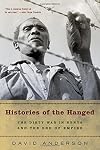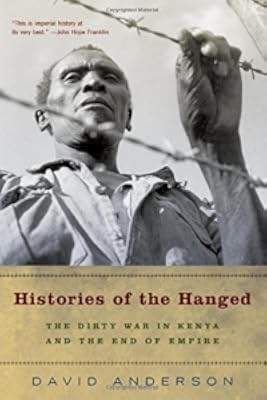
Histories of the Hanged: The Dirty War in Kenya and the End of Empire
by David Anderson
On This Page
Description
An account of Britain's final bloody decade in Kenya, this book tells the story of the brutal war between the colonial government and the insurrectionist Mau Mau between 1952 and 1960. New findings cast the Gikuyu rebels--hardly the terrorists they were thought to be--in a new light and reveal the British to be brutal aggressors in a "dirty war" that involved, among others, Winston Churchill and Harold MacMillan. This book portrays a teetering colonial empire in its final phase--employing show more whatever military and propaganda methods were necessary to preserve an order that could no longer hold. show lessTags
Recommendations



Member Recommendations
Member Reviews
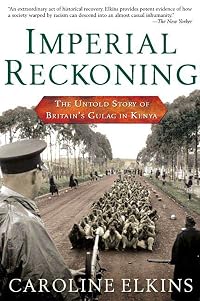
This is one of two books (the other is Imperial Reckoning) that explores the Mau Mau rebellion and the British response fully. The Mau Mau may not have been nationalist heroes, but the British response was brutal. Not pleasant reading, but a good corrective to any tendency to romanticize colonialism.
BRUTALITY, THE BRITISH WAY
Histories of the Hanged by David Anderson & Britain’s Gulag by Caroline Elkins
On 20 October 1952 a state of emergency was declared in Britain’s East African colony of Kenya. It lasted until 1960, and was the most brutal campaign in Britain’s attempt to hold on to its empire after the Second World War. The rebellion was crushed and it is significant that, while the rebels called themselves the Land and Freedom Army, they are remembered as the Mau Mau, the bastardised name given to them by the settlers.
Some 32 white civilians, 63 white military and 527 ‘loyalists’ were killed. In contrast, 11,503 Africans died according to the government (the real toll was probably closer to 30,000). The figure show more doesn’t include over 1,000 rebels who were hanged. Two new books look at the rebellion from very different angles. David Anderson’s Histories of the Hanged examines the emergency through imperial court transcripts, concentrating on those the British executed. It grasps the major issues and generally condemns the imperialists through their own reports. However, it tends to accept reports on their own terms, including the notorious British government whitewash, the Corfield report. On the other hand Caroline Elkins’s Britain’s Gulag is largely based on interviews with African survivors, and provides an invaluable testament to the real horror of what occurred, though she has a less solid grasp of the background.
British conquest of the colony started in the 1890s. By 1908, Winston Churchill, not usually squeamish, commented, ‘It looks like butchery… Surely it cannot be necessary to go on killing these defenceless people on such an enormous scale.’ Having subdued Kenya, the British preferred to rule indirectly. Since the local people had no chiefs, the British appointed their own. Many of these became very wealthy by appropriating land in the ‘African reserves’.
Meanwhile the British took the best arable land – what became known as the White Highlands. The Kikuyu people were most affected by this as they had lived in the Highlands. Africans returning from the Second World War found that their situation had not improved, but was actually deteriorating. The Kenya government planned to encourage white ex-soldiers to immigrate by offering good farming land, while demobbed Africans could find neither land nor work.
It was not unusual for urban militants to be members of both trade unions and street gangs. Those who went on to establish the Mau Mau rebellion were both active trade unionists and members of one of the main gangs operating in the capital, Nairobi. From the late 1940s these radicals moved their activities into the Kenya African Union (KAU), a constitutional nationalist organisation. Operating covertly within KAU branches, they started administering oaths of resistance to colonialism. Loyalists and black police were killed. As the rebellion developed several white settlers were also slain.
The state of emergency was declared and Operation Jock Scott successfully detained all the African nationalist leadership, conservative and radical alike. It both beheaded the movement and caused the larger rebellion to start at least a year before the leadership had intended. Leadership of the Mau Mau had moved down a rung and the rebels were far from prepared, but they remained disciplined and set about establishing guerrilla forces.
Groups of up to 4,000 rebels set up bases in the deep forests around Mount Kenya. Ironically, organisation in the forest camps was based on the structures of the British army. They mounted increasingly audacious raids. The army and airforce were unable to dislodge them, particularly as they enjoyed popular support among the rural population.
To counter this the entire 1.5 million rural Kikuyu population were forcibly resettled into barbed-wire fenced villages, overseen by watch-towers. Continuing urban insurgency was smashed by the aptly named Operation Anvil in April 1954, which effectively arrested all Kikuyu in Nairobi. It also led to an upsurge in detention without trial.
The settlers could not conceive that Africans had legitimate grievances. They believed that the only thing that could make the previously passive workforce rise up was the taking of primitive oaths. A system of detention camps was established. Theoretically, detainees would move down a ‘pipeline’ from one camp to the next as they became cleansed of the Mau Mau disease. They would confess through a mixture of coercion and education. In practice this meant forced labour, torture and near starvation. At least 80,000 passed through the ‘pipeline’.
Outside Nairobi conflict had developed between the loyalist Home Guard and the Mau Mau. Class drove this civil war. Chiefs and loyalists owned the best land in the overcrowded reserves. Mau Mau support came from the poor, the landless and the ex-‘squatters’, being pushed out of the vast white farms. Detention, villagisation and Operation Anvil combined to break the back of the movement by 1956.
Despite this the Mau Mau should be claimed as an important anti-imperialist struggle. Britain won the war, but would be wary of risking the costs of another insurgency elsewhere.
Ken Olende, Socialist Review 295, April 2005
https://socialistworker.co.uk/socialist-review-archive/history-imperialism-bruta... show less
Histories of the Hanged by David Anderson & Britain’s Gulag by Caroline Elkins
On 20 October 1952 a state of emergency was declared in Britain’s East African colony of Kenya. It lasted until 1960, and was the most brutal campaign in Britain’s attempt to hold on to its empire after the Second World War. The rebellion was crushed and it is significant that, while the rebels called themselves the Land and Freedom Army, they are remembered as the Mau Mau, the bastardised name given to them by the settlers.
Some 32 white civilians, 63 white military and 527 ‘loyalists’ were killed. In contrast, 11,503 Africans died according to the government (the real toll was probably closer to 30,000). The figure show more doesn’t include over 1,000 rebels who were hanged. Two new books look at the rebellion from very different angles. David Anderson’s Histories of the Hanged examines the emergency through imperial court transcripts, concentrating on those the British executed. It grasps the major issues and generally condemns the imperialists through their own reports. However, it tends to accept reports on their own terms, including the notorious British government whitewash, the Corfield report. On the other hand Caroline Elkins’s Britain’s Gulag is largely based on interviews with African survivors, and provides an invaluable testament to the real horror of what occurred, though she has a less solid grasp of the background.
British conquest of the colony started in the 1890s. By 1908, Winston Churchill, not usually squeamish, commented, ‘It looks like butchery… Surely it cannot be necessary to go on killing these defenceless people on such an enormous scale.’ Having subdued Kenya, the British preferred to rule indirectly. Since the local people had no chiefs, the British appointed their own. Many of these became very wealthy by appropriating land in the ‘African reserves’.
Meanwhile the British took the best arable land – what became known as the White Highlands. The Kikuyu people were most affected by this as they had lived in the Highlands. Africans returning from the Second World War found that their situation had not improved, but was actually deteriorating. The Kenya government planned to encourage white ex-soldiers to immigrate by offering good farming land, while demobbed Africans could find neither land nor work.
It was not unusual for urban militants to be members of both trade unions and street gangs. Those who went on to establish the Mau Mau rebellion were both active trade unionists and members of one of the main gangs operating in the capital, Nairobi. From the late 1940s these radicals moved their activities into the Kenya African Union (KAU), a constitutional nationalist organisation. Operating covertly within KAU branches, they started administering oaths of resistance to colonialism. Loyalists and black police were killed. As the rebellion developed several white settlers were also slain.
The state of emergency was declared and Operation Jock Scott successfully detained all the African nationalist leadership, conservative and radical alike. It both beheaded the movement and caused the larger rebellion to start at least a year before the leadership had intended. Leadership of the Mau Mau had moved down a rung and the rebels were far from prepared, but they remained disciplined and set about establishing guerrilla forces.
Groups of up to 4,000 rebels set up bases in the deep forests around Mount Kenya. Ironically, organisation in the forest camps was based on the structures of the British army. They mounted increasingly audacious raids. The army and airforce were unable to dislodge them, particularly as they enjoyed popular support among the rural population.
To counter this the entire 1.5 million rural Kikuyu population were forcibly resettled into barbed-wire fenced villages, overseen by watch-towers. Continuing urban insurgency was smashed by the aptly named Operation Anvil in April 1954, which effectively arrested all Kikuyu in Nairobi. It also led to an upsurge in detention without trial.
The settlers could not conceive that Africans had legitimate grievances. They believed that the only thing that could make the previously passive workforce rise up was the taking of primitive oaths. A system of detention camps was established. Theoretically, detainees would move down a ‘pipeline’ from one camp to the next as they became cleansed of the Mau Mau disease. They would confess through a mixture of coercion and education. In practice this meant forced labour, torture and near starvation. At least 80,000 passed through the ‘pipeline’.
Outside Nairobi conflict had developed between the loyalist Home Guard and the Mau Mau. Class drove this civil war. Chiefs and loyalists owned the best land in the overcrowded reserves. Mau Mau support came from the poor, the landless and the ex-‘squatters’, being pushed out of the vast white farms. Detention, villagisation and Operation Anvil combined to break the back of the movement by 1956.
Despite this the Mau Mau should be claimed as an important anti-imperialist struggle. Britain won the war, but would be wary of risking the costs of another insurgency elsewhere.
Ken Olende, Socialist Review 295, April 2005
https://socialistworker.co.uk/socialist-review-archive/history-imperialism-bruta... show less
Adam Foulds, novelist and poet, has chosen to discuss David Anderson’s Histories of the Hanged: Britain’s Dirty War in Kenya and the End of Empire, on FiveBooks (http://five-books.com) as one of the top five on his subject - The Mau Mau Uprising and The Fading Empire, saying that:
“…David Anderson’s Histories of the Hanged is a very good detailed historical overview of the Mau Mau uprising. It’s a military history as well as a social history of the conflict. Its name comes from the fact that central to it is his writing about the kangaroo courts that were set up in Kenya…that tried and convicted and hanged about 1,500 people. The courts functioned to standards that would in no way have been tolerated in Britain at the same show more time...…”.
The full interview is available here: http://thebrowser.com/books/interviews/adam-foulds show less
“…David Anderson’s Histories of the Hanged is a very good detailed historical overview of the Mau Mau uprising. It’s a military history as well as a social history of the conflict. Its name comes from the fact that central to it is his writing about the kangaroo courts that were set up in Kenya…that tried and convicted and hanged about 1,500 people. The courts functioned to standards that would in no way have been tolerated in Britain at the same show more time...…”.
The full interview is available here: http://thebrowser.com/books/interviews/adam-foulds show less
Oct 6, 2005Dutch
Ratings
Members
- Recently Added By
Published Reviews
ThingScore 25
Anderson's book, meant as a kind of requiem for the ''as yet unacknowledged martyrs of the rebel cause: the 1,090 men who went to the gallows as convicted Mau Mau terrorists,'' never manages to render a vivid martyr. Examples of colonial judicial corruption and hypocrisy are thoroughly explored, but little room is left for character.
added by Shortride
Author Information
4 Works 204 Members
Common Knowledge
- Original publication date
- 2005
- Important places
- Africa; East Africa; Kenya
- Original language
- English
Classifications
Statistics
- Members
- 189
- Popularity
- 173,612
- Reviews
- 4
- Rating
- (4.15)
- Languages
- English
- Media
- Paper, Ebook
- ISBNs
- 5
- ASINs
- 2