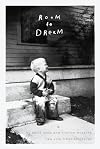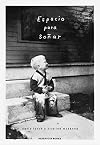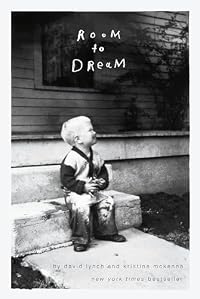
Room to Dream
by David Lynch, Kristine McKenna
On This Page
Description
"An unprecedented look into the personal and creative life of the visionary auteur David Lynch, through his own words and those of his closest colleagues, friends, and family. In this unique hybrid of biography and memoir, David Lynch opens up for the first time about a life lived in pursuit of his singular vision, and the many heartaches and struggles he's faced to bring his unorthodox projects to fruition. Lynch's lyrical, intimate, and unfiltered personal reflections riff off biographical show more sections written by close collaborator Kristine McKenna and based on more than one hundred new interviews with surprisingly candid ex-wives, family members, actors, agents, musicians, and colleagues in various fields who all have their own takes on what happened. Room to Dream is a landmark book that offers a onetime all-access pass into the life and mind of one of our most enigmatic and utterly original living artists."--Dust jacket. show lessTags
Recommendations








Member Recommendations
Member Reviews
Room to Dream
David Lynch is a fascinating person, moreso than I thought before reading this book. If you judged by his movies and television shows, you’d probably think . . . truly strange man, probably with eccentric habits, odd appearance, maybe a little difficult to deal with.
The Lynch we see here, especially in his younger years, really is very much consistent with his movies and television shows, but in a different way. On the surface, a character right out of 50s mythology — bright eyed, clean cut, downright chipper (he actually uses the phrase “peachy keen”), but, maybe like those same 50s in reality, with an underlying bass line of darkness and anxiety.
The book is written as a kind of back and forth between his show more biographer, Kristine McKenna, and his own thoughts and reflections on the events McKenna recounts. It’s kind of a peek behind the curtain of the events McKenna tells us about, Lynch’s director’s commentary on his own life.
The format gives us a mix of facts and impressions. The facts are themselves interesting, sometimes for their prosaic blandness — Lynch’s perfectly normal childhood, his popularity, his adventures in the Boy Scouts, . . . Certainly as he grows up, he takes more eccentric turns — his obsession with art and with making things, a kind of innocent inattention to things around him — but he’s always straight as an arrow — there’s nothing secretive or mysterious going on, even if his actions and personality leave the norm behind.
In fact, I think it’s exactly that normalcy that is ultimately disarming in Lynch’s personality and disturbing in his work. The normalcy of that 50s world in which he grew up somehow can’t be believed. It advertises that it is skin deep, that if you only dig a tiny bit deeper, you’ll find a world that is threatening and anxious.
Even as odd a movie as Eraserhead binds that normalcy with anxiety — there are scenes in which we wait, with nothing happening but with no chance of relaxation because there’s a thrumming mood of anxiety that pervades the most normal moments. McKenna in fact says that it is the mood of Eraserhead that dominates the movie, more than characters, plot, or dialogue. It’s a mood that makes the movie, for me, almost impossible to sit still and watch.
And that’s Lynch. The normal itself is anxious. It’s not just in the movies or the television shows — it’s in him. Think Kyle MacLachlan in Blue Velvet or Twin Peaks, or even Lynch himself as Gordon Cole in Twin Peaks. I get the feeling that Lynch had to do very little acting to be Gordon Cole.
There are other aspects to the book — Lynch’s path through art and film school, his dedication to Transcendental Meditation, his distinctive directorial style, all the quirkiness that eventually shows in his personal life and relationships. One theme that runs through them, by my reading, is that Lynch has never had a quarrel with things and thoughts that are not conventionally rational. He welcomes surprise turns of thought, discontinuities, hunches, signs, and the like. Experiencing it in his personality makes me see it more clearly in his work as well.
I have to admit I found the first half of the book much more interesting and engaging than the second half. In the first half, Lynch is more “pure” in some sense — he’s just himself, with ideas and projects in his younger days. Then . . . he’s “David Lynch” — despite himself and all protestations, he’s famous, and everybody wants to do something with him. It’s like a part of the resistance is gone, and the resistance, especially for someone of Lynch’s quirkiness, helps make him special, and gives him the humble wonder that made David Lynch, but, seemingly, not so much “David Lynch.”
Even the personality he expresses in his own commentary seems to change as he talks about events later in his life. He’s more bothered by things. He never loses the golly-gosh personality entirely, but life does seem to have weathered it a bit. I did take heart, though, that the revival of Twin Peaks (Twin Peaks, the Return) seemed to revive the old David Lynch. Hopefully, there’s still more to come. show less
David Lynch is a fascinating person, moreso than I thought before reading this book. If you judged by his movies and television shows, you’d probably think . . . truly strange man, probably with eccentric habits, odd appearance, maybe a little difficult to deal with.
The Lynch we see here, especially in his younger years, really is very much consistent with his movies and television shows, but in a different way. On the surface, a character right out of 50s mythology — bright eyed, clean cut, downright chipper (he actually uses the phrase “peachy keen”), but, maybe like those same 50s in reality, with an underlying bass line of darkness and anxiety.
The book is written as a kind of back and forth between his show more biographer, Kristine McKenna, and his own thoughts and reflections on the events McKenna recounts. It’s kind of a peek behind the curtain of the events McKenna tells us about, Lynch’s director’s commentary on his own life.
The format gives us a mix of facts and impressions. The facts are themselves interesting, sometimes for their prosaic blandness — Lynch’s perfectly normal childhood, his popularity, his adventures in the Boy Scouts, . . . Certainly as he grows up, he takes more eccentric turns — his obsession with art and with making things, a kind of innocent inattention to things around him — but he’s always straight as an arrow — there’s nothing secretive or mysterious going on, even if his actions and personality leave the norm behind.
In fact, I think it’s exactly that normalcy that is ultimately disarming in Lynch’s personality and disturbing in his work. The normalcy of that 50s world in which he grew up somehow can’t be believed. It advertises that it is skin deep, that if you only dig a tiny bit deeper, you’ll find a world that is threatening and anxious.
Even as odd a movie as Eraserhead binds that normalcy with anxiety — there are scenes in which we wait, with nothing happening but with no chance of relaxation because there’s a thrumming mood of anxiety that pervades the most normal moments. McKenna in fact says that it is the mood of Eraserhead that dominates the movie, more than characters, plot, or dialogue. It’s a mood that makes the movie, for me, almost impossible to sit still and watch.
And that’s Lynch. The normal itself is anxious. It’s not just in the movies or the television shows — it’s in him. Think Kyle MacLachlan in Blue Velvet or Twin Peaks, or even Lynch himself as Gordon Cole in Twin Peaks. I get the feeling that Lynch had to do very little acting to be Gordon Cole.
There are other aspects to the book — Lynch’s path through art and film school, his dedication to Transcendental Meditation, his distinctive directorial style, all the quirkiness that eventually shows in his personal life and relationships. One theme that runs through them, by my reading, is that Lynch has never had a quarrel with things and thoughts that are not conventionally rational. He welcomes surprise turns of thought, discontinuities, hunches, signs, and the like. Experiencing it in his personality makes me see it more clearly in his work as well.
I have to admit I found the first half of the book much more interesting and engaging than the second half. In the first half, Lynch is more “pure” in some sense — he’s just himself, with ideas and projects in his younger days. Then . . . he’s “David Lynch” — despite himself and all protestations, he’s famous, and everybody wants to do something with him. It’s like a part of the resistance is gone, and the resistance, especially for someone of Lynch’s quirkiness, helps make him special, and gives him the humble wonder that made David Lynch, but, seemingly, not so much “David Lynch.”
Even the personality he expresses in his own commentary seems to change as he talks about events later in his life. He’s more bothered by things. He never loses the golly-gosh personality entirely, but life does seem to have weathered it a bit. I did take heart, though, that the revival of Twin Peaks (Twin Peaks, the Return) seemed to revive the old David Lynch. Hopefully, there’s still more to come. show less
Definitely get the audiobook version of this - you can’t transcribe Lynch’s pacing and delivery, and it’s essential.
"These were the days when Europe was very very far away. It was actually the same distance but it seemed far away."
"She had breasts that never seemed to end."
"It's time to get with the program. Walk away from suffering. Walk away from problems. Walk away from blowing the brains out of somebody."
One of the funniest books I've listened to, it's all in that deadpan delivery.
There's a dual biography/memoir thing going on, but the self-narrated bits by Lynch are the highlight of course. I don't think there's a bad word said about Lynch or by Lynch about anyone else. Everything has a vaseline haze of glamour and getting show more along, even down to his apparent cheating on women and breakups with wives, it's all just the best thing ever and everyone was the closest of friends. Even with his work; on Dune the worst he'll say is feeling like he sold out. When Mulholland Drive collapses, when Wild At Heart gets self-parody reviews, there's nothing with bite in this book about any of it. Lynch is just surfing the wave of life, man.
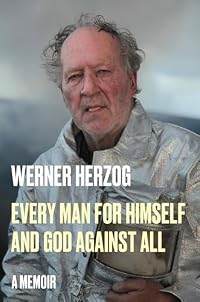
You don't get a sense of looking behind the curtain at any point here. It's an interesting comparison to the much starker Every Man for Himself and God Against All: A Memoir Herzog memoir (also get the audiobook there), who essentially tells you up front he's going to lie his way through the telling of the memoir because he's uninterested in truth, and only interested in the story. Two highly independent visionary directors with completely different styles and aesthetics, many of the same struggles with funding their projects and navigating public reception, both having "sold out" at times to fund projects, but the memoirs are night and day, almost literally.
The most detailed account with some deeper insights about production concerns the development of Eraserhead, but while it covers most of his other works the detail is superficial and if you're interested you've heard most all of it before, including the tidbits on Twin Peaks. In between the shilling for TM, you get some idea of what Lynch is like as a person in the scatterbrained high and low approach he takes to narrating his own memoirs. While listening to this was very enjoyable, I'd struggle to itemize what I learned. Lynch's method for directing; first with just the actors, setting up the blocking, then involving the DP, and later the crew, after which they do the proper take is perhaps the most revolutionary and practical tip found in the book. In storytelling, his ability to follow hunches to the point of tearing up half the script to follow a new rabbit (the famous story of the creation of Bob is recounted here once again).
Oh, and of course I learned that TM is the truth, light and salvation for the entire human race of course. We'd better "get hip" to this teaching before "that fucking bunch in DC" destroy nature and let global warming become a nightmare killing the trees. Lynch really isn't subtle about the preaching portion. show less
"These were the days when Europe was very very far away. It was actually the same distance but it seemed far away."
"She had breasts that never seemed to end."
"It's time to get with the program. Walk away from suffering. Walk away from problems. Walk away from blowing the brains out of somebody."
One of the funniest books I've listened to, it's all in that deadpan delivery.
There's a dual biography/memoir thing going on, but the self-narrated bits by Lynch are the highlight of course. I don't think there's a bad word said about Lynch or by Lynch about anyone else. Everything has a vaseline haze of glamour and getting show more along, even down to his apparent cheating on women and breakups with wives, it's all just the best thing ever and everyone was the closest of friends. Even with his work; on Dune the worst he'll say is feeling like he sold out. When Mulholland Drive collapses, when Wild At Heart gets self-parody reviews, there's nothing with bite in this book about any of it. Lynch is just surfing the wave of life, man.
You don't get a sense of looking behind the curtain at any point here. It's an interesting comparison to the much starker Every Man for Himself and God Against All: A Memoir Herzog memoir (also get the audiobook there), who essentially tells you up front he's going to lie his way through the telling of the memoir because he's uninterested in truth, and only interested in the story. Two highly independent visionary directors with completely different styles and aesthetics, many of the same struggles with funding their projects and navigating public reception, both having "sold out" at times to fund projects, but the memoirs are night and day, almost literally.
The most detailed account with some deeper insights about production concerns the development of Eraserhead, but while it covers most of his other works the detail is superficial and if you're interested you've heard most all of it before, including the tidbits on Twin Peaks. In between the shilling for TM, you get some idea of what Lynch is like as a person in the scatterbrained high and low approach he takes to narrating his own memoirs. While listening to this was very enjoyable, I'd struggle to itemize what I learned. Lynch's method for directing; first with just the actors, setting up the blocking, then involving the DP, and later the crew, after which they do the proper take is perhaps the most revolutionary and practical tip found in the book. In storytelling, his ability to follow hunches to the point of tearing up half the script to follow a new rabbit (the famous story of the creation of Bob is recounted here once again).
Oh, and of course I learned that TM is the truth, light and salvation for the entire human race of course. We'd better "get hip" to this teaching before "that fucking bunch in DC" destroy nature and let global warming become a nightmare killing the trees. Lynch really isn't subtle about the preaching portion. show less
A thoroughly decent bloke who is good at virtually every form of art. That, in a nutshell, is a pretty fair summary of this book.
I, like most of the readers at a guess, read this tome in the hope of getting a greater understanding of Lynch's obscure films. Did it work? Yes and no.
Naturally, the book is not going to provide some sort of cypher that makes every piece of celluloid produced by David Lynch into a crystal clear offering. It does, however, give a fantastic insight into the mind of our hero and I do approach his films with far more confidence.
If you have scratched your head through a David Lynch film; convinced that there is something worthwhile therein but, unable to put your finger upon what that something may be, then you show more have to read this book. If you haven't, then you need to see some of his work, become confused and then, read the book. show less
I, like most of the readers at a guess, read this tome in the hope of getting a greater understanding of Lynch's obscure films. Did it work? Yes and no.
Naturally, the book is not going to provide some sort of cypher that makes every piece of celluloid produced by David Lynch into a crystal clear offering. It does, however, give a fantastic insight into the mind of our hero and I do approach his films with far more confidence.
If you have scratched your head through a David Lynch film; convinced that there is something worthwhile therein but, unable to put your finger upon what that something may be, then you show more have to read this book. If you haven't, then you need to see some of his work, become confused and then, read the book. show less
As a cinephile and a fan of Lynch's work, this part-biography part-memoir is truly awe-inspiring. Not only does it over the nuts and bolts expected from a retrospective (everything from Lynch's first love to his decision to make Twin Peaks: The Return are covered here), but the sections Lynch writes offer an emotional resonance that is not common in these types of books.
But, on some level, I can't imagine this book being written any other way. This is Lynch, after all. He's not just going to run over the hits of his career and call it a day. With that truth comes some repetitive discussions (be prepared to hear about how much Lynch loves transcendental meditation, for example), but overall it's a fascinating insight into a notoriously show more elusive artist. show less
But, on some level, I can't imagine this book being written any other way. This is Lynch, after all. He's not just going to run over the hits of his career and call it a day. With that truth comes some repetitive discussions (be prepared to hear about how much Lynch loves transcendental meditation, for example), but overall it's a fascinating insight into a notoriously show more elusive artist. show less
I thought I had given up on biographies of artists along with artist autobiographies long ago. Last year I had relented and read Pauline Black’s memoir/autobigraphy and regretted it but when i heard that there was a David Lynch biography coming I was intrigued. As news trickled out it emerged that it was a joint venture between Lynch the critic and journalist Kristine McKenna and that settled things - I had to try it. I pre-ordered it in hardback and waited.
Last month it arrived and I have to tell you it is a brick of a book coming in at 592 pages that gives you a physical as well as a mental work out. Published by Penguin Random House in white boards and a white dust jacket it is what publishers would describe as lavishly show more illustrated with typically Lynchian black and white grainy photographs of the man and his collaborators at various points in his life and work. I spent the first few hours scrutinising and appreciating the photos and they were well worth the time and effort.
I should have expected it but as with most of Lynch’s work it surprised me to find out that the format was not what I had expected/feared. No. McKenna does the first chapter, all facts and opinions and reportage about the childhood Lynch - properly, clinically objective and then Chapter 2 is handed over to the maestro who discusses and discourses on McKenna’s findings in the preceding Chapter. It is a fascinating way to approach biography and I cannot recommend it highly enough to other would be artist biographers/autobiographers. And this is how the whole work is constructed - it is the first biographical text that I can genuinely describe as a page turner. Had I had time enough I would have read all 592 pages at a single session but instead I rationed myself to a pair of chapters at a time - the McKenna statement of objective facts and other people’s recollections and opinion followed by Lynch’s unique take on her chapter - fascinating, satisfying and amazingly genial. From the first of his chapters Lynch comes across as one of the nicest people you could ever have the good fortune to meet and there is nothing that happens or is related that will disabuse you of that opinion, in fact most of those interviewed make a point of reinforcing it be it ex-wives or people he has fallen out with nobody has a bad word to say of him. It would not be an exaggeration to describe this whole text as a hagiography in its original sense - a biography of a highly developed spiritual person or saint.
Outwith the facts, figures, dates and works this text bristles with artistic and spiritual insights into Lynch himself and his works artistic: the films, the photography, the painting, the comic strips, the website, the music. All of the films and most of the Tv and advert works is here from The Grandmother and Eraserhead through to Twin Peaks: The Return. It is a veritable feast and most Lynch afficionados I know can never get enough Lynch.
His relationships with people like Angelo Badalamento, Jack Nance, Sissy Spacek Kyle McLachlan as well as all of his wives and mistresses are all laid out here. I could detail it all. I could pick highlights but rather I just commend you, Lynch fan or no, to get a copy and read it because this is a masterful biographic endeavour and Lynch is a man we would all do well to know better. And when you have read it pass it on to some other fortunate person to read. show less
Last month it arrived and I have to tell you it is a brick of a book coming in at 592 pages that gives you a physical as well as a mental work out. Published by Penguin Random House in white boards and a white dust jacket it is what publishers would describe as lavishly show more illustrated with typically Lynchian black and white grainy photographs of the man and his collaborators at various points in his life and work. I spent the first few hours scrutinising and appreciating the photos and they were well worth the time and effort.
I should have expected it but as with most of Lynch’s work it surprised me to find out that the format was not what I had expected/feared. No. McKenna does the first chapter, all facts and opinions and reportage about the childhood Lynch - properly, clinically objective and then Chapter 2 is handed over to the maestro who discusses and discourses on McKenna’s findings in the preceding Chapter. It is a fascinating way to approach biography and I cannot recommend it highly enough to other would be artist biographers/autobiographers. And this is how the whole work is constructed - it is the first biographical text that I can genuinely describe as a page turner. Had I had time enough I would have read all 592 pages at a single session but instead I rationed myself to a pair of chapters at a time - the McKenna statement of objective facts and other people’s recollections and opinion followed by Lynch’s unique take on her chapter - fascinating, satisfying and amazingly genial. From the first of his chapters Lynch comes across as one of the nicest people you could ever have the good fortune to meet and there is nothing that happens or is related that will disabuse you of that opinion, in fact most of those interviewed make a point of reinforcing it be it ex-wives or people he has fallen out with nobody has a bad word to say of him. It would not be an exaggeration to describe this whole text as a hagiography in its original sense - a biography of a highly developed spiritual person or saint.
Outwith the facts, figures, dates and works this text bristles with artistic and spiritual insights into Lynch himself and his works artistic: the films, the photography, the painting, the comic strips, the website, the music. All of the films and most of the Tv and advert works is here from The Grandmother and Eraserhead through to Twin Peaks: The Return. It is a veritable feast and most Lynch afficionados I know can never get enough Lynch.
His relationships with people like Angelo Badalamento, Jack Nance, Sissy Spacek Kyle McLachlan as well as all of his wives and mistresses are all laid out here. I could detail it all. I could pick highlights but rather I just commend you, Lynch fan or no, to get a copy and read it because this is a masterful biographic endeavour and Lynch is a man we would all do well to know better. And when you have read it pass it on to some other fortunate person to read. show less
“David’s always had a cheerful disposition and sunny personality, but he’s always been attracted to dark things. That’s one of the mysteries of David.” – Jack Fisk
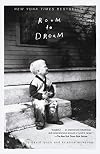
I’ve read a lot of books about David Lynch and his work, and have seen several documentaries, but I still felt as though I learned loads of new information from this book. The biographer really went all-out interviewing practically everyone who has ever known or worked with Lynch (or at least it seems that way :)). And of course Lynch’s own commentary is priceless. I enjoyed it from beginning to end and think any fan would probably love it. Also, the cover is adorable.
I’ve read a lot of books about David Lynch and his work, and have seen several documentaries, but I still felt as though I learned loads of new information from this book. The biographer really went all-out interviewing practically everyone who has ever known or worked with Lynch (or at least it seems that way :)). And of course Lynch’s own commentary is priceless. I enjoyed it from beginning to end and think any fan would probably love it. Also, the cover is adorable.
We listened to the audiobook... what a goofy yet delightful mess. I found it interesting learning about the context of David's life when he was a boy and some of the smaller projects he's done that we'll now have to dig a bit to find and check out. The book does drag often at parts though and David's sections are just a rambling, jumbly mess--but still, you listen--because David Lynch is just that kind of guy. As the book mentions, no one really stays neutral on the subject of Lynch you either love him or you hate him, there's no in between.
Members
- Recently Added By
Lists

To Read
617 works; 7 members
Author Information

108+ Works 5,957 Members
David Lynch is an American filmmaker, director, musician, painter, and photographer, born in Montana in 1946. His feature films and television series include Eraserhead (1977), The Elephant Man (1980), Dune (1984), Blue Velvet (1986), Wild at Heart (1990), Twin Peaks: Fire Walk with Me (1992), Lost Highway (1997), The Straight Story (1999), show more Mulholland Drive (2001), and Inland Empire (2006). He was nominated for 13 Academy Awards, 10 BAFTA (winning 3 for The Elephant Man and 1 for Mulholland Drive), and 13 Golden Globes. He is the co-author of Lynch on Lynch (with Chris Rodley), and Room to Dream: A Life in Art (with Kristine McKenna). (Bowker Author Biography) show less
13+ Works 771 Members
Some Editions
Awards and Honors
Distinctions
The Guardian Book of the Day (2018-06-24)
Common Knowledge
- Canonical title*
- Tilaa unelmoida
- Original title
- Room to Dream
- Original publication date
- 2018
- People/Characters
- Donald Lynch; Edwina Lynch; David Keith Lynch; John Lynch; Martha Levacy; Peggy Reavey (show all 8); Jennifer; Mary Fisk
- Important places
- Missoula, Montana, USA; Spokane, Washington, USA; Durham, North Carolina, USA; Boise, Idaho, USA; Alexandria, Virginia, USA; West Hollywood, California, USA
- Dedication
- Dedicated to His Holiness Maharishi Yogi and the world family
- First words
- David Lynch´s mother was a city person and his father was from the country.
When we decided to write 'Room to Dream' together a few years back there were two things we wanted to achieve. - Introduction - Last words
- (Click to show. Warning: May contain spoilers.)MAY EVERYONE BE HAPPY / MAY EVERYONE BE FREE OF DISEASE / MAY AUSPICIOUSNESS BE SEEN EVERYWHERE / MAY SUFFERING BELONG TO NO ONE / PEACE
- Original language
- English
- Canonical DDC/MDS
- 791.4302/33092
*Some information comes from Common Knowledge in other languages. Click "Edit" for more information.
Classifications
- Genres
- Biography & Memoir, Nonfiction, General Nonfiction, Art & Design
- DDC/MDS
- 791.4302 — Arts & recreation Recreation, sports, and performing arts Public performances Motion pictures, radio, television, podcasting Motion pictures Standard subdivisions
- LCC
- PN1998.3 .L96 .A3 — Language and Literature Literature (General) Literature (General) Drama Motion pictures
- BISAC
Statistics
- Members
- 604
- Popularity
- 48,117
- Reviews
- 9
- Rating
- (4.15)
- Languages
- 9 — Danish, English, Finnish, French, German, Italian, Portuguese (Portugal), Spanish, Swedish
- Media
- Paper, Audiobook, Ebook
- ISBNs
- 29
- ASINs
- 6