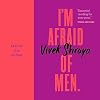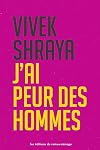
I'm Afraid of Men
by Vivek Shraya
On This Page
Description
"A powerful meditation on the damaging effects of masculinity from a trans girl--a writer with celebrated indie roots and a knack for dismantling assumptions and challenging the status quo. Toxic masculinity takes many insidious forms, from misogyny and sexual harassment to homophobia, transphobia, and bullying. Vivek Shraya has firsthand experience with nearly all of them. As a boy, Vivek exhibited "feminine" qualities. The men in her life immediately and violently disapproved. They taught show more her to fear the word girl by turning it into a weapon used to hurt her. They taught her to hate her femininity, to destroy the best parts of herself. In order to survive, Vivek had to learn to convincingly perform masculinity. As a girl, she's still afraid. Having spent years undoing the damage and salvaging her lost girlhood, she is haunted by the violence of men, seldom dressing the way she wants in public. As a result she is often still perceived as male, stirring feelings of guilt and self-doubt: Am I not feminine enough? Is this my fault for striving to be the perfect man and excelling at it? I'm Afraid of Men is a culmination of the years Vivek spent observing men and creating her own version of manhood. Through deeply personal reflection, she offers a rare and multifaceted perspective on gender and a hopeful reimagining of masculinity at a time when it's needed more than ever."-- show lessTags
Recommendations


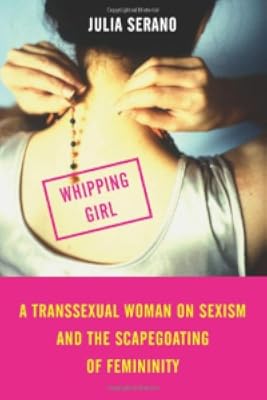



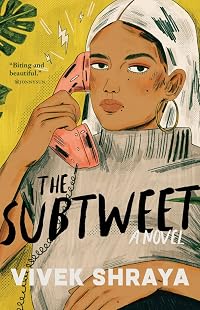
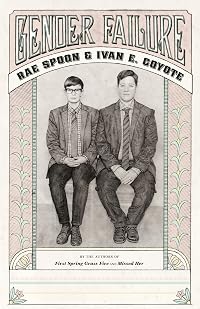
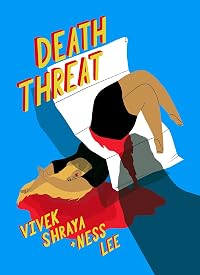









Member Reviews
I used to work for an LGBTQ non-profit, and part of my job was reading and researching books, journals and other forms of media.
It was exhausting. It killed my ability to read for pleasure. I was tired, often, of reading the same statistics, experiencing the same pain the community experiences in such a volume.
I read everything from more recent, modern texts to memoirs from the 80's, historical documents, comics, personal anecdotes. Largely, many of the ways we experience queerphobia and transphobia have shifted, but the way they make us feel is the same.
Of course, there was so much queer and trans joy too, but I was immersed in these videos, books, journals and magazines personally, professionally and emotionally.
A labour of love, show more and it was wonderful to hear from so many people in my community. But it was a deep and tiring commitment.
Then I read this book.
People always call Vivek Shraya's work raw, and while it was an emotionality all its own, her level of craft, care and execution is exceptional.
How can I even begin to review this book? To talk about how she examines gender and toxic masculinity, how she relates it to her own experience? Shraya is exceptional because she proves that you cannot critically examine something without speaking to its emotional power.
You cannot critically examine the performative nature of gender without speaking to personal anecdotes. Those anecdotes, those experiences make that concept come to life.
As always, lines in this book floor me completely.
“Queerness is associated with freedom from boundaries.”
I read an exhausting number of queer books for my work, and somehow, Vivek Shraya's I'm Afraid of Men triumphed over all of that and gave me back my love of reading.
I'll always be grateful for that.
And imagine, just for a minute, that you are a trans youth. And you read this book.
Vivek's power is immeasurable, but her love is too. show less
It was exhausting. It killed my ability to read for pleasure. I was tired, often, of reading the same statistics, experiencing the same pain the community experiences in such a volume.
I read everything from more recent, modern texts to memoirs from the 80's, historical documents, comics, personal anecdotes. Largely, many of the ways we experience queerphobia and transphobia have shifted, but the way they make us feel is the same.
Of course, there was so much queer and trans joy too, but I was immersed in these videos, books, journals and magazines personally, professionally and emotionally.
A labour of love, show more and it was wonderful to hear from so many people in my community. But it was a deep and tiring commitment.
Then I read this book.
People always call Vivek Shraya's work raw, and while it was an emotionality all its own, her level of craft, care and execution is exceptional.
How can I even begin to review this book? To talk about how she examines gender and toxic masculinity, how she relates it to her own experience? Shraya is exceptional because she proves that you cannot critically examine something without speaking to its emotional power.
You cannot critically examine the performative nature of gender without speaking to personal anecdotes. Those anecdotes, those experiences make that concept come to life.
As always, lines in this book floor me completely.
“Queerness is associated with freedom from boundaries.”
I read an exhausting number of queer books for my work, and somehow, Vivek Shraya's I'm Afraid of Men triumphed over all of that and gave me back my love of reading.
I'll always be grateful for that.
And imagine, just for a minute, that you are a trans youth. And you read this book.
Vivek's power is immeasurable, but her love is too. show less
Vivek Shraya’s biography on the back flap of I’m Afraid of Men. says she’s many things: an artist in all kinds of genres, a musician, a professor, and the founder of a publishing imprint. She’s also a transwoman, and in this short book she describes how that trans identity has defined her life, especially in her dealings with men, both romantic and platonic. Shraya’s self-reflection gives way to self-indulgence at times, especially in the first section, but the second section takes the book from diary to something for the public.
Her musings on the arbitrariness of gendering and what it means to act “like a man” or to act “like a woman” are crucial. Dismayingly, despite reading a lot about gender, I’ve seen only one show more other book confront arbitrary gendering: Seeing Gender: An Illustrated Guide to Identity and Expression by Iris Gottlieb. But our gendering of neutral things (and the accompanying erroneous belief that women and men naturally like certain specific things) thwarts gender-equality efforts so much that every book on gender relations should robustly question it. The woman-man binary is a literal division, the perfect kindling to feed the fire of sexism and toxic masculinity. It affects all, but for those who fall neatly into the woman box or man box, the binary exerts a pressure steady enough to be mostly white noise. For trans people like Shraya the noise never stops clanging.
Through ongoing study we’ve come to understand that gender is flexible, lying on a spectrum. I’m Afraid of Men. is a candid first-person experience of the flexibility; however, it’s so personal that it doesn’t reach its full potential as a wider educator. For that, I’m glad to have read Seeing Gender some years before.
Complementary reading in addition to Seeing Gender: Inferior: How Science Got Women Wrong—and the New Research That's Rewriting the Story by Angela Saini
(This review is cross-posted on The Story Graph and Goodreads.) show less
Her musings on the arbitrariness of gendering and what it means to act “like a man” or to act “like a woman” are crucial. Dismayingly, despite reading a lot about gender, I’ve seen only one show more other book confront arbitrary gendering: Seeing Gender: An Illustrated Guide to Identity and Expression by Iris Gottlieb. But our gendering of neutral things (and the accompanying erroneous belief that women and men naturally like certain specific things) thwarts gender-equality efforts so much that every book on gender relations should robustly question it. The woman-man binary is a literal division, the perfect kindling to feed the fire of sexism and toxic masculinity. It affects all, but for those who fall neatly into the woman box or man box, the binary exerts a pressure steady enough to be mostly white noise. For trans people like Shraya the noise never stops clanging.
Through ongoing study we’ve come to understand that gender is flexible, lying on a spectrum. I’m Afraid of Men. is a candid first-person experience of the flexibility; however, it’s so personal that it doesn’t reach its full potential as a wider educator. For that, I’m glad to have read Seeing Gender some years before.
Complementary reading in addition to Seeing Gender: Inferior: How Science Got Women Wrong—and the New Research That's Rewriting the Story by Angela Saini
(This review is cross-posted on The Story Graph and Goodreads.) show less
Drawn in by the high-impact book design, I picked this up from the new non-fiction shelf at the library, and seeing that it is essays on gender written by a trans artist, I had to check it out. (The Tegan & Sara blurb didn't hurt anything either.)
The essays are deeply personal, but they go deep on how gender policing behaviors trap everyone, sooner or later. The people doing the policing, the people being policed, and how everyone involved on all sides internalizes the policing and ends up policing themselves. How policing of gender identity intersects in weird ways with sexual identity.
This book is short, but hard-hitting.
The essays are deeply personal, but they go deep on how gender policing behaviors trap everyone, sooner or later. The people doing the policing, the people being policed, and how everyone involved on all sides internalizes the policing and ends up policing themselves. How policing of gender identity intersects in weird ways with sexual identity.
This book is short, but hard-hitting.
This is Shraya’s statement of what her experiences of dealing with men have been like. As a trans woman, she has, as the song says, ‘looked at life from both sides now’. As a boy, she was encouraged to be more male. She did body building, lowered her voice, and mimicked the walk of masculine men. She gave up color in her wardrobe, sticking to dark neutrals. Later in life she gave up trying to be what she was not, and started expressing her femininity. Now, instead of being harassed for not being masculine enough, she gets harassed for not being feminine enough. The world- and men in particular- just cannot deal with people like her. The majority of men (and women) want women and men to be firmly at the poles of the male/female show more spectrum, and so find themselves uncomfortable- and sometimes violent- in the presence of a trans or gender fluid person. This is an essential book for the 21st century, as we learn to view the world as non-binary. show less
When I'm browsing in the library I find it hard to resist short books with provocative titles. This one challenged me to question my own way of thinking and empathize with a person who is very different from me. While it is fodder for much thought, the fact that it is needs to exist ultimately just makes me sad. And I'm in the quandary that I find the book frustratingly short, but at the same time, were it longer I doubt I would have read it.
In this short book comprised of a single essay, Vivek Shraya reflects on the various ways men and masculinity have made her fearful, from experiences in childhood, to her time in her twenties as a gay man, to her time coming out as a trans woman in her thirties. In the process she reflects on how we might approach gender in the 21st century and how it has the potential to improve the experiences of everyone regardless of their gender expression. While the book is only a brief 85 pages, it's a thought-provoking read with plenty of ideas to unpack and consider.
A gem. Loved the personal perspective of Shraya's writing--both relatable and eye opening while being truly lovely in it's level of detail. Prompts a view up close and from above gently and with so much warmth.
Members
- Recently Added By
Lists

Evergreen Award™ Winners and Nominees 2005–2024
200 works; 3 members

Books Read in 2025
4,128 works; 98 members

Sapph-Lit
78 works; 4 members
Author Information

12+ Works 1,311 Members
Some Editions
Awards and Honors
Awards
Common Knowledge
- Canonical title
- I'm Afraid of Men
- Original publication date
- 2018
- People/Characters
- Vivek Shraya; Nick
- Important places
- Edmonton, Alberta, Canada; University of Calgary, Calgary, Alberta, Canada; Calgary, Alberta, Canada
- Epigraph
- "I know that many men and even women
are afraid and angry when women speak,
because in this barbaric society, when women
speak truly they speak subversively - they can't
help it: if you're underneath, if you're ... (show all)kept
down, you break out, you subvert. We are vol-
canoes. When we women offer our experience
as our truth, as human truth, so the maps
change. There are new mountains."
- URSULA K. LE GUIN - Dedication
- For Adam.
- First words
- I'm afraid of men because it was men who taught me fear.
- Last words
- (Click to show. Warning: May contain spoilers.)Might you then free me at least of my fear, and of your own?
- Blurbers
- Kaur, Rupi; Quin, Tegan; Koul, Scaachi; Tegan and Sara
- Original language
- English
Classifications
- Genres
- Sexuality and Gender Studies, General Nonfiction, Nonfiction, LGBTQ+, Biography & Memoir
- DDC/MDS
- 306.768 — Society, government, & culture Social sciences, sociology & anthropology Social Behavior - Dating, Marriage, Divorce Sexual relations Sexual orientation, transgender identity, intersexuality Transgender identity and intersexuality
- LCC
- PR9199.4 .S53697 .A3 — Language and Literature English English Literature English literature: Provincial, local, etc.
- BISAC
Statistics
- Members
- 385
- Popularity
- 81,327
- Reviews
- 18
- Rating
- (4.06)
- Languages
- English, French
- Media
- Paper, Audiobook, Ebook
- ISBNs
- 7
- ASINs
- 2