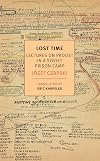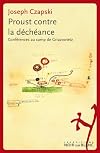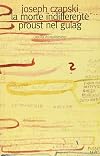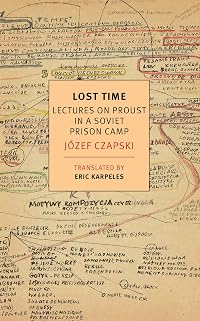
Lost Time: Lectures on Proust in a Soviet Prison Camp (New York Review Books Classics)
by Józef Czapski
On This Page
Description
"The first translation of painter and writer Jozef Czapski's inspiring lectures on Proust, first delivered in a prison camp in the Soviet Union during World War II. During the Second World War, in the heart of the malevolent Soviet Union, a Polish prisoner of war brought Marcel Proust's novel À la recherche du temps perdu to life without a single page of text available for reference. Presenting a series of lectures in an attempt to distract his fellow officers from their collective misery, show more Jozef Czapski managed to revive the novel and his experience of reading it purely from memory. It was a clarifying moment for him, a Proustian moment. His talks were given in French, helping to focus the men's minds and distract their thoughts from their grim surroundings. Calling upon deep reserves of aesthetic knowledge and critical thinking in a variety of languages, Czapski offered aspects of Proust's story, like Scheherazade, night after night. His lectures are a testament to the survival of memories of both worlds woven together, the fictional Faubourg Saint-Germain and the actual Soviet prison camp"-- show lessTags
Recommendations












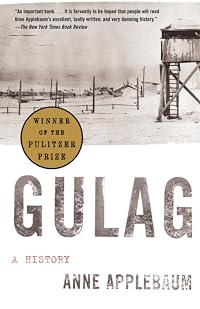

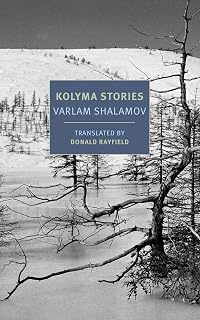

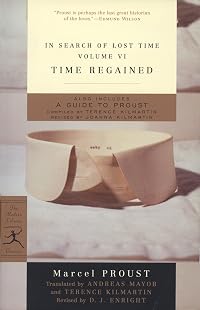


Member Recommendations
Member Reviews
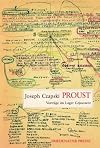
I read this book when it first came out in French, and just re-read it in Karpeles's English translation. A Proust scholar will find perhaps little that they would consider new in terms of research, and the main interest of the book may be its context. While imprisoned in Gryazovets, a Russian camp near Vologda, located in a bombed-out monastery, Czapski participated in a series of sometimes authorized, sometimes clandestine lectures: inmates would discourse from memory on any topic dear to them, whether literature, sports, geography... Czapski gave a series of talks on the history of painting (and, as we learn from Karpeles's biography of Czapski, "Almost Nothing," even drafted an art historical volume, but the notes were lost, show more confiscated...). As he worked on his topic, another idea came to haunt him: to present to his fellow prisoners the work of Proust -- whom he saw as a sort of prisoner, locked in his "corked bedroom," in disregard of his health, entirely devoted to his work. Proust's "In Search of Lost Time" brought hope of a time regained into a place so remote and seemingly antithetical to the aristocratic world he describes. Speaking to Polish fellows in arms, Czapski nevertheless gave his lectures in French. His notes, some of which are reproduced and translated (with only a handful of very slight errors) in the plate section, are a visual map to his interpretation of Proust, drafted mainly in Polish, with a sprinkling of French, German, Latin, as required by the origin of the references. The French edition of these talks presents perhaps a more fragile text as it preserves some grammatical errors and omissions made in the surviving transcripts of these lectures. (The journey from the original conception to the published text is in itself fascinating: it's not clear whether Czapski had detailed notes or whether he spoke based on the mental map in the form of visual diagrams recorded in the notebooks; afterwards, he dictated the lectures in abridged form to two inmates who transcribed it on a typewriter -- as Karpeles points out, mystery envelops the circumstances of the creation of this typescript [a typewriter in a gulag?]. Eventually a second typescript was created. Both bear some handwritten corrections made by Czapski, perhaps others. Karpeles's version relies on a comparison between the two versions; whereas the French publication had access to only one typescript.) Perhaps because of publishing costs, the NYRB edition reproduces only a few select pages with the draft diagrams, accompanied by a translation on the facing page. The French version doesn't offer translations of its plates, but includes color photographs of the entire notebook, including the two tattered covers with the title "Tyetrad" [Exercise Book], printed in Cyrillics.
Let not the Proust scholar be too disappointed or walk away too early, however. While Czapski may seem to add little to the "scholarship," doesn't encountering Proust in the gulag tell us something about Proust we may have previously overlooked? And plain and "unscholarly" as Czapski's interpretation may appear, it brings in his unique erudition by setting Proust side by side Dostoevsky, Tolstoy, Zeromski, Conrad in ways that to a discerning eye might indeed suggest new avenues of exploration! show less
Let not the Proust scholar be too disappointed or walk away too early, however. While Czapski may seem to add little to the "scholarship," doesn't encountering Proust in the gulag tell us something about Proust we may have previously overlooked? And plain and "unscholarly" as Czapski's interpretation may appear, it brings in his unique erudition by setting Proust side by side Dostoevsky, Tolstoy, Zeromski, Conrad in ways that to a discerning eye might indeed suggest new avenues of exploration! show less
This is a short and excellent book. Thoughts about Proust through the memories and thoughts of a Polish artist/soldier speaking in a Soviet prison camp. There is something extremely moving about the circumstances of this book, and the hand-drawn dog picture at the back nearly finished me off - just the simple humanity of someone doing the best for himself and his fellow inmates.
Memory as survival, memory to forget the hostile environment. A fascinating book, as compelling in it own mental way to any survival story. You think as your read it 'the author is barely surviving in a frozen work camp and he's thinking about a book of high end French life in the belle epoch'. Those men coming together for their solace in the world of ideas is very uplifting. Few books do this. Yet you have to imagine the entire scene. Its the bits left out that make it so fascinating.
I came to this book by a circuitous path. I had first heard about the murders of the Polish officers by the soviets and their burial in the Katyn forest through a friend whose father served in the German army. Every soldier knew the story of the Katyn show more forest apparently. Then, I read Field Grey by Philip Kerr, not realising it was set in the historical moment of its discovery. Then I read Proust, or most of Proust. Then I read an article about Czapski that mentioned this book, because once something is in your head it is very hard to get it out. As Swann discovers when he falls in love with Odette. show less
I came to this book by a circuitous path. I had first heard about the murders of the Polish officers by the soviets and their burial in the Katyn forest through a friend whose father served in the German army. Every soldier knew the story of the Katyn show more forest apparently. Then, I read Field Grey by Philip Kerr, not realising it was set in the historical moment of its discovery. Then I read Proust, or most of Proust. Then I read an article about Czapski that mentioned this book, because once something is in your head it is very hard to get it out. As Swann discovers when he falls in love with Odette. show less
Five stars for the back-story, three stars for general Proustiana, but really, unless you're obsessed with Proust, this is not even remotely worth reading. You can get the back story from a solid goodreads review. If you are obsessed with Proust, on the other hand, this is a delightful little squib.
Video review forthcoming along with Céleste Albaret's [b:Monsieur Proust|379255|Monsieur Proust|Céleste Albaret|https://i.gr-assets.com/images/S/compressed.photo.goodreads.com/books/1320487419l/379255._SY75_.jpg|369072] and Samuel Beckett's [b:Proust|289769|Proust|Samuel Beckett|https://i.gr-assets.com/images/S/compressed.photo.goodreads.com/books/1401029323l/289769._SY75_.jpg|52695].
Il s'agit de conférences sur La Recherche et son auteur prononcées par l'auteur (polonais) alors qu'il était prisonnier dans un camp russe en 1940-41. L'oeuvre est replacé dans le contexte des années de sa création et dans la vie de l'auteur. La passion de Czapski est communicative et son analyse est fine même si elle ne peut s'appuyer que sur la mémoire de son auteur, qui n'avait évidemment pas les textes avec lui dans le camp d'internement.
Feb 3, 2013French
Ratings
Members
- Recently Added By
Author Information

29 Works 466 Members
Some Editions
Awards and Honors
Notable Lists
Series
Belongs to Publisher Series
Common Knowledge
- Original title
- Proust contre la déchéance: Conférences au camp de Griazowietz
- Original publication date
- 2018 (English Translation) (English Translation); 1987
- People/Characters
- Marcel Proust
- Important places
- Gryazovets prison camp, Soviet Union
- Dedication
- for Steven Barclay
and
Mikolaj Nowak-Rogoziński - First words
- Most readers will have picked up this book in response to the name Marcel Proust. (Translator's Introduction)
This essay on Proust was dictated in the winter of 1940-41 in the cold refectory of an abandoned convent that served as the mess hall of our prison camp at Gryazovets in the Soviet Union. (Author's Introduction)
It was only in the year 1924 that a volume of Proust fell into my hands. - Last words
- (Click to show. Warning: May contain spoilers.)At some point, Czapski must have done the same thing, before moving on to whatever came next. (Translator's Introduction)
(Click to show. Warning: May contain spoilers.)This essay is but a humble tribute of gratitude to the French art that helped us live through those few years in the USSR. (Author's Introduction)
(Click to show. Warning: May contain spoilers.)On his nightstand a flask of medicine had been overturned, its liquid blackening a little sheet of paper on which had been written that same night, in his fine, nervous handwriting, the name of a not-even-secondary character from À la recherche: Forcheville. - Blurbers
- Taylor, Benjamin; Zagajewski, Adam
- Original language
- French
Classifications
- Genres
- Nonfiction, Literature Studies and Criticism, Fiction and Literature
- DDC/MDS
- 843.912 — Literature & rhetoric French Literature French fiction 1900- 20th Century 1900-1945
- LCC
- PQ2631 .R63 .A7848 — Language and Literature French, Italian, Spanish and Portuguese literatures French literature Modern literature 1900-1960
- BISAC
Statistics
- Members
- 267
- Popularity
- 121,218
- Reviews
- 6
- Rating
- (3.82)
- Languages
- 5 — English, French, German, Italian, Portuguese
- Media
- Paper, Ebook
- ISBNs
- 11
- ASINs
- 3