On This Page
Description
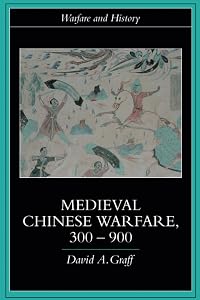
Shortly after 300 AD, barbarian invaders from Inner Asia toppled China's Western Jin dynasty, leaving the country divided and at war for several centuries. Despite this, the empire gradually formed a unified imperial order. Medieval Chinese Warfare, 300-900 explores the military strategies, institutions and wars that reconstructed the Chinese empire that has survived into modern times. Drawing on classical Chinese sources and the best modern scholarship from China and Japan, David A. Graff show more connects military affairs with political and social developments to show how China's history was shaped by war. show lessTags
Recommendations

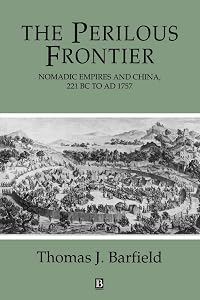

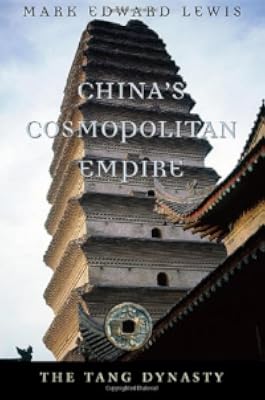
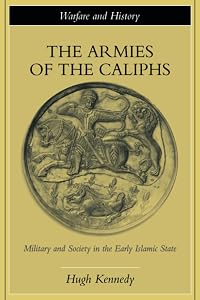
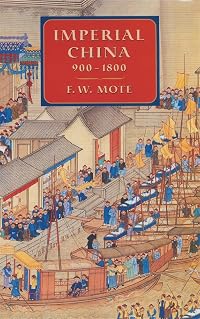




Member Reviews
Even though this book is part of a series of introductory surveys on the military history of assorted periods and cultures, Graff still manages to provide as much detail as anyone but a hardened scholar would require. This is as Graff details the impact of steppe nomad cavalry on Chinese Empire 1.0, how the Han elite came to terms with this development in the process of recreating empire, and thus began a series of relationships that continued down to modern times. Graff also does a good job of keeping a balance between operational & strategic detail, the political & sociological context of the period, and providing a good sense of the limitations of the sources that have come down to us. The one limitation of this work is if you want show more nuts and bolts details on weaponry and costumes. In that case you'll probably want to supplement Graff with the relevant Osprey booklets on the period in question. show less
This is a very good book about China's political and military history during the period from the heyday of the Western Jin dynasty to the fall of the Tang dynasty. The period saw periods of internal unity and external expansion, as under the early Tang, but also long periods of fragmentation and foreign invasion, as during the time in the 4th and 5th centuries known rather graphically as the "Sixteen Kingdoms of the Five Barbarians".
Graff deals mostly with the strategic and operational levels, tactical detail being in any case sparse in the sources (especially it appears before the late 6th century), and almost not at all with fighting techniques at the individual level, nor much with equipment. There is a good deal about organization show more and recruitment - subjects well loved by military historians because the bureaucrats in charge of them tend to write down what they do - but at times one would like a bit more clarity as whom exactly was being organized and recruited. For example, did the various concurrent recruitment systems under the early Tang turn up the same sorts of soldiers, or were some used, say, mainly to raise cavalry and others infantry? But that's a minor complaint; overall this is, as said, a very good book.
While undoubtedly a tough read for anyone wholly unfamiliar with Chinese history, sinological jargon is minimized and the book is definitely within reach of the educated layman show less
Graff deals mostly with the strategic and operational levels, tactical detail being in any case sparse in the sources (especially it appears before the late 6th century), and almost not at all with fighting techniques at the individual level, nor much with equipment. There is a good deal about organization show more and recruitment - subjects well loved by military historians because the bureaucrats in charge of them tend to write down what they do - but at times one would like a bit more clarity as whom exactly was being organized and recruited. For example, did the various concurrent recruitment systems under the early Tang turn up the same sorts of soldiers, or were some used, say, mainly to raise cavalry and others infantry? But that's a minor complaint; overall this is, as said, a very good book.
While undoubtedly a tough read for anyone wholly unfamiliar with Chinese history, sinological jargon is minimized and the book is definitely within reach of the educated layman show less
Good study of warfare in a period when China first went through major internal strife, then expanded into Central Asia, then lapsed into civil strife again.
Ratings
Members
- Recently Added By
Lists

All Things China
205 works; 3 members
Author Information
5+ Works 132 Members
David A. Graff is Associate Professor of History at Kansas State University, USA. He is the author of Medieval Chinese Warfare, 300-900 (Routledge, 2002) and co-editor of the Journal of Chinese Military History.
Series

Common Knowledge
- Canonical title
- Medieval Chinese Warfare, 300-900
- Important places
- China
- Important events
- Tang Dynasty (618 | 907)
Classifications
Statistics
- Members
- 63
- Popularity
- 493,804
- Reviews
- 4
- Rating
- (4.38)
- Languages
- English, Russian
- Media
- Paper, Ebook
- ISBNs
- 6