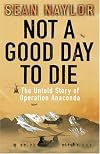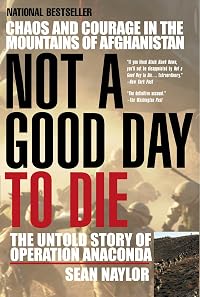
Not a Good Day to Die
by Sean Naylor
On This Page
Description
After the Al Qaeda attacks of September 11, 2001, America quickly toppled the Taliban regime that had sheltered the terrorist organization in Afghanistan. But, believing the war to be all but over, U.S. Central Command refused to commit the forces required to achieve total victory. Instead, the war's biggest battle--one that could have broken Al Qaeda and captured Osama bin Laden--was waged by a hodge-podge of units thrown together at the last moment. On March 2, 2002, America's first major show more battle of the 21st century began in the Shahikot Valley, where young, untested U.S. soldiers paid a bloody price for strategic, higher-level miscalculations. Journalist eyewitness Naylor describes how, denied the extra infantry, artillery, and attack helicopters with which they had trained, these troops nevertheless proved their worth in brutal combat and prevented an American military disaster.--From publisher description. show lessTags
Recommendations






Member Reviews
A sobering look at a completely mismanaged operation in Afghanistan. A true story of heroism, idiotic government bumbling, and how the men on the ground are the ones who have to deal with it and overcome the obstacles of not only the enemy but their faulty high command. Those responsible for this failed endeavor should be put before a court martial for their decisions and ignoring the intel presented to them by men who were actually on the ground. Their refusing to believe the facts cost us dearly in American lives. This story wouldnt be out of place in the Vietnam era when it comes to just how much intel was ignored and deemed irrelevant by people thousands of miles away from those who had boots and eyes on the ground. Overall an show more excellent book but one that just makes you shake your head and truly feel sorry for the men who had to endure what they did and the families who lost who they did. show less
An excellent, clear-eyed study of Operation Anaconda, in March, 2002, in Afghanistan. Tactical bravery and brilliance mixed with operational hubris, arrogance, and chain of command issues are well documented. The manner in which the American military leadership can, at times, fail to learn the correct lessons from America’s previous wars - as illustrated by the chronic underestimation of our adversaries and the difficulties of asymmetrical warfare - is frustrating and one hopes for much better, going forward.
A sobering look at a completely mismanaged operation in Afghanistan. A true story of heroism, idiotic government bumbling, and how the men on the ground are the ones who have to deal with it and overcome the obstacles of not only the enemy but their faulty high command. Those responsible for this failed endeavor should be put before a court martial for their decisions and ignoring the intel presented to them by men who were actually on the ground. Their refusing to believe the facts cost us dearly in American lives. This story wouldnt be out of place in the Vietnam era when it comes to just how much intel was ignored and deemed irrelevant by people thousands of miles away from those who had boots and eyes on the ground. Overall an show more excellent book but one that just makes you shake your head and truly feel sorry for the men who had to endure what they did and the families who lost who they did. show less
You can tell what this book is really about, seeing as something like half of the work is devoted to command, control, and intelligence issues before you get to the actual battle. This is when you then get the details of how what was supposed to be an exercise in political theatre turned into a near disaster, only to be redeemed by the professionalism and good nerves of the men on the ground.
Most striking to me was how the author puts the disasters of the Afghani auxiliaries and the U.S. troops on Robert's Ridge into context. The first were probably doomed to failure by the attempt to use a scratch group of irregulars like disciplined light infantry; not helped by a bad "friendly fire" incident. In the case of the SEALS they appear to show more have been their own worst enemy, and were brought low by what can only be called arrogance; this not being helped by off-site commanders seeking to micro-manage at the worst possible moment, which almost destroyed the Rangers sent to the rescue.
The only reason I don't rate this book higher is that there is still more to be learned about this battle (particularly from the perspective of the SEALS). An organized list of the personages involved and a flow chart of the command "structure" would have been nice too. show less
Most striking to me was how the author puts the disasters of the Afghani auxiliaries and the U.S. troops on Robert's Ridge into context. The first were probably doomed to failure by the attempt to use a scratch group of irregulars like disciplined light infantry; not helped by a bad "friendly fire" incident. In the case of the SEALS they appear to show more have been their own worst enemy, and were brought low by what can only be called arrogance; this not being helped by off-site commanders seeking to micro-manage at the worst possible moment, which almost destroyed the Rangers sent to the rescue.
The only reason I don't rate this book higher is that there is still more to be learned about this battle (particularly from the perspective of the SEALS). An organized list of the personages involved and a flow chart of the command "structure" would have been nice too. show less
Detailed account of a FUBAR battle in Afghanistan, heavy on military lingo and on explaining from the Americans’-eye view what went wrong in the chain of command, leading to the preventable deaths of several soldiers despite the training, in-the-moment competence, and equipment available to those soldiers. Another lesson in: don’t ever think you know what a military operation will be like. Or, as one aphorism Naylor quotes says, no matter how good your plan is, remember that the enemy gets to vote on it too.
This book really brings home three points:
1) Unity of command--lack of a clear chain of command brings unneccesary friction to the battle field
2) Need for conventional forces on the battlefield; SOF is great--those guys can do amazing things. But the wish to keep US KIA low and substitute SOF and local troops prevented the US commander from achieving his objectives.
3) US Army fire support personnel need to be cross trained as Terminal Area Controllers in order to control close air support.
Great Book; really recommend it.
1) Unity of command--lack of a clear chain of command brings unneccesary friction to the battle field
2) Need for conventional forces on the battlefield; SOF is great--those guys can do amazing things. But the wish to keep US KIA low and substitute SOF and local troops prevented the US commander from achieving his objectives.
3) US Army fire support personnel need to be cross trained as Terminal Area Controllers in order to control close air support.
Great Book; really recommend it.
An important contribution to the history of the ongoing Afghanistan war.Mr. Naylor is a reporter with Army Times. This was widely reviewed in Amazon with some of the reviewers stating it was one of the best books of the war
Members
- Recently Added By
Author Information

2 Works 809 Members
Sean Naylor received a master's degree in international relations from Boston University in 1990. He is a journalist, who currently is a senior writer for Army Times. His first book, Clash of Chariots: The Great Tank Battles, which he co-wrote, was published in 1995. His other books include Not a Good Day to Die: The Untold Story of Operation show more Anaconda and Relentless Strike: The Secret History of Joint Special Operations Command. (Bowker Author Biography) show less
Common Knowledge
- Canonical title
- Not a Good Day to Die
- Alternate titles
- Not a Good Day to Die
- Original publication date
- 2005
- Important places
- Afghanistan; Shahi-Kot Valley, Afghanistan
- Important events
- Operation Enduring Freedom
Classifications
Statistics
- Members
- 575
- Popularity
- 51,183
- Reviews
- 8
- Rating
- (3.95)
- Languages
- English, French, Hebrew
- Media
- Paper, Audiobook, Ebook
- ISBNs
- 15
- UPCs
- 1
- ASINs
- 4