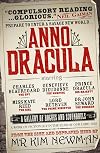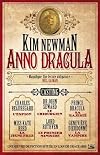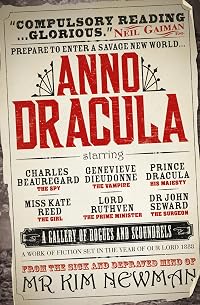
Anno Dracula {with additional material}
by Kim Newman
Anno Dracula (Collections and Selections — 1 & extra)
On This Page
Description
Fantasy. Fiction. Mystery. Historical Fiction. HTML:"Kim Newman's Anno Dracula is back in print, and we must celebrate. It was the first mash-up of literature, history and vampires, and now, in a world in which vampires are everywhere, it's still the best, and its bite is just as sharp. Compulsory reading, commentary, and mindgame: glorious." - Neil Gaiman"Politics, horror, and romance are woven together in this brilliantly imagined and realized novel. Newman's prose is a delight, his show more attention to detail is spellbinding." - Time Out
“Stephen King assumes we hate vampires; Anne Rice makes it safe to love them, because they hate themselves. Kim Newman suspects that most of us live with them… Anno Dracula is the definitive account of that post-modern species, the self-obsessed undead.” - New York Times
“Anno Dracula will leave you breathless... one of the most creative novels of the year.” - Seattle Times
“Powerful... compelling entertainment... a fiendishly clever banquet of dark treats.” - San Francisco Chronicle
'A ripping yarn, an adventure romp of the best blood, and a satisfying… read' - Washington Post Book World
"The most comprehensive, brilliant, dazzlingly audacious vampire novel to date. 'Ultimate' seems an apt description... Anno Dracula is at once playful, horrific, intelligent, and revelatory." - Locus
"A marvelous marriage of political satire, melodramatic intrigue, gothic horror, and alternative history. Not to be missed." - The Independent
"Once you start reading this Victorian-era thriller, you will not be satiated until you reach the end." - Ain't It Cool
"Anno Dracula is the smart, hip Year Zero of the vampire genre's ongoing revolution." - Paul McAuley
"Kim Newman brings Dracula back home in the granddaddy of all vampire adventures. Anno Dracula couldn't be more fun if Bram Stoker had scripted it for Hammer. It's a beautifully constructed Gothic epic that knocks almost every other vampire novel out for the count." - Christopher Fowler
"The most interesting take on the Dracula story... to date. Recommending this one to all those that love Dracula and historical fiction!" - RexRobotReviews
—
It is 1888 and Queen Victoria has remarried, taking as her new consort Vlad Tepes, the Wallachian Prince infamously known as Count Dracula. Peppered with familiar characters from Victorian history and fiction, the novel follows vampire Geneviève Dieudonné and Charles Beauregard of the Diogenes Club as they strive to solve the mystery of the Ripper murders.
Anno Dracula is a rich and panoramic tale, combining horror, politics, mystery and romance to create a unique and compelling alternate history. Acclaimed novelist Kim Newman explores the darkest depths of a reinvented Victorian London.
This brand-new edition of the bestselling novel contains unique bonus material, including a new afterword from Kim Newman, annotations, articles and alternate endings to the original novel. show less
Tags
Recommendations




Member Reviews
For the first hundred pages, Kim Newman's homage to vampires is little more than a clever but convoluted series of in-jokes, cramming in characters from Bram Stoker's novel and other popular Victorian works of fiction, from Sherlock Holmes to Jekyll and Hyde. Then the plot starts to pick up speed, and two of Newman's best characters - his own - get together.
Charles Beauregard is a secret agent working for a government agency known as the Diogenes Club (Conan Doyle again). Genevieve Dieudonne is a centuries old vampire, one of the 'elders' in the new society, who was 'turned' as a sixteen year old girl in Joan of Arc's France. Now, in 1888, Victoria is on the throne, but her prince consort is none other than Count Dracula. Three years show more after the events of Stoker's novel (retconned to fit with the Ripper murders), Van Helsing and Harker are dead, Godalming and Mina are undead, and Britain is under the control of 'new-born' vampires. A vicious murderer known as 'Silver Knife' or 'Jack the Ripper' is also stalking the streets of Whitechapel, slaying vampire prostitutes. Charles is hired by the head of the Diogenes Club - Professor Moriarty - to track down the killer, and joins forces with Genevieve to better understand his quarry.
*Spoilers?*
The fusing of fact and fiction is cleverly thought out by Newman, offering a workable theory as to the identity of the infamous Ripper - Jack Seward, doctor and rejected suitor in Stoker's Dracula. I'm not really giving away the plot there either, because Seward helpfully dictates his shattered sanity and twisted crimes onto his beloved phonograph throughout the story. The 'cameo' appearances from historical and literary names alike - Lestrade, Lord Ruthven, Doctor Moreau, Oscar Wilde and the Elephant Man - also make sense, for the most part, but Newman does go overboard with his inclusion of every vampire, on page and screen, since Polidori and Le Fanu.
*End spoilers*
What rescued the story for me, binding together the premise, plot, and borrowed cast of characters, was quite simply the interaction between Charles and Genevieve. He is the unflappable British spy, masking his deep grief over the death of his wife with intelligence and diplomacy, and she is the sophisticated, powerful creature of the night who breaks through his defences. Even without the mystery of 'whodunit', Charles and Genevieve kept me reading until the end. Classy Genevieve, the bloated and truly evil Dracula (who isn't merely a misunderstood, lonely old man in Newman's alternative history), and the acquired popular mythology of gothic novels, are what vampire fiction is all about.
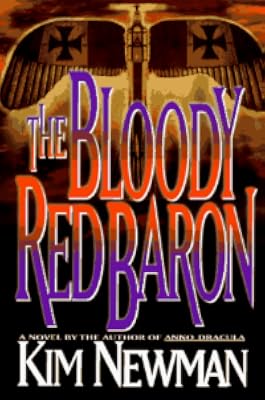
Definitely recommended for Dracula devotees, and there are another two novels in the series: Anno Dracula: The Bloody Red Baron is being reprinted in 2012. show less
Charles Beauregard is a secret agent working for a government agency known as the Diogenes Club (Conan Doyle again). Genevieve Dieudonne is a centuries old vampire, one of the 'elders' in the new society, who was 'turned' as a sixteen year old girl in Joan of Arc's France. Now, in 1888, Victoria is on the throne, but her prince consort is none other than Count Dracula. Three years show more after the events of Stoker's novel (retconned to fit with the Ripper murders), Van Helsing and Harker are dead, Godalming and Mina are undead, and Britain is under the control of 'new-born' vampires. A vicious murderer known as 'Silver Knife' or 'Jack the Ripper' is also stalking the streets of Whitechapel, slaying vampire prostitutes. Charles is hired by the head of the Diogenes Club - Professor Moriarty - to track down the killer, and joins forces with Genevieve to better understand his quarry.
*Spoilers?*
The fusing of fact and fiction is cleverly thought out by Newman, offering a workable theory as to the identity of the infamous Ripper - Jack Seward, doctor and rejected suitor in Stoker's Dracula. I'm not really giving away the plot there either, because Seward helpfully dictates his shattered sanity and twisted crimes onto his beloved phonograph throughout the story. The 'cameo' appearances from historical and literary names alike - Lestrade, Lord Ruthven, Doctor Moreau, Oscar Wilde and the Elephant Man - also make sense, for the most part, but Newman does go overboard with his inclusion of every vampire, on page and screen, since Polidori and Le Fanu.
*End spoilers*
What rescued the story for me, binding together the premise, plot, and borrowed cast of characters, was quite simply the interaction between Charles and Genevieve. He is the unflappable British spy, masking his deep grief over the death of his wife with intelligence and diplomacy, and she is the sophisticated, powerful creature of the night who breaks through his defences. Even without the mystery of 'whodunit', Charles and Genevieve kept me reading until the end. Classy Genevieve, the bloated and truly evil Dracula (who isn't merely a misunderstood, lonely old man in Newman's alternative history), and the acquired popular mythology of gothic novels, are what vampire fiction is all about.
Definitely recommended for Dracula devotees, and there are another two novels in the series: Anno Dracula: The Bloody Red Baron is being reprinted in 2012. show less
What if all the fictional vampires (and some of the other victorian era monsters) were real, and Van Helsing & Co. failed to stop Dracula? Mixed in with Jack the Ripper and various conspiracies surrounding him (plus some new ones) were all happening along with the new world order installed by Dracula. Its a fun conceit, and Newman is clearly well read and researched on vampire fiction and lore. That knowledge wielded like Jack (Seward's) scalpel rather than the ham-fisted hammer it could have been. References all feel natural within the lived in world and in many cases are quite oblique. A large number of them are obscure enough that they might go unrecognized by some readers, and prior familiarity is in no way necessary to plot. In show more fact, unless its the extended edition or you really *want* to go hunting for easter eggs, it could be read straight, as one should be able to.
All that said, I'm not sure I want or need a more extended world of novels operating under the same notions in other times and places. I think it worked great written both in the same time period and in the same style as Dracula/Jekyll&Hyde/etc., and I'm unsure weather I'd enjoy the same thing done in other time periods and styles. show less
All that said, I'm not sure I want or need a more extended world of novels operating under the same notions in other times and places. I think it worked great written both in the same time period and in the same style as Dracula/Jekyll&Hyde/etc., and I'm unsure weather I'd enjoy the same thing done in other time periods and styles. show less
The title kept niggling at me: shouldn't it be Anno Draculae? Latin declensions aside though, this counterfictional mash-up is quite good fun, if a little baggy. The premise is that Dracula was not defeated by Van Helsing, but instead succeeded in his plot to take over British society, and ended up marrying – and turning – Queen Victoria. As the Prince Consort, he now rules over a British Empire where vampirism is a fashionable lifestyle choice, and where historical figures like Joseph Merrick or Bram Stoker rub shoulders with such fictional worthies as Dr Jekyll, Mina Harker and Mycroft Holmes.
Although Newman's joy in playing around with these familiar tropes is everywhere in evidence, there is often a sense that he is more show more interested in pastiching the conventions of Gothic Victoriana than he is in developing a really compelling narrative of his own. Many scenes consist of clever-ish little conceits that move the story on not at all. And sometimes even as a period exercise his voice does not ring true – amidst the pea-soupers and Hansom cabs of the opening chapter was description of a streetwalker that mentioned her ‘bangs’, a word so completely at variance with the time and place that I had to put the book down and stare with bemusement directly into the camera, like someone from The Office.
The main plot revolves around the hunt for Jack the Ripper, here recast as a potential catalyst for open war between the undead and the ‘warm’. But all that is very much a pretext for the main business, which is about crowbarring in as many references to obscure literary vampires and Victorian marginalia as physically possible. Spotting them all is, admittedly, quite fun, although this newer edition spoils the game somewhat by including an appendix which makes explicit most of the references. Perhaps ironically, the most compelling characters by far are the two that Newman has invented himself – Charles Beauregard, a kind of proto-spy, and Geneviève Dieudonné, a four-hundred-year-old, more-or-less virtuous French vampire who looks like a teenage girl. If only he had put a little more faith in his own creations and felt less need to lean quite so heavily on his metafictional scaffolding, you feel that this could have been wildly successful.
As it is I still enjoyed myself much more than some critics here seemed to – though other books have done this kind of thing better, most of them came later and looked back to Anno Dracula when they did it. Besides, Kim Newman's love and knowledge of horror conventions and B-movie devices was, I felt, rather irresistible. I find myself quite wanting to read more in the series to see whether the prose gets any leaner and more controlled, and indeed whether Newman's Latin improves. show less
Although Newman's joy in playing around with these familiar tropes is everywhere in evidence, there is often a sense that he is more show more interested in pastiching the conventions of Gothic Victoriana than he is in developing a really compelling narrative of his own. Many scenes consist of clever-ish little conceits that move the story on not at all. And sometimes even as a period exercise his voice does not ring true – amidst the pea-soupers and Hansom cabs of the opening chapter was description of a streetwalker that mentioned her ‘bangs’, a word so completely at variance with the time and place that I had to put the book down and stare with bemusement directly into the camera, like someone from The Office.
The main plot revolves around the hunt for Jack the Ripper, here recast as a potential catalyst for open war between the undead and the ‘warm’. But all that is very much a pretext for the main business, which is about crowbarring in as many references to obscure literary vampires and Victorian marginalia as physically possible. Spotting them all is, admittedly, quite fun, although this newer edition spoils the game somewhat by including an appendix which makes explicit most of the references. Perhaps ironically, the most compelling characters by far are the two that Newman has invented himself – Charles Beauregard, a kind of proto-spy, and Geneviève Dieudonné, a four-hundred-year-old, more-or-less virtuous French vampire who looks like a teenage girl. If only he had put a little more faith in his own creations and felt less need to lean quite so heavily on his metafictional scaffolding, you feel that this could have been wildly successful.
As it is I still enjoyed myself much more than some critics here seemed to – though other books have done this kind of thing better, most of them came later and looked back to Anno Dracula when they did it. Besides, Kim Newman's love and knowledge of horror conventions and B-movie devices was, I felt, rather irresistible. I find myself quite wanting to read more in the series to see whether the prose gets any leaner and more controlled, and indeed whether Newman's Latin improves. show less
(Re-posted from http://theturnedbrain.blogspot.com/)
The premise of Anno Dracula might seem a little out there, but it's straightforward enough. It’s a Victorian London where every fictional vampire ever written is real (along with a bunch of other fictional folk), and Dracula is married to the Queen. Jack the Ripper is on the prowl, targeting only vampire whores and tensions between vampires and “warms” (humans) are rising.
Whenever I go to describe this book I found myself saying things like ‘a cracker read,’ and ‘a rollicking good time, by Jove.’ All said with a rubbish British accent, natch. The book is just so overwhelmingly and charmingly British, circa the 1800s. Everything is all correct manners and cricket and show more chivalry. But at the same time Newman pulls off the impressive trick of sounding authentic and modern at the same time. The book did not read like a novel in 1880, is read like a novel set in 1880. A small but important distinction, if you ask me.
And you might think that all the Britishness would get old after a while, but I never found this to be so. The plot and characters are strong enough to carry it, and it makes for a highly unique and enjoyable read.
In some ways the book reminded me of Gail Carriger’s ‘Soulless,’ although ‘Anno Dracula’ has almost 20 years on it. But it’s a similar setting, and one where vampires have only just come out of the closet, as it were. Newman, however, delves far deeper into the ramifications and politics of this than does Carriger, and it was one of my favourite aspects of the book. I also enjoyed that, while many steampunk authors tend to glamorize the era, Newman does not shy away from the uglier side of the time. When asked what would they eat when everyone in Britain was a vampire one character points out, in a most reasonable manner, that they would simply import Africans to serve as cattle. A repulsive idea to you and me of course, but the matter of fact way its said in the book shines a light on the way people thought back then.
This book is also a literary nerd’s dream. The world Newman has created feels fresh and original, but really is the results of taking a whole bunch of other books and smooshing them together. There are scores of familiar faces, from Dracula to Jack the Ripper to Dr. Jekyll. But more fun than the named characters are the ones only mentioned in passing. I was ridiculously proud of myself when I spotted Anne Rice’s Lestat from only a sentence of description. ‘Oh ho,’ I thought to myself, ‘I bet not too many others were canny enough to notice that!’ Then I looked on the internet and realized for that one little reference that I’d gotten there were, oh, a bazzallion others that I’d missed.
And it didn’t effect my enjoyment of the book at all. So if your knowledge of classic works of horror is limited, don’t let it put you off this book. My only issue was that sometimes I would be unsure if a character was Newman’s original creation or if he’d borrowed them from somewhere. It would pull me out of the story a little and I’d have to go look it up to be sure.
The book technically isn’t steampunk, but the rise of the genre is almost undoubtedly why the book got reissued. I’m sure steampunk fans would get a real kick out of, as will vampire fans or horror fans or queen Victoria fans or, well, pretty much anyone who likes there fiction a little on the quirky side. show less
The premise of Anno Dracula might seem a little out there, but it's straightforward enough. It’s a Victorian London where every fictional vampire ever written is real (along with a bunch of other fictional folk), and Dracula is married to the Queen. Jack the Ripper is on the prowl, targeting only vampire whores and tensions between vampires and “warms” (humans) are rising.
Whenever I go to describe this book I found myself saying things like ‘a cracker read,’ and ‘a rollicking good time, by Jove.’ All said with a rubbish British accent, natch. The book is just so overwhelmingly and charmingly British, circa the 1800s. Everything is all correct manners and cricket and show more chivalry. But at the same time Newman pulls off the impressive trick of sounding authentic and modern at the same time. The book did not read like a novel in 1880, is read like a novel set in 1880. A small but important distinction, if you ask me.
And you might think that all the Britishness would get old after a while, but I never found this to be so. The plot and characters are strong enough to carry it, and it makes for a highly unique and enjoyable read.
In some ways the book reminded me of Gail Carriger’s ‘Soulless,’ although ‘Anno Dracula’ has almost 20 years on it. But it’s a similar setting, and one where vampires have only just come out of the closet, as it were. Newman, however, delves far deeper into the ramifications and politics of this than does Carriger, and it was one of my favourite aspects of the book. I also enjoyed that, while many steampunk authors tend to glamorize the era, Newman does not shy away from the uglier side of the time. When asked what would they eat when everyone in Britain was a vampire one character points out, in a most reasonable manner, that they would simply import Africans to serve as cattle. A repulsive idea to you and me of course, but the matter of fact way its said in the book shines a light on the way people thought back then.
This book is also a literary nerd’s dream. The world Newman has created feels fresh and original, but really is the results of taking a whole bunch of other books and smooshing them together. There are scores of familiar faces, from Dracula to Jack the Ripper to Dr. Jekyll. But more fun than the named characters are the ones only mentioned in passing. I was ridiculously proud of myself when I spotted Anne Rice’s Lestat from only a sentence of description. ‘Oh ho,’ I thought to myself, ‘I bet not too many others were canny enough to notice that!’ Then I looked on the internet and realized for that one little reference that I’d gotten there were, oh, a bazzallion others that I’d missed.
And it didn’t effect my enjoyment of the book at all. So if your knowledge of classic works of horror is limited, don’t let it put you off this book. My only issue was that sometimes I would be unsure if a character was Newman’s original creation or if he’d borrowed them from somewhere. It would pull me out of the story a little and I’d have to go look it up to be sure.
The book technically isn’t steampunk, but the rise of the genre is almost undoubtedly why the book got reissued. I’m sure steampunk fans would get a real kick out of, as will vampire fans or horror fans or queen Victoria fans or, well, pretty much anyone who likes there fiction a little on the quirky side. show less
I bought The Bloody Red Baron after seeing the crucial words "Biggles fights Dracula", then discovered it was a sequel to this and dutifully bought it to read first. Having finished it, I'm now rethinking the whole business.
The book is very heavily weighed towards borrowing, being crammed to the gills with both real characters and fictional ones from other works. I have no problem with authors inserting historical or fictional characters in their works, provided it's done well. I didn't really have a problem with it here either. The premise of the book was also strong: Dracula survived Van Helsing, married Queen Victoria, and vampirism is now widespread in England. The problem was the execution.
The first thing is that the tone of the show more book doesn't match my expectations. The premise has a touch of tongue-in-cheek camp about it, bolstered by the inclusion of a whole swathe of borrowed characters and historical figures, especially vampires. Sherlock Holmes is in a concentration camp for anti-vampire activitists (which, as the author admits in a very substantial commentary section at the end, explains why he can't be called in to solve the central mystery, though presumably not including him would also have worked), Oscar Wilde makes an appearance, and Lord Ruthven is the Prime Minister. The cover of the book also supports this knowing approach to the book, and I read it expecting a campy, fun (if darkly so) adventure romp about detectives and vampires. Unfortunately, Newman hasn't written that. The book actually takes a very "gritty" approach: vampire prostitutes offering sex or immortal undeath for a few pence, grinding poverty, an oppressive vampire aristocracy and a Britain in thrall to Dracula. There is precious little fun to be had, and lots of squalid sex, death and madness.
Fundamentally, the problem for me was that this made itself out to be a vampire novel loosely based on Dracula. I expected Victoriana, drama, fine (if heavy) prose, and based on the premise and the overall look of the thing, a sort of campy, possibly steampunky approach to the story. What Newman has actually written has very little in common with Victorian writing that I'm aware of. In fact, Anno Dracula has an uncanny resemblance to Warhammer fiction, of which he has written a fair bit. Most specifically, it is extremely similar in feel to Beasts in Velvet, which happens to be... a novel by Newman (under the pseudonym of Jack Yeovil, I believe) about a vampire called Genevieve hunting down a serial killer of prostitutes!
Now there are various problems with this. For one thing, the dark, gritty tone works well in the Warhammer setting, where it fits the cynically dark nature of the world, and has a tinge of gallows humour. However, in Victorianesque London it doesn't come over in the same way, partly because it's a real place where life actually was extremely grim for many people, but also just in the sense of not quite fitting. Dickens and his ilk did a great job of portraying the grimness of that life, whereas Newman's didn't convince as a portrayal of Victorian London, let alone as a portrayal of Victorian London under the sway of fairly old-school vampires. In fact, what it came across as was a version of London transplanted to the Old World of Warhammer and left to rot under the sway of a Chaos Prince. The constant themes of death, decay and madness that Newman paints on his world have little to do with their counterparts in Victorian melodrama, but are basically indistinguishable from the manifestations of the Chaos Powers in Warhammer. The corrupted (vampires) develop strange diseases with pustules and rot, as though they were touched by the Plaguelord Nurgle. Vampires, and sometimes others, commit wanton murder out of fun and bloodlust. There is a scene in a brothel that reads like a Warhammer or 40K description of some corrupt noble's haunt with a tinge of Slaanesh (another Chaos power, lord of hedonism). Most ridiculous of all is the description of the palace. I don't know whether Newman intended it to be funny or horrifying, but it didn't achieve either, just a lot of eye-rolling. Swap out a few names, and it could be slotted verbatim into a Warhammer novel as the lair of a Chaos Prince. Joseph Merrick has been drafted in as a doorman, which is not okay - I don't care if you give him a "heroic" death, Newman, the poor bloke had a hard enough life without you dragging him in as an damn extra. There are naked women being chased down by slavering vampires in the throne room! Queen Victoria is on a chain like a dog! And Dracula - the classic charismatic, articulate vampire of social power - is a hairy, blood-soaked naked monster squatting there in pointless squalor like the stereotypical couch potato. Seriously, I don't know whether to laugh or cry.
One of the most distasteful scenes was a raid on a brothel frequented by homosexuals; the description was much like that in a Warhammer or 40K novel where some noble's brothel or Slaaneshi pleasure room was discovered, especially a scene with a vampire noble. Partly I wasn't happy with the scene because it seemed to bring up the mistreatment of homosexuals at the time purely for the sake of an over-the-top scene of gore and squalor, rather than actually having to handle the issue. It was also fairly unconvincing, which reinforced the first impression. Leaving aside whether the vampire soldiers would have acted as they do in the scene, I found it deeply unlikely that public opinion, in such a short space of time, could have been brought round to accepting the summary execution (by impaling!) of homosexuals. The development of morality by the Victorian era does not seem to me to leave room for that kind of volte-face; the adoption of the death penalty is less of a problem even than the sudden switch to autocracy. Frankly, I found it extremely unconvincing that such a level of power would have been yielded to the new vampire aristocracy in such a short time. In fact, the way Dracula and vampirism in general is so rapidly accepted and becomes dominant is nothing short of incredible. Far more likely, given Victorian ways of thinking, would be the social rejection of this loutish foreigner and his acolytes, and quite likely a popular uprising lead by outraged moralists and theologians. There were plenty of firebrands, activists and adventurous types in those times. I'm also not convinced that the Queen's consort would have been especially powerful, given the way society had developed by that point, and especially with him being a foreigner. Similarly, the spread of vampirism amongst the nobles was not entirely convincing, since the drawbacks seem to be fairly clear, and there are certainly moral and idealogical issues at play. In general, I got the impression that Newman had given little thought to how religious and philosophical issues would have affected things.
There are also a couple of issues of characterisation. There is a scene where a protagonist ends up in a den of master criminals, about half of whom are vampires. Amongst their number is included Raffles. Now, it's entirely possible that Newman's view of Raffles doesn't match mine. The Raffles of the books certainly did not come across to me as someone to join a conspiracy; he is a lone operator who steals to keep himself going, glamorous though his crimes are, and there's a sense that he's getting back at the society that failed him. He has only one friend and confidant, and a very sporting view of life and crime, cynical though he can be. However, he's sufficiently tied in to society and common ideas that he very unselfishly volunteers in the Boer War, where he dies. There is nothing in that character that allows me to accept he might join a conspiracy of master criminals (he's more likely to turn them in), let alone to take the selfish and somewhat distasteful step of becoming a vampire.
I think the most annoying problem for me, though, was Genevieve. As I said, she's lifted whole from his Warhammer novels and dumped in the middle of this plot. Well, that's pretty bare-faced of Newman but I can take it, it's a vampire novel, and maybe it's intended as a nod and a wink to his fans. The trouble is, Genevieve isn't just a character, she's one of the protagonists. Could he really not be bothered to think up a new one? He's so lazy that he just transplants an existing character suitable for a vampire-themed detective novel? In the process he misses the opportunity to develop a new character, and I suspect the presence of Genevieve is one of the reasons for the Warhammeralike nature of the book. More importantly, Genevieve is a COLOSSAL Mary Sue. She is considered generally awesome, beautiful, strong, brave and all that. Newman even bends the rules of his own universe to accommodate her! In the book, vampires (as I've said) are associated with a sort of madness, with an oddly animalistic appearance, and with a mysterious disease. But Newman can't bear to let his precious Genevieve have any of the traits he's associated with vampires. Instead, he brings in "bloodlines": Dracula has a nasty, corrupt Eastern European bloodline with all those problems, whereas Genevieve has a nice, clean bloodline from a French vampire that has no problems of any kind whatsoever, and indeed very few disadvantages. Just to make this clear, there are precisely two vampires in the story that are not Draculine. One is a Chinese "hopping vampire", which I thought might turn out to be an interesting opportunity to bring in another culture's tradition, but actually turns out to be another spin on the hackneyed "mysterious and all-powerful Oriental assassin!" trope with no characterisation whatsoever, who is a pawn of Fu Manchu (equally dubious). The other is Genevieve.
It is not a terrible book. I have read much worse books. There are some very nice bits of writing and description. The madness is quite well done, and the climatic scene in the palace has a good and unexpected ending, which I won't spoil. However, there were enough flaws in it to break my suspension of disbelief, and once that happened I started picking all kinds of holes in the setting and writing. That being said, I did read it pretty much at one sitting and never considered not finishing it. show less
The book is very heavily weighed towards borrowing, being crammed to the gills with both real characters and fictional ones from other works. I have no problem with authors inserting historical or fictional characters in their works, provided it's done well. I didn't really have a problem with it here either. The premise of the book was also strong: Dracula survived Van Helsing, married Queen Victoria, and vampirism is now widespread in England. The problem was the execution.
The first thing is that the tone of the show more book doesn't match my expectations. The premise has a touch of tongue-in-cheek camp about it, bolstered by the inclusion of a whole swathe of borrowed characters and historical figures, especially vampires. Sherlock Holmes is in a concentration camp for anti-vampire activitists (which, as the author admits in a very substantial commentary section at the end, explains why he can't be called in to solve the central mystery, though presumably not including him would also have worked), Oscar Wilde makes an appearance, and Lord Ruthven is the Prime Minister. The cover of the book also supports this knowing approach to the book, and I read it expecting a campy, fun (if darkly so) adventure romp about detectives and vampires. Unfortunately, Newman hasn't written that. The book actually takes a very "gritty" approach: vampire prostitutes offering sex or immortal undeath for a few pence, grinding poverty, an oppressive vampire aristocracy and a Britain in thrall to Dracula. There is precious little fun to be had, and lots of squalid sex, death and madness.
Fundamentally, the problem for me was that this made itself out to be a vampire novel loosely based on Dracula. I expected Victoriana, drama, fine (if heavy) prose, and based on the premise and the overall look of the thing, a sort of campy, possibly steampunky approach to the story. What Newman has actually written has very little in common with Victorian writing that I'm aware of. In fact, Anno Dracula has an uncanny resemblance to Warhammer fiction, of which he has written a fair bit. Most specifically, it is extremely similar in feel to Beasts in Velvet, which happens to be... a novel by Newman (under the pseudonym of Jack Yeovil, I believe) about a vampire called Genevieve hunting down a serial killer of prostitutes!
Now there are various problems with this. For one thing, the dark, gritty tone works well in the Warhammer setting, where it fits the cynically dark nature of the world, and has a tinge of gallows humour. However, in Victorianesque London it doesn't come over in the same way, partly because it's a real place where life actually was extremely grim for many people, but also just in the sense of not quite fitting. Dickens and his ilk did a great job of portraying the grimness of that life, whereas Newman's didn't convince as a portrayal of Victorian London, let alone as a portrayal of Victorian London under the sway of fairly old-school vampires. In fact, what it came across as was a version of London transplanted to the Old World of Warhammer and left to rot under the sway of a Chaos Prince. The constant themes of death, decay and madness that Newman paints on his world have little to do with their counterparts in Victorian melodrama, but are basically indistinguishable from the manifestations of the Chaos Powers in Warhammer. The corrupted (vampires) develop strange diseases with pustules and rot, as though they were touched by the Plaguelord Nurgle. Vampires, and sometimes others, commit wanton murder out of fun and bloodlust. There is a scene in a brothel that reads like a Warhammer or 40K description of some corrupt noble's haunt with a tinge of Slaanesh (another Chaos power, lord of hedonism). Most ridiculous of all is the description of the palace. I don't know whether Newman intended it to be funny or horrifying, but it didn't achieve either, just a lot of eye-rolling. Swap out a few names, and it could be slotted verbatim into a Warhammer novel as the lair of a Chaos Prince. Joseph Merrick has been drafted in as a doorman, which is not okay - I don't care if you give him a "heroic" death, Newman, the poor bloke had a hard enough life without you dragging him in as an damn extra. There are naked women being chased down by slavering vampires in the throne room! Queen Victoria is on a chain like a dog! And Dracula - the classic charismatic, articulate vampire of social power - is a hairy, blood-soaked naked monster squatting there in pointless squalor like the stereotypical couch potato. Seriously, I don't know whether to laugh or cry.
One of the most distasteful scenes was a raid on a brothel frequented by homosexuals; the description was much like that in a Warhammer or 40K novel where some noble's brothel or Slaaneshi pleasure room was discovered, especially a scene with a vampire noble. Partly I wasn't happy with the scene because it seemed to bring up the mistreatment of homosexuals at the time purely for the sake of an over-the-top scene of gore and squalor, rather than actually having to handle the issue. It was also fairly unconvincing, which reinforced the first impression. Leaving aside whether the vampire soldiers would have acted as they do in the scene, I found it deeply unlikely that public opinion, in such a short space of time, could have been brought round to accepting the summary execution (by impaling!) of homosexuals. The development of morality by the Victorian era does not seem to me to leave room for that kind of volte-face; the adoption of the death penalty is less of a problem even than the sudden switch to autocracy. Frankly, I found it extremely unconvincing that such a level of power would have been yielded to the new vampire aristocracy in such a short time. In fact, the way Dracula and vampirism in general is so rapidly accepted and becomes dominant is nothing short of incredible. Far more likely, given Victorian ways of thinking, would be the social rejection of this loutish foreigner and his acolytes, and quite likely a popular uprising lead by outraged moralists and theologians. There were plenty of firebrands, activists and adventurous types in those times. I'm also not convinced that the Queen's consort would have been especially powerful, given the way society had developed by that point, and especially with him being a foreigner. Similarly, the spread of vampirism amongst the nobles was not entirely convincing, since the drawbacks seem to be fairly clear, and there are certainly moral and idealogical issues at play. In general, I got the impression that Newman had given little thought to how religious and philosophical issues would have affected things.
There are also a couple of issues of characterisation. There is a scene where a protagonist ends up in a den of master criminals, about half of whom are vampires. Amongst their number is included Raffles. Now, it's entirely possible that Newman's view of Raffles doesn't match mine. The Raffles of the books certainly did not come across to me as someone to join a conspiracy; he is a lone operator who steals to keep himself going, glamorous though his crimes are, and there's a sense that he's getting back at the society that failed him. He has only one friend and confidant, and a very sporting view of life and crime, cynical though he can be. However, he's sufficiently tied in to society and common ideas that he very unselfishly volunteers in the Boer War, where he dies. There is nothing in that character that allows me to accept he might join a conspiracy of master criminals (he's more likely to turn them in), let alone to take the selfish and somewhat distasteful step of becoming a vampire.
I think the most annoying problem for me, though, was Genevieve. As I said, she's lifted whole from his Warhammer novels and dumped in the middle of this plot. Well, that's pretty bare-faced of Newman but I can take it, it's a vampire novel, and maybe it's intended as a nod and a wink to his fans. The trouble is, Genevieve isn't just a character, she's one of the protagonists. Could he really not be bothered to think up a new one? He's so lazy that he just transplants an existing character suitable for a vampire-themed detective novel? In the process he misses the opportunity to develop a new character, and I suspect the presence of Genevieve is one of the reasons for the Warhammeralike nature of the book. More importantly, Genevieve is a COLOSSAL Mary Sue. She is considered generally awesome, beautiful, strong, brave and all that. Newman even bends the rules of his own universe to accommodate her! In the book, vampires (as I've said) are associated with a sort of madness, with an oddly animalistic appearance, and with a mysterious disease. But Newman can't bear to let his precious Genevieve have any of the traits he's associated with vampires. Instead, he brings in "bloodlines": Dracula has a nasty, corrupt Eastern European bloodline with all those problems, whereas Genevieve has a nice, clean bloodline from a French vampire that has no problems of any kind whatsoever, and indeed very few disadvantages. Just to make this clear, there are precisely two vampires in the story that are not Draculine. One is a Chinese "hopping vampire", which I thought might turn out to be an interesting opportunity to bring in another culture's tradition, but actually turns out to be another spin on the hackneyed "mysterious and all-powerful Oriental assassin!" trope with no characterisation whatsoever, who is a pawn of Fu Manchu (equally dubious). The other is Genevieve.
It is not a terrible book. I have read much worse books. There are some very nice bits of writing and description. The madness is quite well done, and the climatic scene in the palace has a good and unexpected ending, which I won't spoil. However, there were enough flaws in it to break my suspension of disbelief, and once that happened I started picking all kinds of holes in the setting and writing. That being said, I did read it pretty much at one sitting and never considered not finishing it. show less
In Victorian England, history has taken a peculiar turn: Queen Victoria has married Vlad Tepes, who has turned the Queen, restored her youth, and given her eternal life. With the Queen of England and her Prince Consort counted among the undead, it's not long before it becomes fashionable, and even a political necessity, to embrace the Dark Kiss that brings immortality. High-born and low-born alike have renounced their "warm" lives in favor of the "red thirst." To accommodate the societal change, most business is conducted at night, silver is in restricted supply (hide grandma's tea service!), and humans are increasingly finding themselves in the minority. In the midst of this societal upheaval, a new threat has emerged as poor, show more eviscerated vampire prostitutes have been found in Whitechapel, "ripped" by a murderer with his own violent agenda. Welcome to A.D.--the year of our Dracula.
Anno Dracula is a wildly inventive premise that eventually collapses under its own weight. Newman's novel builds upon a reimagining of events that occur in the wake of Bram Stoker's Dracula had it been history instead of fiction. In Newman's Victorian England, the hunt is on for the murderer known as "Silver Knife" until he's given a new moniker when anonymous letters are received with the signature of "Jack the Ripper." Turning the killing spree of Jack the Ripper into a hate crime against vampires is brilliant, but instead of being the axis of the book's action it serves only as a loose framework. We as readers know the identity of the killer within the first 20 pages, but this revelation never creates any real sense of dramatic irony. If anything, it lessens the suspense that could have been created by a tense manhunt through the streets of London. The characters purportedly brought in to track the murderer do little other than show up at the scene of the crime and discuss everything but Jack the Ripper. No one character seems truly invested in tracking the madman. In fact, it's possible to forget the Jack the Ripper angle for entire chapters as characters fall in love, fall out of love, and engage in all of the social duties expected of the upper class.
The two primary characters--and it's hard to narrow it down to just two because you need to fill out a dance card to keep up with who you're supposed to focus on in this large cast, a problem further complicated by a constantly shifting point of view between chapters--are Genevieve Dieudonne and Charles Beauregard. Genevieve is a vampire elder, older than Dracula by half a century. Mirroring European snobbery based upon pedigree, she is of the pure bloodline of Chandagnac and looks down upon those from the "polluted" bloodline of Dracula. An undead philanthropist, she works in a free clinic for newly turned vampires, shows up everywhere looking beautiful and refined, and, for reasons that are murky at best, is asked to begin looking into the Jack the Ripper case because of her unique insight (of which she basically has nil). Charles Beauregard is a member of the Diogenes Club, a secret organization of powerful men who pull the strings in London society. Charles rejects the idea of becoming a vampire, shows up everywhere looking handsome and refined, and, for reasons that are murky at best, is asked to begin looking into the Jack the Ripper case because of his unique skill set (of which he basically has a silver sword concealed in a cane). Given that these two have nothing to do at the crime scenes other than shake their heads sympathetically over the gruesome loss of life, it's inevitable that they will fall in love. In terms of characterization, we're wading in some shallow waters. Neither character seems anything more than a fictional construct simply acting and reacting in ways that move the plot forward in a serviceable, if not seamless, manner.
In regard to the large cast of characters, Newman has considerable fun weaving historical and fictional characters into the plot. Florence Stoker, Oscar Wilde, Mark Twain, Beatrix Potter, Sherlock and Mycroft Holmes, Mina Harker, and several Victorian societal and political luminaries either make appearances or are alluded to throughout. Even Lestat de Lioncourt makes a brief appearance as a foppish rebel against the Christians who denounce the rise of the undead. Now, initially this might sound like fun, but these characters make appearances so brief that they don't really add anything to the narrative. It's name-dropping in lieu of a clever conceit; basically, it's the literary equivalent of spotting Angelina Jolie in a crowded airport and then boring everyone for the rest of your life with the photo of the back of her head you managed to snap as she whisked through the terminal. And, in grandiose terms, you shall forever refer to this event as "the day I met Angelina Jolie."
The book is not entirely without its merits and I can certainly see where hardcore Dracula fans or Victorian Era Anglophiles would enjoy the hell out of this. As for me, it was a marvelously ingenious idea that ultimately felt as cold and stiff as a vampire sleeping it off in his crypt. The absence of Dracula until the last 20 pages also added to the disappointment and, while the scene in which Genevieve and Charles finally visit the vampire court is horrifically twisted, I was disappointed in the anticlimactic ending that was over with too quickly and easily.
Cross posted at This Insignificant Cinder show less
Anno Dracula is a wildly inventive premise that eventually collapses under its own weight. Newman's novel builds upon a reimagining of events that occur in the wake of Bram Stoker's Dracula had it been history instead of fiction. In Newman's Victorian England, the hunt is on for the murderer known as "Silver Knife" until he's given a new moniker when anonymous letters are received with the signature of "Jack the Ripper." Turning the killing spree of Jack the Ripper into a hate crime against vampires is brilliant, but instead of being the axis of the book's action it serves only as a loose framework. We as readers know the identity of the killer within the first 20 pages, but this revelation never creates any real sense of dramatic irony. If anything, it lessens the suspense that could have been created by a tense manhunt through the streets of London. The characters purportedly brought in to track the murderer do little other than show up at the scene of the crime and discuss everything but Jack the Ripper. No one character seems truly invested in tracking the madman. In fact, it's possible to forget the Jack the Ripper angle for entire chapters as characters fall in love, fall out of love, and engage in all of the social duties expected of the upper class.
The two primary characters--and it's hard to narrow it down to just two because you need to fill out a dance card to keep up with who you're supposed to focus on in this large cast, a problem further complicated by a constantly shifting point of view between chapters--are Genevieve Dieudonne and Charles Beauregard. Genevieve is a vampire elder, older than Dracula by half a century. Mirroring European snobbery based upon pedigree, she is of the pure bloodline of Chandagnac and looks down upon those from the "polluted" bloodline of Dracula. An undead philanthropist, she works in a free clinic for newly turned vampires, shows up everywhere looking beautiful and refined, and, for reasons that are murky at best, is asked to begin looking into the Jack the Ripper case because of her unique insight (of which she basically has nil). Charles Beauregard is a member of the Diogenes Club, a secret organization of powerful men who pull the strings in London society. Charles rejects the idea of becoming a vampire, shows up everywhere looking handsome and refined, and, for reasons that are murky at best, is asked to begin looking into the Jack the Ripper case because of his unique skill set (of which he basically has a silver sword concealed in a cane). Given that these two have nothing to do at the crime scenes other than shake their heads sympathetically over the gruesome loss of life, it's inevitable that they will fall in love. In terms of characterization, we're wading in some shallow waters. Neither character seems anything more than a fictional construct simply acting and reacting in ways that move the plot forward in a serviceable, if not seamless, manner.
In regard to the large cast of characters, Newman has considerable fun weaving historical and fictional characters into the plot. Florence Stoker, Oscar Wilde, Mark Twain, Beatrix Potter, Sherlock and Mycroft Holmes, Mina Harker, and several Victorian societal and political luminaries either make appearances or are alluded to throughout. Even Lestat de Lioncourt makes a brief appearance as a foppish rebel against the Christians who denounce the rise of the undead. Now, initially this might sound like fun, but these characters make appearances so brief that they don't really add anything to the narrative. It's name-dropping in lieu of a clever conceit; basically, it's the literary equivalent of spotting Angelina Jolie in a crowded airport and then boring everyone for the rest of your life with the photo of the back of her head you managed to snap as she whisked through the terminal. And, in grandiose terms, you shall forever refer to this event as "the day I met Angelina Jolie."
The book is not entirely without its merits and I can certainly see where hardcore Dracula fans or Victorian Era Anglophiles would enjoy the hell out of this. As for me, it was a marvelously ingenious idea that ultimately felt as cold and stiff as a vampire sleeping it off in his crypt. The absence of Dracula until the last 20 pages also added to the disappointment and, while the scene in which Genevieve and Charles finally visit the vampire court is horrifically twisted, I was disappointed in the anticlimactic ending that was over with too quickly and easily.
Cross posted at This Insignificant Cinder show less
What if, at the end of Bram Stoker’s Dracula, the group led by Van Helsing doesn’t manage to kill Dracula? What if, instead, he stays in England, and charmes the most wanted widow of them all? What if he marries Queen Victoria and becomes the Lord Protector?
That what this book is about. We are in London in the late nineteenth century. Dracula is effectively ruling England, and vampires are very common. It has become fashionable to turn, and most of life takes place at night. Van Helsing is beheaded, and other members of his group are trying to stay out of sight as not to incur the wrath of Dracula himself. Meanwhile, a killer of low vampire whores in Whitechapel is drawing attention, not only of Scotland Yard, but also of the show more Diogenes Club and of course Dracula himself.
Not only the characters from Dracula appear in this book, also characters from other books, like Lestrade, Mycroft and the Diogenes Club from Sherlock Holmes, Jack the Ripper and Inspector Abberline, Joseph Merrick, Oscar Wilde, George Bernard Shaw and many others. So many others in fact, that a 15 page section is included as to where all the references come from. The story was a fun read, both exploring what would happen with a vampire like Dracula in charge, and what and who Jack the Ripper could be. It is a fun pulpy read, with nasty non-sparkly and some sophisticated vampires. show less
That what this book is about. We are in London in the late nineteenth century. Dracula is effectively ruling England, and vampires are very common. It has become fashionable to turn, and most of life takes place at night. Van Helsing is beheaded, and other members of his group are trying to stay out of sight as not to incur the wrath of Dracula himself. Meanwhile, a killer of low vampire whores in Whitechapel is drawing attention, not only of Scotland Yard, but also of the show more Diogenes Club and of course Dracula himself.
Not only the characters from Dracula appear in this book, also characters from other books, like Lestrade, Mycroft and the Diogenes Club from Sherlock Holmes, Jack the Ripper and Inspector Abberline, Joseph Merrick, Oscar Wilde, George Bernard Shaw and many others. So many others in fact, that a 15 page section is included as to where all the references come from. The story was a fun read, both exploring what would happen with a vampire like Dracula in charge, and what and who Jack the Ripper could be. It is a fun pulpy read, with nasty non-sparkly and some sophisticated vampires. show less
Members
- Recently Added By
Lists

LGBTQIA Horror
172 works; 7 members

Books Read in 2025
4,091 works; 97 members

Horror Then & Now
44 works; 4 members

Horror: Creature Features
70 works; 9 members

Paranormal investigators and space detectives
274 works; 9 members
Author Information

196+ Works 10,273 Members
Kim Newman is a novelist, critic and broadcaster. His fiction has been translated into many languages and he is a past recipient of, among others, the International Horror Critics' Guild Award for Best Novel
Series

Work Relationships
Contains
Common Knowledge
- Canonical title
- Anno Dracula {with additional material}
- Original publication date
- 1992
- People/Characters
- Dracula (Prince Consort); Jack the Ripper; Charles Beauregard; Geneviève Dieudonné; Kostaki; Arthur Holmwood (show all 137); Adam Adamant; Meinster; Kurt Barlow; Danvers Carew; Thomas Carnacki; Barnabas Collins; Daniel Dravot; Gunga Din; Soames Forsyte; Fu Manchu (The Celestial); Griffin (Invisible Man); Basil Hallward; Mina Murray; Mycroft Holmes; Henry Jekyll / Edward Hyde; Carmilla Karnstein; Inspector G. Lestrade; Lestat de Lioncourt; Mac the Knife; Prince Mamuwalde; Mandeville Messervy; Sebastian Moran; Dr Moreau; Professor James Moriarty; Orlok; Allan Quatermain; Rupert of Hentzau; Lord Ruthven; Kate Reed; John Reid; John Seward; Bill Sikes; Varney the Vampire; Von Krolock; Yorga; Carl Kolchak; Waverly; A. J. Raffles; Antonio Nikola; John Clayton; John Roxton; Lucy Westenra; Abraham Van Helsing; R. M. Renfield; Jonathan Harker; Quincey Morris; Lulu Schon; Chandagnac; Ivan Dragomiloff; Geschwitz; Melissa d'Acques; Brastov; Conrad Vulkan; Sebastian de Villanueva; Edward Weyland; Karnstein; Adelina Ducayne; Sarah Kenyon; Ethelind Fionguala; Dolingen; Ezzelin von Klatka; Vardalek; Madame de la Rougierre; Clarimonde; Martin Hewitt; Max Carrados; Augustus S. F. X. Van Dusen; Cotford; Mrs Warren; Inspector Mackenzie; Berserker the Dog; The Wurdalak; Louis Bauer; Edward Malone; Mrs. Amworth; Henry Wilcox; General Zaroff; Lucian de Terre; Mitterhaus; Armand Tesla; Duval (in El Vampiro); Marya Zaleska; Asa Vajda; Martin Cuda; Anthony Vincenzo; Caleb Croft; Dr Ravna; Dr Callistratus; Frederick Abberline; Edward Aveling; Barbara of Celje; Elizabeth Báthory; Annie Besant; Cagliostro (Alessandro Cagliostro); Antoine Augustin Calmet; Catherine II, Empress of Russia; Comte de St Germain; Annie Chapman; Marie Corelli; Montague Druitt; Catherine Eddowes; Edward VII, King of the United Kingdom; Robert Cunninghame-Graham; W. S. Gilbert; Frank Harris; Henry Hyndman; Mary Jane Kelly; Eleanor Marx; Henry Matthews; Joseph Merrick; William Morris; Arthur Morrison; Mary Ann Nichols; Beatrice Potter Webb; George Bernard Shaw; Emma Elizabeth Smith; William Thomas Stead; Bram Stoker; Florence Stoker; Elizabeth Stride; Arthur Sullivan; Algernon Charles Swinburne; Martha Tabram; Alfred Lord Tennyson; Arnold Toynbee; Vlad Tepes (Dracula); Victoria, Queen of the United Kingdom; Charles Warren; Theodore Watts-Dunton; James McNeill Whistler; Oscar Wilde
- Important places
- London, England, UK; Buckingham Palace, London, England, UK
- Dedication
- For Steve Jones, the Mammoth Bookkeeper of Vampires
- First words
- (Introduction) "We Szekeleys have a right to be proud, for in our veins flows the blood of many brave races who fought as the lion fights, for lordship."
- Last words
- (Click to show. Warning: May contain spoilers.)After they were past the piked skull of Abraham Van Helsing, Geneviève looked back and saw only darkness.
Classifications
Statistics
- Members
- 884
- Popularity
- 30,587
- Reviews
- 24
- Rating
- (3.77)
- Languages
- English, French
- Media
- Paper, Ebook
- ISBNs
- 5
- ASINs
- 1