On This Page
Description
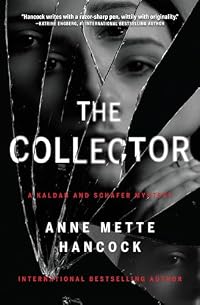
For fans of Katrine Engberg and Lars Kepler, the second chilling novel in Anne Mette Hancock's #1 bestselling Danish crime series is a psychological whirlwind that explores the nature of truth and what it means when we can no longer trust what we know to be real. When 10-year-old Lukas disappears from his Copenhagen school, police investigators discover that the boy had a peculiar obsession with pareidolia-a phenomenon that makes him see faces in random things. A photo on his phone posted show more just hours before his disappearance shows an old barn door that resembles a face. Journalist Heloise Kaldan thinks she recognizes the barn-but from where? When Luke's blood-flecked jacket is found in the moat at Copenhagen's Citadel, DNA evidence points to Thomas Strand, an ex-soldier suffering from severe PTSD. But then Strand turns up dead in his apartment, shot in the head execution style. What did the last person to see Lukas really witness that morning in the school yard? Was it really Lukas, or an optical illusion? Can you ever truly trust your eyes? show lessTags
Recommendations






















Member Reviews
This book starts out with an unnamed man seeing someone drop a child from a bridge. Abruptly, the next chapter flips to Heloise Kaldan in her doctor's office, considering an abortion. Her appointment is cut short when the doctor receives a call telling him that his son is missing from school. Another segue to detective Erik Schafer being called by his partner to report to said school to respond to a missing boy.
Because I didn't read the first book in this series, I don't know how the friendship between Kaldan and Schafer began. The fact that Heloise is a reporter assigned to write about the case on which Schafer is working turns out to cause problems between the two of them. And Heloise's ambivalence towards her partner and pregnancy show more is another stressor in her life. In spite of the tension between them, Kaldan provides assistance to Schafer in the solution of the crime, and they maintain their friendship through various personal issues. Although the inclusion of personal crises and problems distracted from the police investigation of the missing child case, I did appreciate getting to know the two main characters and gained an understanding of them.
The chapters were short and a little choppy feeling, but that also made it a fast read, especially since there was always something happening. The ending took me by surprise, and I didn't feel like the motivation was entirely explained. But overall I enjoyed it and am looking forward to reading the next installment in the series. show less
Because I didn't read the first book in this series, I don't know how the friendship between Kaldan and Schafer began. The fact that Heloise is a reporter assigned to write about the case on which Schafer is working turns out to cause problems between the two of them. And Heloise's ambivalence towards her partner and pregnancy show more is another stressor in her life. In spite of the tension between them, Kaldan provides assistance to Schafer in the solution of the crime, and they maintain their friendship through various personal issues. Although the inclusion of personal crises and problems distracted from the police investigation of the missing child case, I did appreciate getting to know the two main characters and gained an understanding of them.
The chapters were short and a little choppy feeling, but that also made it a fast read, especially since there was always something happening. The ending took me by surprise, and I didn't feel like the motivation was entirely explained. But overall I enjoyed it and am looking forward to reading the next installment in the series. show less
 This review was written for LibraryThing Early Reviewers.
This is my first introduction to author, Anne Mette Hancock. After reading this book, I really want to go back and check out book one, The Corpse Flower. While I was reading this book, I was getting vibes of another Danish author, David Newson. He is the author of The Killing that was made into a television series by the same name. The show is sadly no more.
As soon as I started reading, I immediately got sucked into this book. To the fact that I literally finished it in a matter of a few hours in one sitting. Heloise and Schafer both had different ways of investigating the case of the missing child. It was intriguing to get both viewpoints.
I honestly had no clue as to where the story was going to take me. In other words, I never saw show more the ending coming. Which is the biggest reveal of this story. A strong ending to a strong story with The Collector! show less
As soon as I started reading, I immediately got sucked into this book. To the fact that I literally finished it in a matter of a few hours in one sitting. Heloise and Schafer both had different ways of investigating the case of the missing child. It was intriguing to get both viewpoints.
I honestly had no clue as to where the story was going to take me. In other words, I never saw show more the ending coming. Which is the biggest reveal of this story. A strong ending to a strong story with The Collector! show less
This was a great follow-up to the first in the series and a really enjoyable thriller that kept me guessing! Although this is #2 in a series, you don't have to have read the first one to understand what's going on - this story and the characters stand on their own just fine, but it is enhanced if you know the backstory from the previous book. The book also didn't do too much filling you in on what happened in the previous book (which I think can be annoying for readers regardless of if they read it or not).
[SPOILERS BELOW]
I loved that the mystery in this was hard to piece together (for both the characters and the reader) and that in fact it didn't get tied up neatly as the act of only one person. This was a complex story with multiple show more overlapping mysteries. The ending was also quite chilling - don't drink that vodka, Anne Sofie!! show less
[SPOILERS BELOW]
I loved that the mystery in this was hard to piece together (for both the characters and the reader) and that in fact it didn't get tied up neatly as the act of only one person. This was a complex story with multiple show more overlapping mysteries. The ending was also quite chilling - don't drink that vodka, Anne Sofie!! show less
This review was written for LibraryThing Early Reviewers.The Collector, from Anne Mette Hancock, is a tense and exciting trip through a labyrinthine investigation, culminating in a great ending.
While this is the second in a series it can easily be read as a standalone, though I would recommend reading The Corpse Flower as well simply because it is a good book. Plus we can all use more book series to add to our list, right?
Though I used the term labyrinthine I don't mean to imply it is a difficult book to follow, it isn't. Though paying close attention to what you read pays huge benefits here. Interconnectedness might have been a better word for me to use, but either works.
Every reader has their preferences about the minor aspects of a book, and chapter length is something that I tend to show more notice. This book worked very well for me. Some good size chapters when needed and plenty of short chapters that seem to propel the narrative when they come into play. Sometimes these things matter and mixing the length does a lot to help a reader focus on detail in some chapters while hold on tight in others.
Highly recommended for readers who enjoy suspense and challenging concepts in their crime novels.
Reviewed from a copy made available by the publisher via NetGalley. show less
While this is the second in a series it can easily be read as a standalone, though I would recommend reading The Corpse Flower as well simply because it is a good book. Plus we can all use more book series to add to our list, right?
Though I used the term labyrinthine I don't mean to imply it is a difficult book to follow, it isn't. Though paying close attention to what you read pays huge benefits here. Interconnectedness might have been a better word for me to use, but either works.
Every reader has their preferences about the minor aspects of a book, and chapter length is something that I tend to show more notice. This book worked very well for me. Some good size chapters when needed and plenty of short chapters that seem to propel the narrative when they come into play. Sometimes these things matter and mixing the length does a lot to help a reader focus on detail in some chapters while hold on tight in others.
Highly recommended for readers who enjoy suspense and challenging concepts in their crime novels.
Reviewed from a copy made available by the publisher via NetGalley. show less
In Anne Mette Hancock's "The Collector," translated from the Danish by Tara Chace, Copenhagen-based Detectives Erik Schäfer, and his partner, Lisa Augustin, investigate the disappearance of ten-year-old Lukas Bjerre. The officers interview the boy's distraught parents, and their colleagues conduct a thorough search of the surrounding area. Meanwhile, Erik's friend, journalist Heloise Kaldan, is planning to write an article about the case, but Erik warns her not to play amateur sleuth or interfere with his efforts.
This police procedural has an ungainly and slow-moving plot. In addition, most of the characters do not come to life, nor do their actions ring true. The themes—alcoholism; domestic abuse; murder; vengeance; and mental show more illness—are grim, and there is little humor to relieve the sorrow. Heloise is in a relationship that she suspects is going nowhere. The happiest scenes are those in which Erik and his beloved wife, Connie, express their deep affection for one another.
Readers will be curious to learn what happened to Lukas and why, but it takes quite a while to learn the truth. In addition, Schäfer and Augustin show themselves to be all too fallible; they miss subtle but crucial clues that could have steered them in the right direction sooner. The author incorporates an army veteran's murder into the mix, but this feels like padding, since it is a distraction that adds little of substance to the novel. Sadly, most of the men and women in "The Collector" are cynical and dejected. To make matters worse, the concluding page shocks us with a sickeningly sadistic twist. show less
This police procedural has an ungainly and slow-moving plot. In addition, most of the characters do not come to life, nor do their actions ring true. The themes—alcoholism; domestic abuse; murder; vengeance; and mental show more illness—are grim, and there is little humor to relieve the sorrow. Heloise is in a relationship that she suspects is going nowhere. The happiest scenes are those in which Erik and his beloved wife, Connie, express their deep affection for one another.
Readers will be curious to learn what happened to Lukas and why, but it takes quite a while to learn the truth. In addition, Schäfer and Augustin show themselves to be all too fallible; they miss subtle but crucial clues that could have steered them in the right direction sooner. The author incorporates an army veteran's murder into the mix, but this feels like padding, since it is a distraction that adds little of substance to the novel. Sadly, most of the men and women in "The Collector" are cynical and dejected. To make matters worse, the concluding page shocks us with a sickeningly sadistic twist. show less
"Schäfer looked over at the child-sized jacket on the light table and speculated on what kind of a monster would hurt a child. In his thirty years on the force, he had investigated almost 600 homicides, and an ordinary person had been hiding behind every single beast. In most of the cases he had been able to see the situation through the killers’ eyes, and it wasn’t hard to understand motives like revenge, jealousy, money, and sex. But— no matter what glasses Schäfer put on—there was no part of him that would ever understand how a person could make himself hurt a child."
I'm pretty sure this marks the first series I started and continued through netgalley. I really love the darkness in Nordic noir like this. This is a great - show more and quite dark sequel to the Corpse flower.
A 10 year old boy Lukas goes missing. The case becomes linked to his weird interest in pareidolia - seeing faces or other significance in random objects and things.
This is a really good procedural that feels smart as the author takes us through the likely suspects and the evidence. I don't know much about Denmark or their police so I can't speak to the accuracy.
Thank you netgalley and Crooked Lane books for giving me an advanced review copy of this book in exchange for an honest review. show less
I'm pretty sure this marks the first series I started and continued through netgalley. I really love the darkness in Nordic noir like this. This is a great - show more and quite dark sequel to the Corpse flower.
A 10 year old boy Lukas goes missing. The case becomes linked to his weird interest in pareidolia - seeing faces or other significance in random objects and things.
This is a really good procedural that feels smart as the author takes us through the likely suspects and the evidence. I don't know much about Denmark or their police so I can't speak to the accuracy.
Thank you netgalley and Crooked Lane books for giving me an advanced review copy of this book in exchange for an honest review. show less
I received a copy of this novel from the publisher via NetGalley.
This centres on the disappearance of a child, and switches between the perspectives of the police officers investigating the case and an investigative journalist who finds herself in the middle of things. Handily she is also really good friends with one of the police officers and her best friend's daughter knows the missing boy. I found this a fairly good read, although elements of the plot puzzle me. The ending made sense, but there hadn't been enough clues for the reader to work it out.
I found the translation so clunky in places that it took me out of the story: 'he tried to light his lighter'/'he got his lighter lit' and the very non-idiomatic (in English) 'sensing that show more they were moving out into an opium field packed full of land mines' to mean their conversation was entering dangerous territory, being just a few examples. show less
This centres on the disappearance of a child, and switches between the perspectives of the police officers investigating the case and an investigative journalist who finds herself in the middle of things. Handily she is also really good friends with one of the police officers and her best friend's daughter knows the missing boy. I found this a fairly good read, although elements of the plot puzzle me. The ending made sense, but there hadn't been enough clues for the reader to work it out.
I found the translation so clunky in places that it took me out of the story: 'he tried to light his lighter'/'he got his lighter lit' and the very non-idiomatic (in English) 'sensing that show more they were moving out into an opium field packed full of land mines' to mean their conversation was entering dangerous territory, being just a few examples. show less
Members
- Recently Added By
Author Information
6 Works 366 Members
Some Editions
Awards and Honors
Series

Common Knowledge
- Canonical title
- The Collector
- Original title
- Mercedes-snittet
- People/Characters
- Heloise Kaldan
- Important places
- Copenhagen, Denmark
- Dedication
- To Vega and Castor
You were written in the stars. - First words
- The man moved quickly, sliding past the bushes and the bare trees.
- Last words
- (Click to show. Warning: May contain spoilers.)She closed her eyes and brought the bottle to her lips.
- Blurbers
- Engberg, Katrine; Schepp, Emilie; Hunsicker, Harry
- Original language
- Danish
Classifications
- Genres
- Fiction and Literature, Mystery
- DDC/MDS
- 839.813 — Literature & rhetoric German & related literatures Other Germanic literatures Danish and Norwegian literatures Danish Danish fiction
- LCC
- PT8177.18 .A557 .M4713 — Language and Literature German, Dutch and Scandinavian literatures Danish literature Individual authors or works 2001-
- BISAC
Statistics
- Members
- 93
- Popularity
- 344,098
- Reviews
- 11
- Rating
- (3.68)
- Languages
- 5 — Danish, English, French, German, Italian
- Media
- Paper, Audiobook, Ebook
- ISBNs
- 18
- ASINs
- 10