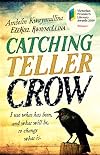
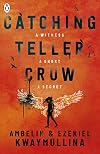
Catching Teller Crow
by Ambelin Kwaymullina, Ezekiel Kwaymullina
On This Page
Description
Nothing's been the same for Beth Teller since she died. Her dad, a detective, is the only one who can see and hear her - and he's drowning in grief. But now they have a mystery to solve together. Who is Isobel Catching, and what's her connection to the fire that killed a man? What happened to the people who haven't been seen since the fire? As Beth unravels the mystery, she finds a shocking story lurking beneath the surface of a small town, and a friendship that lasts beyond one life and show more into another. Told in two unforgettable voices, this gripping novel weaves together themes of grief, colonial history, violence, love and family. show lessTags
Recommendations








Member Reviews
Very clever, beautifully written. I love the dramatically different ways the sections with the different viewpoints are written, although when I came to the first change I was a bit taken aback, because it is so very different. I suspect that it would be very interesting to hear someone with an understanding of the relevant storytelling traditions talk in depth about the ways that this story has been crafted, because I can tell that there are things happening, but I don't have the context to appreciate the nuances.
There are some pretty dark goings on sitting just under the surface of the story, which are sadly not a surprise when one is at all familiar with the (historical and ongoing) treatment of Indigenous children and teens. And show more although the perspective is very much from the policing side of the story, it isn't particularly kind to the police. show less
There are some pretty dark goings on sitting just under the surface of the story, which are sadly not a surprise when one is at all familiar with the (historical and ongoing) treatment of Indigenous children and teens. And show more although the perspective is very much from the policing side of the story, it isn't particularly kind to the police. show less
CW: rape, drugging, kidnapping, murder, Stolen Generation (First nations people), loss of loved ones, car accident, depression, racism, authority figures covering up crimes
Well that was an emotional and slightly traumatic reading experience.
This short, powerful novel touches upon a shameful history in which First Nations People were treated horrifically during times of colonisation. The story is told in a contemporary setting through alternating POVs of two Australian Aboriginal teenagers. Beth was killed in a car accident and has not crossed over to the 'place with colours' because she feels she can't leave her grieving father who can see and talk to her. They are in a small Australian town to investigate a deadly fire. There they show more meet Isobel Catching who has a dark, seemingly magical, story that she needs Beth's father, a police detective, to hear. The two main characters are so vivid. Beth is quite naive and sheltered which contrasts well with a hardened, world wary Catching. The writing is absolutely wonderful with Catching's POV written in captivating verse. I don't want to say anything that will potentially spoil the story but I loved the use of allegory as a vehicle for the horrible truth.
The content is quite heavy so I recommend this for NZ Year 11 and above. I will definitely be looking to read more from these ownvoice authors. show less
Well that was an emotional and slightly traumatic reading experience.
This short, powerful novel touches upon a shameful history in which First Nations People were treated horrifically during times of colonisation. The story is told in a contemporary setting through alternating POVs of two Australian Aboriginal teenagers. Beth was killed in a car accident and has not crossed over to the 'place with colours' because she feels she can't leave her grieving father who can see and talk to her. They are in a small Australian town to investigate a deadly fire. There they show more meet Isobel Catching who has a dark, seemingly magical, story that she needs Beth's father, a police detective, to hear. The two main characters are so vivid. Beth is quite naive and sheltered which contrasts well with a hardened, world wary Catching. The writing is absolutely wonderful with Catching's POV written in captivating verse. I don't want to say anything that will potentially spoil the story but I loved the use of allegory as a vehicle for the horrible truth.
The content is quite heavy so I recommend this for NZ Year 11 and above. I will definitely be looking to read more from these ownvoice authors. show less
I do love a bit of synchronicity! The very day before I read Catching Teller Crow, by collaborative writing duo Ambelin Kwaymullina and Ezekiel Kwaymullina, I stumbled on a Tweet from the Sydney Review of Books which was about stylistic innovation in Young Adult Literature a.k.a. YA. Felicity Castagna, author of No More Boats, was reviewing Helena Fox’s How It Feels To Float (see here) but began by talking about the ways in which YA is judged.
But, she argues, this means show more that YA books are valued as a social good, rather than a literary good, and whereas literary critics of adult books tend to look for complex and interesting textual practices... In YA we look for issues, themes, the ability to make young people want to turn pages and read on. So YA criticism does not often explore the shape-shifting, genre-blending, fragmentary, wildly experimental, literary kind of books that she loves.
Well, I think Castagna would probably love Catching Teller Crow. The judges of the 2019 Victorian Premier's Award for YA did, and the novella also won the Aurealis Award for Best Young Adult Novel (2018), and was a nominee for the speculative fiction Norma K. Hemming Award (2019). It's detective fiction, but not as you know it: the theme is grief and how to reconcile living with an overwhelming loss; the dual narration is in poetry and story; and two of the characters are Indigenous ghosts.
Sixteen-year-old Beth Teller narrates the story, while Isobel Catching, a possible witness to a possible crime, reveals what she knows in poetry. Dead narrators are not often successful IMO, but this one works. Beth was killed in a car accident but she has not yet 'crossed over to the other side' because she needs to care for her devastated father. He's a detective but while he's not coping, he's been sent to deal with what looks like busy work: a death that just looks like an unfortunate consequence of an accidental fire. But Beth, who is remarkably sanguine about her young life being cut short, is a canny young thing, and she soon realises that things are much more complex than they appear.
To read the rest of my review, please visit https://anzlitlovers.com/2020/07/05/catching-teller-crow-by-ambelin-kwaymullina-... show less
... more than any other genre YA books are likely to be judged on their relevance and relatability. YA is valued for its ability to speak to, to dissect, to make present, to make clear, to smash over your head the issues that really matter in young people’s lives.
But, she argues, this means show more that YA books are valued as a social good, rather than a literary good, and whereas literary critics of adult books tend to look for complex and interesting textual practices... In YA we look for issues, themes, the ability to make young people want to turn pages and read on. So YA criticism does not often explore the shape-shifting, genre-blending, fragmentary, wildly experimental, literary kind of books that she loves.
Well, I think Castagna would probably love Catching Teller Crow. The judges of the 2019 Victorian Premier's Award for YA did, and the novella also won the Aurealis Award for Best Young Adult Novel (2018), and was a nominee for the speculative fiction Norma K. Hemming Award (2019). It's detective fiction, but not as you know it: the theme is grief and how to reconcile living with an overwhelming loss; the dual narration is in poetry and story; and two of the characters are Indigenous ghosts.
Sixteen-year-old Beth Teller narrates the story, while Isobel Catching, a possible witness to a possible crime, reveals what she knows in poetry. Dead narrators are not often successful IMO, but this one works. Beth was killed in a car accident but she has not yet 'crossed over to the other side' because she needs to care for her devastated father. He's a detective but while he's not coping, he's been sent to deal with what looks like busy work: a death that just looks like an unfortunate consequence of an accidental fire. But Beth, who is remarkably sanguine about her young life being cut short, is a canny young thing, and she soon realises that things are much more complex than they appear.
To read the rest of my review, please visit https://anzlitlovers.com/2020/07/05/catching-teller-crow-by-ambelin-kwaymullina-... show less
Written by an Australian indigenous brother and sister, this is a hard novel to categorise. SPOILER ALERT: On one hand, it is almost adult in its concept of abuse of indigenous foster children in a care home in an outback town and then on the other, we have the dead Beth Teller,haunting her detective father and prompting him to solve the mystery surrounding the home with a child's innocence of "getting the job done" without realising what horrors this might uncover. It is a bit 6th sense in the "I see dead people" with Isobel Catching, the abused ex-junkie orphan telling her story through verse set in a supernatural world of Fetchers and the Crow.
I like the fact that this book is actually the names of the three protaginists - Catching, show more Teller and finally the Crow.
It's all very spiritual but also looks at the wrongs that were done to the Indigenous people in white history. I like how Beth is half white and half indigenous which means she sees what is happening from both perspectives.
A haunting book that I am not sure that students will take to, but I found very engrossing. Reviewed for VPRC. show less
I like the fact that this book is actually the names of the three protaginists - Catching, show more Teller and finally the Crow.
It's all very spiritual but also looks at the wrongs that were done to the Indigenous people in white history. I like how Beth is half white and half indigenous which means she sees what is happening from both perspectives.
A haunting book that I am not sure that students will take to, but I found very engrossing. Reviewed for VPRC. show less
Catching Teller Crow by Ambelin Kwaymullina and Ezekiel Kwaymullina is a very thoughtful and deliberate YA novel. It tells the story of three girls, Catching, Beth Teller, and Crow and deals with some brutal issues. However, the worst parts of the story and told with symbolism and only partly explained plainly, so I suspect younger readers could read the book without having to deal with the specifics of those parts.
Most of the story is told from the point of view of Beth, a ghost of a girl who recently died in a car accident. She spends her time following around her father, the only person who can now see and hear her. Her father, aside from not coping well with her death, is a detective and is working on a case involving an orphanage show more burning down and some connected adults being missing. Beth rags along helping him and providing a sounding board. The pivotal moment comes with they interview a witness, Catching, and the book starts having sections from her point of view.
I don’t want to spoil anything, but some aspects of the story were predictable. However, this was more than made up for by the unique way in which the story was told. Beth wasn’t a ghost seeking vengeance for her death and Catching told her story very symbolically. Catching’s version of her story was true, but so was the decoded version Beth’s dad later summarised. While this was a story about horrible things, Beth’s dad always made sure to protect his daughter from what he could (like not letting her see dead bodies), even though she was already dead. On the other hand, Beth and the reader aren’t shielded from discussions of racism and the Stolen Generations, just the more immediate crimes.
This is quite a short book and that meant it moved very quickly through the story. I read it in only two sittings (with a few pages grabbed at other times). I expect the length makes it more accessible to its intended YA audience, especially younger readers and those that might be daunted by thick books. I liked Catching Teller Crow. It was an enjoyable read (without being “fun”) and the story was expertly told in a creative way. I highly recommend it to YA readers who don’t mind a bit of realistic darkness in their books. I also wouldn’t hesitate to give it to most teens; in fact, I can imagine finding it on a high school reading list.
4.5 / 5 stars
You can read more of my reviews on my blog. show less
Most of the story is told from the point of view of Beth, a ghost of a girl who recently died in a car accident. She spends her time following around her father, the only person who can now see and hear her. Her father, aside from not coping well with her death, is a detective and is working on a case involving an orphanage show more burning down and some connected adults being missing. Beth rags along helping him and providing a sounding board. The pivotal moment comes with they interview a witness, Catching, and the book starts having sections from her point of view.
I don’t want to spoil anything, but some aspects of the story were predictable. However, this was more than made up for by the unique way in which the story was told. Beth wasn’t a ghost seeking vengeance for her death and Catching told her story very symbolically. Catching’s version of her story was true, but so was the decoded version Beth’s dad later summarised. While this was a story about horrible things, Beth’s dad always made sure to protect his daughter from what he could (like not letting her see dead bodies), even though she was already dead. On the other hand, Beth and the reader aren’t shielded from discussions of racism and the Stolen Generations, just the more immediate crimes.
This is quite a short book and that meant it moved very quickly through the story. I read it in only two sittings (with a few pages grabbed at other times). I expect the length makes it more accessible to its intended YA audience, especially younger readers and those that might be daunted by thick books. I liked Catching Teller Crow. It was an enjoyable read (without being “fun”) and the story was expertly told in a creative way. I highly recommend it to YA readers who don’t mind a bit of realistic darkness in their books. I also wouldn’t hesitate to give it to most teens; in fact, I can imagine finding it on a high school reading list.
4.5 / 5 stars
You can read more of my reviews on my blog. show less
A Young Adult novel that blurs the line between contemporary Australia and Indigenous mythology. Beth Teller is dead and she doesn't know why she hasn't gone to the other-place. Her grieving policeman father is the only soul that can see and speak to her and together, as he slowly comes to terms with her circumstance, they seek to understand a series of suspicious deaths in a small outback community. There's sinister happenings in the town and when their trail leads to Catcher, who interprets the modern world with mythological gravity, they find the truth to all the answers. Outstanding Australian YA Fiction.
Excellent YA novel.
Members
- Recently Added By
Lists

Fantasy/Scifi Heroines Without Love Intrests
46 works; 10 members

Books Read in 2024
4,623 works; 126 members
Author Information

20+ Works 1,019 Members
18+ Works 549 Members
Some Editions
Awards and Honors
Awards
Common Knowledge
- Original publication date
- 2018-09-01
Classifications
- Genres
- Fiction and Literature, Poetry, Teen, Young Adult
- DDC/MDS
- 823.92 — Literature & rhetoric English & Old English literatures English fiction 1900- 2000-
- LCC
- H2018 — Social sciences
- BISAC
Statistics
- Members
- 91
- Popularity
- 351,138
- Reviews
- 8
- Rating
- (3.74)
- Languages
- English
- Media
- Paper, Audiobook, Ebook
- ISBNs
- 15